
Walking After Meals for Diabetes: What the Research Shows
What trials say about a short walk after meals for people with diabetes, how long and how soon to walk, and who should take care.
Table of Contents
• What the Research on Walking After Meals for Diabetes Shows
• Why a Short Walk Helps
• The Trial That Compared Timing
• What About a Long Morning Walk?
• Does Walking Replace Medicine?
• How Soon and How Long to Walk
• How to Fit Walking Into Your Day
• Start With Dinner
• A Gentle Pace Is Enough
• Walks for Busy, Hot or Rainy Days
• Common Mistakes I See
• What a Real Day Looks Like
• Who Should Be Careful
• Where the Research Falls Short
• When to Check With Your Doctor First
• The Bottom Line on Walking After Meals for Diabetes
• Frequently Asked Questions About Walking After Meals for Diabetes
Walking after meals for diabetes is one of the easiest habits I suggest, and one of the most underrated. It costs nothing, needs no gym, and takes about ten minutes. All it asks is that you get up from the table and move.
Most of my clients already know exercise is good. What they don’t know is when they walk, it makes a huge difference. A short walk immediately after eating seems to blunt the sugar spike after a meal.
Social media loves this tip, and some posts promise too much. The research is real, but the studies are small and short. I would rather show you what they actually found.
This post covers what trials say about walking after meals for diabetes, how soon and how long to walk, how to fit it into a normal Indian day, and who should take care.
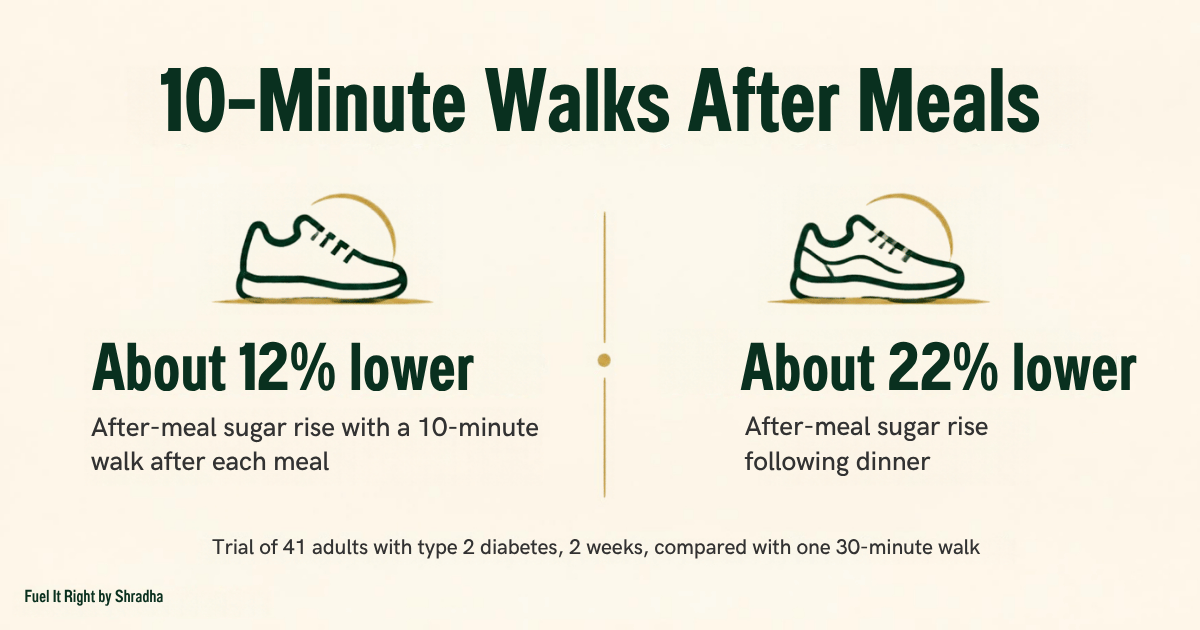
Key Takeaways • In a trial of 41 adults with type 2 diabetes, a 10-minute walk after each meal lowered the after-meal sugar rise by about 12 percent, compared with one 30-minute walk at any time. • The biggest gain was after dinner, where the rise was about 22 percent lower. • In older adults at risk of diabetes, three 15-minute walks after meals lowered average 24-hour blood sugar by about 10 percent. • In a small study of people on insulin, walking after one meal came close to one mealtime insulin dose, but the effect was small. It does not replace medicine. • A gentle pace is enough. If you take insulin or have foot problems, check with your doctor first. |
What the Research on Walking After Meals for Diabetes Shows
The sugar from the food you eat goes into your blood after you eat. In diabetes the body takes longer to clear the sugar, so the level goes higher and stays high longer. Your muscles can soak up sugar when they work, which is why walking after meals is encouraged in diabetes.
Why a Short Walk Helps
When your leg muscles work, they pull sugar out of your blood to use as fuel. They can do this even when insulin is not working well. That is standard body science, not something these trials set out to prove.
So after a meal, a few minutes of walking gives the sugar somewhere to go. That is the simple reason walking after meals for diabetes can flatten the spike.
The Trial That Compared Timing
Researchers in a 2016 trial asked 41 adults with type 2 diabetes to try two walking plans, each for two weeks. The average age was 60, and they had lived with diabetes for about ten years.
In one case they walked for 10 minutes after each of their three main meals. In the other, they took just one 30-minute walk a day at a time of their choosing. The total walking time was the same, and all of them wore a sensor that measured blood sugar.
With the walks after meals, the rise in blood sugar over three hours after eating was about 12 percent lower. After dinner, it was about 22 percent lower. The average sugar in those three hours was about 0.5 mmol/L lower, which is roughly 9 mg/dL.
This was a small trial, and each plan lasted only two weeks. The people knew which plan they were on. Still, it is a clear sign that walking after meals for diabetes works better than the same walking done at a random time.
What About a Long Morning Walk?
A smaller trial tested older adults who were at risk of diabetes, but did not yet have it. They walked 45 minutes a day, either in one go or in three 15-minute walks that began 30 minutes after meals.
The walks after meals lowered average blood sugar by about 10 percent over 24 hours. One 45-minute walk in the morning lowered it by about 8 percent. A walk in the late afternoon didn't help much.
Only the walks after meals lowered the sugar after dinner in a clear way. So a morning walk is good, but it is not the same as moving after your biggest meal. This study had only 10 people, so I treat it as a hint, not a rule.
Does Walking Replace Medicine?
No, and the research is careful about this. In a small Thai study, 14 people with type 2 diabetes who took long-acting insulin walked for 15 to 20 minutes after one meal a day. In another six-week period, they took one extra dose of mealtime insulin instead.
The three-month sugar average, HbA1c, was lowered by 0.05 points with walking and 0.19 points with insulin. The difference between the two was not significant. Walking may work as well as a single mealtime dose, but the effect was small, the authors said.
Some people in that study did not walk much, and the group was tiny. Please do not change your medicine because of walking. Think of walking after meals for diabetes as a helper that sits alongside your treatment.
How Soon and How Long to Walk
The best timing is not settled. In the 2016 trial, people started within five minutes of finishing. In the older adult trial, they began 30 minutes after eating.
A 2025 study in 12 healthy young adults tested a 10-minute walk right after a glucose drink against a 30-minute walk half an hour later. Both walks lowered the overall rise. Only the quick walk lowered the peak. Those people did not have diabetes, so this is only a hint.
A 2022 review of seven studies also found that light walking breaks lowered sugar after meals more than standing or sitting. No one in those studies had diabetes, and the tests lasted one day. My take is that sooner is probably better, but a later walk still helps.
Shradha's Tip Do not wait for the perfect moment. If you can walk within 10 to 30 minutes of finishing your meal, do it. A late walk beats no walk. |
How to Fit Walking Into Your Day
You do not need a new routine. You need a small habit that you can repeat on tired days too. Here is how I set up walking after meals for diabetes with my clients.
Start With Dinner
For diabetes, the trials showed the biggest gain for walking after meals at dinner. This is also the meal most of us sit down in front of the television after, so start there with walking after meals for diabetes, and add lunch once it feels normal.
Ten minutes is enough. Walk around the house, the garden, the building compound, or the street outside. If it is a social walk with family, even better.
A Gentle Pace Is Enough
The studies used an easy pace, about the speed you would walk while chatting. You do not need to sweat. A fast walk on a full stomach can cause discomfort, and it is not what the research tested.
If you feel heavy after a big meal, start slowly for the first couple of minutes. Then settle into an easy rhythm.
Walks for Busy, Hot or Rainy Days
None of these ideas has been tried out so take them as my practical tips. At the office take a phone call while you walk the corridor. At home pace the room or climb a flight of stairs slowly.
In the monsoon or the heat, walk indoors. March on the spot while you wash up or fold laundry. Even a few minutes of light movement is better than sitting straight after you eat.
Common Mistakes I See
The first mistake is skipping the walk on the days you feel tired. Those are the days a slow, five-minute stroll is still worth it. A short walk you do beats a long one you skip.
The second is walking too hard, too soon after a big meal. The trials used an easy pace, and that is all walking after meals for diabetes needs.
The third is counting only your steps for the day. The same steps taken in one long go may not bring the same after-meal benefits as short walks after eating. In the 2016 trial, timing was the only thing that was different.
What a Real Day Looks Like
Here is a simple pattern. After breakfast, a few minutes around the house. After lunch, 10 minutes, even if it is a walk to the shop or a lap of the office floor.
After dinner, 10 to 15 minutes with family, before you settle in for the evening. This is a pattern, not a prescription. Your plan depends on your medicines, your joints and your blood sugar numbers.
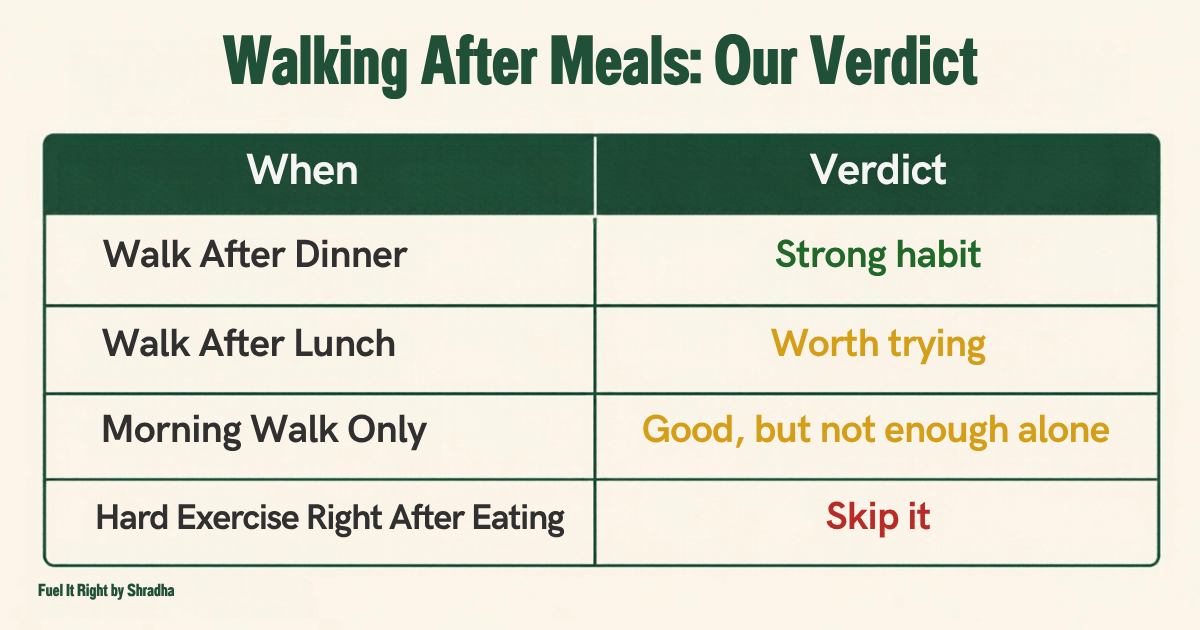
Walk After Dinner Strong habit |
This is where the biggest drop in after-meal sugar was seen in the trials. How to make it work: Walk 10 to 15 minutes after dinner, at an easy pace. |
Walk After Lunch Worth trying |
The evidence after lunch is weaker. In one small study, the sugar after lunch did not drop in a clear way. How to make it work: Take 10 minutes after lunch, even indoors. |
Morning Walk Only Good, but not enough alone |
A 45-minute morning walk lowered 24-hour sugar, but did not lower the after-dinner rise much. How to make it work: Keep your morning walk and add a short one after dinner. |
Hard Exercise Right After Eating Skip it |
The trials used an easy pace. A hard workout on a full stomach can cause cramps or discomfort. How to make it work: Keep it light after meals and save harder exercise for another time. |
WHAT YOU'VE HEARD I walked for an hour in the morning, so I can sit after meals. |
WHAT'S ACTUALLY TRUE A morning walk helps. But in the trials, the sugar after dinner dropped most when people walked after the meal. |
Who Should Be Careful
Walking after meals for diabetes is gentle exercise, but a few people need extra care. Please read this part even if you feel fine.
Where the Research Falls Short
Most trials were small and short, some only two weeks. Many were fit volunteers who liked walking. None tested walking after a full Indian thali, so the effect on your meal is an assumption.
The long-term gain is also modest. A drop of a few percent in sugar after meals will not replace the bigger levers, such as portion size, what you eat and how well your medicines are matched to you.
When to Check With Your Doctor First
If you are on insulin or tablets that can cause low blood sugar, talk to your doctor before increasing your activity. Walking uses up sugar, so your dosage may need to be adjusted. This is a general safety precaution, not a finding from a specific trial.
If you have numb feet, foot sores or heart problems, or if you feel dizzy or breathless when you walk, check first. Wear comfortable shoes, and look at your feet every day.
Some people feel bloated or crampy when they walk right after a meal. If that sounds like you, the Gut Health Quiz is a good place to start.
The Bottom Line on Walking After Meals for Diabetes
Walking after meals for diabetes is a small, free habit with real but modest benefits. A gentle 10-minute walk, especially after dinner, seems to lower the sugar rise after eating. It will not replace your medicine or a good plate, but it helps both work a little better.
If you are following this series, the earlier posts on eating order, fruit, rice, millets, intermittent fasting, jaggery vs sugar and sweeteners cover the other pieces of eating well with diabetes.
If you are new to walking after meals for diabetes, do not aim for perfect. Aim for most days. A habit you keep at a gentle pace beats a strict plan that lasts a week.
I like this habit because it’s respectful of how people actually live. Nobody needs a gym, a special product or an extra hour. It fits in with family dinners, office lunches and the evening stroll, which is why my clients tend to stick with it.
My advice is simple. Pick one meal, usually dinner, and walk for 10 minutes for the next two weeks. If you check your sugar at home, compare your readings before and after. Share what you see with your doctor.
Want a daily routine, meals and walks, built around your own blood sugar readings?
Book a consultation:
Frequently Asked Questions About Walking After Meals for Diabetes
How Long Should I Walk After Eating?
In the main trial, people walked for 10 minutes after each meal. Another small study used 15 minutes. Start with 10 minutes and build up if it feels easy.
Should I Walk Right After Eating?
Sooner looks better in the research. In one trial, people started within five minutes of finishing. If you feel heavy, walk slowly at first, and a later walk still helps.
Is 10 Minutes Enough?
For after-meal sugar, the trials suggest yes. Ten minutes after each meal was better than one 30-minute walk at a random time. More movement during the day is still good for you.
Does Walking After Meals Lower HbA1c?
The evidence is thin. The short trials mostly measured sugar after meals, not HbA1c. In a small study on insulin, HbA1c changed only a little. Treat it as a way to ease the daily spike.
Is It Okay to Walk After a Late Dinner?
Yes, a gentle walk is usually fine. Keep the pace easy and avoid very hard exercise close to bedtime. Walking after dinner showed the biggest gain in the trials.
What if I Cannot Walk Because of Knee Pain?
Ask your doctor or a physiotherapist. Gentle options such as pacing the room, standing and moving, slow stair steps may help. The trials tested walking so other options are less proven.
Will Walking After Meals Help Me Lose Weight?
The trials did not test this. Weight change depends on the whole day, including your food and your total movement. Think of this as a blood sugar habit first.
Does Walking After Meals Work for Prediabetes?
The older adult trial included people at risk of diabetes, and their average sugar fell with walks after meals. It was a very small study, but the habit is gentle and free, so many of my clients with prediabetes try it too.
Is Walking After Meals Safe if I Take Insulin?
Speak to your doctor first. Walking uses up sugar, so your dose or timing may need a review. Do not change your medicine on your own.
Shradha | Nutritionist & Dietitian | Fuel It Right