
Indian Diet and Diabetes: Why Rice Matters More Than Sugar
A landmark 2025 analysis of India's national diabetes survey found carbohydrate-heavy plates driving diabetes risk far more than sugar alone, and one simple protein swap that actually helps.
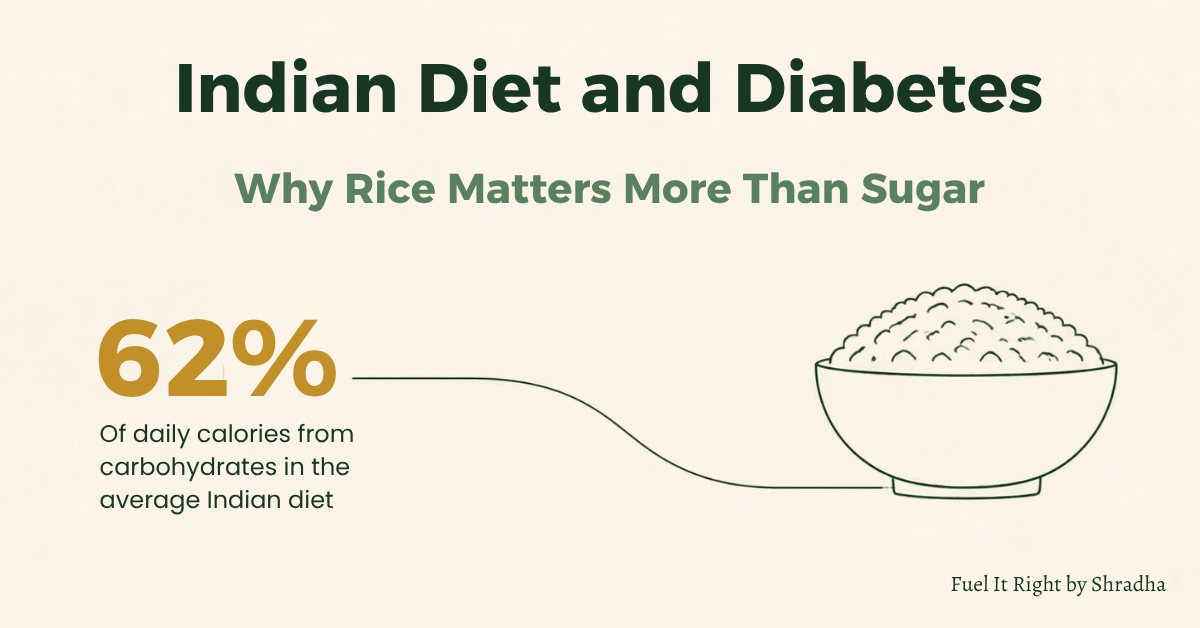
Table of Contents
• What the Biggest Indian Diet and Diabetes Study Ever Found
• The Real Numbers Behind Indian Diet and Diabetes Risk
• Why Eating Healthy Whole Grains Isn't the Fix You Think
• The One Swap That Actually Lowers Indian Diet and Diabetes Risk
• Why Protein Is the Missing Piece in Most Indian Plates
• White Rice and Indian Diet and Diabetes Risk: What the Data Shows
• Who Indian Diet and Diabetes Risk Affects Most
• What Indian Diet and Diabetes Research Means for Your Plate Today
• A Realistic Sample Day, Not a Rigid Diet Chart
• A Realistic, Food-First Way to Rebalance Carbs and Protein
• The Bottom Line on Indian Diet and Diabetes
• Frequently Asked Questions About Indian Diet and Diabetes
Indian diet and diabetes are more closely linked than most people realise, and the connection is not just about sugar. A landmark new analysis of India's own national diabetes survey was published in September 2025, and it points a finger at something most of us eat at every single meal.
As a nutritionist, I get asked constantly what really drives diabetes risk here. This study gives one of the clearest answers yet, and it is not a supplement or a superfood. It comes down to what fills most of the plate, day after day.
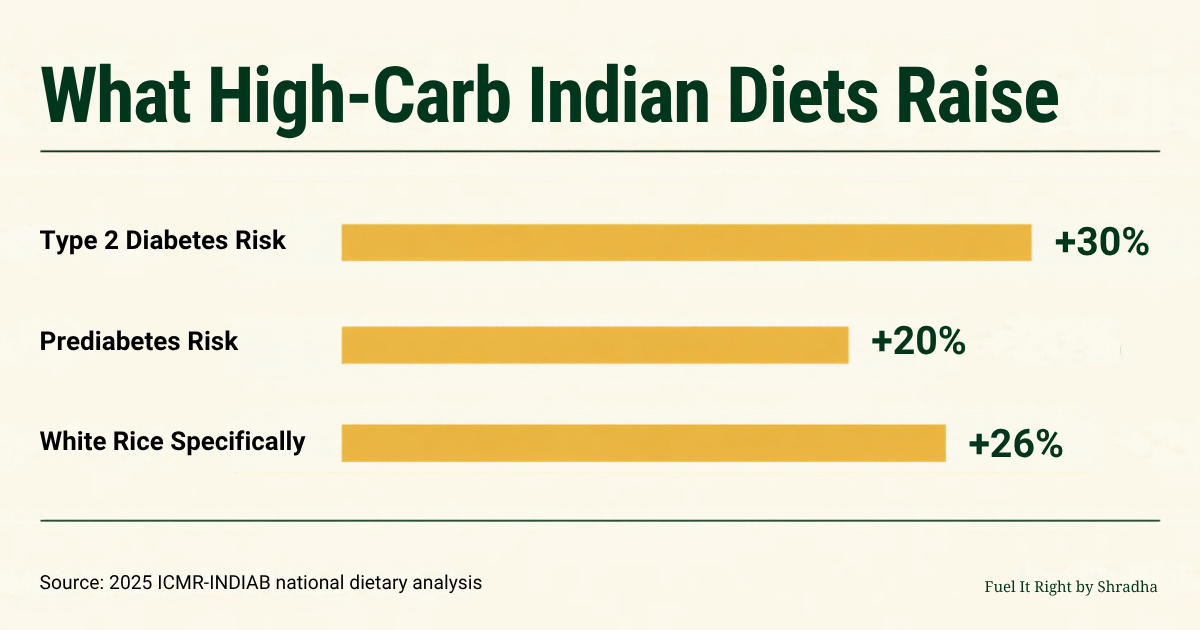
Key Takeaways • Indian diets average 62% of daily calories from carbohydrates, far above what supports stable blood sugar. • High-carb eaters face roughly 30% higher diabetes risk and 20% higher prediabetes risk. • White rice specifically carries up to 26% higher risk, more than any other single food measured. • Whole wheat is not meaningfully better than white rice for this risk, both are carb-dominant. • Swapping carbs for protein (dal, curd, paneer, egg, fish) cut diabetes risk by up to 18%. |
What the Biggest Indian Diet and Diabetes Study Ever Found
This is the same national survey that gave us the widely cited figure that 101 million Indians now live with diabetes. The researchers dug deep into what people actually eat across the country, not just how much sugar they put into their tea. It is the most detailed look so far at Indian diet and diabetes patterns across the country.
This kind of large-scale evidence matters. Most competing claims about Indian diet and diabetes come from small studies or anecdotes. International data often does not reflect how Indians actually eat either, which is exactly why a national sample this size closes that gap.
The finding was striking. Indian diets draw about 62 percent of daily calories from carbohydrates, mostly rice and wheat. That is far higher than what most nutrition guidelines recommend for stable blood sugar.
The Real Numbers Behind Indian Diet and Diabetes Risk
Those who ate the most carbohydrate-rich diets had about a third higher risk of type 2 diabetes than those who ate the least. The risk of prediabetes was about a fifth higher in the same group.
In practice, obesity followed the same pattern. General obesity risk was around a fifth higher, and abdominal fat risk climbed further still. Indian diet and diabetes risk, in other words, tracks closely with how carbohydrate-heavy a plate really is.
Here, the amount of abdominal fat is more important than overall weight. It is the type of fat most associated with insulin resistance, the process that, if nothing in the diet changes, leads to full-blown diabetes from prediabetes.
India's carbohydrate intake sits well above what nutrition bodies consider ideal for stable blood sugar. That gap helps explain why diabetes has grown faster here than in many countries eating comparatively less rice and wheat.
Why Eating Healthy Whole Grains Isn't the Fix You Think
Here’s the part that surprises most of my clients. Just replacing white rice with whole wheat flour did not significantly reduce risk. They are both still carbohydrate-dominant, just from a different grain. This is one of the more counterintuitive findings in the link between Indian diet and diabetes risk.
That is not to say whole grains have no value. It is simply to say the issue is the sheer proportion of the plate that is occupied by carbohydrates, not what grain fills that space.
Whole wheat still offers more fibre and micronutrients than refined flour, and that is worth keeping for digestion and gut health. Just do not expect it alone to fix diabetes risk if the rest of the plate stays exactly the same.
Shradha's Tip Try this today: In just one meal, replace half your usual rice or roti portion with a bowl of dal, curd, or an egg preparation. That one swap mirrors exactly what this research found protective. |
The One Swap That Actually Lowers Indian Diet and Diabetes Risk
The simplest finding from the whole study was the most surprising and useful. Replacing some carbohydrate with protein, from plant sources, dairy, egg or fish, cut diabetes risk by nearly a fifth.
As a result, this single swap did more for risk reduction than any other dietary change the researchers measured. It is also the change I push hardest with clients managing Indian diet and diabetes risk together.
Protein slows the rate at which a meal raises blood sugar, and it helps you feel full longer than carbs alone. That combo is exactly why this one swap beat everything else the researchers measured.
Why Protein Is the Missing Piece in Most Indian Plates
The national average for protein intake is a mere 12 per cent of daily calories, far below the 15 per cent recommended by nutrition guidelines. Most of the small amount of protein people do eat comes from plant sources. The gap at the center of the entire Indian diet and diabetes conversation, and it echoes the evidence behind India’s protein gap.
Dairy contributes barely 2 percent of calories, and animal protein barely 1 percent, across the average Indian plate. For a country eating this much rice and wheat, that gap is exactly where the risk hides.
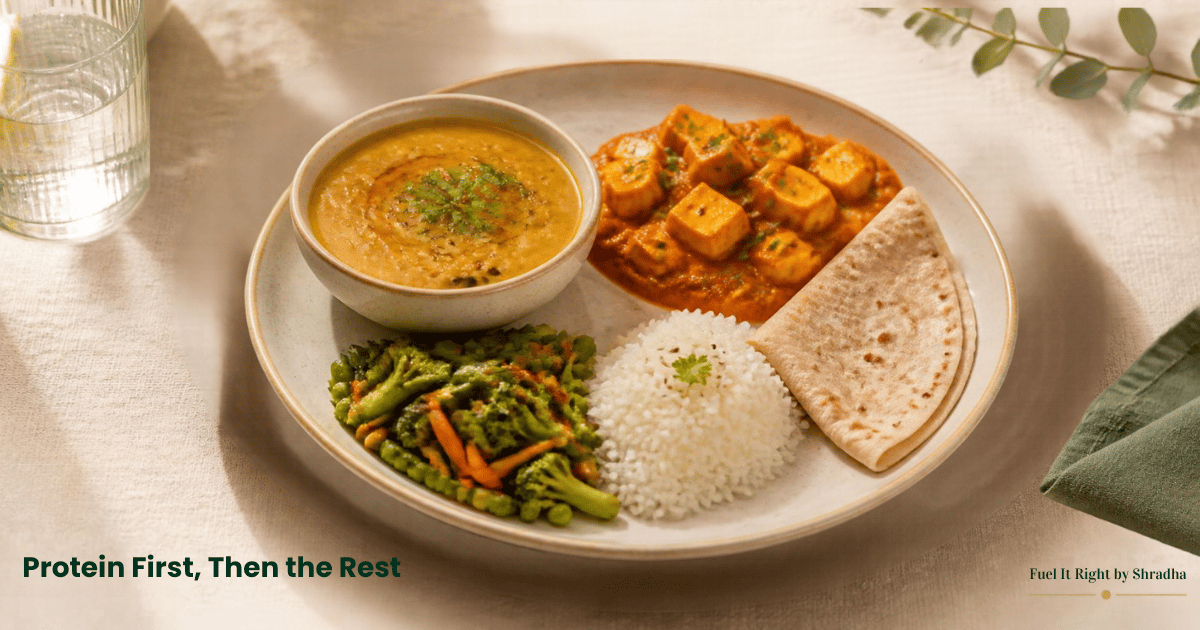
Closing this gap does not require anything exotic. Dal, curd, paneer, soy chunks, and sprouts work well on vegetarian plates, while eggs, fish, and chicken work for those who eat them. The goal is simply more of these, more consistently.
White Rice and Indian Diet and Diabetes Risk: What the Data Shows
White rice merits a callout here by itself. It was associated with as much as a quarter higher risk across several metabolic conditions among the highest consumers, more than any other single food in the analysis. Few single foods exemplify Indian diet and diabetes risk as clearly as this one.
This does not mean cutting rice out entirely. It means portion and pairing matter far more than most people assume, especially at the meal where rice already dominates the plate.
A simple rule I give clients: keep rice to about one levelled katori per meal, and never eat it alone. Pairing it with dal, curd, or a vegetable and protein side slows down how fast that rice actually raises blood sugar.
Brown rice and other less processed varieties fare slightly better than polished white rice for blood sugar response. The effect is modest, though, compared with what pairing and portion control achieve on their own.
Who Indian Diet and Diabetes Risk Affects Most
Family history increases baseline risk no matter what you eat, but these results are just as meaningful for those with no family history at all, since the mechanism works through what is actually eaten, not just genetics.
Anyone already told their blood sugar is borderline or prediabetic should treat these findings as the most actionable part of this entire piece. Indian diet and diabetes risk is still reversible at the prediabetes stage in a way it is not once diabetes is established.
What Indian Diet and Diabetes Research Means for Your Plate Today
None of this requires a radical change in diet. Indian diet and diabetes risk responds to small, repeatable changes much better than it does to a total overhaul that most people are unable to maintain past a few weeks.
Urban Indians already show higher obesity rates than rural India, roughly one in three versus about one in five. That gap tracks closely with how processed and carbohydrate-heavy urban eating patterns have become. Indian diet and diabetes risk runs through both rural and urban India, just at different intensities, echoing what even thin Indians carry real insulin resistance risk already found for weight-independent risk.
That urban gap is worth paying attention to regardless of where you live. Even smaller towns are shifting toward more packaged, rice-heavy, low-protein meals, which means this risk is moving outward, not staying confined to big cities.
A Realistic Sample Day, Not a Rigid Diet Chart
For instance, breakfast built around eggs, moong dal chilla or paneer bhurji with a small portion of roti is a good way to start the day rather than on tea and toast alone.
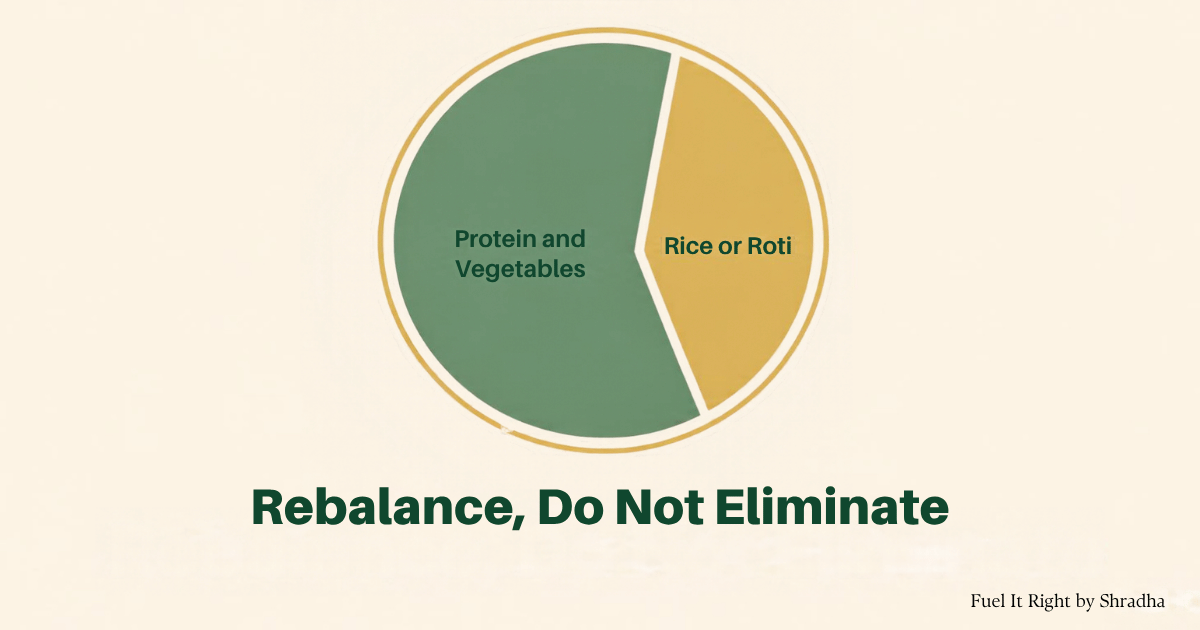
Lunch and dinner work well anchored the same way. A visible katori of dal, curd, or a protein side, a modest portion of rice or roti, and vegetables filling the rest of the plate.
None of this requires special ingredients or supplements. It is the same food already sitting in any Indian kitchen, just arranged with protein first instead of as an afterthought.
A Realistic, Food-First Way to Rebalance Carbs and Protein
First, anchor lunch and dinner around a visible protein portion and then fill the rest of the plate. Dal, curd, paneer, eggs and fish all fit well within an ordinary Indian kitchen. This is exactly the shift that the Indian diet and diabetes research points toward.
Reduce rice or roti portions gradually rather than cutting them out. A smaller portion eaten alongside more protein and vegetables tends to stick far longer than an all-or-nothing rule ever does.
None of this needs to happen overnight. Indian diet and diabetes risk builds up over years, so reversing the pattern works the same way, gradually.
Quick Check Look at your last three lunches. If protein was an afterthought rather than the anchor, that is the single easiest place to start rebalancing this week, not next month. |
Curious how your own eating pattern compares? Take the free Gut Health Quiz for a personalised starting point rooted in your actual plate, not a generic chart.
The Bottom Line on Indian Diet and Diabetes
The issue of Indian diet and diabetes risk is one of proportion rather than any villain food. The real pattern behind the numbers is that carbohydrates occupy most of the plate, with protein hardly showing up.
So, the fix is not dramatic. Add protein before you subtract carbohydrate, and let portions shift gradually. This is the same food-first logic behind why type 2 diabetes reversal is possible with the right approach. If you want a plan built around your own plate rather than a generic chart, book a consultation below.
Small, sustained changes beat dramatic short-term ones for Indian diet and diabetes outcomes specifically. Blood sugar patterns respond to consistency far more than intensity.
This is also the first in a series of posts that will examine Indian diet and diabetes from every angle – from specific foods to myths worth retiring. If you have a question you want answered directly, that is what this series is for.
Want a plan built around your own plate, not a generic chart?Book a consultation:
Frequently Asked Questions About Indian Diet and Diabetes
What Did the Latest Indian Diet and Diabetes Study Find?
A September 2025 analysis of India's national diabetes survey found that Indian diets average about 62 percent of daily calories from carbohydrates, well above what supports stable blood sugar, with protein sitting at just 12 percent. The survey's national scale is what makes the finding hard to dismiss as a fluke.
Is Sugar or Rice the Bigger Problem in Indian Diet and Diabetes Risk?
Not just sugar. The increase in overall carbohydrate intake was a stronger driver, but white rice in particular emerged as a standout, with the highest consumers facing up to a quarter higher risk across several metabolic conditions. That is the core Indian diet and diabetes insight this study delivers.
Does Switching to Whole Wheat Lower Indian Diet and Diabetes Risk?
Not on its own. The study found little meaningful difference in risk between white rice and whole wheat flour, since both are still carbohydrate-dominant. Whole wheat still offers more fibre, but reducing the overall carbohydrate proportion mattered more than which grain filled it.
What Single Change Lowers Indian Diet and Diabetes Risk Most?
Swapping some carbohydrate for protein (from plants, dairy, egg or fish) in this study reduced diabetes risk by nearly a fifth, more than any other single dietary change measured. This is likely because protein blunts the blood sugar spike a carbohydrate-heavy meal causes.
How Low Is Protein Intake in the Average Indian Diet?
National average protein intake sits at just 12 percent of calories, compared with a recommended 15 percent, with dairy and animal protein each contributing barely 1 to 2 percent of the average plate, a gap far below what most people assume.
Should I Cut Out Rice and Roti Completely?
Not necessarily. It is usually more effective to gradually reduce the amount of rice or roti and add a visible source of protein, rather than eliminate one of these staples altogether. This is because an all-or-nothing rule rarely lasts for more than a few weeks.
Are Urban Indians More at Risk Than Rural Indians?
Roughly one in three urban Indians are now classified as obese, compared with about one in five in rural India. That gap is central to how Indian diet and diabetes risk is distributed geographically, though the same shift is now reaching smaller towns too.
What Is the Simplest First Step to Rebalance My Plate?
Make a protein portion like with dal, curd, paneer, egg or fish the anchor of your lunch and dinner and fill the rest of the plate with a modest portion of rice or roti and vegetables. This one shift addresses the exact imbalance the research points to.
Shradha | Nutritionist & Dietitian | Fuel It Right