
Methi Seeds for Diabetes: What the Research Shows
What trials say about methi (fenugreek) seeds and blood sugar, how soaked seeds are used, and who should be careful.
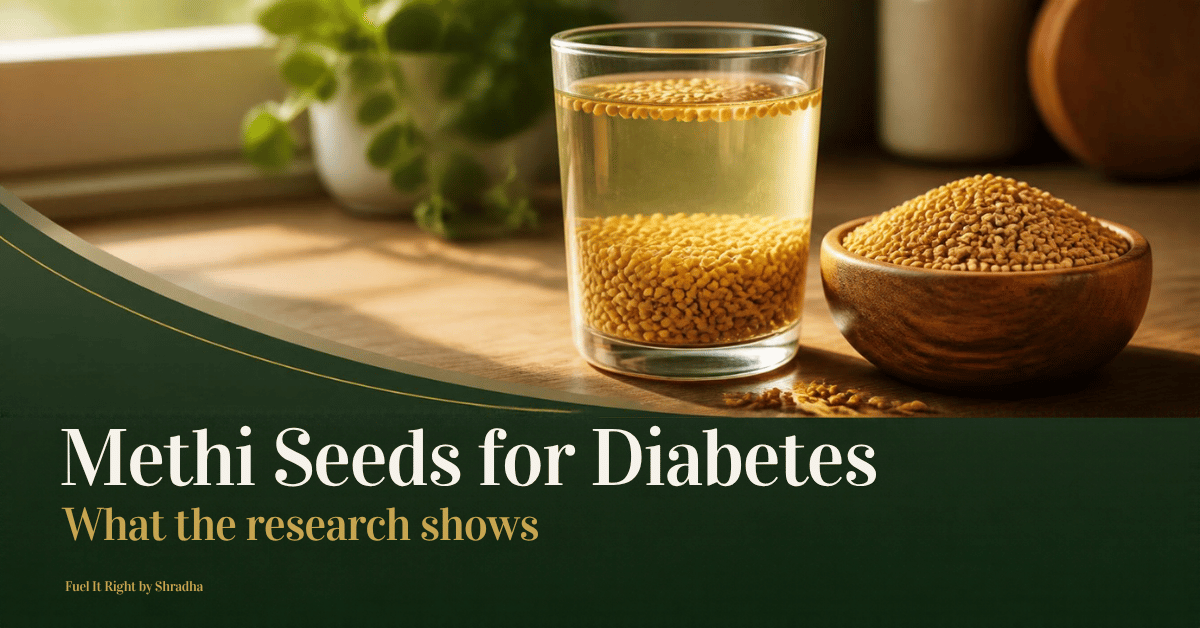
Table of Contents
• What the Research on Methi Seeds for Diabetes Shows
• The 2014 Review of 10 Trials
• The 2025 Review of 26 Trials
• A Trial From India
• Are Methi Seeds Safe for Diabetes?
• Is Methi Good for Diabetic Patients?
• Low Blood Sugar and Medicines
• Stomach Upset and Other Effects
• Who Should Be Careful
• How to Use Methi Seeds for Diabetes at Home
• The Soaked Seed Method
• Methi in Everyday Cooking
• Raw, Roasted or Sprouted Seeds
• Check Your Own Response
• What Matters More Than Methi
• The Bottom Line on Methi Seeds for Diabetes
• Frequently Asked Questions About Methi Seeds for Diabetes
Methi seeds for diabetes is one of the most common home remedies I am asked about. Almost every client has a relative who says, "Just soak a spoon of methi overnight and drink the water." Some swear by it. Others worry it is a myth.
Here’s the short answer. The research is promising, but not robust. Methi seeds may lower blood sugar a little, and they can be a useful food in your plan. But they are not a replacement for your medicines.
In this post on methi seeds for diabetes, I explain what the trials found, how much was used, what side effects to watch for, and how I suggest my clients use methi seeds in everyday cooking.
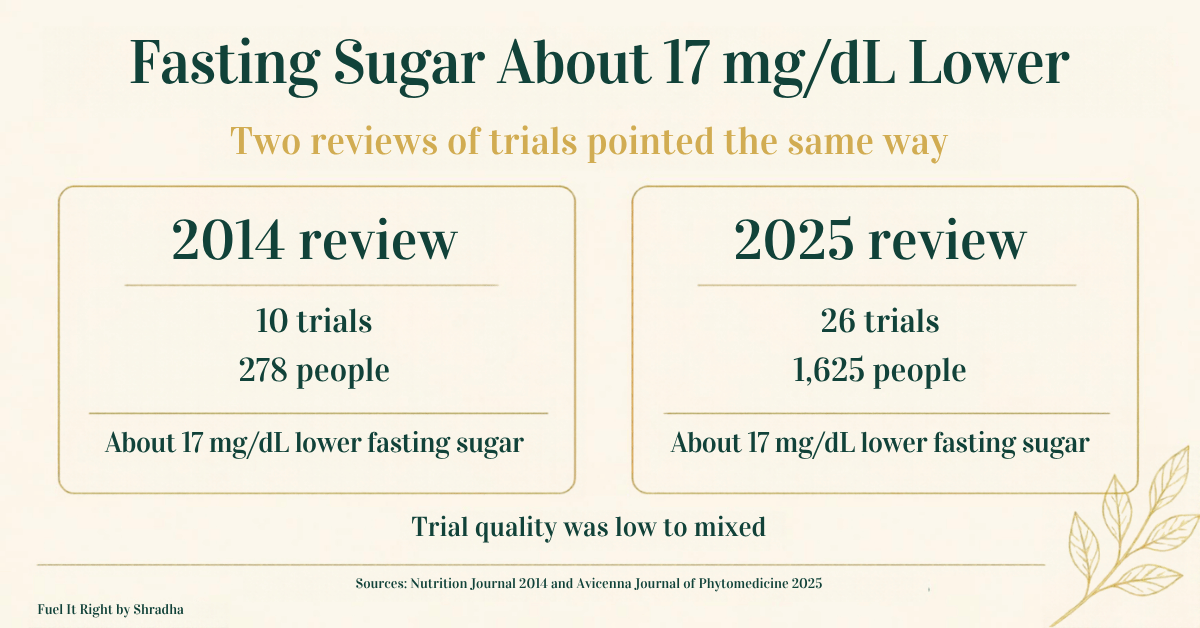
Key Takeaways • A 2014 review of 10 small trials found that methi seeds lowered fasting sugar by about 17 mg/dL and after-meal sugar by about 39 mg/dL. The trials were low quality, so treat the numbers as a hint, not a promise. • A 2025 review of 26 trials found fasting sugar about 17 mg/dL lower and HbA1c about 0.6 points lower. Results varied a lot from trial to trial. • In an Indian trial, 10 g of soaked seeds a day, on top of medicines, was linked to a better HbA1c after 6 months. The benefit only showed up late, from month 5. • Small amounts under 5 g a day showed no clear effect. Most useful doses were 10 g a day or more. • Stomach upset is the most common side effect. If you take diabetes medicines, tell your doctor first, because your sugar could drop too low. |
What the Research on Methi Seeds for Diabetes Shows
Methi is the Hindi name for fenugreek. The seeds are small, bitter and golden brown. They contain a lot of soluble fiber, which creates a gel in your gut and slows down how fast sugar gets into your blood. This is the most common explanation for why methi seeds for diabetes might help. It is a theory and I will be clear which parts have been tested.
The 2014 Review of 10 Trials
Researchers pooled 10 small trials with 278 people in total. Most people had type 2 diabetes. The doses ranged from 1 g to 100 g a day, and the trials ran from 10 to 84 days.
Fasting blood sugar was lower by 0.96 mmol/L, which is about 17 mg/dL. Sugar two hours after a glucose drink was lower by 2.19 mmol/L, about 39 mg/dL. HbA1c, your three-month average, fell by 0.85 points, but only three trials measured it.
The result was not the same for everyone. Doses below 5 g a day showed no clear effect. Powdered whole seed worked, while the extracts used at low doses did not. That matters for anyone thinking about methi seeds for diabetes in a pill form.
Now for the catch. The quality of the trial was generally poor, said the authors. Few explained how they assigned people to groups and it was often unclear whether medicines stayed the same during the trial. There was also a chance that small trials with good results were more likely to be published.
The 2025 Review of 26 Trials
A newer review pooled 26 trials with about 1,600 people. Some had type 2 diabetes. Others had other conditions or were healthy. The trials ran from 4 weeks to nearly 3 years.
Fasting sugar was about 17 mg/dL lower, and HbA1c was about 0.6 points lower. Both numbers are similar to the older review, which is reassuring. The biggest HbA1c drops were seen with 10 g a day or more, taken for 8 weeks or more.
There was a catch here too. The results varied a lot between trials, and many of them were of poor quality.
The paper was also an early online version, and some of its two-hour sugar figures did not match between sections. So I have left those out. Two reviews pointing the same way is a good sign, but the evidence on methi seeds for diabetes is still not solid.
A Trial From India
This one is close to home. In a hospital in Telangana, 60 adults with type 2 diabetes were split into two groups of 30. Both groups kept taking their usual medicines and got diet and exercise advice.
One group also had 10 g of fenugreek seeds a day, soaked in hot water and taken 30 minutes before a meal. This went on for six months.
There was no significant difference between the groups in the first four months. At month six, fasting sugar was 143 mg/dL in the methi group and about 154 mg/dL in the other group. HbA1c was 5.78 versus 6.96.
Two things to keep in mind. The study was small, and the patients knew which group they were in, which can nudge the results. And the benefit took months to show up. If anyone promises you a drop in sugar in a week, the research does not back that up for methi seeds for diabetes.
Shradha's Tip Judge methi by your three-month HbA1c, not by one morning reading. The trials suggest it may take months to see a change, if you see one at all. |
Are Methi Seeds Safe for Diabetes?
Methi is a food, and most people tolerate it well. Safety is the first question I ask about methi seeds for diabetes. A 2025 review looked at 60 articles on fenugreek side effects in humans and concluded it is generally safe, with mostly mild effects that pass on their own. Still, safe does not mean right for everyone. This is where the details matter.
Is Methi Good for Diabetic Patients?
For many diabetic patients, methi seeds are a reasonable food to add, as long as the dose is sensible and your doctor knows about it. The trials suggest a modest benefit, mostly at around 10 g a day. That is roughly two to three teaspoons of seeds, which is my kitchen estimate, not a number from the papers.
A modest benefit is the key phrase. In the Indian trial, people were still taking their medicines. Methi was an add-on, not a swap. Please do not stop or cut any medicine because you started methi.
Low Blood Sugar and Medicines
The safety review lists low blood sugar as a reported effect. This matters most if you take insulin or tablets that push sugar down. Methi could add to that effect.
Know the signs of a low: shakiness, sweating, sudden hunger, a pounding heart or feeling confused. If you notice them, check your sugar and tell your doctor. Ask whether your doses need a review before you start methi seeds for diabetes daily.
Stomach Upset and Other Effects
The most common problem is mild stomach discomfort, such as bloating, gas or loose motions. Starting with a small amount and building up usually helps. If you already have a sensitive gut, go slowly.
Allergy to fenugreek is rare, but case reports exist, including serious reactions. If you get a rash, swelling or breathing trouble, stop and get medical help. The review also notes a maple syrup smell in sweat or urine, which is harmless but can surprise people.
One reference in the review links a fenugreek herbal mix to an effect on a blood thinner, warfarin. So if you take blood thinners, speak to your doctor first.
Quality is also variable. Methi products sold as powders or capsules vary in strength and purity and a label does not always tell you how much is in there. That is one more reason I lean on plain whole seeds from the kitchen.
Who Should Be Careful
In pregnancy, large amounts of methi seeds are usually avoided. This is standard advice, not from these trials, so please ask your doctor. The same goes if you are breastfeeding, have a thyroid condition or have low potassium.
The studies I read did not follow anyone for more than six months, so long-term safety of daily high doses is unknown. I would rather say that than guess.
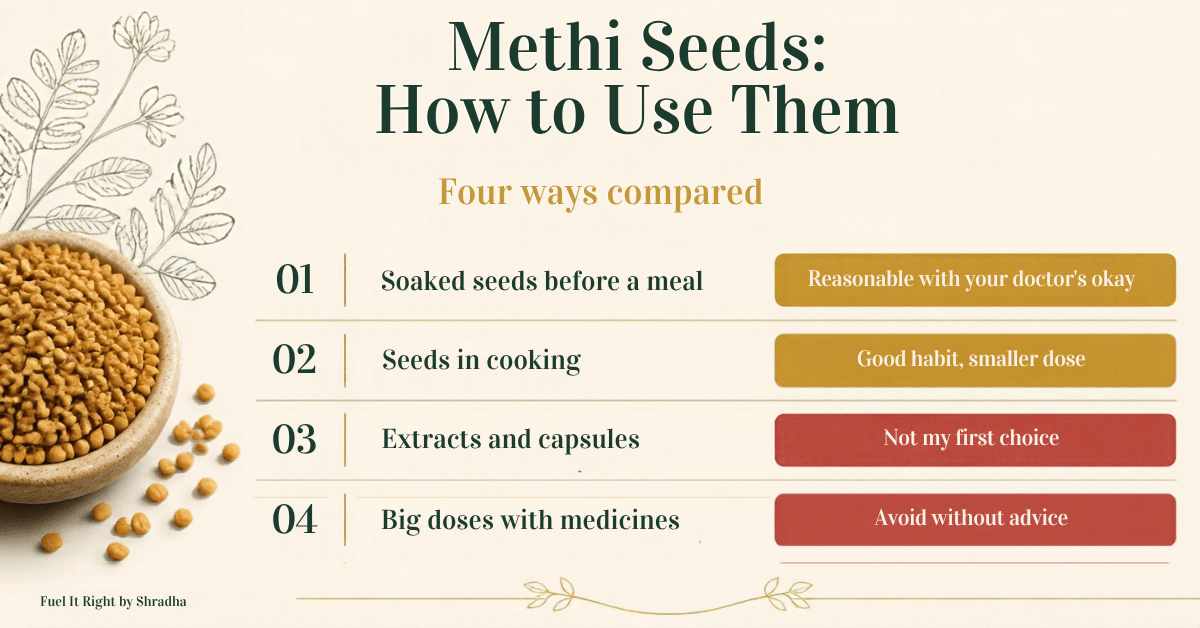
Soaked Seeds Before a Meal Reasonable, with your doctor's okay |
This is the method used in the Indian trial. The seeds soften and the fibre forms a gel. How to make it work: Start with half a teaspoon, then build up slowly. |
Seeds in Cooking Good habit, smaller dose |
Methi in dal, sabzi or roti adds fibre and flavour. I found no trial of cooked methi, so the effect is unknown. How to make it work: Use it as a flavour, not as a treatment. |
Extracts and Capsules Not my first choice |
The 2014 review found that low-dose extracts showed no clear effect. Doses and quality vary between products. How to make it work: I prefer food-first options, as with all my clients. |
Big Doses With Your Medicines Avoid without advice |
Large amounts may cause stomach trouble and may add to the effect of your medicines on blood sugar. How to make it work: Talk to your doctor before you raise the dose. |
WHAT YOU'VE HEARD Methi water can replace my diabetes medicines. |
WHAT'S ACTUALLY TRUE No trial shows this. In the Indian trial, everyone still took their usual medicines, and methi was an extra. The effect was modest and took months. |
How to Use Methi Seeds for Diabetes at Home
If your doctor is fine with it, here is how I suggest my clients try methi seeds for diabetes. None of this needs a special product, and all of it fits Indian cooking.
The Soaked Seed Method
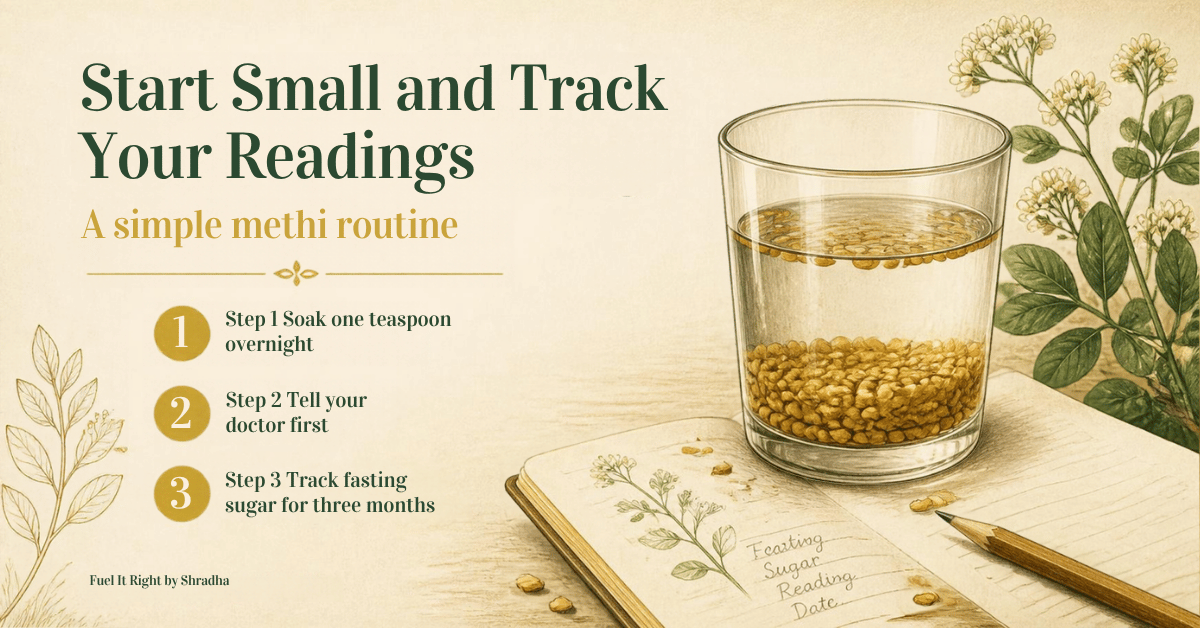
Soak a teaspoon of seeds overnight in a cup of water. In the morning drink the water and if you can, chew the soft seeds. The seeds are bitter so some people find it easier to mix them in to curd.
The Indian trial used 10 g soaked in hot water, taken 30 minutes before a meal. I suggest you work up to your own comfortable amount slowly, instead of starting at the full dose.
Chewing the soaked seeds gives you the fibre as well as the water. If the taste is too bitter, swallow them with a spoon of curd or a few sips of water, the way you would take a tablet.
Pick one routine and keep it steady. Trying three methi methods at once makes it hard to tell what is helping, and what is upsetting your stomach.
Methi in Everyday Cooking
You can also use methi in food. Add a pinch of seeds to your dal tadka, grind roasted seeds into a spice mix or add sprouted methi to a salad. fresh methi leaves in paratha or sabzi are a vegetable, they are a different thing from the seeds.
I want to be honest here. The trials used soaked or powdered seeds, not tadka. So cooking with methi is a healthy habit, but I cannot tell you it lowers sugar as the trials did.
Raw, Roasted or Sprouted Seeds
People often ask which form is best. The trials mostly used powdered or soaked raw seed, so that is the form with the most evidence. One reason may be that heat can change the taste and some of the fibre, but I have not seen a trial that settles this.
Roasting makes the seeds less bitter, which is good if you can’t stand the taste. Sprouting makes them milder and easier to chew. Both are fine to eat. Just remember that the research on methi seeds for diabetes was done on the plain seed, so the benefit of other forms is a guess.
Whatever form you choose, buy whole seeds from a shop you trust and store them in a dry, airtight jar. Old seeds that smell musty should go in the bin.
Check Your Own Response
If you test at home, note your fasting sugar for two weeks before you start. Then track it for a few months, and check your HbA1c at your next test. That is how you will know whether methi seeds for diabetes work for you.
Write down what else changed in that time, such as your medicines, your walking or your meals. If the numbers drop and your medicines are the same, that is a good sign. Share it with your doctor, so they can adjust your plan.
What Matters More Than Methi
Methi is a small helper, even if methi seeds for diabetes work well for you. The big levers are still your plate, your movement and your medicines. Eating vegetables and protein before carbs, walking after meals, and choosing whole grains do more than any one seed.
If you want to start there, read the post on walking after meals and the post on fruit.
Shradha's Tip Change one thing at a time. Start methi, and keep everything else the same for a few weeks, so you can see what the seeds are doing. |
The Bottom Line on Methi Seeds for Diabetes
There is fair but not brilliant evidence for methi seeds for diabetes. Two reviews found a small reduction in fasting sugar and HbA1c, mainly at around 10 g a day. The trials were small and mixed in quality, and it took months to see the benefit.
My view is simple. Methi is a fair food-first addition, not a treatment. Use it alongside your medicines, tell your doctor, start slowly and track your readings.
If you are following this series, you may also like sweeteners and Diwali sweets.
Want a plan that fits methi, your medicines and your own blood sugar readings?
Book a consultation:
Call or WhatsApp: +91 70570 63984 Or
Frequently Asked Questions About Methi Seeds for Diabetes
Do Methi Seeds Really Lower Blood Sugar?
They may, a little. Two reviews found about a 17 mg/dL drop in fasting sugar. The trials were small and varied, so the effect is modest and not guaranteed.
Is Methi Good for Diabetic Patients?
For many people methi seeds for diabetes are a reasonable addition, at a sensible dose and with your doctor's okay. It is an add-on to your medicines, not a replacement.
How Much Methi Should I Take Every Day?
The Indian trial used 10 g a day of soaked seeds, and the best effects in reviews were at 10 g or more. I suggest starting with half a teaspoon and working up slowly.
When Is the Best Time to Take Methi Seeds?
The Indian trial gave them 30 minutes before a meal. I suggest the morning soaked-seed routine because it is easy to keep up.
Can I Take Methi With Diabetes Medicines?
Many people do, but your sugar could drop too low. Tell your doctor before you start, and watch for signs of low blood sugar.
How Long Before Methi Seeds Work?
In the Indian trial, the difference only showed from month five. Do not expect changes in a week or two.
Does Methi Water Work as Well as the Seeds?
I didn’t see any trial using methi water alone. The trials used the seeds, soaked or powdered, so I would suggest chewing the soaked seeds as well.
Who Should Not Take Methi Seeds?
Be careful in pregnancy, while breastfeeding, with allergies to the plant family, or if you take blood thinners. Ask your doctor first.
Shradha | Nutritionist & Dietitian | Fuel It Right