
Millets and Diabetes: What the 2025 Data Actually Shows
A 2025 look at the real evidence on millets and diabetes: what a 12-study meta-analysis and a viral single-arm trial actually found, and why preparation matters more than the grain itself.
Table of Contents
• What the Research on Millets and Diabetes Actually Shows
• The Real Numbers Behind Millets and Diabetes
• The One Study Everyone's Sharing, and What It Actually Found
• Why 'Millet' Alone Doesn't Guarantee a Lower Blood Sugar Response
• Which Millet Preparations Actually Help
• Where the Millet Hype Gets It Wrong
• Why the Government Push Doesn't Settle the Science
• How to Actually Add Millets to an Indian Plate
• What This Means at Prediabetes vs Established Diabetes
• A Realistic Sample Day With Millets
• A Realistic Way to Start
• Who Should Be Extra Careful
• The Bottom Line on Millets and Diabetes
• Frequently Asked Questions About Millets and Diabetes
Millets and diabetes have become one of the most searched pairings in Indian nutrition right now. The government's Shree Anna push and a wave of social media claims both say millets can reverse diabetes on their own.
As a nutritionist, I am asked almost daily if switching to millets is enough to fix blood sugar. The honest answer is somewhere between the hype and the skepticism, and the research explains why.
This post delves into what the actual 2025 evidence on millets and diabetes really says. It looks at where the popular claims overreach, and how you can use millets in a way that really helps, not just appears healthy.
Key Takeaways • A 12-study meta-analysis found millets cut fasting blood sugar by 11.8% and post-meal blood sugar by 15.1%, a real, statistically significant effect. • HbA1c improvement across those same studies was not statistically significant, so millets are a helpful addition, not a proven cure. • Preparation changes everything: finger millet laddus scored a glycaemic index of 98.2, higher than white rice, while sorghum idli scored a moderate 61.3. • A viral 2025 study (100 patients, 6 weeks) showed strong fasting glucose and HbA1c improvement, but had no control group, and HDL cholesterol dropped too. • Millets work best replacing some rice or wheat within a balanced, protein-paired plate, not as a stand-alone fix or a medication substitute. |
What the Research on Millets and Diabetes Actually Shows
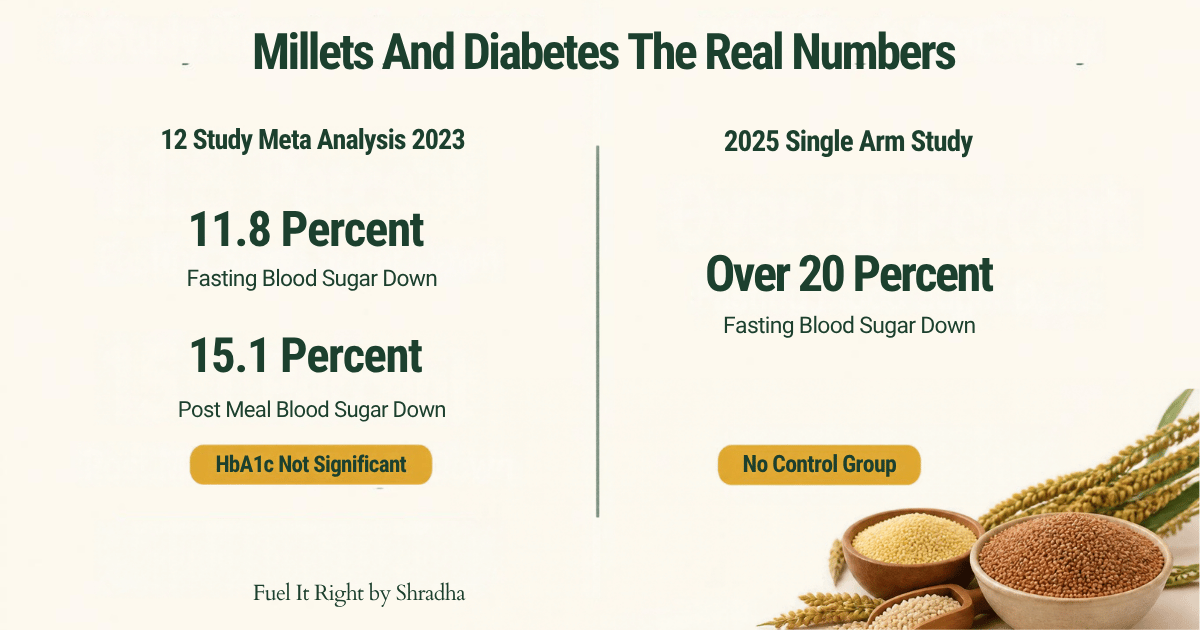
A systematic review and meta-analysis published in 2023 combined 12 studies, most of them from India, that directly examined the impact of millets on diabetes. The millet group experienced an average reduction in fasting blood sugar of 11.8 percent. That’s an actual, statistically significant effect, not a rounding error.
Post-meal blood sugar improved too. It dropped around 15.1 percent after meals that included millets, compared with control meals. Both changes held up across a range of study designs, which is what gives this finding real weight.
The Real Numbers Behind Millets and Diabetes
Here’s the part that rarely makes it into the WhatsApp forwards. The same meta-analysis found no statistically significant improvement in HbA1c, the three-month blood sugar average that doctors actually use to track diabetes control.
Researchers pointed to small sample sizes and short study durations as the likely reason. It is an honest gap in the millets and diabetes evidence base, not a reason to dismiss the findings entirely.
That gap still matters. Fasting and post-meal numbers moving in the right direction is genuinely encouraging. But HbA1c is the number that shows whether a change actually holds up over months, not just on the day you tested it.
The One Study Everyone's Sharing, and What It Actually Found
A more recent 2025 study followed 100 people with type 2 diabetes on a diet that included one millet meal per day for six weeks. Fasting blood sugar was down more than 20 percent, and HbA1c was also down significantly.
Those numbers explain why this particular study spread so fast online. What most shares leave out is the study design. There was no control group to compare against.
That means some of the improvement could reflect other changes people made alongside eating millets, not millets alone. Total cholesterol, triglycerides, and LDL all improved too.
The protective cholesterol, HDL, also fell. That’s a detail worth knowing before celebrating this study as an unqualified win for millets, and diabetes outcomes generally.
None of this means the study is worthless. It means treating one promising, uncontrolled study as settled proof is exactly the overreach that credentialed nutrition advice should call out, not repeat.
Shradha's Tip If you already track your fasting blood sugar at home, note the exact millet, preparation, and portion you ate before checking a genuine before and after. That tells you more about your own response than any national average can. |
Why 'Millet' Alone Doesn't Guarantee a Lower Blood Sugar Response
This is the piece that most millet content skips entirely. Millets and diabetes outcomes depend heavily on how the grain is prepared, not just which grain it is.
A 2022 study that measured the glycaemic index of common Indian foods put this gap in stark numbers. Finger millet made into laddus recorded a glycaemic index of 98.2, higher than most servings of white rice.
Sorghum roti scored 84.1, also a high number. Sorghum idli, by contrast, measured a far more moderate 61.3, and pearl millet roti came in at 70.1.
The researchers behind that study put it plainly. Being a whole grain does not automatically mean a lower glycaemic index. Processing, fermentation, and how finely a grain is ground all change how fast it raises blood sugar, sometimes more than the grain itself does.
That single fact is the piece most millets and diabetes content shared online leaves out entirely, treating the ingredient list as the whole story instead of just the starting point.
Here is how the most common millet preparations actually compare, based on the glycaemic index numbers above, rather than on how healthy a name sounds on a packet.
Which Millet Preparations Actually Help
Sorghum / Millet Idli, Dosa (fermented) GOOD (GI ~61) |
Fermentation slows the blood sugar response, similar to how fermented rice-and-lentil batter behaves. How to make it work: Pair with a protein-rich chutney (peanut, moong dal) rather than only coconut chutney. |
Pearl Millet Roti MODERATE (GI ~70) |
Comparable to most wheat roti, reasonable within a balanced meal, not a free pass to eat more of it. How to make it work: Treat portion like wheat roti, one to two, paired with dal or a protein side. |
Finger Millet Laddus / Millet Sweets HIGH CAUTION (GI ~98) |
Fine grinding plus added sugar or jaggery produces a fast blood sugar spike, despite the millet label. How to make it work: Treat as an occasional treat, not a diabetes-friendly snack, whatever the packaging claims. |
Fermented preparations seem to have the best shot. Fermentation gives a leg-up to the idli and dosa batters made with millet. That seems to reduce the blood sugar surge compared to unfermented flour converted straight to dough.
This lines up with what fermentation already does for regular rice and lentil idli batter. Rotis sit in the middle of the scale. Pearl millet roti at 70.1 is comparable to many wheat preparations.
That makes it reasonable as part of a balanced plate, not a free pass to eat more of it than you would rice or wheat.
Where the Millet Hype Gets It Wrong
Millet laddus, millet-based sweets, and heavily processed millet snacks marketed as healthy are where the gap between perception and reality is widest.
Although both are made from the same grain, a laddu made of finely ground grain mixed with sugar or jaggery will generate a very different blood sugar response than a fermented idli batter.
This is not a reason to avoid millets. It is a reason to judge the preparation, not just the ingredient list. Millets and diabetes claims that skip preparation are missing the actual mechanism.
WHAT YOU'VE HEARD Millets are a natural cure for diabetes and can replace medication. |
WHAT'S ACTUALLY TRUE Millets can meaningfully improve fasting and post-meal blood sugar as part of a balanced plate, but current evidence does not support them reversing diabetes on their own or replacing prescribed treatment. |
Why the Government Push Doesn't Settle the Science
India's official mission to promote millets, called Shree Anna, has done a lot of good for farmers and for reviving grains that had fallen out of everyday use. That’s separate from what the evidence shows for diabetes specifically.
With over 101 million Indians now living with diabetes, it makes sense that any grain positioned as a fix spreads fast. That scale of demand is exactly why the evidence deserves a closer look, not a faster one.
A government nutrition campaign is not the same as a clinically proven treatment, even if they are talked about as if they were. Millets and diabetes deserve to be evaluated on the research alone, not on how much a grain is being promoted this year.
How to Actually Add Millets to an Indian Plate
The research on millets and diabetes is genuinely encouraging in one specific context. It works when millets replace some rice or refined wheat within an otherwise balanced plate.
It does not work as a stand-alone fix layered on top of the same eating pattern. Start with one meal a day rather than switching everything at once.
A millet roti or a millet-based fermented breakfast in place of your usual grain is enough to see how your own body responds before expanding further.
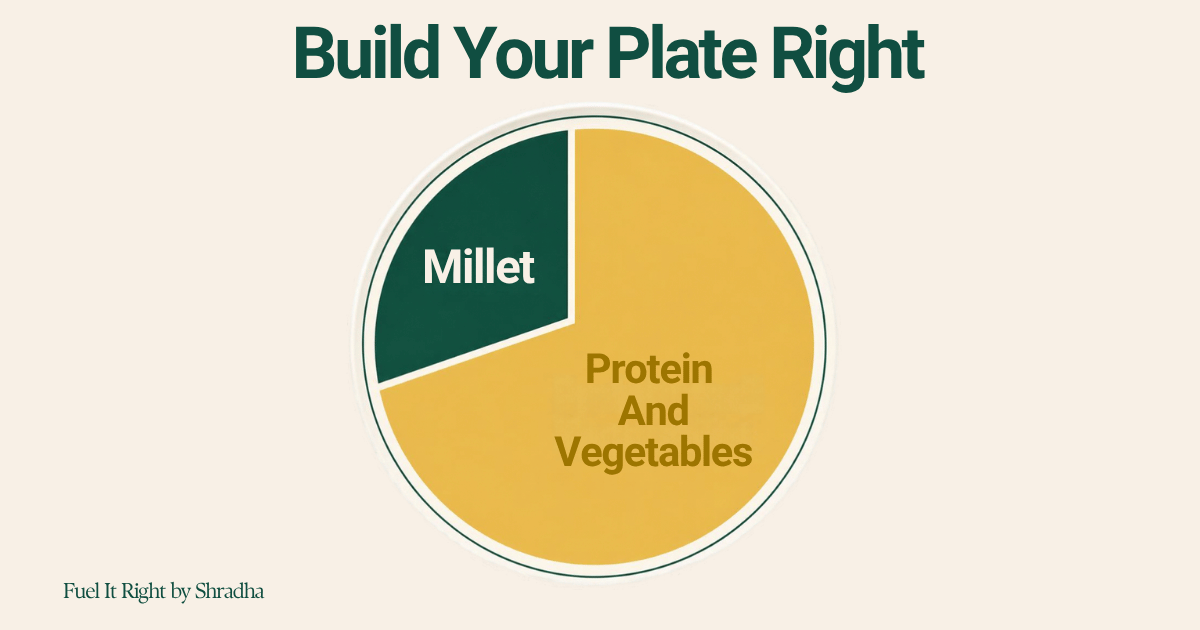
Pair millets with protein and vegetables as you would rice or wheat. Millets and diabetes benefits mostly manifest within a balanced plate, not in isolation. A pearl millet roti with dal, curd or a protein side blunts its blood sugar impact far more than eating it alone.
What This Means at Prediabetes vs Established Diabetes
This distinction matters more than most millet content admits. At the prediabetes stage, a genuine dietary shift like this one can meaningfully change the trajectory, the same reversibility window this diabetes series has covered before.
Once diabetes sets in, millets and diabetes management is best pursued as part of a broader plan that includes medication, rather than as a substitute for it. The evidence presented here indicates improvement rather than reversal.
A Realistic Sample Day With Millets
Breakfast built around millet dosa or idli, with a protein-rich chutney like peanut or moong dal, covers the fermentation advantage and the protein pairing in one meal, the same lower-GI logic already established for idli and dosa (Blog 89).
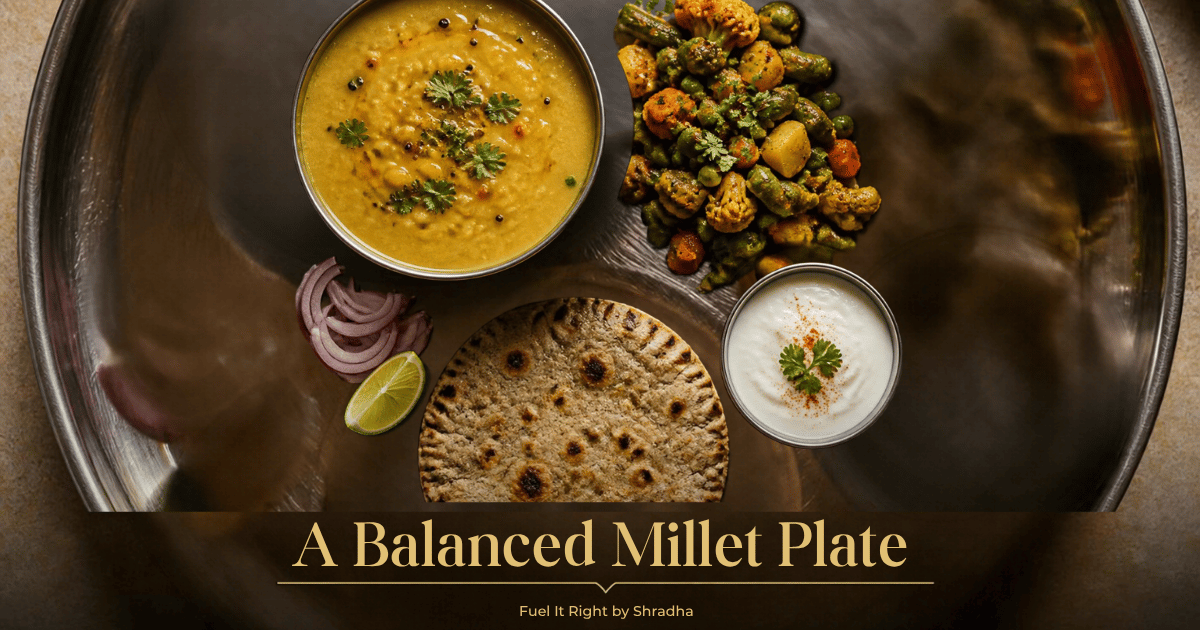
Lunch can anchor around a pearl millet or jowar roti alongside dal, a vegetable side, and curd, the same balanced-plate structure that matters for rice too.
It is not necessary to have a millet in every dinner everyday. Alternating between millets, rice and wheat throughout the week rather than having millets in every meal is what is important.
A Realistic Way to Start
Give any swap two to three weeks before judging the effect. Blood sugar responses to a dietary change are rarely visible after a single meal.
Judging millets and diabetes outcomes from one day's numbers sets up disappointment either way, whether the number looks good or bad on day one.
Who Should Be Extra Careful
Millets are not a substitute for prescribed diabetes medication. Do not stop or reduce medication, because millets are included in the diet, this is not a decision to make without your doctor.
Food changes support treatment, they do not replace it. Anyone managing kidney disease alongside diabetes should also check with their doctor before increasing millet intake significantly, since some varieties carry more potassium than rice or wheat.
Quick Check Look at your last three meals that included a grain. If it was rice or wheat every single time, that is the easiest place to try one millet swap this week, not a full overhaul. |
Curious how your own eating pattern compares? Take the free Gut Health Quiz for a personalised starting point rooted in your actual plate, not a generic chart.
The Bottom Line on Millets and Diabetes
Millets and diabetes is a real, evidence-based relationship, just not the miracle-cure version that is floating around online. The fasting and post-meal blood sugar improvements are real.
HbA1c evidence is still thin, and preparation changes the outcome as much as the grain itself does. Used well, replacing some rice or refined wheat with a fermented millet preparation fits the same food-first pattern this series keeps coming back to (Blog 119).
Used carelessly, as a laddu eaten because it says millet on the label, it can do the opposite of what people expect. If you want a plan that accounts for which millets, how much, and how they fit your own blood sugar pattern, book a consultation below.
This is the second post in a series on Indian diets and diabetes. This is exactly what this series is for, if there is a particular food or myth you would like to see examined next with the same level of scrutiny.
Want a plan that accounts for which millets, how much, and how they fit your blood sugar pattern?
Book a consultation:
Frequently Asked Questions About Millets and Diabetes
Do Millets Actually Help With Diabetes?
Yes, in a real but limited way. A meta-analysis of 12 mostly Indian studies found millets reduced fasting blood sugar by an average of 11.8 percent and post-meal blood sugar by about 15.1 percent. HbA1c improvement was not statistically significant, so treat millets and diabetes management as a helpful addition, not a cure.
Can Millets Replace Rice Completely for Diabetes Management?
They do not need to. The research supports replacing some rice or refined wheat with millets within a balanced plate, not eliminating rice entirely. Portion and pairing with protein matter as much for millets and diabetes control as they do for rice.
Which Millet Preparation Is Best for Diabetes?
Fermented preparations like sorghum idli or dosa, with a glycemic index of about 61, do better than unfermented millet flour, cooked as roti or ground fine for sweets. The preparation matters more than the specific millet you opt for.
Are Millet Laddus and Millet Snacks Good for Diabetics?
Not automatically. Finger millet ground fine for laddus scored a glycaemic index of 98.2 in testing, higher than typical white rice, because fine grinding combined with added sugar spikes blood sugar fast despite the millet label.
Can Millets Replace My Diabetes Medication?
No. Millets can be part of an overall food-first pattern to help manage blood sugar, but there is no current evidence to support them replacing prescribed diabetes medication. Any medication changes should go through your doctor, not a dietary swap.
How Much Millet Should I Eat Per Day for Diabetes?
Start with one meal a day, such as a millet roti or fermented millet breakfast in place of your usual grain, rather than switching all meals at once. This lets you see your own response before expanding further.
Do Millets Have Side Effects for People With Kidney Disease?
Some types of millet contain more potassium than rice or wheat, which is particularly important for people managing kidney disease along with diabetes. Consult your doctor before significantly increasing millet intake if kidney function is a concern.
How Long Before Millets Show an Effect on Blood Sugar?
Give any millets and diabetes swap two to three weeks before judging its effect, rather than expecting a visible change after a single meal. Fasting and post-meal blood sugar responses build with consistency, not a one-time swap.
Shradha | Nutritionist & Dietitian | Fuel It Right