
Fruit and Diabetes: What the Research Shows
What large studies and trials say about mango, banana, grapes and fruit juice for people with diabetes, how much fruit is fine, and how to eat it.
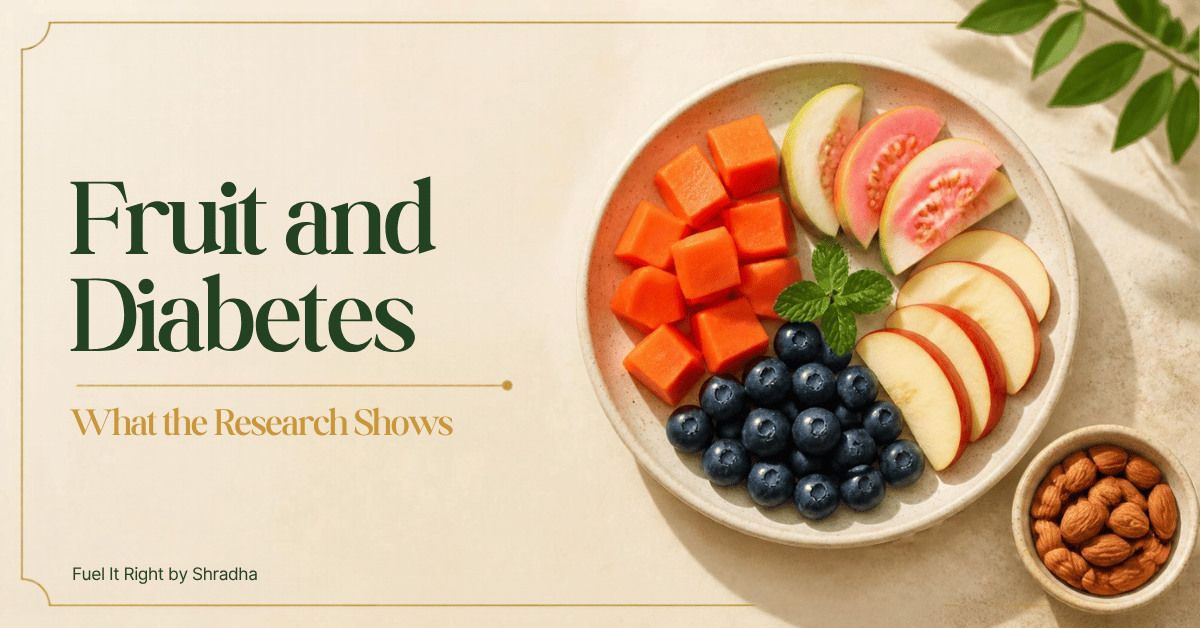
Table of Contents
• What the Research on Fruit and Diabetes Shows
• What Large Studies Found
• What Happens When You Cut Fruit Back
• Why Juice Is a Different Story
• Mango, Banana, Grapes and Juice Compared
• Mango
• Banana
• Grapes and Dried Fruit
• Mistakes I See Most Often
• Who Should Be More Careful
• How to Eat Fruit if You Have Diabetes
• Keep to One Portion at a Time
• Pair Fruit With Protein or Nuts
• Choose Whole, Not Blended
• What a Real Day Looks Like
• The Bottom Line on Fruit and Diabetes
• Frequently Asked Questions About Fruit and Diabetes
Fruit and diabetes is the question I hear most from clients and it usually comes with fear. Can I eat mango? Is banana bad? Should I stop fruit completely? Many people have been told to cut fruit out and they miss it.
Here is the short answer. Whole fruit is not the enemy. Fruit juice is a different story, and portion size matters more than the fruit you pick.
Social media makes this sound simple, either "fruit is just sugar" or "fruit is always healthy". Neither is quite right. I would rather show you what the studies actually found.
This post covers what research says about fruit and diabetes, how mango, banana, grapes and juice compare, and how to fit fruit into your day without a sugar spike.
Key Takeaways • In a very large study, people who ate blueberries, grapes or apples at least twice a week had up to 23 percent lower risk of type 2 diabetes. • People who drank fruit juice every day had up to 21 percent higher risk. • In a 12-week trial of people with new type 2 diabetes, eating more fruit did not make blood sugar or weight worse. • An Indian pilot study found that mango raised blood sugar about the same as white bread, not more. • Portion size and what you eat the fruit with matter more than which fruit you pick. |
What the Research on Fruit and Diabetes Shows
Fruit contains natural sugar, so it is reasonable to ask if it is safe. The good news is that researchers have done a lot of research on fruit and diabetes. Some studies follow large groups over many years, and other studies test fruit in people who already have diabetes.
What Large Studies Found
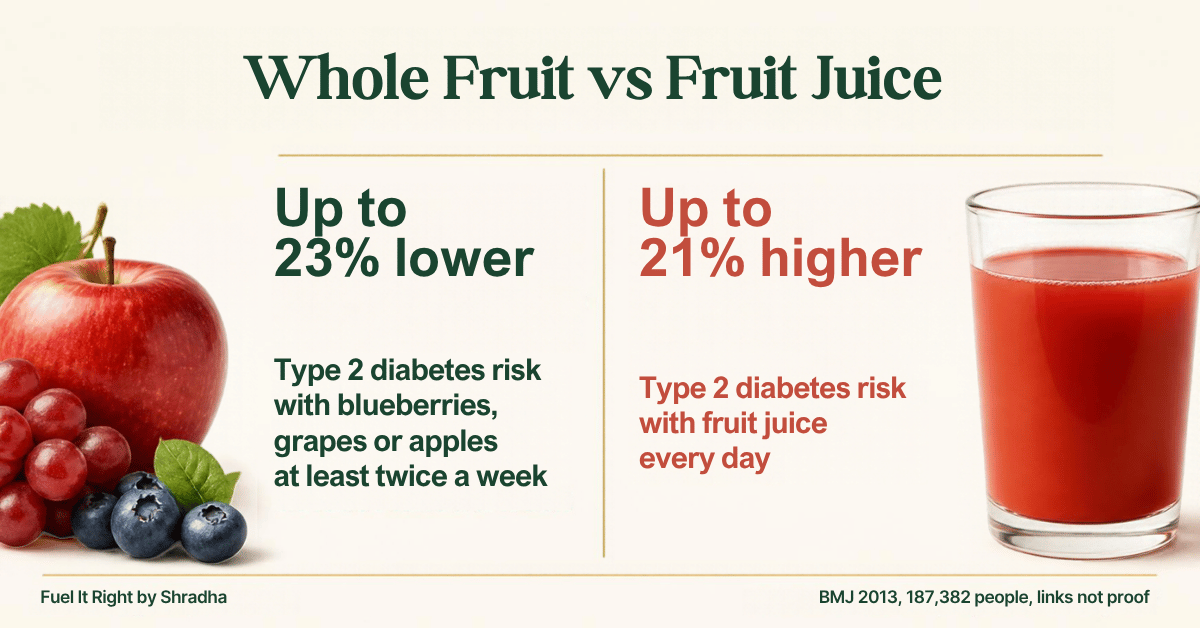
A study published in the BMJ in 2013 followed 187,382 people in the United States for up to 24 years. During that time, 12,198 of them developed type 2 diabetes. Researchers tracked what they ate.
People who ate at least two servings a week of blueberries, grapes or apples had up to 23 percent lower risk of type 2 diabetes, compared with people who ate them less than once a month.
This is a study that looks at people, not one that recommends diets. It shows a correlation , not proof. Other habits, such as people who eat fruit also exercise more, cannot be ruled out in studies like this. But the correlation held up in a large group over many years, so it’s hard to dismiss.
Those fruits are not special because of low sugar. The researchers looked at how fast each fruit raises blood sugar, and it did not explain the result. Fibre and plant compounds in whole fruit may play a part.
What Happens When You Cut Fruit Back
Large studies cannot tell us what happens if someone who already has diabetes eats more or less fruit. For that, we need a trial.
In a 12-week trial, 63 overweight adults with newly diagnosed type 2 diabetes received diet advice. One group was asked to eat at least two pieces of fruit a day. The other was asked to eat no more than two.
The high fruit group consumed about 125 more grams of fruit a day. The low fruit group consumed about 51 less grams. Blood sugar, measured by HbA1c, improved in both groups and the difference between the two was small and not meaningful. There was no difference in weight or waist size either.
The authors concluded that people with diabetes do not need to be told to cut back on fruit. That is a useful message for anyone worried about fruit and diabetes. This was a small trial, so I take it as reassuring, not final. It fits what I see in my clients, where cutting fruit out rarely helps and often backfires.
Why Juice Is a Different Story
In the same BMJ study, those who drank fruit juice at least once a day had up to 21 percent higher risk of type 2 diabetes, with juice and whole fruit on opposite sides of the equation.
The reason is easy to understand. A glass of juice is the sugar of several fruits with the fibre removed. It goes down fast, it does not fill you up, and your blood sugar rises quickly.
The researchers also estimated that swapping three servings of juice a week for whole fruit was linked to about 7 percent lower risk. So the first change for fruit and diabetes is simple. Eat the fruit, skip the glass.
Shradha's Tip If you like fruit juice, treat it like a sweet, not a drink. Keep it for rare occasions and have a whole fruit most days instead. |
Mango, Banana, Grapes and Juice Compared
Most questions on fruit and diabetes are about specific fruits, so here is how I see the four that come up most. Each depends on portion and timing, not just the fruit.
Mango
Mango is the one my clients fear the most. A pilot study conducted in India funded by ICMR tested 95 adults, 45 of them with type 2 diabetes. They ate Safeda, Dasheri or Langra mango on one day and white bread or glucose on another.
In people with diabetes, mango raised blood sugar about the same as white bread. Sensor readings over the day looked lower after mango than after bread, though most of those gaps were small enough to be chance. One measure of blood sugar swings was clearly lower after mango.
The authors suggest mango can be good for type 2 diabetics if portion size is managed. This was a pilot, so consider it a hopeful first signal. My advice is to stick to a small slice or half a cup, not a whole mango, and not on an empty stomach.
Banana
Banana is higher in sugar than papaya or guava, but it can still fit. The ripeness matters. A firm, slightly green banana has more starch that digests slowly. A very ripe, spotty banana has more sugar and raises blood sugar faster.
This part is standard nutrition knowledge, not something I tested in a trial for this post. Choose a small banana, eat half if your readings run high, and pair it with nuts or curd. If you have kidney disease, ask your doctor first, because banana is rich in potassium.
Grapes and Dried Fruit
Grapes were one of three fruits associated with lower risk in the BMJ study. They’re easy to overeat, though, because they’re small and you keep going back for more. Count out a small bowl, about a cupped handful, and stop there.
Dried fruit is a different matter. Raisins, dates and dried figs are fruit with the water taken out, so the sugar is packed into a small space. A few raisins are fine. A big handful adds up quickly.
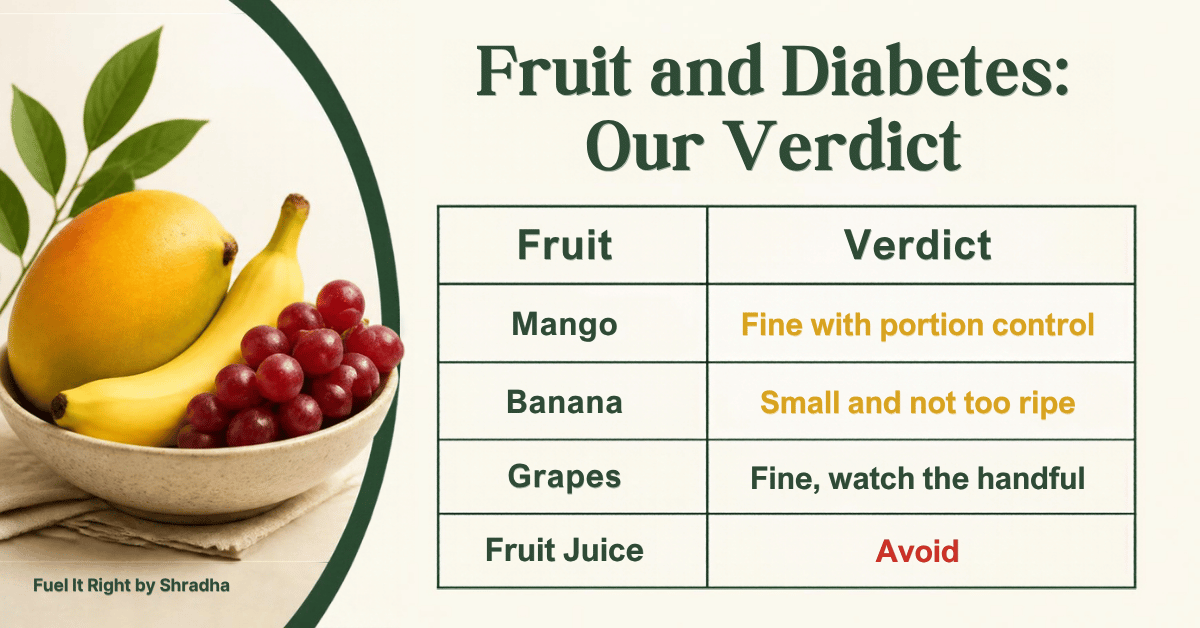
Mango Fine with portion control |
In an Indian pilot study, mango raised blood sugar about the same as white bread in people with type 2 diabetes. How to make it work: Have a small slice or half a cup, with a meal, not alone. |
Banana Small and not too ripe |
Riper bananas have more sugar. Firmer ones digest more slowly. How to make it work: Pick a small, firm banana and pair it with nuts or curd. |
Grapes Fine, watch the handful |
Grapes were linked to lower diabetes risk in the BMJ study, but they are easy to overeat. How to make it work: Count out a cupped handful before you start eating. |
Fruit Juice Avoid |
Juice has the sugar of several fruits and none of the fibre. Daily juice was linked to higher diabetes risk. How to make it work: Eat the whole fruit instead. |
Mistakes I See Most Often
The first mistake? Cutting out fruit entirely and then treating yourself to sweets later because you’ve built up so many cravings. The second? Swapping fruit for juice because it’s more convenient, or “healthier,” for a busy morning.
The third is eating a huge bowl of "safe" fruit in one go. Even good fruit can push your sugar up when the portion is big. When clients get fruit and diabetes right, they usually did not change the fruit. They changed the amount and the timing.
The fourth is judging a fruit by a single bad reading. One high number after a mango may be about the whole meal, your sleep, or stress that day. Look for a pattern across several days before you ban anything.
Who Should Be More Careful
Some folks need to be wary of fruit with diabetes, so I want to be clear who. If your blood sugar is soaring at the moment, start with smaller portions and see how you do. If you have kidney disease, some fruits are high in potassium, so check with your doctor.
If you take insulin or tablets that can cause low blood sugar, tell your doctor before you change how much fruit you eat. Your dose is matched to your usual meals.
WHAT YOU'VE HEARD Fruit is just sugar, so people with diabetes should avoid it. |
WHAT'S ACTUALLY TRUE Whole fruit comes with fibre, water and plant compounds. In the trials, eating whole fruit did not worsen blood sugar and was linked to lower diabetes risk. |

How to Eat Fruit if You Have Diabetes
Now that you know fruit is safe, the next question is how to eat it. You don’t need a special fruit list. You need a few habits you can repeat. Here is how I set up fruit and diabetes with my clients.
Keep to One Portion at a Time
A good portion is about 100 to 150 grams, roughly one cupped hand of cut fruit or one small whole fruit. This is my working rule from practice, not an official limit.
The ICMR dietary guidelines suggest at least 100 grams of fruit a day. I read that as a floor to build on, not a ceiling. Two portions spread across the day work well for most people.
Pair Fruit With Protein or Nuts
Fruit eaten alone digests quickly. Fruit eaten with protein, nuts or curd digests more slowly, so the blood sugar rise is gentler. The same logic is behind the eating order post in this series.
Try an apple with a few almonds, papaya after an egg breakfast, or guava with a bowl of curd. These pairings are easy and filling.
Choose Whole, Not Blended
Another small point is the way you eat it. Whole fruit takes longer to chew, and it keeps its fiber. Juice and smoothies break that fiber down, and make the sugar easier to absorb. If you blend, keep the pulp and add curd or seeds, but whole fruit is still the better choice for fruit and diabetes.
What a Real Day Looks Like
Here is a simple pattern. At breakfast, have an egg or sprouts, with a few slices of papaya. Mid-morning, an apple with a small handful of nuts.
In the afternoon, a guava or a small bowl of berries. In mango season, swap one of these for a small slice of mango with lunch, not a second dessert on top of it.
This is a pattern, not a prescription. Your portions depend on your medicines, activity and blood sugar numbers. The goal is to enjoy fruit and diabetes together, without fear.
Shradha's Tip Test your own reading two hours after a new fruit. Your body is the best evidence you have. If the number stays in your target range, that fruit is likely fine at that portion. |
Some fruit can cause bloating if your gut is sensitive. If that sounds like you, the Gut Health Quiz is a good place to start.
The Bottom Line on Fruit and Diabetes
Fruit and diabetes can work together. The studies say whole fruit is safe and even beneficial, and juice is the one to avoid. Portion size, ripeness and pairing do most of the work.
If you are following this series, the earlier posts on rice, millets, intermittent fasting, jaggery vs sugar, sweeteners and eating order cover the other pieces of eating well with diabetes.
My advice is simple. Pick one fruit you enjoy, eat a small portion with a meal, and check your reading two hours later. Share what you see with your doctor.
Want a fruit plan built around your own blood sugar readings and the fruits you actually enjoy?
Book a consultation:
Frequently Asked Questions About Fruit and Diabetes
Can I Eat Mango if I Have Diabetes?
Yes, in small amounts. An Indian study found that mango raised blood sugar levels about the same as white bread in people with type 2 diabetes. Stick to a small slice or half a cup with a meal, and check your own reading.
Is Banana Bad for Diabetes?
No, but size and ripeness matter. A small, firm banana is a better pick than a large, very ripe one. Pair it with nuts or curd, and ask your doctor if you have kidney disease.
What Is the Best Fruit for Diabetes?
Good everyday choices include berries, apples, guava, papaya and pears. Blueberries, grapes and apples were associated with lower risk in the BMJ study. The best fruit is one you like in a reasonable portion.
Is Fruit Juice Okay for Diabetes?
I suggest avoiding it. Daily juice was linked to up to 21 percent higher risk of type 2 diabetes. Whole fruit gives you the fibre that juice loses.
How Much Fruit Can I Eat in a Day?
Most of my clients do well with two portions a day, each about 100 to 150 grams, spread across the day. That is my practice, not a fixed rule. Your numbers decide the final amount.
Is Dried Fruit Safe for Diabetes?
Only in small amounts. Dried fruit crams the sugar of several fresh pieces into a small handful. A few raisins or one date is very different from a big handful.
Is It Okay to Eat Fruit at Night?
There is no strong research that fruit at night is harmful. What matters more is the portion and what you eat it with. A small bowl of papaya or guava after dinner is usually fine.
Should I Avoid Fruit if My Sugar Is High?
You do not need to stop. Cut the portion, pair it with protein or nuts, and avoid juice for now. If your readings stay high, speak to your doctor about your overall plan instead of dropping fruit.
Is Fruit Sugar Different From Table Sugar?
Yes. The sugar in fruit is combined with fiber and water, so the sugar is absorbed more slowly and you are filled up. Table sugar and juice don't have that buffer. That's why fruit and diabetes is not as much of a worry as sugar and diabetes.
Shradha | Nutritionist & Dietitian | Fuel It Right