
PCOS, PMOS and Thyroid: Why They Come Together
PCOS, PMOS, and thyroid conditions share the same metabolic root and keep showing up together. 1 in 5 Indian women with PMOS also has subclinical hypothyroidism. Here is why and what to do.
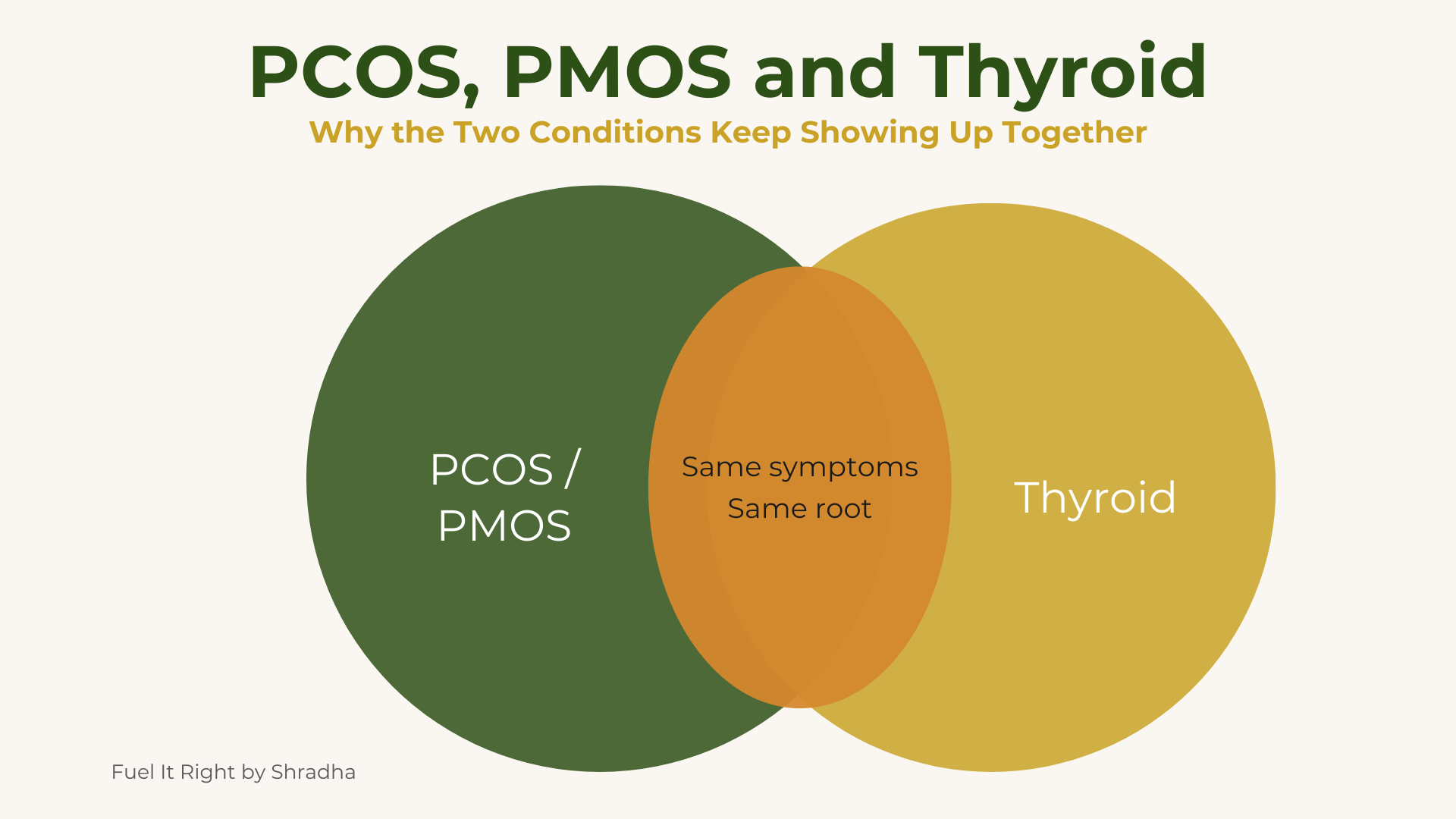
Table of Contents:
1. The Consultation That Confuses Millions of Indian Women.
2. Why PCOS/PMOS and Thyroid Share the Same Metabolic Root.
3. How Each Condition Makes the Other Worse.
4. The Symptom Overlap: Why It Is So Hard to Tell Them Apart.
5. What Your Blood Tests Are Not Catching.
6. The Gut Connection Nobody Mentions.
7. What Indian Food Does for Both Conditions Simultaneously.
8. Conclusion.
9. FAQs.
The Consultation That Confuses Millions of Indian Women
PCOS/PMOS and thyroid conditions are the two most common endocrine disorders in Indian women of reproductive age. They share so many symptoms that women are routinely diagnosed with one while the other goes undetected, sometimes for years.
Here is a conversation that happens in gynaecology consultations across India every day. A woman presents with fatigue, weight she cannot shift, hair falling out, irregular periods, and acne. The doctor runs a hormonal panel. Either PCOS comes back or the thyroid is flagged. She is treated for one. The other continues unaddressed. The symptoms improve partially. She is told to be patient.
It is often both. And treating only one while the other continues is why so many women with PCOS and thyroid conditions never fully recover.
A 2026 study from South India published in PubMed confirmed that subclinical hypothyroidism is a common and metabolically relevant comorbidity in women with PCOS, aggravating insulin resistance and dyslipidemia. An Indian cross-sectional study of 139 PCOS patients found hypothyroidism prevalence of 20.87%. Approximately 1 in 5 Indian women with PCOS or PMOS also has a thyroid condition. Most are treated for only one.
Why PCOS/PMOS and Thyroid Share the Same Metabolic Root
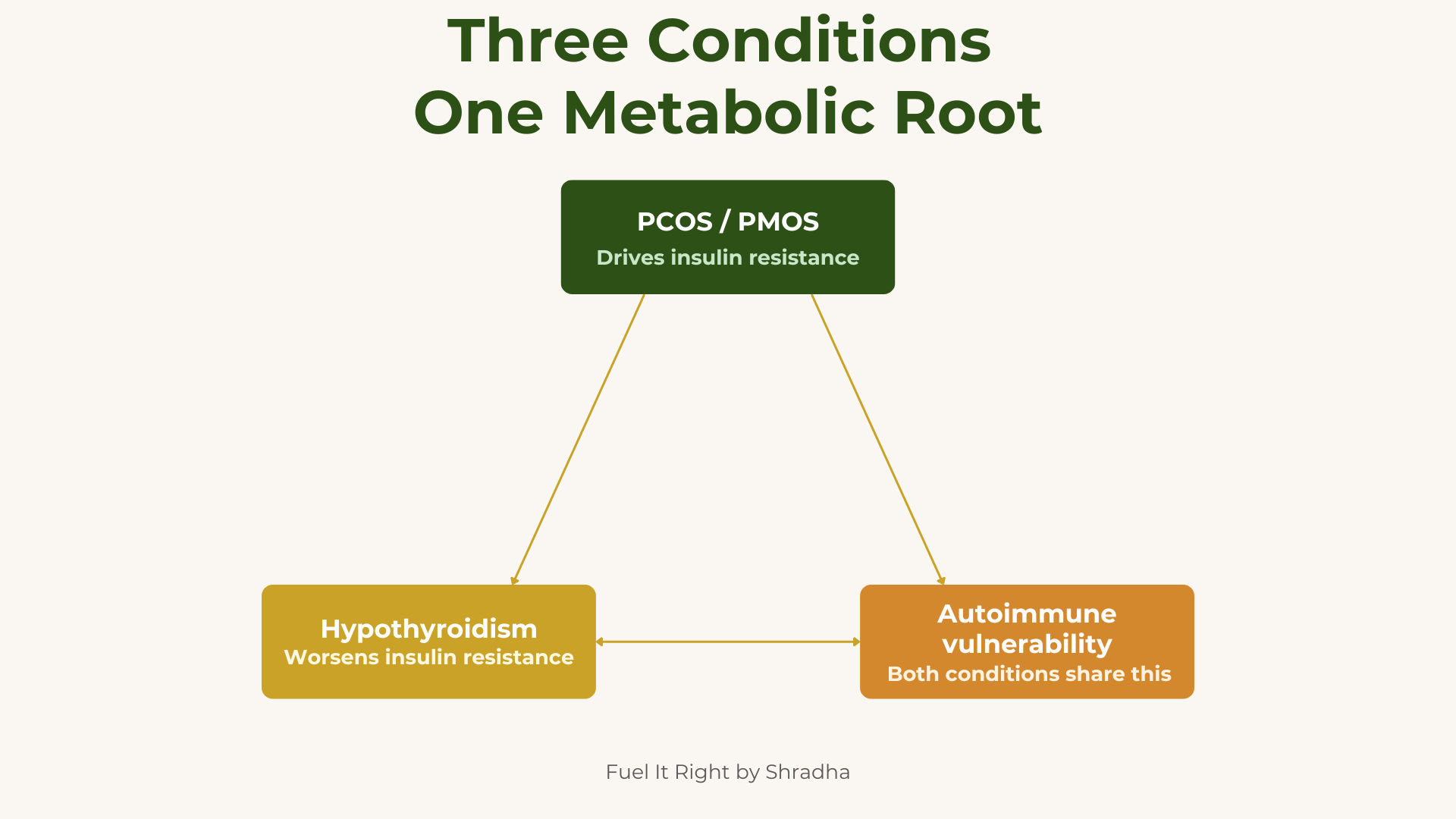
The reason PCOS/PMOS and thyroid conditions co-occur so frequently is not coincidence. They share metabolic and immunological roots that make the development of one significantly more likely when the other is present.
The Autoimmune Connection
PMOS is associated with a high incidence of autoimmune thyroiditis, specifically Hashimoto's thyroiditis, the most common cause of hypothyroidism. Decreased progesterone levels in women with PMOS may increase susceptibility to autoimmune conditions. The immune dysregulation that allows the body to attack its own thyroid tissue is more common when the hormonal environment of PMOS is present.
This is why the polyendocrine framing of PMOS matters. It is not just insulin, androgens, and the ovaries. The endocrine system is a network. When one node is disrupted, others follow. For more on the metabolic root, see the blog on PMOS as a metabolism problem.
Insulin Resistance as the Common Thread
Both PMOS and hypothyroidism independently worsen insulin resistance. When both conditions are present simultaneously, insulin resistance is significantly more severe than with either condition alone. The thyroid hormones, T3 and T4, regulate the speed of metabolic processes throughout the body. When thyroid function is low, glucose uptake in cells slows, insulin sensitivity decreases, and the insulin resistance already driven by PMOS deepens further.
How Each Condition Makes the Other Worse
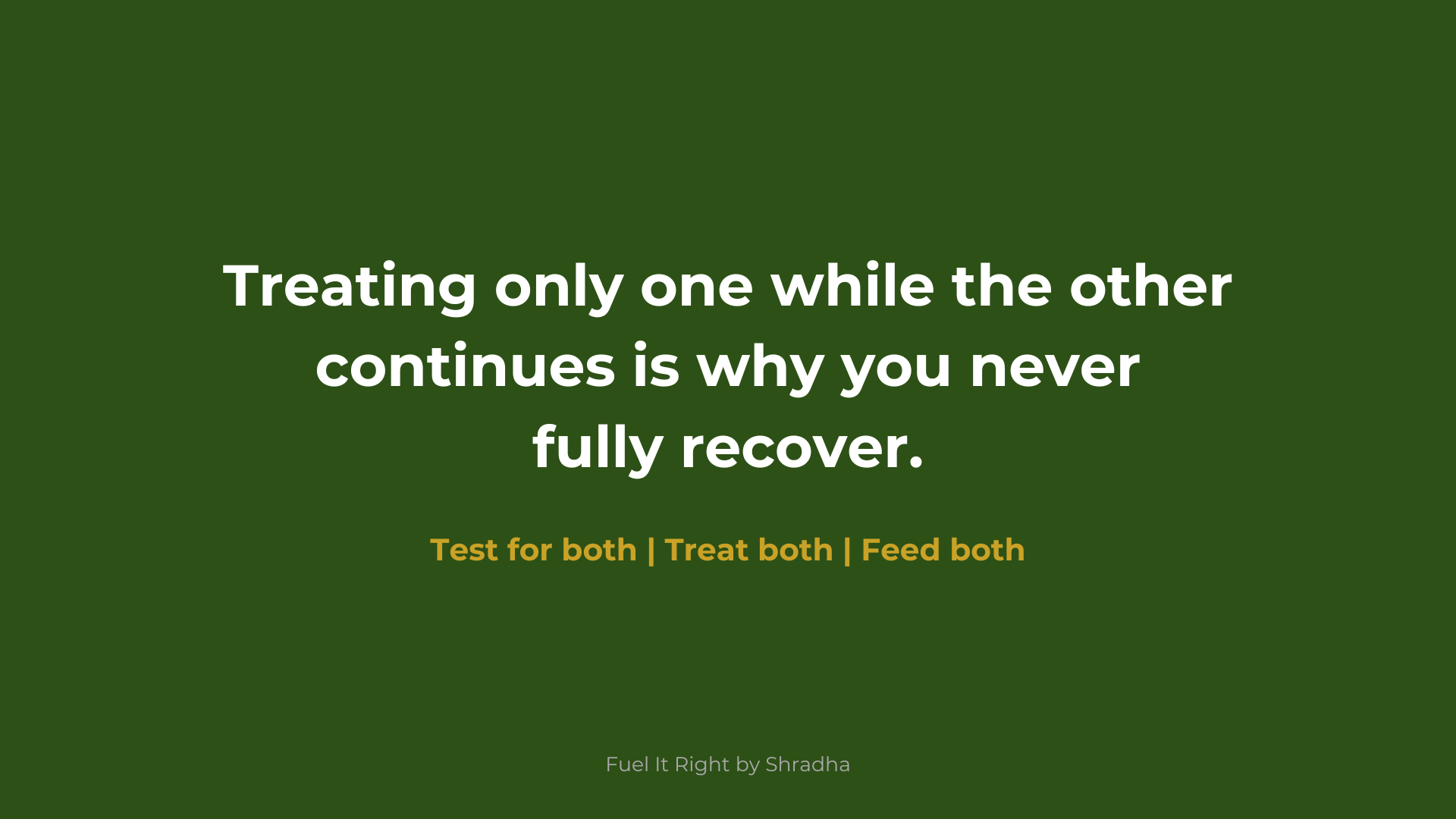
PCOS/PMOS and thyroid dysfunction do not simply co-exist. They actively worsen each other through specific biological mechanisms.
What Hypothyroidism Does to PMOS
• Slows metabolism and deepens insulin resistance, amplifying the hyperinsulinemia that drives androgen excess
• Raises TSH, which in turn raises prolactin. Elevated prolactin disrupts the LH/FSH ratio and suppresses ovulation, adding a second ovulatory disruption on top of the one PMOS already causes
• Increases LH levels, further driving ovarian androgen production
• Reduces SHBG, increasing free testosterone and worsening androgenic symptoms like acne, hair fall, facial hair
• Slows gut motility, worsening the gut dysbiosis already present in PMOS and amplifying the inflammatory load
What PMOS Does to Thyroid Function
• Insulin resistance impairs thyroid hormone conversion, specifically the conversion of T4 to the active T3, meaning thyroid function is effectively lower than TSH alone suggests.
• Chronic low-grade inflammation in PMOS activates the immune pathways that drive Hashimoto's thyroiditis, accelerating autoimmune thyroid damage.
• Elevated androgens in PMOS impair thyroid hormone receptor sensitivity, reducing the effective action of thyroid hormones even when levels appear normal.
• Gut dysbiosis in PMOS reduces the conversion of T4 to T3 that happens in the gut, adding a third mechanism by which PMOS impairs thyroid function
The clinical consequence A woman with both PMOS and subclinical hypothyroidism has: worsened insulin resistance, more severe androgen excess, more disrupted ovulation, greater weight resistance, more significant fatigue, and higher cardiovascular risk than a woman with either condition alone. Treating only one without addressing the other leaves significant metabolic disruption unresolved. |
The Symptom Overlap: Why It Is So Hard to Tell Them Apart
PCOS/PMOS and thyroid symptoms overlap so extensively that even experienced clinicians miss the co-occurrence. As noted by Dr Leena N Sreedhar, Manipal Hospital: persistent fatigue, difficulty losing weight, dry skin, hair thinning and irregular periods are commonly associated with hypothyroidism but can also occur due to PMOS-related hormonal imbalance.
Symptom | In PCOS/PMOS | In Hypothyroidism |
Fatigue | Driven by insulin resistance and poor cellular glucose uptake | Driven by slowed metabolic rate and reduced T3 action in cells |
Weight resistance | Insulin drives fat storage; visceral fat accumulates | Slowed metabolism reduces calorie burning; weight builds despite normal eating |
Hair fall | Androgen excess drives scalp hair thinning | Thyroid hormones required for hair follicle cycling; deficiency causes diffuse loss |
Irregular periods | Disrupted ovulation from LH/FSH imbalance and androgen excess | Elevated prolactin from high TSH suppresses ovulation independently |
Brain fog | Insulin resistance impairs brain glucose metabolism | Low T3 slows neurological processing and memory consolidation |
Dry skin | Less common; more often oily skin from androgens | Classic feature; thyroid hormones regulate skin cell turnover |
Depression and anxiety | Hormone-driven; androgens and insulin affect mood | T3 directly regulates serotonin production and mood |
Cold intolerance | Not typical | Classic; thyroid hormones regulate body temperature |
What Your Blood Tests Are Not Catching
The most dangerous gap in PCOS/PMOS and thyroid management is not in the conditions themselves. It is in how incompletely both are tested.
The TSH Problem
Standard laboratory reference ranges flag TSH as normal up to 4.5 or 5.0 mIU/L. But as covered in the PMOS blood report explained, the PMOS-optimal TSH range is 0.5 to 2.5 mIU/L. A woman with a TSH of 3.8 mIU/L will be told her thyroid is normal. Her PMOS management will not account for the thyroid's role in worsening her insulin resistance. Her symptoms will not fully improve.
The T4 to T3 Conversion Problem
TSH alone is not enough. Free T4 tells you how much thyroid hormone the gland is producing. Free T3 tells you how much active thyroid hormone is available to cells. T4 must be converted to T3 to be biologically active. This conversion happens partly in the gut, meaning gut dysbiosis in PMOS directly impairs T4 to T3 conversion. A woman can have normal TSH and normal free T4 but low free T3, with all the symptoms of hypothyroidism, and be told her thyroid is fine.
The Hashimoto's Gap
Anti-TPO antibodies and anti-thyroglobulin antibodies test for Hashimoto's thyroiditis, the autoimmune thyroid condition most common in women with PMOS. These are not ordered on standard thyroid panels. You must ask for them by name. A woman can have Hashimoto's with a currently normal TSH and be heading toward hypothyroidism without knowing it. For the full panel and optimal ranges, see the PMOS diagnosis checklist.
The complete thyroid panel for women with PCOS/PMOS • TSH: optimal 0.5 to 2.5 mIU/L for PMOS management, not the lab's 4.5 • Free T4: 0.9 to 1.7 ng/dL • Free T3: 3.0 to 4.0 pg/mL; low-normal free T3 signals conversion problem • Anti-TPO antibodies: rules out or confirms Hashimoto's • Anti-thyroglobulin antibodies: second Hashimoto's marker • Reverse T3: elevated when T4 is being converted to an inactive form rather than active T3; relevant in chronic stress |
The Gut Connection Nobody Mentions
The PCOS/PMOS-thyroid connection has a third player that is almost never discussed in consultations: the gut microbiome.
How the Gut Affects Thyroid Function
Approximately 20% of the conversion of T4 to active T3 happens in the gut, facilitated by specific bacterial enzymes. When gut dysbiosis is present, as it consistently is in women with PMOS, this conversion is impaired. Less active T3 is produced. Thyroid function is effectively lower than blood tests suggest.
The gut also regulates iodine and selenium absorption, both of which are essential for thyroid hormone production. And gut inflammation directly activates the autoimmune pathways that drive Hashimoto's thyroiditis. Rebuilding gut health is not separate from thyroid management, it is part of it. See the Gut-PMOS connection blog for the full picture.
Take the free Gut Health Quiz. 2 minutes. Get a personalised read on your gut pattern and receive the free 3-Day Indian Gut Reset straight to your inbox.
What Indian Food Does for Both Conditions Simultaneously
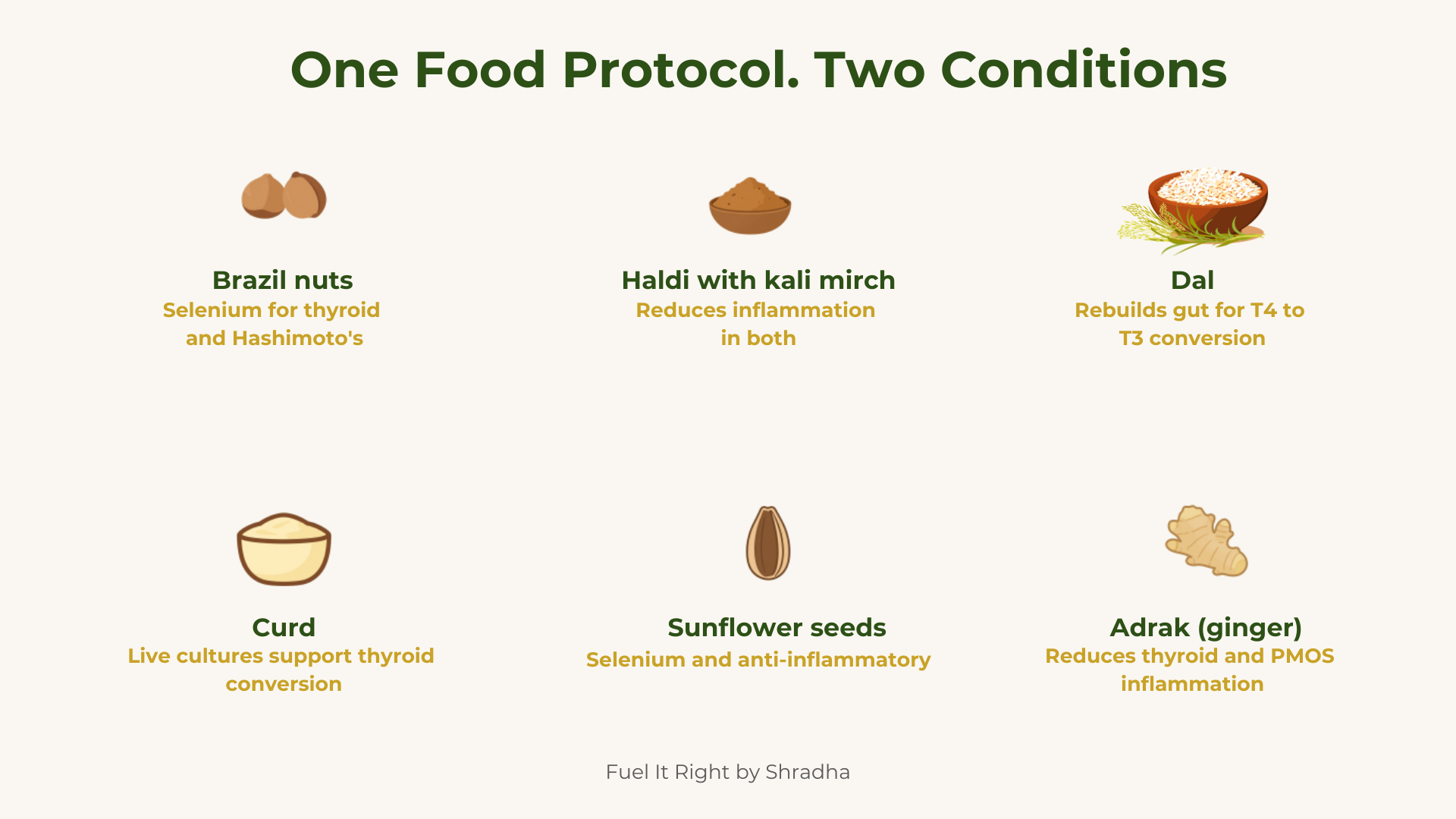
The dietary approach to PCOS/PMOS and thyroid management is remarkably similar because both conditions share the same metabolic root. Food that addresses insulin resistance, gut health, and inflammation helps both simultaneously.
What Helps Both
Selenium-rich foods | Selenium is essential for T4 to T3 conversion and for reducing thyroid autoantibodies in Hashimoto's. Brazil nuts (2 per day), sunflower seeds, and whole grains provide selenium. India's soil is selenium-depleted in many regions, making dietary sources important. |
Iodine adequacy without excess | Thyroid hormone production requires iodine. Iodised salt provides adequate iodine for most Indian women. Excess iodine, however, can trigger or worsen Hashimoto's in susceptible women. Seaweed supplements are not appropriate in the PMOS-Hashimoto's context. |
Anti-inflammatory eating | Haldi, jeera, adrak, and omega-3 rich foods reduce the inflammation driving both PMOS and Hashimoto's progression. Chronic inflammation is the common driver of both. |
Dal and gut-healing foods | Rebuilding the gut microbiome directly improves T4 to T3 conversion. Dal, curd, chaas, and fibre-rich vegetables feed the bacteria responsible for this conversion. This is the most underappreciated thyroid intervention available in an Indian kitchen. |
Protein at every meal | Both PMOS and hypothyroidism drive muscle wasting and metabolic slowing. Adequate protein at every meal maintains muscle mass, supports metabolic rate, and provides the amino acids required for thyroid hormone production. |
Gluten consideration for Hashimoto's | Gluten sensitivity and Hashimoto's thyroiditis share immune mechanisms. For women with confirmed Hashimoto's and persistent symptoms, a 3-month trial of gluten reduction is worth considering. This is not elimination for everyone, only for confirmed Hashimoto's cases with persistent antibodies. |
What to Avoid When Both Conditions Are Present
• Raw cruciferous vegetables in large quantities like cabbage, broccoli, cauliflower contain goitrogens that can impair thyroid hormone production when eaten raw and in excess. Cooking deactivates them. This is not an elimination, it is a moderation of raw consumption.
• Soy in excess. Soy isoflavones can interfere with thyroid hormone absorption if consumed in large quantities, particularly close to thyroid medication timing.
• Refined oils and packaged foods is the primary drivers of both PMOS inflammation and Hashimoto's progression.
• Sweetened beverages, fructose drives the inflammatory load that activates autoimmune pathways in Hashimoto's while simultaneously worsening insulin resistance in PMOS.
Managing PMOS and thyroid together in Goa?
The Diet Dr Clinic team works with clients navigating PCOS, PMOS, thyroid conditions, and weight management through real Indian food. Call or WhatsApp us.
+91 7057063984
Conclusion: Test for Both. Treat Both. Feed Both.
PCOS/PMOS and thyroid conditions are not two separate diagnoses that happen to affect the same woman. They are two expressions of the same underlying vulnerability like metabolic, inflammatory, and immunological, and they actively worsen each other when only one is treated.
The most common clinical failure is treating the PMOS without testing the thyroid properly, or treating the thyroid without addressing the insulin resistance that is impairing thyroid function at the cellular level. Both conditions need to be on the table from the first consultation.
Get the complete thyroid panel like TSH, free T4, free T3, anti-TPO antibodies. Bring your PMOS numbers alongside them. And build a food protocol that addresses the shared metabolic root: insulin resistance, gut health, and inflammation. The same food works for both. Your kitchen does not need to be split into two separate protocols. Start with the free Gut Health Quiz and 3-Day Reset as the foundation, and build from there.
Book a Free 30-Minute Discovery Call
Bring your PMOS panel and your thyroid panel. We will read both together and build your food protocol from the shared root.
Or call us: +91 7057063984
FAQs: PCOS, PMOS and Thyroid
Q1. Can PCOS/PMOS cause thyroid problems?
Not directly in a single-cause sense, but PMOS creates conditions that significantly increase thyroid dysfunction risk. Reduced progesterone levels in PMOS increase susceptibility to autoimmune conditions, including Hashimoto's thyroiditis. Chronic inflammation from PMOS activates the autoimmune pathways that attack thyroid tissue. And insulin resistance in PMOS impairs T4 to T3 conversion. PMOS does not cause thyroid problems, but it creates a metabolic and immunological environment where they are far more likely to develop.
Q2. I have PCOS/PMOS and my TSH is 3.2. Should I be concerned?
In the PMOS context, yes. Standard lab reference ranges flag TSH as normal up to 4.5 mIU/L. But for women with PMOS, the optimal TSH range is 0.5 to 2.5 mIU/L. A TSH of 3.2 indicates the thyroid is working harder than optimal, likely because thyroid hormone conversion or utilisation is impaired. Ask for free T4, free T3, and anti-TPO antibodies alongside TSH. These four values together give you the complete thyroid picture that TSH alone cannot.
Q3. How do I know if I have Hashimoto's?
Ask for anti-TPO antibodies and anti-thyroglobulin antibodies. These are not part of a standard thyroid panel and must be requested specifically. Elevated anti-TPO antibodies above 35 IU/mL indicate autoimmune thyroid attack is present, even if TSH is currently normal. Many women with Hashimoto's have years of normal TSH while antibodies are elevated and thyroid damage is accumulating. In women with PMOS, screening for Hashimoto's should be standard.
Q4. I am already on thyroid medication. Does that mean my thyroid is managed?
Not necessarily. Thyroid medication replaces or supplements thyroid hormone, but it does not address the factors worsening thyroid function from the PMOS side. Insulin resistance impairs thyroid hormone utilisation at the cellular level regardless of medication dose. Gut dysbiosis impairs T4 to T3 conversion. Chronic inflammation continues to drive Hashimoto's progression. Medication manages the output. Food addresses the environment that is undermining the output.
Q5. What comes first; treat PMOS or treat thyroid?
Both simultaneously. They are not sequential problems. The thyroid impairs PMOS management. PMOS impairs thyroid function. Treating one first means the untreated condition is actively undermining your results. A food protocol that addresses insulin resistance, gut health, and inflammation works for both from day one. Medical management of whichever condition has more severe markers can proceed alongside dietary change.
Q6. Can the gut really affect thyroid function?
Yes, directly. Approximately 20% of T4 to T3 conversion happens in the gut through bacterial enzymes. When gut dysbiosis is present, which it consistently is in women with PMOS, this conversion is impaired. Additionally, the gut regulates selenium and iodine absorption, both required for thyroid hormone production. And gut inflammation activates the autoimmune pathways that drive Hashimoto's. Rebuilding gut health through dal, curd, chaas, and fibre is a direct thyroid intervention.
Q7. My doctor says my thyroid is fine and I just have PCOS. What should I do?
Ask specifically for free T4, free T3, and anti-TPO antibodies if they have not been tested. Also ask whether the TSH optimal range for PMOS, 0.5 to 2.5 mIU/L, was used to interpret your result, or the standard lab range. If your TSH is between 2.5 and 4.5 mIU/L and your free T3 is in the lower half of the reference range, you may have suboptimal thyroid function that is being missed by standard interpretation. Request a referral to an endocrinologist if your gynaecologist is not comfortable investigating further.
Q8. Does selenium supplementation help Hashimoto's?
Clinical evidence supports selenium supplementation in Hashimoto's for reducing anti-TPO antibody levels. The Cochrane review found that selenium supplementation significantly reduced thyroid peroxidase antibody and improved mood and wellbeing after 3 months. The recommended dose is 200 mcg daily of selenomethionine, not sodium selenite. Food sources including 2 Brazil nuts daily provide approximately this amount. Supplementation should be discussed with a doctor, as excess selenium is toxic.
About the Author
Shradha | Nutritionist and Dietitian | Fuel It Right. Practising out of Goa, India, with a focus on gut health, PMOS/PCOS, thyroid disorders, and weight management using real Indian food. No supplements. No machines. Just food, and the science behind it.
fuel-it-right.com | @fuelitright