
Selenium and Thyroid Function: What to Know First
Selenium is essential for two specific thyroid processes, and Indian soil often falls short of it. Here's what the evidence shows on deficiency, dosing, and why this nutrient has a narrower safety margin than most.
Table of Contents
1. Selenium and Thyroid Function Basics: The Actual Mechanism
2. Selenium and Thyroid Function: Why Indian Soil Complicates This
3. Selenium and Thyroid Function: What Real Deficiency Looks Like
4. Selenium and Thyroid Function: What Supplementation Trials Actually Found
5. Selenium and Thyroid Function: The Honest Limits of the Evidence
6. Selenium and Thyroid Function: Why More Isn't Automatically Better
7. Selenium and Thyroid Function: Food Sources Worth Knowing
8. Selenium and Thyroid Function: A Realistic Daily Approach
Selenium and Thyroid Function: The Takeaway
Selenium and Thyroid Function: Frequently Asked Questions
Selenium and thyroid health are more directly linked than most realize, and more precariously so. This trace mineral aids in two separate thyroid processes, not just one vague general benefit. Indian soil is actually low in selenium in several parts, making an already easy-to-miss nutrient even more difficult. This article discusses what the evidence actually supports, including why more isn't always better here.
What Selenium and Thyroid Function Have to Do With Each Other
1. Selenium and Thyroid Function Basics: The Actual Mechanism
Selenium and thyroid function connect through two specific enzyme systems, not a vague general association. Glutathione peroxidase uses selenium to protect thyroid tissue from oxidative damage during hormone production. Deiodinase enzymes, also selenium-dependent, convert storage hormone T4 into active T3. Deficiency can genuinely impair this conversion, not just general thyroid wellbeing.
2. Selenium and Thyroid Function: Why Indian Soil Complicates This
Selenium content in food depends heavily on the soil crops grow in, not diet variety alone. Indian food grains have repeatedly tested below optimal selenium levels in affected regions. This isn't something you can reliably fix just by eating more of the same foods grown locally. Regional soil quality genuinely limits what's available through diet.
3. Selenium and Thyroid Function: What Real Deficiency Looks Like
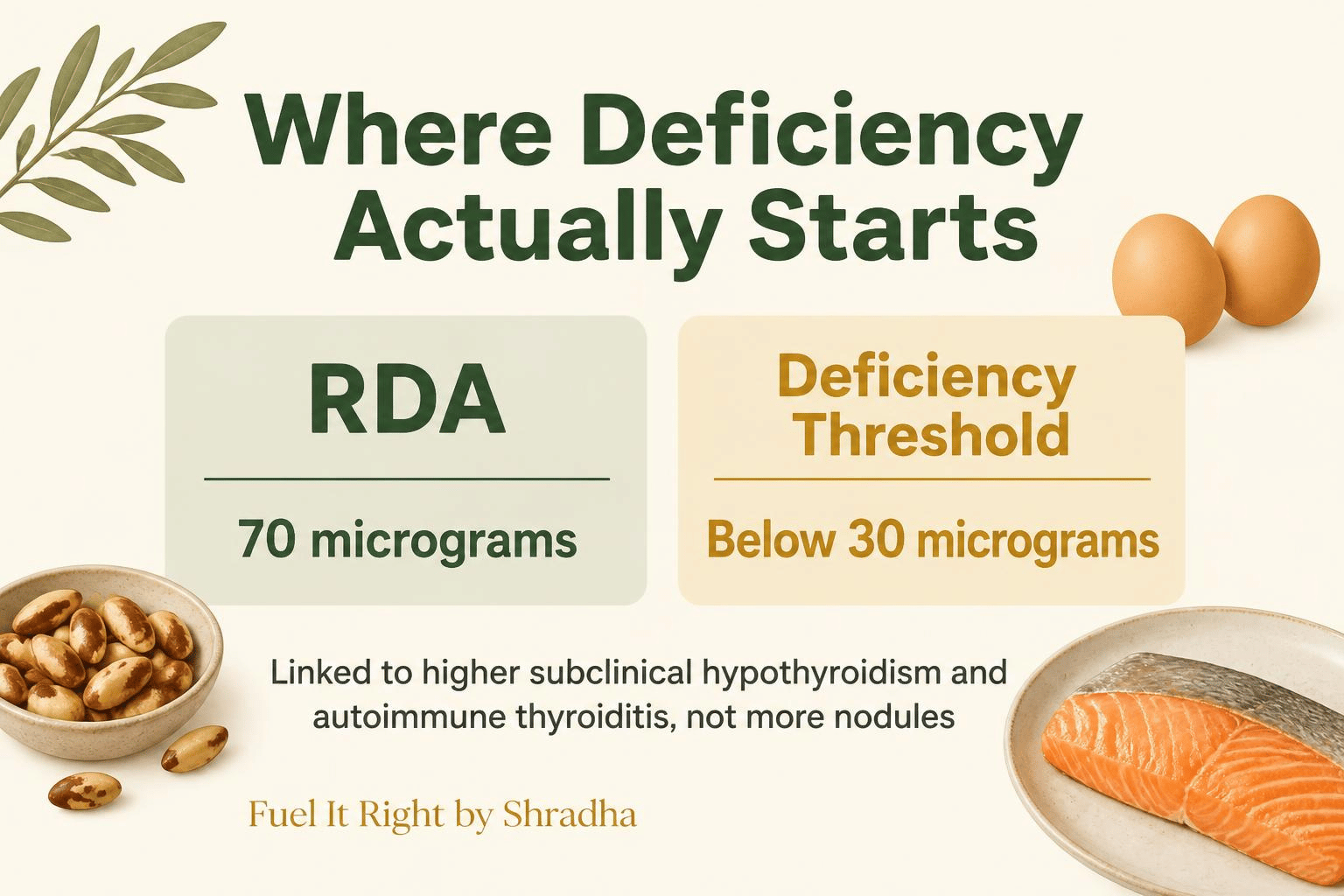
Selenium and thyroid function deficiency is clinically obvious at around 30 micrograms daily intake or less, well below the 70 microgram RDA. A Chinese study comparing regions by soil selenium levels found no difference in thyroid nodule rates, but significantly higher subclinical hypothyroidism and autoimmune thyroiditis in low-selenium areas specifically. The deficiency picture is more specific than a single symptom.
What the Evidence Says About Supplementing
4. Selenium and Thyroid Function: What Supplementation Trials Actually Found
Selenium and thyroid function research includes real trial data, something teased in Hashimoto's Thyroiditis Diet: What to Know First. Doses of 100 to 200 micrograms daily of selenomethionine showed favourable results reducing thyroid antibodies in some studies. That benefit weakened over time in at least one trial though, not a permanent fix from a single supplement course.
5. Selenium and Thyroid Function: The Honest Limits of the Evidence
A 2025 narrative review stated it plainly: current data are not sufficient to conclusively support or refute the efficacy of selenium supplementation for thyroid disorders. Results vary meaningfully by geographic region, baseline selenium status, and study design. This is genuinely a different message than the confident recommendations many supplement brands make.
6. Selenium and Thyroid Function: Why More Isn't Automatically Better
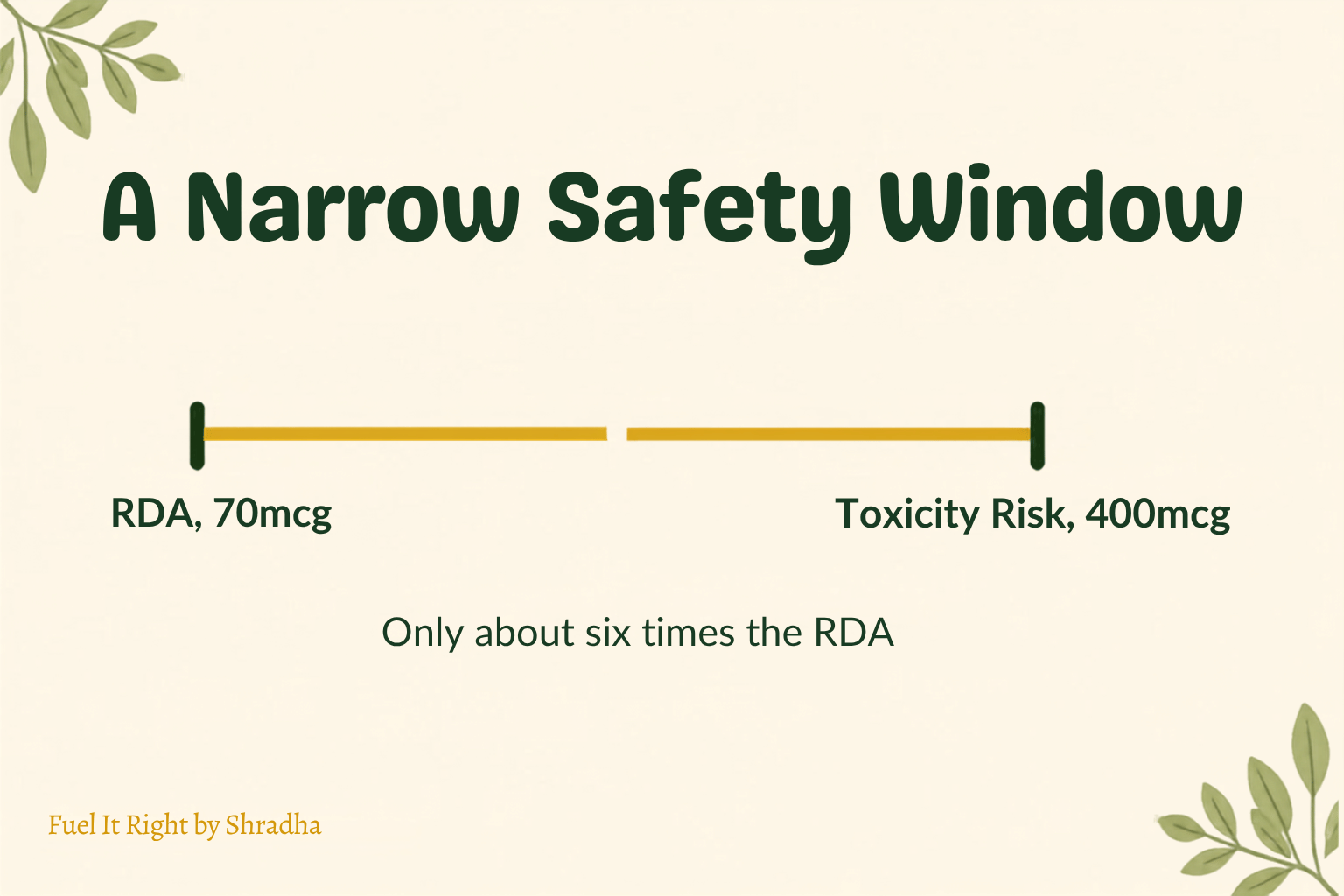
Selenium and thyroid function research has an unusually narrow safety margin compared to most nutrients. Toxicity risk rises meaningfully above 400 micrograms daily, only about six times the RDA. Symptoms of excess can include hair loss, nail changes, and disrupted hormone regulation. Self-dosing high amounts without medical guidance carries real, documented risk here.
Wondering if selenium supplementation is actually right for your specific labs?
Let's figure that out together
Building a Realistic Selenium Approach
7. Selenium and Thyroid Function: Food Sources Worth Knowing
Brazil nuts are unusually rich in selenium, sometimes containing a whole day's allowance in one nut. Eggs, fish and whole grains also contribute a lot, but the quantities depend on the quality of the soil. Food-first sources are far less risky in terms of toxicity than concentrated supplements, as it is really hard to overdose through normal eating.
8. Selenium and Thyroid Function: A Realistic Daily Approach
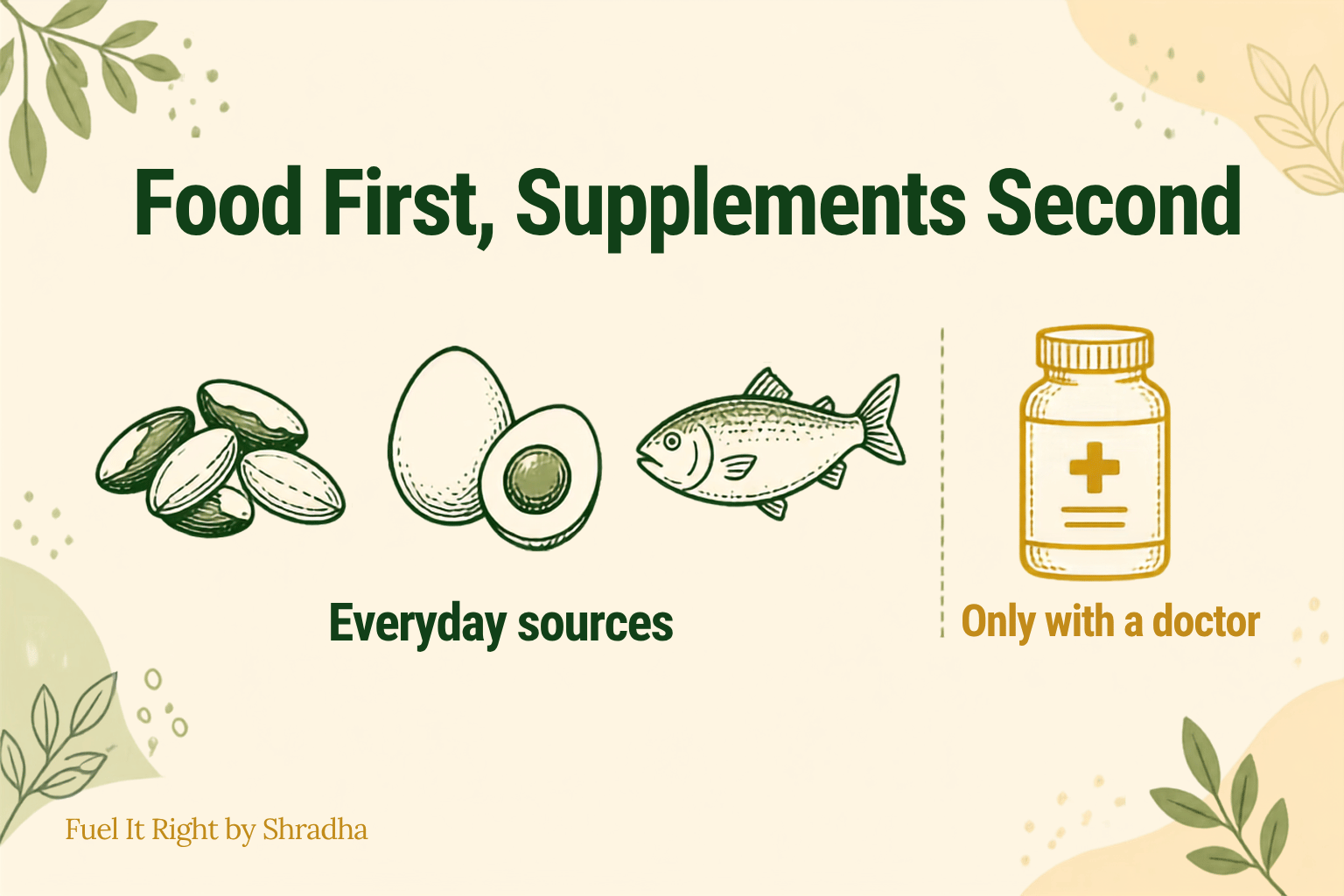
A realistic selenium and thyroid function plan leans on food first, one or two Brazil nuts, regular eggs, and fish where accessible. Save concentrated supplementation for a specific diagnosis discussed with your endocrinologist, given how easily the safe range gets exceeded. This isn't a nutrient to self-prescribe casually based on general wellness advice.
Selenium and Thyroid Function: The Takeaway
Selenium and the thyroid function deserve the careful eye not the casual supplement. The mineral really does help hormone conversion and antioxidant protection, Indian soil is often deficient, and modest supplementation has been shown to be beneficial in some auto immune thyroid trials. The safety margin is narrower than most nutrients though and food first sources are still the lower risk starting point before any concentrated supplement.
Selenium and Thyroid Function: Frequently Asked Questions
Selenium and thyroid function questions come up often, so here are direct answers to what patients ask most.
Does selenium actually help thyroid function?
Yes, selenium and thyroid function connect through two specific mechanisms: protecting thyroid tissue from oxidative damage and converting T4 into active T3. Deficiency can genuinely impair both processes, not just general wellbeing.
Is selenium deficiency common in India?
It could be because of the low selenium levels in the soil, rather than the dietary choices, as Indian food grains have been found repeatedly to have sub-optimal levels of selenium in affected areas.
What dose of selenium has shown benefit for thyroid disorders?
Trials using 100 to 200 micrograms daily of selenomethionine showed favourable antibody reduction in some Hashimoto's patients, though the benefit weakened over time in at least one study.
Is selenium supplementation a proven treatment for thyroid disease?
Not conclusively. A 2025 review found current evidence insufficient to definitively support or refute its efficacy, with results varying by region, baseline status, and study design.
Can too much selenium actually be harmful?
Yes, more so than most nutrients. Above 400 micrograms a day, roughly six times the RDA, the risk of toxicity increases meaningfully. Symptoms include hair loss and disrupted hormone regulation.
What foods provide selenium naturally?
Brazil nuts are unusually concentrated, sometimes providing a full day's requirement in one nut. Eggs, fish, and whole grains contribute meaningfully too, depending on local soil quality.
Should I take a selenium supplement for my thyroid?
Discuss it with your endocrinologist before self-prescribing. Food-first sources are much less risky for toxicity and supplementation makes more sense for a specific diagnosed need.
Does selenium affect thyroid nodules specifically?
A Chinese regional study found no significant difference in thyroid nodule rates based on soil selenium levels, though subclinical hypothyroidism and autoimmune thyroiditis were more common in low-selenium areas.
About the Author
Shradha | Nutritionist & Dietitian | Fuel It Right. Food-first, evidence-based nutrition for real, sustainable results.