
Iodine Deficiency in India: The Real Picture
Iodine deficiency in India is often called a solved problem, thanks to decades of salt iodization. A June 2026 study found real gaps still exist in rural India, in both deficiency and excess. Here's the actual picture, not just the success story.
Table of Contents
1. Iodine Deficiency in India Basics: A Public Health Success Story|
2. Iodine Deficiency in India: What the Newest Study Actually Found
3. Iodine Deficiency in India: The Excess Problem Nobody Expects
4. Iodine Deficiency in India: Access Versus Actual Status
5. Iodine Deficiency in India: The Salt Reduction Tension
6. Iodine Deficiency in India: Why This Still Matters for Children
7. Iodine Deficiency in India: Signs Worth Actually Checking
8. Iodine Deficiency in India: A Realistic Daily Approach
Iodine Deficiency in India: The Takeaway
Iodine Deficiency in India: Frequently Asked Questions
India’s iodine deficiency is more often described as a solved problem than current data would support. National salt iodization has truly changed public health here since the 1990s. But a study published just weeks ago complicates that success story, finding real gaps still exist, in both directions. This piece walks through what the newest research actually shows, not just the headline version.
What Iodine Deficiency in India Actually Looks Like Today
1. Iodine Deficiency in India Basics: A Public Health Success Story
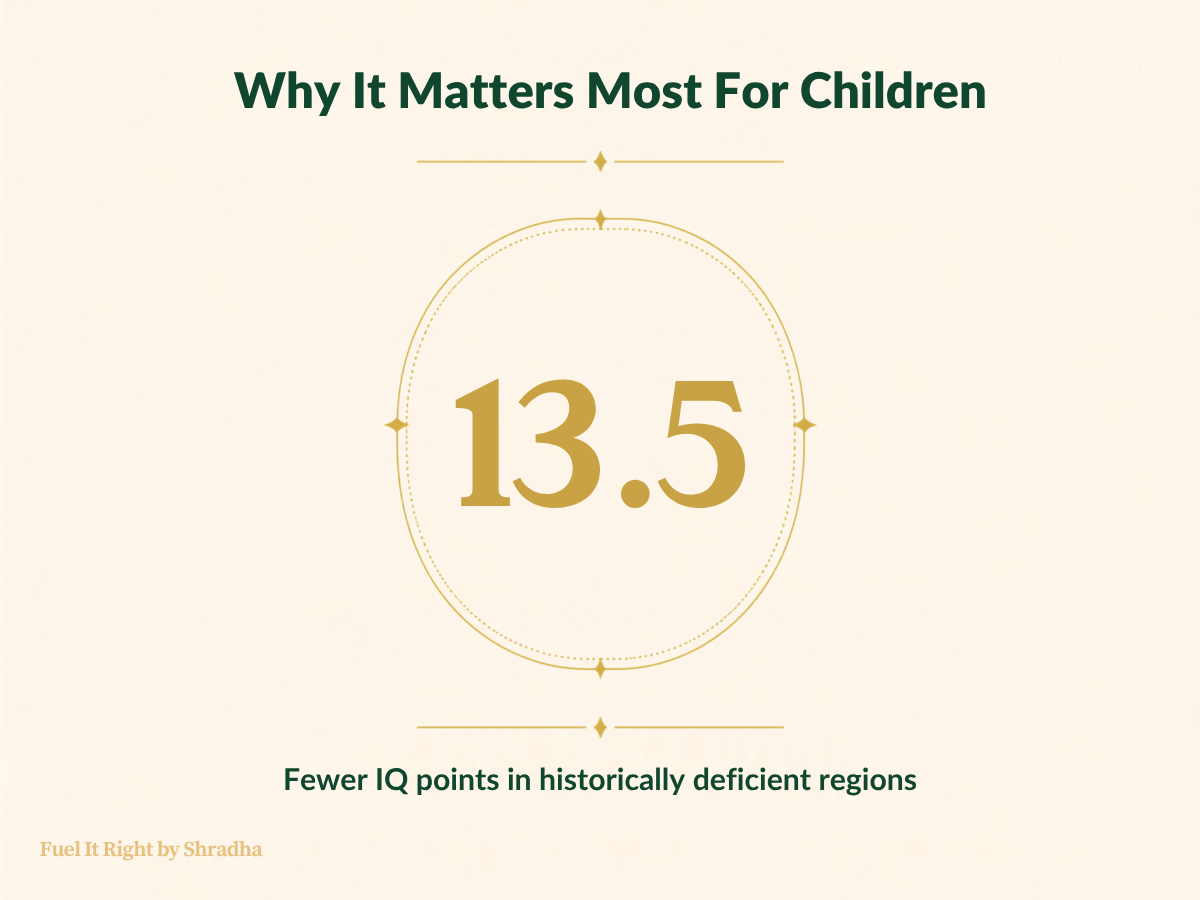
Iodine deficiency in India was once among the world's most serious. Children born in deficient regions historically averaged 13.5 fewer IQ points than those in iodine-sufficient areas. Universal salt iodization, launched decades ago, brought roughly 92% of the population onto iodized salt. That achievement genuinely deserves recognition, even with the gaps that remain.
2. Iodine Deficiency in India: What the Newest Study Actually Found
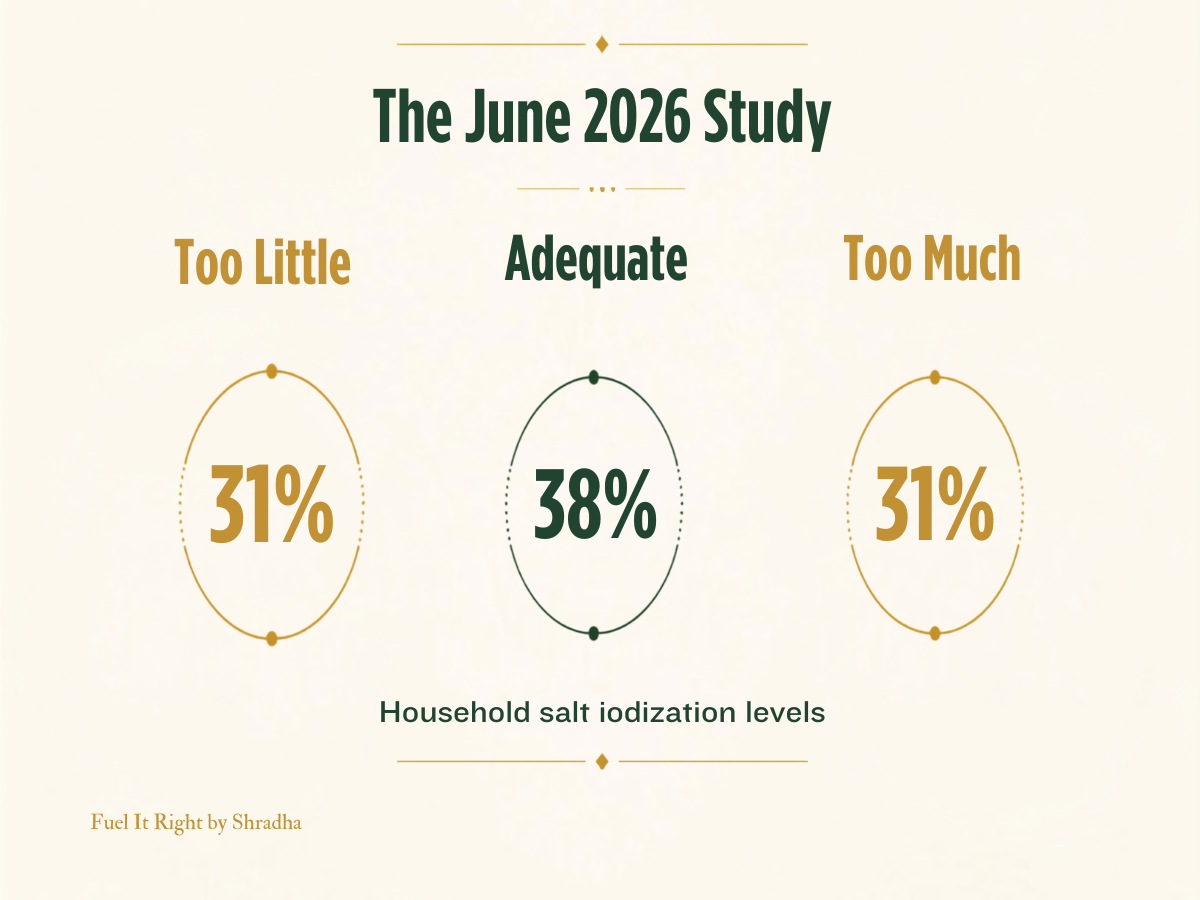
A sobering June 2026 study in the Indian Journal of Endocrinology and Metabolism found that more than a quarter of the rural population studied were still biochemically iodine deficient, measured directly by urine, not survey questions. Only 38% had adequately iodized salt at home. The rest fell between too little and, less expected, too much.
3. Iodine Deficiency in India: The Excess Problem Nobody Expects
31% of households in that same study used salt with more than 30 parts per million iodine, genuinely excessive by international standards. Most people assume more iodized salt only helps. Excess iodine intake carries its own thyroid risks, and India is now among a small group of countries documented to have both deficiency and excess simultaneously.
Why the Official Numbers Don't Tell the Whole Story
4. Iodine Deficiency in India: Access Versus Actual Status
National surveys estimate that about 94% of households have some iodized salt at home . That is an access number, not a biochemical number for iodine deficiency in India specifically. Having iodized salt in the kitchen does not guaranty correct storage, correct dosage or actual absorption. The difference between owning iodized salt and being iodine sufficient is why national and local data can appear so different.
5. Iodine Deficiency in India: The Salt Reduction Tension
India's separate push to cut sodium intake for blood pressure, something we covered in Cutting Salt Isn't Enough: The Ratio That Lowers BP, creates a genuine tension here. Reducing salt intake broadly, without care, risks reducing iodine intake too. Public health experts now call for coordinating both strategies together, rather than pursuing them separately.
6. Iodine Deficiency in India: Why This Still Matters for Children
Children continue to be the most vulnerable group in the iodine deficiency debate in India. Iodine deficiency in pregnancy and early childhood remains the single largest preventable cause of impaired brain development globally. This is not a problem of the past, solved in previous decades. The rural gaps exposed in 2026 indicate that some children today are still being raised in truly deficient households.
Not sure if your own salt and diet actually cover your iodine needs?
Let's check together:
Call or WhatsApp: +91 70570 63984 or
Building a Realistic Approach to Iodine in Your Own Diet
7. Iodine Deficiency in India: Signs Worth Actually Checking
Fatigue, unexplained weight change, and a visible neck swelling all warrant a conversation with your doctor about iodine deficiency India risk specifically. A simple blood or urine test settles the question far better than guessing from symptoms alone. This matters more if you live in a rural area or regularly use non-iodized salt.
8. Iodine Deficiency in India: A Realistic Daily Approach
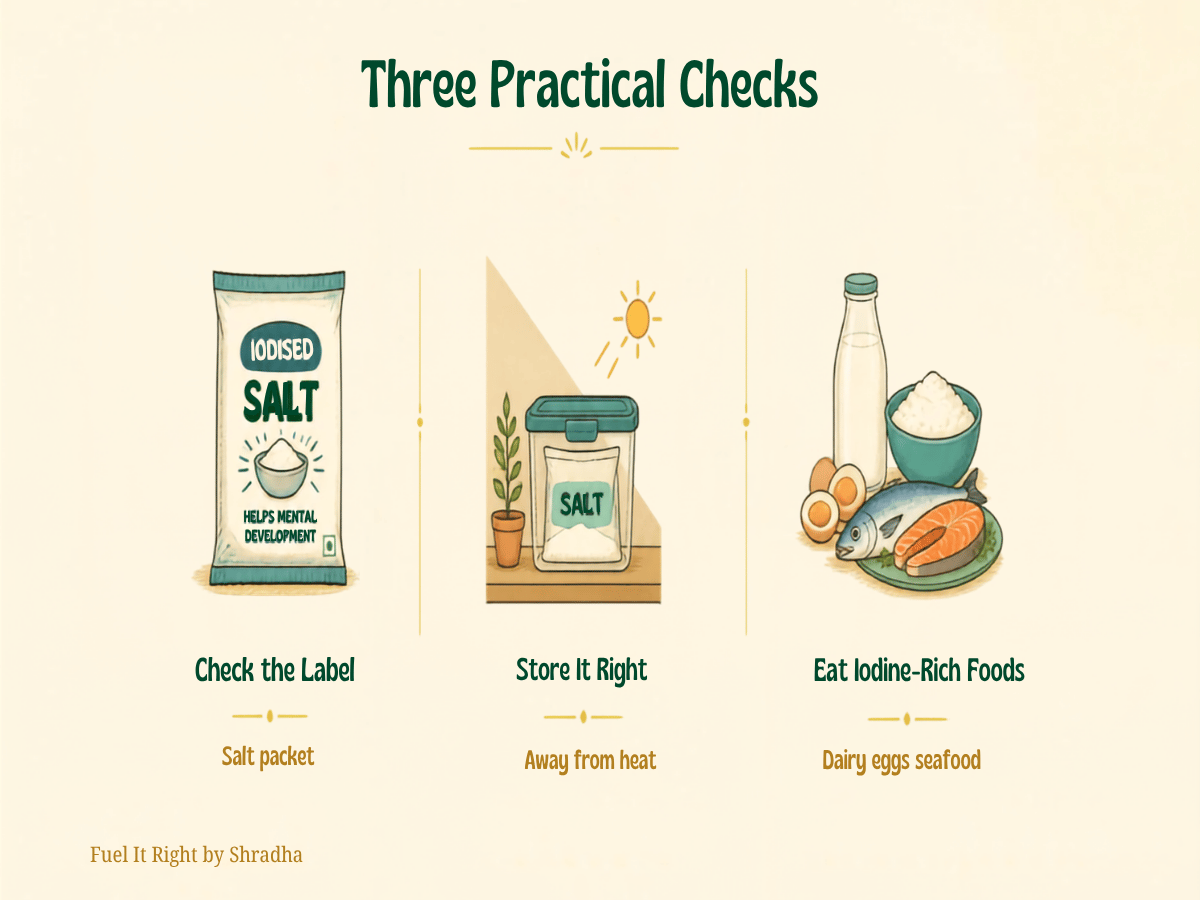
Check the salt you use in your own kitchen to see if it has a visible iodization label . Keep it away from heat and moisture which can degrade iodine content over time . Dairy , eggs , and seafood provide iodine and help fill gaps in areas where access to fresh food matters . Don ’t just assume that because you have iodized salt , you are getting enough iodine without ever looking .
Iodine Deficiency in India: The Takeaway
Iodine deficiency in India isn't the fully solved story it's often presented as. The salt iodization program remains a genuine public health achievement, and roughly 92% coverage is real progress worth protecting. A June 2026 study found real gaps persisting in rural India though, in both deficiency and excess. Check your own salt, ask about testing if at risk, and don't assume the national success story applies to your household.
Iodine Deficiency in India: Frequently Asked Questions
Iodine deficiency in India questions come up often, so here are direct answers to what people ask most.
Is iodine deficiency actually still a problem in India?
Yes, in some pockets. A June 2026 study of iodine deficiency India found over a quarter of the rural population studied remained biochemically deficient although the national salt iodization program was a success overall.
How successful has India's salt iodization program been?
Genuinely successful overall. Roughly 92% of the population uses iodized salt today, a major public health achievement, though adequate coverage and actual biochemical status still vary by region.
Can too much iodized salt actually be a problem?
Yes. A recent study found 31% of households studied used salt with excessive iodine content, above 30 parts per million, which carries its own documented thyroid risks.
Does owning iodized salt mean I'm getting enough iodine?
Not necessarily. National surveys measure access to salt, not individual biochemical status. Storage, dosage and cooking methods all affect how much iodine actually reaches your body.
Does reducing salt intake for blood pressure affect iodine status?
It can, if done without care. Broad sodium reduction for blood pressure risks reducing iodine intake too, which is why public health experts recommend coordinating both strategies together.
Why does iodine deficiency matter most for children?
Because it remains the single biggest preventable cause of impaired brain development worldwide. Children born in historically deficient regions scored 13.5 fewer IQ points on average than those born in sufficient areas.
What symptoms suggest I should get my iodine status checked?
Fatigue, unexplained weight change, and visible neck swelling all warrant asking your doctor about a simple blood or urine test, especially if you live in a rural area.
What can I actually do to protect my own iodine status?
Lower your risk of iodine deficiency in India by using salt with a visible iodization label. Keep in a cool, dry place. Include iodine-rich foods like dairy, eggs or seafood whenever possible.
About the Author
Shradha | Nutritionist & Dietitian | Fuel It Right. Food-first, evidence-based nutrition for real, sustainable results.