
PMOS Diagnosis Checklist: What Tests to Ask Your Doctor For
The PMOS diagnosis checklist every Indian woman should take to her doctor. Fasting insulin, HOMA-IR, testosterone, thyroid are the exact tests, the normal ranges, and the numbers that matter.
Table of Contents
1. Why Most Women With PMOS Leave the Doctor With the Wrong Tests.
2. The Problem With Standard Blood Work.
3. The Complete PMOS Diagnosis Checklist.
4. The Metabolic Panel: Your Most Important Tests.
5. The Hormonal Panel: What Your Androgens Are Telling You.
6. The Thyroid and Inflammation Panel.
7. Beyond Blood Tests: What Else to Ask For.
8. What to Say to Your Doctor -Word for Word.
9. Conclusion.
10. FAQs
Why Most Women With PMOS Leave the Doctor With the Wrong Tests
The PMOS diagnosis checklist that most Indian women receive from their doctor is incomplete. A standard gynaecology workup typically includes an ultrasound, a basic hormonal panel, and fasting blood glucose. That is not enough. It has never been enough. And the gap between what is ordered and what actually needs to be measured is where PMOS goes unmanaged for years.
What a Standard Workup Misses
Most routine panels do not include fasting insulin. They do not calculate HOMA-IR. They do not test for free testosterone or SHBG. They rarely include a lipid panel in a woman under 35. And the thyroid panel, if ordered, often stops at TSH without free T4.
The result: a woman is told her blood work is normal. Her periods are irregular but her glucose is fine. Her testosterone is elevated but within the broad reference range. Her ultrasound shows no cysts. She is sent home. The metabolic damage continues.
The key insight from the 2026 PMOS update As noted in research published alongside the PMOS rename, fasting glucose alone is inadequate for Indian women. Postprandial glucose rises first. By the time fasting glucose becomes abnormal, insulin resistance has often been present for a decade or more. The 2023 International PCOS Guidelines had already recommended metabolic assessment at diagnosis. The PMOS rename makes this non-negotiable. |
The Problem With Standard Blood Work
Understanding why the standard workup is insufficient requires understanding how PMOS diagnosis differs from a typical blood test interpretation.
Fasting Glucose Is the Last Thing to Change
When insulin resistance develops, the body compensates by producing more insulin to keep glucose normal. This compensation can last a decade or more. During this entire time, fasting glucose reads normal. HbA1c reads normal. The woman is told she does not have diabetes and does not need further investigation. [also read PMOS is a metabolism problem].
But insulin resistance is already driving androgen excess, disrupting ovulation, causing acne and hair fall, and building cardiovascular risk. All while fasting glucose looks perfectly fine.
Reference Ranges Are Not Optimised for Indian Women
Most laboratory reference ranges for insulin, testosterone, and metabolic markers were established on Western populations. Indian women, with their higher visceral fat at lower BMI and different metabolic phenotype, can have clinically significant insulin resistance at values that fall within normal reference ranges calibrated for another population.
This is why asking for your exact numbers, not just normal or abnormal, is essential. A fasting insulin of 14 mIU/L may fall within a lab's reference range and still indicate significant insulin resistance in an Indian woman with PMOS symptoms.
The Complete PMOS Diagnosis Checklist
The PMOS diagnosis checklist below covers every test you should ask for at your first comprehensive workup. Print this section and take it to your doctor.
Test | Why it matters | Optimal range | Flag if |
METABOLIC PANEL |
| ||
Fasting insulin | The single most important test. Reveals insulin resistance before glucose rises. | 2–12 mIU/L | Above 12 mIU/L |
HOMA-IR | Calculated from fasting insulin and fasting glucose. Direct measure of insulin resistance. | Below 1.5 (optimal) | Above 2.5 significant |
Fasting glucose | Baseline. Normal does not rule out insulin resistance. | 70–99 mg/dL | Above 100 mg/dL |
75g OGTT (2-hr) | Catches postprandial glucose dysregulation missed by fasting glucose alone. | Below 140 mg/dL at 2hr | Above 140 mg/dL |
HbA1c | 3-month average glucose. Useful alongside fasting insulin, not instead of it. | Below 5.7% | Above 5.7% |
Lipid panel | TC, TG, HDL, LDL. Dyslipidemia present in 91.9% of Indian women with PMOS. | TG below 150, HDL above 50 | TG above 150, HDL below 50 |
HORMONAL PANEL |
| ||
Total testosterone | Measures androgen excess, the driver of acne, hair fall, facial hair. | 0.5–2.4 nmol/L | Above 2.4 nmol/L |
Free testosterone | More accurate than total testosterone. Reflects biologically active androgen. | 0.3–1.9 pg/mL | Above 1.9 pg/mL |
SHBG | Sex hormone binding globulin. Low SHBG = more free testosterone circulating. | 40–120 nmol/L | Below 40 nmol/L |
DHEAS | Adrenal androgen. Elevated in some PMOS phenotypes, especially with stress. | 35–430 mcg/dL | Above 430 mcg/dL |
LH/FSH ratio | Elevated ratio is a classic PMOS marker. LH drives androgen production. | Ratio below 2:1 | Ratio above 2:1 |
AMH | Anti-Mullerian Hormone. Reflects ovarian reserve and follicle count. | 1–3.5 ng/mL | Above 4.45 ng/mL (PMOS) |
Prolactin | Rule out hyperprolactinaemia, which mimics PMOS symptoms. | Below 25 ng/mL | Above 25 ng/mL |
THYROID AND INFLAMMATION |
| ||
TSH | Thyroid stimulating hormone. Co-occurrence with hypothyroidism is high in Indian women with PMOS. | 0.5–2.5 mIU/L (optimal for PMOS) | Above 2.5 mIU/L - investigate |
Free T4 | Full thyroid picture requires both TSH and free T4. TSH alone is not sufficient. | 0.8–1.8 ng/dL | Below 0.8 ng/dL |
hsCRP | High-sensitivity C-reactive protein. Marker of systemic inflammation driving PMOS. | Below 1 mg/L (optimal) | Above 3 mg/L significant |
Vitamin D | Deficiency worsens insulin resistance and inflammatory markers. Extremely common in India. | 40–60 ng/mL | Below 30 ng/mL |
The Metabolic Panel: Your Most Important Tests
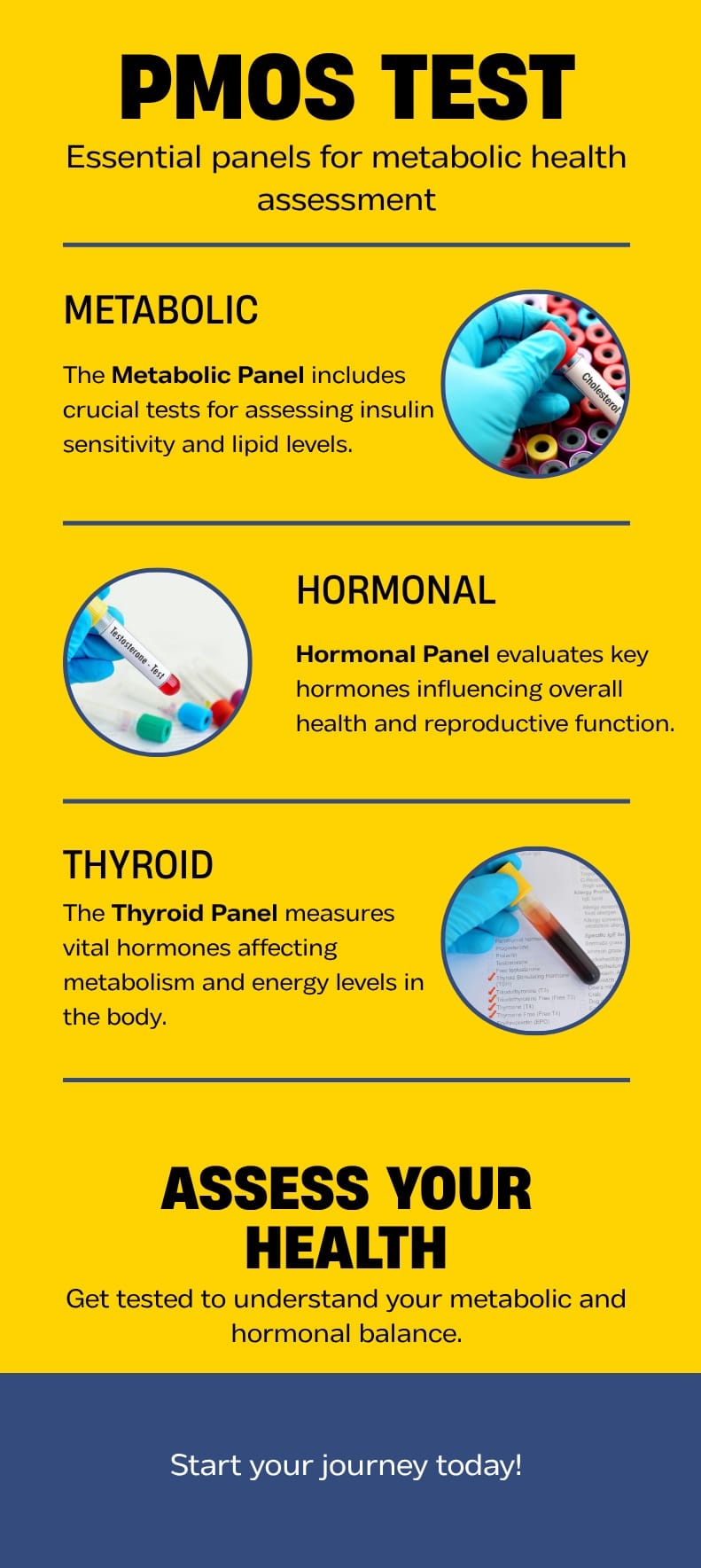
In the PMOS diagnosis checklist, the metabolic panel is the foundation. These are the tests that directly measure insulin resistance which is the metabolic root of the condition.
Fasting Insulin and HOMA-IR
Fasting insulin is not part of a standard panel. You will need to ask for it by name. The optimal fasting insulin for a woman with PMOS symptoms is below 10 mIU/L, with values above 12 mIU/L indicating significant insulin resistance. Values above 15–20 mIU/L indicate severe insulin resistance and require immediate metabolic intervention.
HOMA-IR is calculated using the formula: fasting insulin (mIU/L) x fasting glucose (mg/dL) / 405. A value below 1.5 is optimal. Above 2.5 is clinically significant. Above 3.5 indicates severe insulin resistance. Most labs will calculate this for you if you ask, or you can calculate it yourself with the two values.
The 75g OGTT: Why Fasting Glucose Is Not Enough
As noted in recent clinical commentary on the PMOS rename, fasting glucose alone is inadequate for Indian women. Post-meal glucose rises first. A 75g oral glucose tolerance test with a 2-hour reading catches the glucose dysregulation that fasting tests miss entirely. If your fasting glucose looks normal but you have PMOS symptoms, ask specifically for an OGTT.
The Hormonal Panel: What Your Androgens Are Telling You
The hormonal component of the PMOS diagnosis checklist goes beyond the standard LH and FSH. Free testosterone and SHBG are the markers most commonly missed, and they tell a more accurate story than total testosterone alone.
Free Testosterone vs Total Testosterone
Total testosterone measures all testosterone in the blood, including the portion bound to SHBG and albumin. Free testosterone measures only the biologically active fraction. A woman can have a normal total testosterone but significantly elevated free testosterone if her SHBG is low. This is a common pattern in insulin-resistant women like low SHBG, normal total testosterone, high free testosterone, and significant androgenic symptoms.
If your doctor orders only total testosterone, ask for free testosterone and SHBG alongside it. The three numbers together give the complete androgenic picture.
The LH/FSH Ratio
An LH/FSH ratio above 2:1 is a classic PMOS marker. In a normal cycle, LH and FSH are roughly equal in the follicular phase. Elevated LH drives excess androgen production in the ovaries. This is the hormonal mechanism behind irregular ovulation and the ovarian morphology associated with PMOS. Ask for both values and calculate the ratio yourself.
The Thyroid and Inflammation Panel
Thyroid dysfunction and chronic inflammation are two of the most underinvestigated aspects of PMOS diagnosis in India. Both are common, both worsen PMOS symptoms, and both are routinely missed in standard workups.
Why TSH Alone Is Not Enough
TSH measures how hard the pituitary is working to stimulate the thyroid. But it does not directly measure what the thyroid is producing. A woman can have a TSH within the standard lab reference range of 0.5 to 5.0 mIU/L and still have suboptimal thyroid function. For women with PMOS, the optimal TSH range is 0.5 to 2.5 mIU/L. Free T4 alongside TSH gives the complete picture.
hsCRP and Vitamin D
High-sensitivity CRP measures systemic inflammation, which is significantly elevated in women with PMOS and directly worsens insulin resistance. Values above 3 mg/L require attention. Vitamin D deficiency is extremely common in Indian women and independently worsens both insulin resistance and inflammatory markers. A level below 30 ng/mL should be addressed before any other dietary intervention.
Beyond Blood Tests: What Else to Ask For
The complete PMOS diagnosis checklist includes two investigations beyond blood tests that are routinely ordered but often interpreted incorrectly.
Pelvic Ultrasound: What to Ask For Specifically
A pelvic ultrasound for PMOS should include follicle count per ovary and ovarian volume, not just a comment on whether cysts are present. Polycystic ovarian morphology is defined as 20 or more follicles per ovary or an ovarian volume above 10 mL in either ovary. Ask your radiologist to include both measurements in the report. And remember, you can have PMOS without these findings on ultrasound.
Body Composition Scan
BMI does not measure visceral fat. A body composition assessment, available at most diagnostic centres in India, measures visceral fat level, skeletal muscle mass, and body fat percentage. These numbers tell the metabolic story that a BMI and a weighing scale cannot. The 2026 PMOS update explicitly lists body composition assessment alongside standard blood work as part of a complete evaluation.
What to Say to Your Doctor - Word for Word
The most common barrier to getting the right tests is not knowing how to ask for them. Here is exactly what to say at your next appointment.
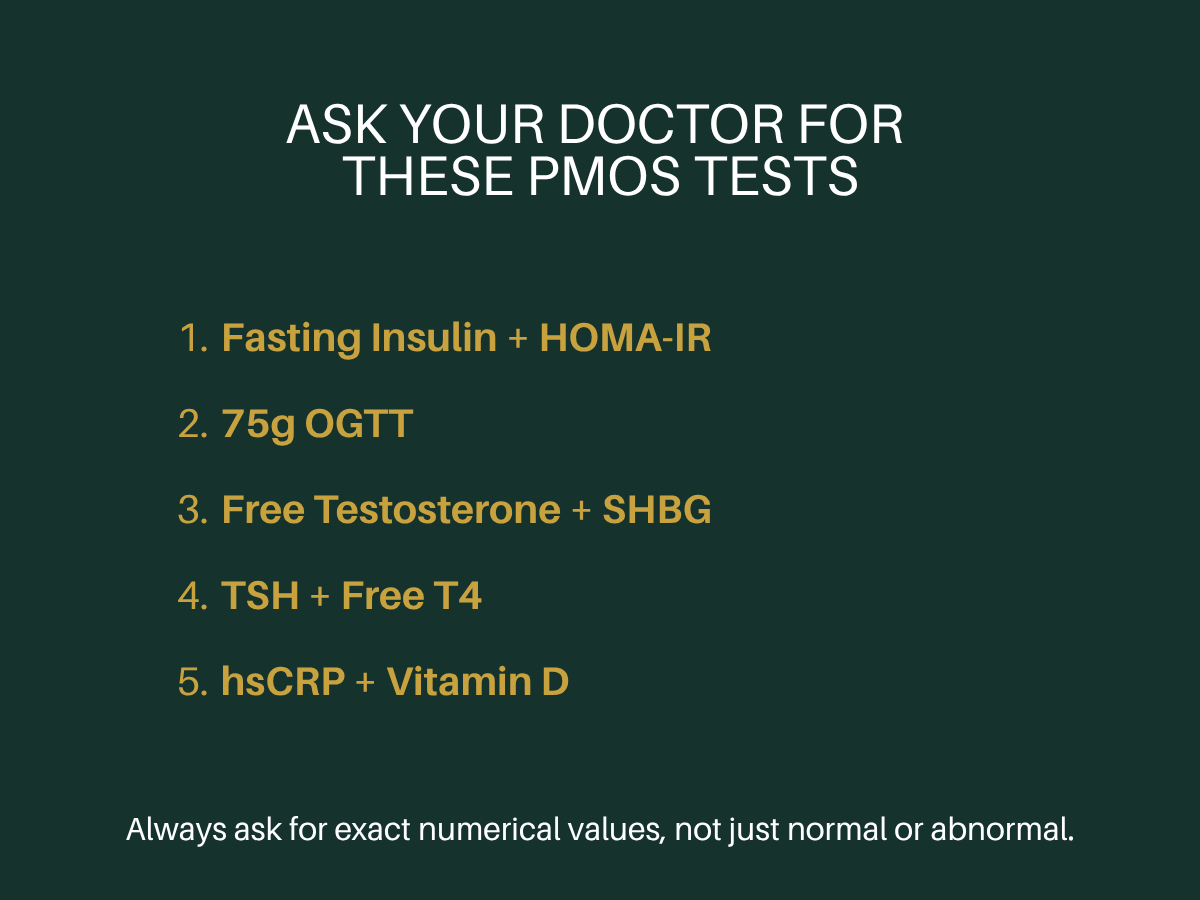
Script for your doctor's appointment "I have been reading about the PMOS diagnosis framework and I would like a comprehensive metabolic and hormonal workup. Specifically, I am asking for:" • Fasting insulin and HOMA-IR calculation • 75g OGTT with 2-hour reading, not just fasting glucose • HbA1c and lipid panel • Total testosterone, free testosterone, and SHBG • DHEAS, LH, FSH, AMH, and prolactin • TSH and free T4 • hsCRP and Vitamin D • Body composition scan if available "These are all recommended under the 2026 PMOS evaluation framework. I would like the exact numerical values on my report, not just normal or abnormal." |
If your doctor dismisses any of these requests Ask for a referral to an endocrinologist. The 2026 PMOS framework explicitly states that an endocrinologist belongs in this patient's care from early on, not only when fertility becomes the issue. A gynaecologist treating PMOS without metabolic investigation is treating the downstream symptoms, not the condition. |
Conclusion: The Tests You Were Never Offered
The PMOS diagnosis checklist exists because the standard workup has failed millions of Indian women. Normal fasting glucose while insulin resistance has been building for a decade. Normal total testosterone while free testosterone drives acne and hair fall. Normal TSH while the thyroid undermines every other intervention. Normal BMI while visceral fat loads the metabolic risk.
The 2026 PMOS rename changes the clinical mandate. Metabolic screening is no longer optional, it is the starting point. But the Indian healthcare system will take time to catch up. Until it does, you need to walk into the consultation knowing exactly what to ask for.
Take this checklist to your next appointment. Ask for every test on it. Request your exact numerical values. And if you need help understanding what your results mean and what food protocol to build around them, book a free 30-minute discovery call.
Book a Free 30-Minute Discovery Call
Bring your blood reports. We will explain every number and build your food protocol from the root.
FAQs: PMOS Diagnosis Checklist
Q1. My doctor says fasting glucose is normal so I don't have insulin resistance. Is that correct?
No. Fasting glucose is the last marker to change when insulin resistance develops. The body compensates by producing more insulin to keep glucose normal, sometimes for a decade or more. During this time, fasting glucose looks fine while insulin resistance is already driving androgen excess and PMOS symptoms. Ask for fasting insulin and HOMA-IR, not just fasting glucose.
Q2. Can I do these tests at any time or do I need to fast?
Fasting tests like fasting insulin, fasting glucose, HOMA-IR, lipid panel, and HbA1c, require 8 to 12 hours of fasting before the blood draw. Schedule a morning appointment and do not eat or drink anything except water from the night before. Hormonal tests like LH, FSH, AMH, and testosterone are ideally drawn on day 2 or 3 of your cycle for most accurate results.
Q3. What is HOMA-IR and can I calculate it myself?
HOMA-IR stands for Homeostatic Model Assessment of Insulin Resistance. The formula is: fasting insulin (mIU/L) multiplied by fasting glucose (mg/dL), divided by 405. A result below 1.5 is optimal. Above 2.5 indicates clinically significant insulin resistance. Above 3.5 indicates severe insulin resistance. You can calculate this yourself once you have both values from your blood report.
Q4. My ultrasound showed no cysts. Can I still have PMOS?
Yes. Polycystic ovarian morphology is one of three diagnostic criteria, not all three need to be present. Research published with the PMOS rename confirmed there is no increase in abnormal ovarian cysts in the condition. You can have significant PMOS with a normal ultrasound. The metabolic and hormonal markers matter more.
Q5. What TSH level should I be asking for with PMOS?
Standard laboratory reference ranges for TSH go up to 4.5 or 5.0 mIU/L. But for women with PMOS symptoms, the optimal range is 0.5 to 2.5 mIU/L. A TSH of 3.5 mIU/L will be reported as normal by your lab but may indicate suboptimal thyroid function that is contributing to weight gain, fatigue, and worsening insulin resistance. Always ask for free T4 alongside TSH.
Q6. Why is free testosterone more important than total testosterone for PMOS?
Total testosterone measures all testosterone, including the portion bound to proteins and biologically inactive. Free testosterone measures only the fraction available to act on tissues. In insulin-resistant women, SHBG is often low, which means more testosterone is free and active, driving acne, hair fall, and facial hair, while total testosterone stays within the normal range. Always ask for free testosterone and SHBG alongside total testosterone.
Q7. I am lean. Should I still do the full PMOS checklist?
Especially if you are lean. Insulin resistance is present in 75% of lean women with PMOS. The metabolic damage is the same regardless of body weight as it is just less visible. Lean women are consistently undertested and underdiagnosed. The full metabolic and hormonal panel is even more important when weight is not flagging the risk.
Q8. What should I do with my test results once I have them?
Do not accept a normal or abnormal verdict without seeing the exact numbers. Write down or photograph every value. Compare each number to the optimal ranges in this checklist, not just the lab reference range. Bring the results to a consultation where the metabolic picture — not just the reproductive symptoms, will be addressed. If your current doctor does not discuss insulin resistance, fasting insulin, and your lipid panel, seek a second opinion from an endocrinologist.
About the Author
Shradha | Nutritionist & Dietitian | Fuel It Right. Practising out of Goa, India, with a focus on gut health, PMOS/PCOS, thyroid disorders, and weight management using real Indian food. No supplements. No machines. Just food, and the science behind it.
fuel-it-right.com | @fuelitright