
PCOS, PMOS and Cortisol: How Stress Worsens Your Symptoms
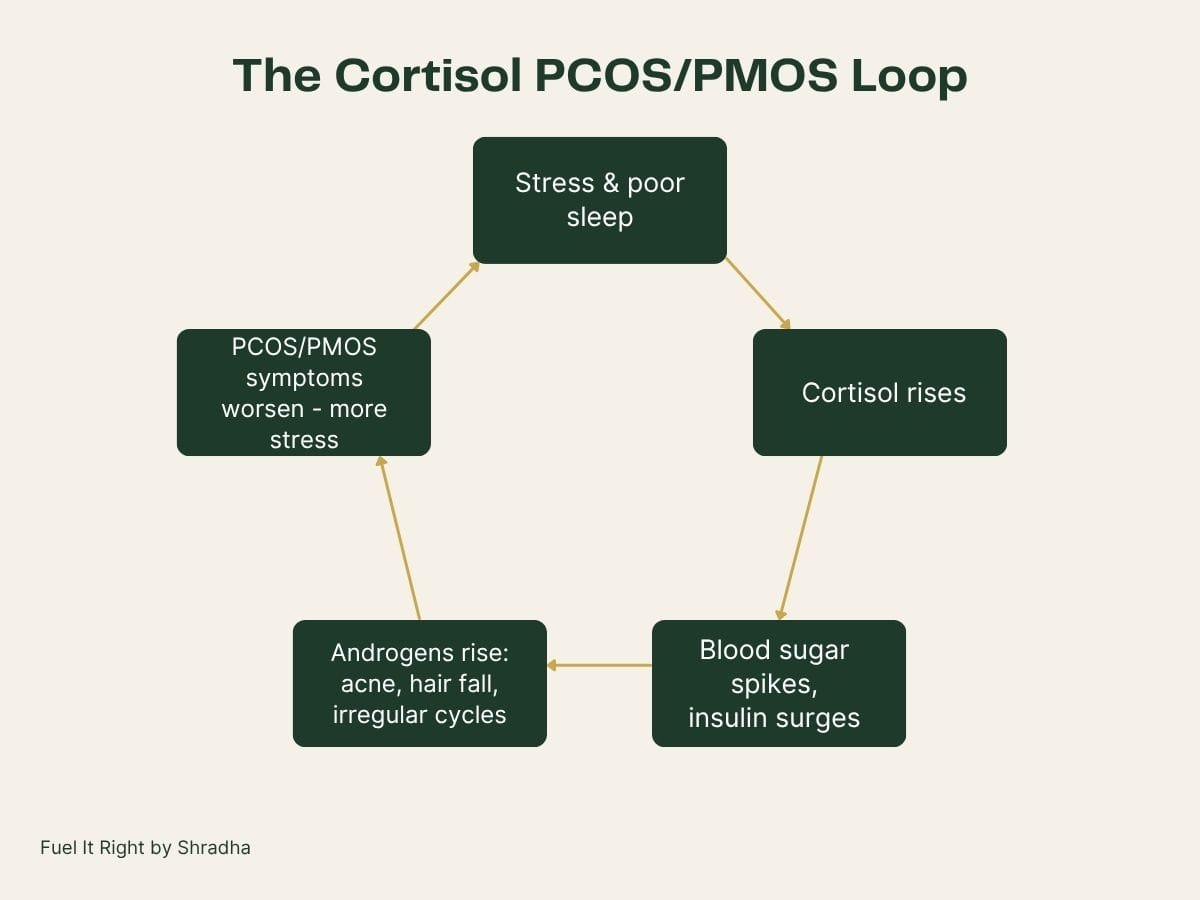
Cortisol and PCOS/PMOS are locked in a loop. Stress raises cortisol. Cortisol worsens insulin resistance. Worse insulin resistance worsens PCOS/PMOS. Here is how to break the cycle.
Table of Contents
1. Why Stress Is Not Just a Lifestyle Issue in PCOS/PMOS
2. The Cortisol-Insulin-Androgen Cascade
3. How Cortisol Drives Inflammation in PCOS/PMOS
4. Cortisol, Thyroid, and the Sleep Disruption Loop
5. The Gut-Stress Axis: How Your Microbiome Responds to Cortisol
6. How to Measure Your Cortisol Load
7. What Indian Food Does to Lower Cortisol
8. What to Reduce: The Hidden Cortisol Triggers in Indian Life
9. Conclusion
10. FAQs
Why Stress Is Not Just a Lifestyle Issue in PCOS/PMOS
Cortisol and PCOS/PMOS are locked in a bidirectional loop where each one actively worsens the other. The PCOS/PMOS diagnosis itself creates physiological stress. And elevated cortisol directly worsens every metabolic feature of PCOS/PMOS.
An Indian case-control study published in Clinical Epidemiology and Global Health found that serum cortisol levels were significantly elevated in PCOS women compared to healthy controls — a mean of 395.84 versus 256.26, a difference of approximately 54%. DHEA was also significantly elevated. Stress plays a silent role in the pathogenesis of PCOS and interventions to reduce stress can considerably help reduce symptom severity.
Cortisol in women with PCOS/PMOS is 54% higher on average than in women without the condition. This is one of its drivers, not just a side effect.
When a woman with PCOS/PMOS is told to reduce stress, she is being given advice without a mechanism. Understanding why cortisol worsens PCOS/PMOS is the prerequisite for doing something useful about it.
The Cortisol-Insulin-Androgen Cascade
Cortisol impacts PCOS/PMOS beginning at insulin resistance. Every cortisol rise raises blood sugar. Every blood sugar rise requires an insulin response. In a woman whose insulin sensitivity is already compromised, every stressful event deepens the metabolic problem she is already managing.
Step by Step: How One Stressful Day Compounds PCOS/PMOS
A deadline, a difficult conversation, a traffic jam, a poor night's sleep. Each activates the hypothalamic-pituitary-adrenal (HPA) axis, releasing cortisol. Here is what follows:
• Cortisol signals the liver to release stored glucose, raising blood sugar without any food intake.
• The pancreas responds with insulin. In insulin-resistant women, more insulin is required for the same glucose uptake.
• Hyperinsulinaemia rises. The ovaries receive the excess insulin signal and produce more androgens.
• Elevated androgens worsen acne, hair fall, and ovulatory disruption, the visible symptoms of PCOS/PMOS.
• Cortisol also directly stimulates the adrenal glands to produce DHEA, adding a second androgen source independent of the ovaries.
• Elevated DHEA raises total androgen load further, particularly in lean women where adrenal androgens are often the primary driver.
This cascade means every stressful event is, hormonally speaking, a PCOS/PMOS event. For more on the insulin resistance mechanism, see the blog on insulin resistance and PCOS/PMOS.
How Cortisol Drives Inflammation in PCOS/PMOS
Cortisol and inflammation have a paradoxical relationship in PCOS/PMOS. Acute cortisol is anti-inflammatory. But chronic cortisol elevation eventually becomes pro-inflammatory, the state consistently found in women with PCOS/PMOS.
Elevated TNF-alpha, IL-6, and hsCRP found in Indian women with PCOS are all worsened by chronic cortisol. The blog on PCOS/PMOS and inflammation covers how food addresses this directly.
Visceral Fat: The Cortisol-Inflammation Amplifier
Cortisol specifically promotes visceral fat storage. Visceral fat cells have a higher density of cortisol receptors than subcutaneous fat, meaning they preferentially grow under cortisol stimulation. Visceral fat then produces inflammatory cytokines continuously. This explains why chronic stress causes abdominal weight gain even without increased calorie intake — common in women with PCOS/PMOS regardless of BMI.
Cortisol, Thyroid, and the Sleep Disruption Loop
As covered in the blog on PCOS/PMOS and thyroid conditions, 1 in 5 Indian women with PCOS/PMOS also has a thyroid condition. Chronic cortisol elevation suppresses TSH secretion and impairs T4 to T3 conversion. A woman can have worsening thyroid function while TSH remains in the normal range.
The Sleep-Cortisol-PCOS/PMOS Spiral
Cortisol follows a diurnal pattern: highest in the morning, declining through the day to allow sleep. In women with PCOS/PMOS, evening cortisol remains elevated, delaying sleep onset. Poor sleep then elevates the next morning's cortisol. A single night of poor sleep reduces insulin sensitivity by 25% in healthy individuals, far more significant in women with PCOS/PMOS.
The pattern most Indian women with PCOS/PMOS recognise Deadline at work. Cannot sleep. Woke up exhausted. Skipped breakfast. Stress eating at 3pm. Could not stop the cravings. Skin broke out. Period late again. Felt guilty about eating. Slept badly again. Every part of this pattern is hormonally driven by cortisol. It is not willpower. It is a stress hormone doing exactly what it is designed to do, at the wrong time, in the wrong amount, in a body already metabolically stressed. |
The Gut-Stress Axis: How Your Microbiome Responds to Cortisol
The gut-stress connection in PCOS/PMOS is one of the most important and least discussed aspects of the condition. Cortisol directly alters gut microbiome composition, gut motility, and gut lining integrity.
• Increases gut permeability: cortisol weakens tight junctions in the gut lining, allowing bacterial fragments to trigger inflammation
• Alters microbiome composition: chronic stress reduces Lactobacillus and Bifidobacterium populations
• Disrupts gut motility: causing either constipation or urgency depending on the type and duration of stress
• Reduces gut serotonin production: approximately 90% of serotonin is made in the gut. Cortisol suppresses this, contributing to anxiety and mood disruption common in PCOS/PMOS
A dysbiotic gut then feeds back into the stress response via the vagus nerve, maintaining HPA axis activation even when the original stressor is gone. The gut-PCOS/PMOS connection blog covers the microbiome mechanisms in detail.
Is your gut adding to your cortisol load?
Take the free Gut Health Quiz. 2 minutes. Get a personalised read on your gut pattern and receive the free 3-Day Indian Gut Reset straight to your inbox.
How to Measure Your Cortisol Load
Before building a cortisol reduction protocol, knowing your cortisol pattern matters.
Blood Cortisol: Useful but Limited
A morning serum cortisol between 8am and 9am is the standard test. Optimal range: 10 to 20 mcg/dL. Above 20 mcg/dL suggests HPA axis overactivation. Ask for this alongside the PCOS/PMOS diagnosis checklist.
DHEA-S: The Adrenal Androgen Marker
Elevated DHEA-S above 200 mcg/dL in the PCOS/PMOS context indicates adrenal androgen excess driven by chronic HPA activation. In lean women with PCOS/PMOS, elevated DHEA-S is often the primary androgen driver, more significant than ovarian testosterone.
Indirect Markers Worth Tracking
• Evening energy surge- feeling most alert between 10pm and midnight is a classic sign of disrupted cortisol rhythm.
• Afternoon sugar cravings- the 3pm craving pattern is a reliable cortisol signal.
• Waking between 2am and 4am- cortisol rising too early disrupts the second half of sleep.
• Increased PCOS/PMOS symptoms during high-stress periods acne flares, cycle delays, abdominal weight gain.
Is cortisol driving your PCOS/PMOS symptoms?
Book a free 30-minute discovery call. Bring your DHEA-S and morning cortisol results. We will tell you whether adrenal androgens are the primary driver and what food protocol addresses it.
What Indian Food Does to Lower Cortisol
Lowering cortisol through food in PCOS/PMOS works through four mechanisms: stabilising blood sugar, rebuilding the gut microbiome, reducing inflammatory load, and providing nutrients that support adrenal function.
Blood Sugar Stability Is Cortisol Management
Every glucose crash triggers a cortisol response. For a woman with PCOS/PMOS eating a high-carbohydrate, low-protein diet, cortisol is being activated multiple times daily by food patterns alone. Protein-first meals, consistent meal timing, and avoiding refined carbohydrates on an empty stomach are the most direct dietary cortisol interventions available.
Specific Foods That Support Adrenal Function
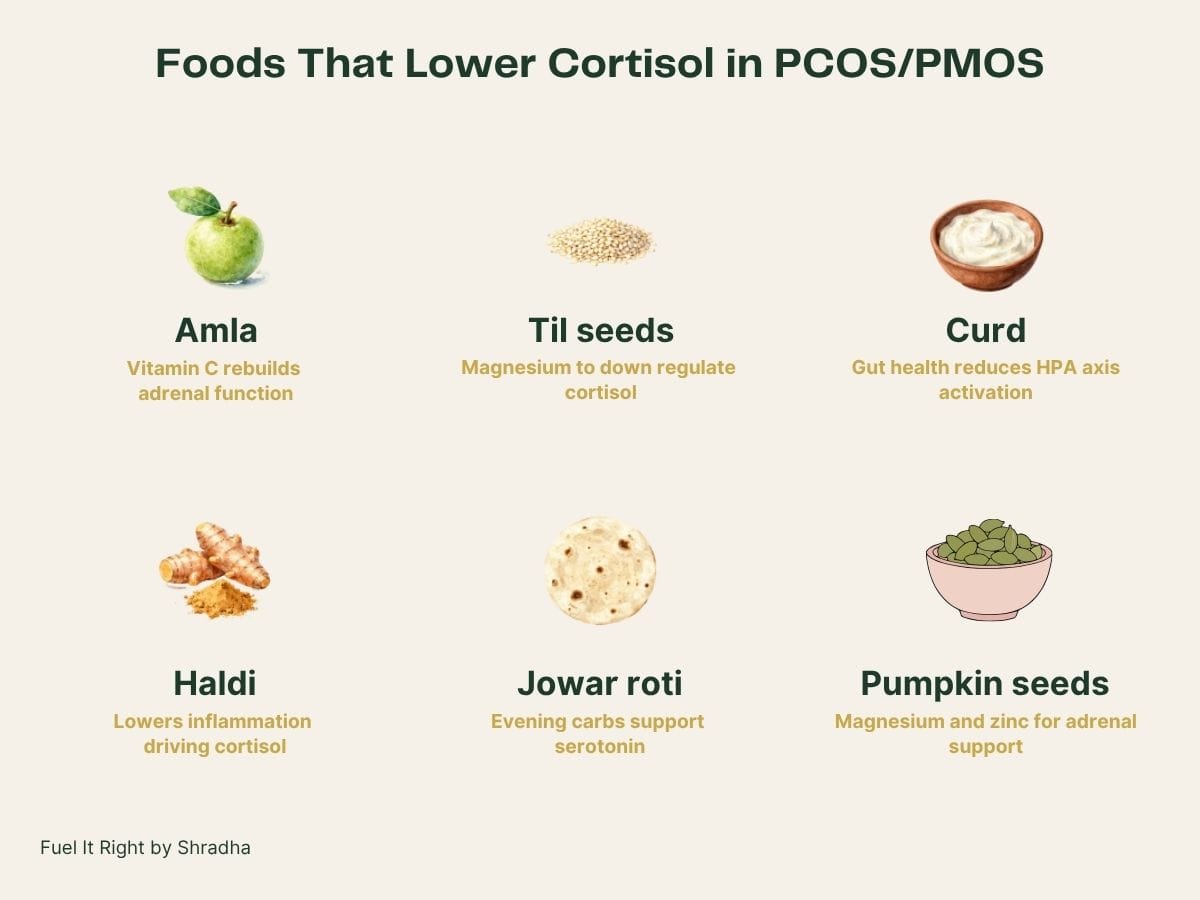
Magnesium-rich foods | Magnesium is consumed rapidly during stress responses. Dark leafy greens, pumpkin seeds, til (sesame seeds), and rajma are the richest Indian sources. Magnesium deficiency directly impairs the ability to downregulate cortisol after a stressor. |
Vitamin C rich foods | The adrenal glands have the highest concentration of Vitamin C in the body. Cortisol production depletes it rapidly. Amla, guava, capsicum, and citrus fruits replenish adrenal Vitamin C and support the regulatory feedback loop that turns off cortisol production. |
Complex carbohydrates at dinner | A moderate serving of complex carbohydrates at dinner, jowar roti, sweet potato, brown rice, supports serotonin production and lowers cortisol in the evening, supporting sleep onset. One context where dinner carbohydrates serve a specific hormonal purpose. |
Haldi and adrak | Both reduce the inflammatory load that maintains chronic cortisol elevation. Lower inflammation reduces the stimulus for continued HPA axis activation. Daily use in cooking is the most consistent intervention. |
Curd and chaas | Rebuilding the gut microbiome through consistent probiotic intake reduces gut permeability driven by cortisol, and improves vagus nerve signalling that downregulates HPA axis activity. Two servings daily. |
Ashwagandha — when clinically indicated | Clinical trials show ashwagandha reduces morning cortisol by 27.9% and serum DHEA-S significantly after 8 weeks. Appropriate when DHEA-S is elevated and cortisol is confirmed high. Discuss with your doctor before adding. |
What to Reduce: The Hidden Cortisol Triggers in Indian Life
Cortisol triggers in PCOS/PMOS extend well beyond obvious stress. Several everyday patterns in Indian urban life chronically activate the HPA axis.
The Dietary Cortisol Triggers
• Skipping breakfast or eating only chai and biscuits will make blood sugar crash triggers cortisol within 2 hours of waking, setting a high-cortisol baseline for the entire day.
• Caffeine on an empty stomach like coffee before food spikes cortisol significantly. After a protein-based meal produces a much smaller response.
• High sugar and refined carbohydrate intake like three high-glycaemic meals daily means three HPA axis activations from food alone.
• Alcohol, even small amounts disrupt cortisol rhythm and worsen sleep quality and insulin sensitivity in women with PCOS/PMOS.
The Lifestyle Cortisol Triggers
• Screens after 9pm. Blue light suppresses melatonin and maintains cortisol elevation into the evening.
• Irregular meal timing. The body treats unpredictable meal timing as a threat and maintains background cortisol elevation.
• Intense exercise in the evening. High-impact exercise raises cortisol when it should be declining. Morning or early afternoon is the appropriate window.
• Chronic over commitment. The most sustained HPA axis activator in urban Indian women's lives.
The one change with the highest cortisol impact Eat breakfast within one hour of waking, with protein as the first thing you consume.This single habit stabilises the morning cortisol rise. Everything downstream - cravings, energy crashes, sleep quality, androgen levels improves when the morning cortisol pattern is corrected. It takes one week of consistency to feel the difference. |
Want a cortisol and PCOS/PMOS protocol built for your lifestyle?
The Diet Dr Clinic team works with clients managing PCOS, PMOS, adrenal androgens, stress, and weight through real Indian food. No supplements. No machines.
+91 7057063984
Conclusion: Stress Is a Hormonal Event in PCOS/PMOS
Cortisol and PCOS/PMOS are mechanistically linked in a loop that makes each one worse. Stress raises cortisol. Cortisol raises blood sugar. Blood sugar raises insulin. Insulin raises androgens. Androgens worsen PCOS/PMOS. PCOS/PMOS causes more stress.
This is not a loop that willpower breaks. It is a loop that food, sleep, and consistent daily habits regulate. Protein at breakfast. Blood sugar stability. Magnesium and Vitamin C from Indian foods. Gut health through dal and curd. Evening carbohydrates that support serotonin. Screens off before 10pm.
These are not wellness suggestions. They are interventions in the cortisol-PCOS/PMOS loop at multiple points simultaneously. Start with the one that is most absent from your daily routine right now.
Book a Free 30-Minute Discovery Call
Bring your DHEA-S, morning cortisol, and PCOS/PMOS panel. We will build your cortisol management and food protocol together.
Or call us: +91 7057063984
FAQs: PCOS, PMOS and Cortisol
Q1. Does stress actually cause PCOS/PMOS?
Stress does not cause PCOS/PMOS on its own. But chronic stress significantly accelerates the development of PCOS/PMOS symptoms in predisposed women, and actively worsens every metabolic feature once present. An Indian case-control study found cortisol 54% higher in PCOS women than healthy controls, a difference with direct clinical consequences for symptom severity.
Q2. How do I know if cortisol is driving my PCOS/PMOS symptoms?
Ask for morning serum cortisol and DHEA-S on your next blood panel. Morning cortisol above 20 mcg/dL or DHEA-S above 200 mcg/dL indicates adrenal overactivation. Indirect signs: acne worsens during stressful periods, periods become irregular when work pressure increases, weight accumulates around the abdomen, afternoon sugar cravings are intense and consistent, sleep is poor despite exhaustion.
Q3. Why does my PCOS/PMOS get worse when I am stressed?
Because cortisol directly activates the same metabolic cascade that drives PCOS/PMOS symptoms. Each cortisol spike raises blood sugar, which raises insulin, which signals the ovaries and adrenal glands to produce more androgens. More androgens mean more acne, hair fall, disrupted ovulation. The stress-symptom connection is biochemical and direct.
Q4. I exercise to manage stress but my PCOS/PMOS symptoms are not improving. Why?
Timing and type of exercise matters significantly. Intense high-impact exercise in the evening raises cortisol when it should be declining, worsens sleep, and adds to the overall cortisol load. Morning or early afternoon exercise at moderate intensity, walking, yoga, swimming, resistance training, reduces cortisol over time. Evening high-intensity workouts can worsen the cortisol-PCOS/PMOS loop even while improving cardiovascular fitness.
Q5. Can intermittent fasting help with cortisol in PCOS/PMOS?
Intermittent fasting is a physiological stress and directly activates the HPA axis. For women with already elevated cortisol and adrenal DHEA-S, extended fasting windows raise cortisol further. The most cortisol-protective pattern is three consistent meals with protein at each, with the first meal within one hour of waking. Skipping breakfast is particularly damaging.
Q6. My doctor says my cortisol is normal but I have all the symptoms. What should I do?
Ensure the test is drawn strictly between 8am and 9am, without prior exercise or caffeine. Also ask for DHEA-S. If both appear normal but symptoms persist, a 4-point salivary cortisol test measuring levels at morning, midday, evening, and midnight gives a more complete picture of the daily cortisol rhythm.
Q7. Does magnesium help with cortisol and PCOS/PMOS?
Magnesium deficiency impairs the ability to downregulate cortisol after a stressor, extremely common in Indian women. Food sources like dark leafy greens, til, pumpkin seeds, rajma are preferred. When dietary intake is consistently low, magnesium glycinate at 300 to 400 mg daily has good clinical evidence for improving sleep quality and cortisol regulation.
Q8. Will managing cortisol alone fix my PCOS/PMOS?
No. Cortisol is one driver among several- insulin resistance, gut dysbiosis, inflammation, and dietary patterns all operate simultaneously. But for women with elevated DHEA-S, adrenal-driven androgen excess, and stress-reactive symptom patterns, cortisol management is the highest-leverage intervention point. It often makes other interventions more effective by reducing the cortisol load that was undermining them.
About the Author
Shradha | Nutritionist and Dietitian | Fuel It Right. Practising out of Goa, India, with a focus on gut health, PMOS/PCOS, thyroid disorders, and weight management using real Indian food. No supplements. No machines. Just food, and the science behind it.
fuel-it-right.com | @fuelitright