
PMOS Inflammation: The Indian Kitchen Solution
PMOS is always associated with chronic low-grade inflammation. Your Indian kitchen already has everything needed to reduce it. Here is the science and exactly which foods work.
Table of Contents
1. PMOS Is Always an Inflammatory Condition
2. How Inflammation and Insulin Resistance Drive Each Other
3. What Chronic Inflammation Does to Your Hormones
4. Where the Inflammation Comes From
5. What Your Blood Tests Are Telling You About Inflammation
6. The Indian Spice Cabinet as Anti-Inflammatory Medicine
7. Beyond Spices: Anti-Inflammatory Foods in the Indian Kitchen
8. What to Remove: Foods That Fuel PMOS Inflammation
9. Conclusion
10. FAQs
PMOS Is Always an Inflammatory Condition
PMOS and inflammation are inseparable. Research consistently shows that PMOS is not sometimes inflammatory, it is always associated with chronic low-grade inflammation. Using blood tests, studies find that people with PMOS have significantly higher levels of inflammatory markers than people without PMOS, regardless of their weight, their BMI, or whether their periods are regular.
This is not a new finding. But it is one that has been systematically under-addressed in clinical practice, where PMOS management has focused on reproductive symptoms rather than the inflammatory biology driving them.
What the Indian research shows An Indian study published in Frontiers in Endocrinology examined inflammatory markers in 144 Indian women with PCOS and 320 healthy controls. Pro-inflammatory markers like TNF-alpha, IL-6, IL-1beta, hsCRP, and serum resistin, were significantly higher in women with PCOS. Anti-inflammatory markers like IL-10 and adiponectin were significantly lower. The inflammatory pattern was consistent regardless of whether the women were vegetarian or non-vegetarian. |
The 2026 PMOS rename, which identifies the condition as polyendocrine and metabolic, creates the mandate to treat inflammation as a core feature of the condition rather than a secondary finding. Inflammatory PMOS is not a subtype. It is simply PMOS.
How Inflammation and Insulin Resistance Drive Each Other
PMOS inflammation and insulin resistance are not parallel problems. They are a loop, each one worsening the other in a cycle that is self-reinforcing without dietary intervention.
Inflammation Worsens Insulin Resistance
Pro-inflammatory cytokines, particularly TNF-alpha and IL-6, directly interfere with insulin receptor signalling. They activate serine kinase pathways that block the insulin receptor's ability to transmit its signal into the cell. The cell becomes more resistant. More insulin is required. Hyperinsulinaemia deepens.
Insulin Resistance Worsens Inflammation
Chronically elevated insulin promotes visceral fat accumulation. Visceral fat is metabolically active, it produces inflammatory cytokines continuously. The more visceral fat, the more inflammation. The more inflammation, the worse the insulin resistance. The cycle continues.
Androgens Add a Third Layer
Elevated androgens, driven by excess insulin, independently contribute to the inflammatory load. Women with PMOS have elevated hsCRP, TNF-alpha, and IL-6 even after controlling for BMI, meaning the inflammation is driven by the hormonal and metabolic dysregulation, not just by body weight. A lean woman with PMOS is inflamed. A woman at normal weight with PMOS is inflamed. Inflammation in PMOS is not a weight problem.
What Chronic Inflammation Does to Your Hormones
Understanding PMOS inflammation requires understanding how it disrupts the hormonal systems that govern your cycle, your skin, your hair, and your weight.
Disrupts the HPO axis | The hypothalamic-pituitary-ovarian axis governs ovulation. Pro-inflammatory cytokines directly disrupt GnRH pulsatility which is the signal that starts the ovulation cascade. Elevated TNF-alpha and IL-6 suppress the HPO axis independently of insulin. Irregular cycles in PMOS are partly an inflammatory problem, not only an insulin problem. |
Impairs follicle development | Inflammation within the ovarian follicle environment directly impairs oocyte quality and follicle maturation. Even in women with PMOS who do ovulate, elevated local inflammatory cytokines reduce egg quality and implantation rates. |
Suppresses adiponectin | Adiponectin is a hormone produced by fat cells that improves insulin sensitivity and has anti-inflammatory effects. In women with PMOS, adiponectin is consistently lower than in healthy women and lower adiponectin means both worsened insulin resistance and reduced anti-inflammatory protection. |
Elevates cortisol | Chronic inflammation activates the HPA axis, driving cortisol elevation. Cortisol worsens insulin resistance, raises LH, suppresses progesterone, and further disrupts the hormonal balance already compromised by PMOS. The stress-inflammation-hormone triad is tightly linked. |
Where the Inflammation Comes From
Identifying the sources of PMOS inflammation is essential because different sources require different interventions. There are four primary drivers in Indian women with PMOS.
• Gut dysbiosis and leaky gut: gram-negative bacteria breach a permeable gut lining and enter the bloodstream as lipopolysaccharides, triggering the immune system and sustaining chronic inflammation. This is often the primary driver and the most responsive to dietary change.
• Visceral fat: even small amounts of fat stored around internal organs produce inflammatory cytokines continuously. This is why inflammation is present in lean women with PMOS, not just in those who are overweight.
• Hyperglycaemia and post-meal glucose spikes: elevated blood glucose directly activates inflammatory pathways. Each high-glycaemic meal produces an inflammatory response. For a woman eating three high-glycaemic meals daily, inflammation is being triggered multiple times every day.
• Refined oils and trans fats: processed vegetable oils, deep-fried foods, and packaged snacks are the most potent dietary drivers of arachidonic acid-based inflammation. Common in Indian urban diets and dramatically underaddressed in PMOS management conversations.
The gut connection is explored in detail in the Gut-PMOS connection. The insulin-inflammation loop is covered in depth in insulin resistance and PMOS.
What Your Blood Tests Are Telling You About Inflammation
Before building an anti-inflammatory protocol, know your inflammatory baseline in PMOS. Two markers tell you the most.
hsCRP: Your Primary Inflammation Marker
High-sensitivity C-reactive protein is the most clinically accessible marker of systemic inflammation. In women with PMOS, hsCRP is consistently elevated. The PMOS-optimal target is below 1.0 mg/L, not the lab's standard threshold of below 3.0 mg/L. A value of 2.1 mg/L will be reported as low risk by your lab. In the context of PMOS management, it indicates active inflammation that requires dietary intervention.
TNF-alpha and IL-6
These pro-inflammatory cytokines are rarely ordered in standard clinical practice but are significantly elevated in women with PMOS in research settings. If hsCRP is persistently above 1.0 mg/L despite dietary changes, asking for TNF-alpha and IL-6 can help identify whether the inflammation is primarily gut-driven, fat-driven, or immune-driven, each of which responds to different dietary approaches.
Adiponectin
Low adiponectin is an underused marker in PMOS. Adiponectin below 10 mcg/mL indicates impaired anti-inflammatory protection and worsened insulin sensitivity. Foods that raise adiponectin — omega-3 rich sources, magnesium-rich foods, high-fibre legumes, should be prioritised when adiponectin is low.
The Indian Spice Cabinet as Anti-Inflammatory Medicine
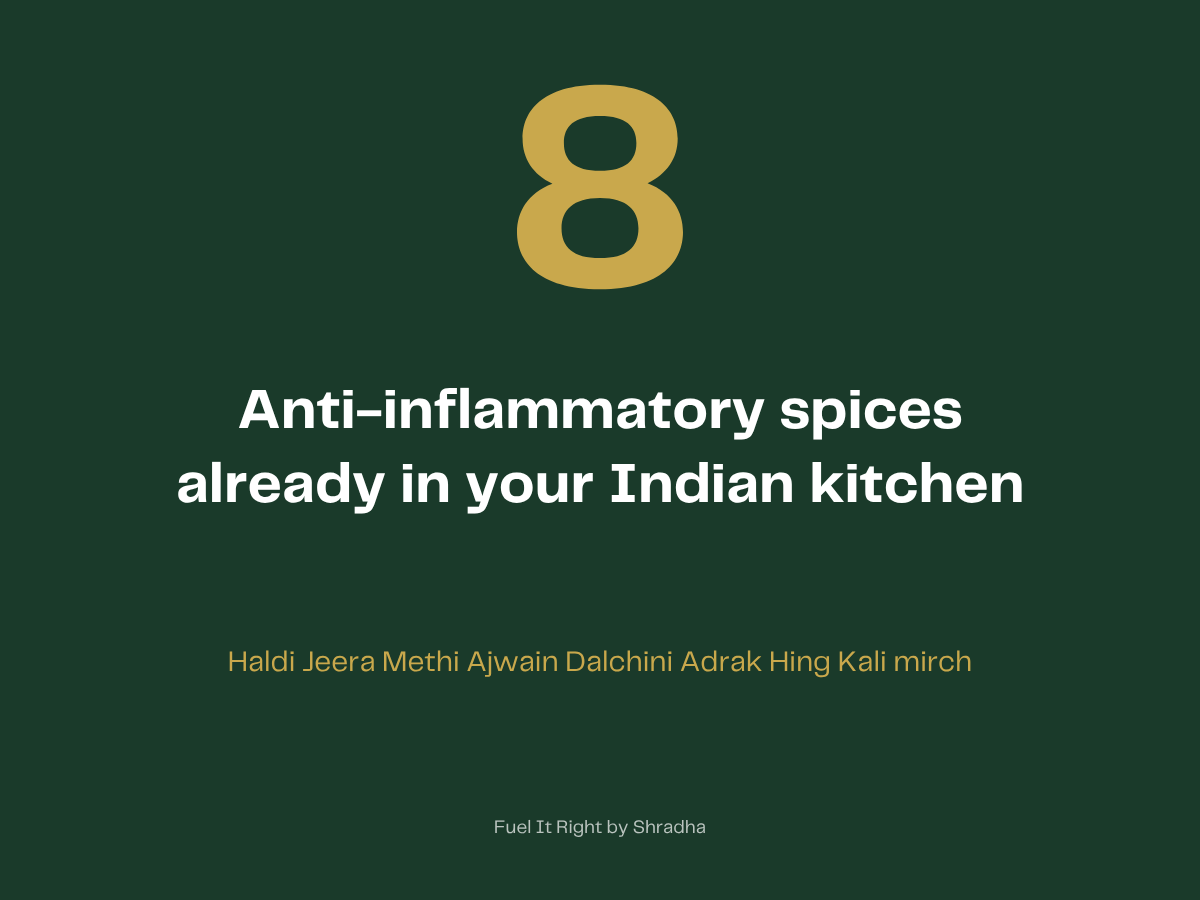
The anti-inflammatory tools for PMOS are not expensive supplements, imported superfoods, or pharmaceutical interventions. They are in the Indian spice cabinet, and they have clinical evidence behind them.
Spice | Active compound | Mechanism | PMOS benefit |
Haldi (turmeric) | Curcumin | Inhibits NF-kB pathway: the master switch for inflammatory cytokine production. Reduces TNF-alpha, IL-6, and hsCRP directly. | Reduces ovarian inflammation. Improves insulin sensitivity. Supports gut lining repair. |
Jeera (cumin) | Thymoquinone, cuminaldehyde | Inhibits inflammatory enzymes COX-1 and COX-2. Reduces prostaglandin production. Improves bile secretion and gut motility. | Reduces bloating and gut inflammation. Improves digestion of proteins and fats. |
Methi (fenugreek) | Galactomannan, trigonelline | Reduces post-meal glucose spike by directly reducing the inflammatory hit from each meal. Galactomannan is prebiotic, feeding anti-inflammatory gut bacteria. | Dual action: reduces inflammation and insulin resistance simultaneously. |
Ajwain (carom) | Thymol | Antimicrobial and anti-inflammatory. Reduces gram-negative bacterial overgrowth that drives LPS-mediated inflammation. | Reduces gut inflammation source. Relieves bloating and acidity associated with PMOS gut dysbiosis. |
Dalchini (cinnamon) | Cinnamaldehyde | Mimics insulin action at the cellular level. Reduces post-meal glucose and insulin response. Reduces CRP and inflammatory markers. | Directly addresses insulin resistance while reducing inflammation - dual benefit. |
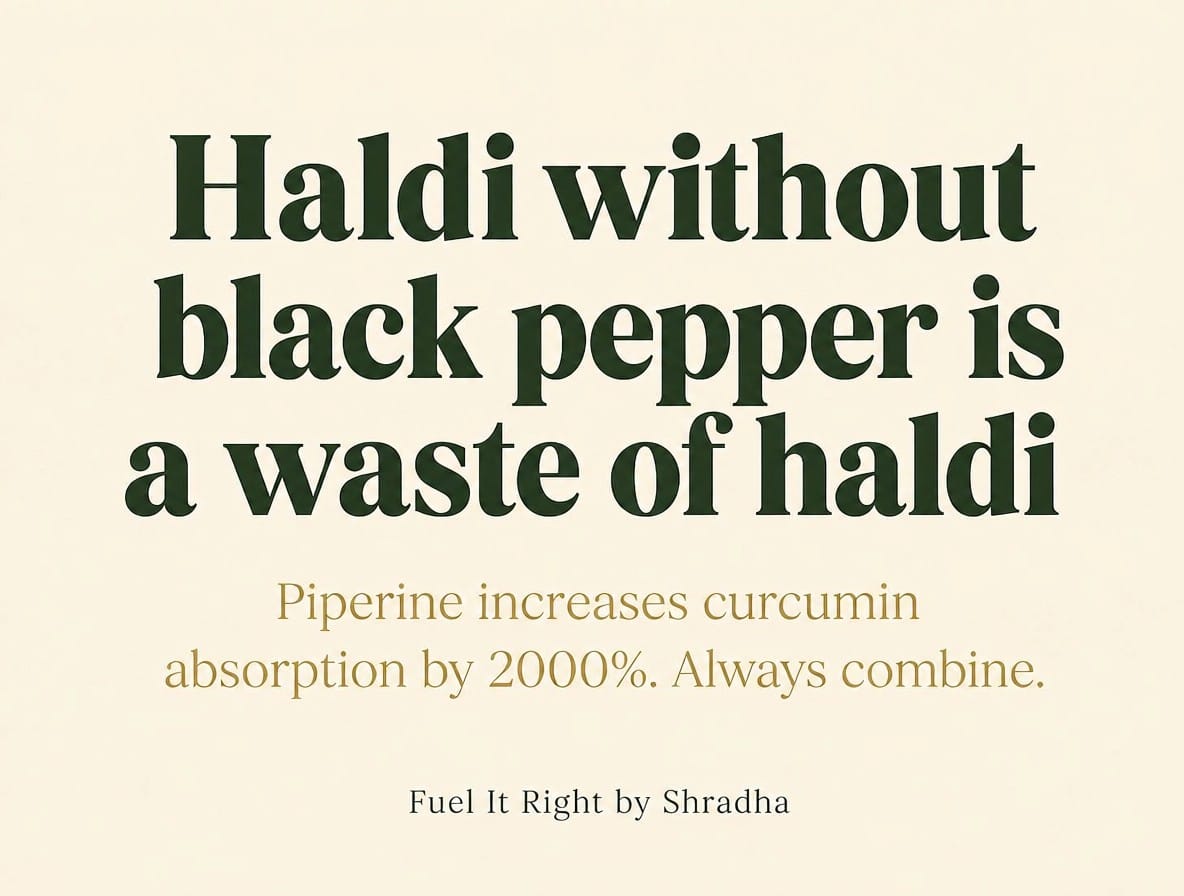
Kali mirch (black pepper) | Piperine | Enhances curcumin bioavailability by up to 2000%. Independently reduces inflammatory cytokines. | Without black pepper, haldi's curcumin is poorly absorbed. Always combine. |
Adrak (ginger) | Gingerols, shogaols | Inhibits leukotriene and prostaglandin synthesis. Reduces TNF-alpha. Improves gastric motility. | Anti-androgenic properties in research. Reduces inflammatory markers in PMOS. |
Hing (asafoetida) | Ferulic acid, coumarins | Reduces intestinal spasm. Anti-inflammatory in the gut lining. Reduces gram-negative bacterial activity. | Reduces gut inflammation source. Relieves the digestive discomfort common in PMOS gut dysbiosis. |
The most important combination in your kitchen Haldi + black pepper + fat. Curcumin is fat-soluble and poorly absorbed without fat and piperine. A pinch of kali mirch and a small amount of ghee or coconut oil alongside haldi increases curcumin absorption by up to 2000%. The traditional Indian practice of cooking haldi in ghee before adding to dal is not just flavour, it is optimised bioavailability. |
Beyond Spices: Anti-Inflammatory Foods in the Indian Kitchen
The spice cabinet is the most potent anti-inflammatory tool, but anti-inflammatory eating for PMOS extends across the entire meal. Here are the food categories that matter most.
1 | Dal and legumes daily Dal is the single most anti-inflammatory food in the Indian diet. The fibre feeds Faecalibacterium prausnitzii which produces butyrate and reduces systemic inflammation through gut lining repair. One cup of cooked dal daily is the most impactful single food change for reducing PMOS inflammation. |
2 | Seasonal vegetables at every meal Polyphenols in vegetables act as antioxidants that neutralise the reactive oxygen species driving inflammation. Diversity matters like different vegetables feed different anti-inflammatory gut bacteria. Eating the same two vegetables daily is significantly less effective than rotating through seasonal options. |
3 | Curd and chaas twice daily Live cultures in fresh curd reduce intestinal permeability and LPS translocation by addressing the gut inflammation source directly. Two servings of curd or chaas daily provides measurably better outcomes than one serving. |
4 | Ghee in moderate amounts Contains butyrate directly and stimulates butyrate production by gut bacteria. Butyrate is the primary anti-inflammatory fuel for the colon lining. A small amount of ghee daily, not elimination, is the evidence-based approach. |
5 | Omega-3 rich sources Flaxseeds, walnuts, chia seeds, and fatty fish (for non-vegetarians) provide omega-3 fatty acids that directly suppress the arachidonic acid inflammatory cascade. Omega-3 also raises adiponectin, the anti-inflammatory hormone consistently low in PMOS. |
6 | Green leafy vegetables Moringa (drumstick leaves), methi leaves, spinach, and palak provide magnesium, folate, and antioxidants that support the anti-inflammatory response and reduce oxidative stress, which is elevated in PMOS. |
What to Remove: Foods That Fuel PMOS Inflammation
Reducing PMOS inflammation through food works in two directions, adding anti-inflammatory foods and removing pro-inflammatory ones. The removal matters as much as the addition. You cannot out-haldi a diet full of refined oils and packaged snacks.
The most pro-inflammatory foods in the Indian urban diet
• Refined oils used for deep frying [samosa, pakora, puri, vada] trans fats and oxidised oils directly activate inflammatory pathways.
• Maida in all forms like bread, biscuits, naan, pav, drives glucose spikes that trigger inflammatory cascades at every meal.
• Packaged snacks like mixture, chips, instant noodles, contain refined oils, hidden sugars, and additives that compound inflammation.
• In sweetened beverages like cold drinks, packaged juices, flavoured milk, fructose directly activates hepatic inflammatory pathways.
• Full-fat milk in large quantities may raise androgen levels in PMOS according to some research. Moderate amounts of curd and paneer are fine.
• Excess red meat increases arachidonic acid load; relevant for non-vegetarian women with high inflammatory markers
Elimination is not the goal. Reduction and replacement is. Every pakora replaced with a handful of roasted chana reduces the inflammatory load. Every sweetened chai replaced with jeera or haldi water reduces it further. The direction matters more than perfection.
Conclusion: Your Kitchen Was Always the Lab
PMOS and inflammation are inseparable. The condition is always inflammatory. The inflammatory biology drives the insulin resistance that drives the androgen excess that drives the symptoms. Treating PMOS without addressing inflammation is treating the river without touching the source.
The Indian kitchen is uniquely positioned to address this. Haldi, jeera, methi, ajwain, dalchini, adrak are not just wellness additions to a treatment plan. They are the treatment plan's foundation, with mechanisms that have been mapped in clinical research. Your grandmother was doing anti-inflammatory medicine. She just did not call it that.
Start with your hsCRP. Know your inflammatory baseline. Build your plate around dal, seasonal sabzi, and curd. Cook with haldi and kali mirch in ghee. Eat methi seeds daily. And if you want a protocol built specifically around your inflammatory markers and your kitchen, book a free 30-minute discovery call.
Book a Free 30-Minute Discovery Call
Tell me your hsCRP and your daily diet. We will build your anti-inflammatory protocol from your own kitchen.
FAQs: PMOS and Inflammation
Q1. How do I know if inflammation is high in my PMOS?
Ask for hsCRP on your blood panel. The PMOS-optimal target is below 1.0 mg/L which is significantly lower than the lab's standard threshold of below 3.0 mg/L. A value between 1.0 and 3.0 mg/L will be reported as low risk by your lab but indicates active inflammation requiring dietary intervention in the PMOS context. Symptoms that suggest high inflammation: persistent fatigue, acne that does not respond to skin treatments, joint discomfort, and worsened PMOS symptoms despite dietary changes.
Q2. Can haldi alone reduce inflammation in PMOS?
Haldi has strong clinical evidence for reducing TNF-alpha, IL-6, and hsCRP through its curcumin content. But curcumin alone is poorly bioavailable, it is rapidly metabolised and excreted before it can act. For meaningful anti-inflammatory effect, haldi must always be combined with black pepper, which contains piperine that enhances curcumin absorption by up to 2000%, and with fat like ghee or coconut oil, since curcumin is fat-soluble. Haldi in warm water without black pepper or fat has very limited clinical effect.
Q3. Is inflammation in PMOS caused by being overweight?
No. Research consistently shows that pro-inflammatory markers like TNF-alpha, IL-6, and hsCRP are significantly elevated in women with PMOS even after controlling for BMI. Inflammation in PMOS is driven by insulin resistance, gut dysbiosis, androgen excess, and hyperglycaemia, all of which occur independently of body weight. Lean women with PMOS are inflamed. Weight loss alone is insufficient to resolve PMOS inflammation; the dietary drivers must be addressed directly.
Q4. How long does it take for anti-inflammatory eating to reduce hsCRP?
In studies using consistent dietary anti-inflammatory protocols, hsCRP begins to shift within 6 to 8 weeks. Symptomatic changes like reduced fatigue, clearer skin, less bloating, often appear within 3 to 4 weeks. Androgen-driven symptoms like acne and hair fall take longer, typically 3 to 6 months, as they require the full inflammatory-insulin-androgen cascade to shift. Consistent daily application matters more than perfection but partial compliance produces partial results.
Q5. Should I take curcumin or turmeric supplements?
Curcumin supplements are more bioavailable than raw haldi, and some formulations use piperine or phospholipid complexes to enhance absorption further. For women with significantly elevated hsCRP who are struggling to achieve therapeutic doses through food alone, a supplement can be appropriate. But food-first is always the starting point like cooking with haldi, black pepper, and ghee daily costs nothing and works. Supplements are adjunct, not primary.
Q6. What is the single most impactful dietary change for PMOS inflammation?
Removing deep-fried foods and packaged snacks. These two categories are the most potent pro-inflammatory inputs in the Indian urban diet like refined oils, trans fats, and refined carbohydrates in combination create an inflammatory load that no amount of haldi can neutralise. Reduction of deep-fried foods plus consistent dal and curd daily produces more measurable hsCRP improvement than any supplement stack.
Q7. Can stress worsen PMOS inflammation?
Yes, significantly. Cortisol activates the same NF-kB inflammatory pathway that pro-inflammatory cytokines activate. Chronic psychological stress directly elevates TNF-alpha and IL-6, worsening the inflammatory load in PMOS. Stress management is not a lifestyle suggestion, it is an inflammatory intervention. For women with high hsCRP who are eating well but not seeing improvement, chronic stress is often the missing variable.
Q8. Is a vegetarian diet better than non-vegetarian for PMOS inflammation?
The Indian research found comparable inflammatory markers between vegetarian and non-vegetarian women with PCOS, with vegetarians having higher carbohydrate intake and non-vegetarians having higher testosterone and lipid levels. Neither diet is inherently superior for PMOS inflammation like the quality of the diet within each pattern matters more than the category. A vegetarian diet heavy in refined carbohydrates and packaged foods is more inflammatory than a non-vegetarian diet rich in dal, vegetables, curd, and fish with moderate refined carbohydrate intake.
About the Author
Shradha | Nutritionist & Dietitian | Fuel It Right. Practising out of Goa, India, with a focus on gut health, PMOS/PCOS, thyroid disorders, and weight management using real Indian food. No supplements. No machines. Just food, and the science behind it.
fuel-it-right.com | @fuelitright