
Why PCOS and PMOS Cause Anxiety and Depression
42% of women with PCOS/PMOS experience depression. 34 to 57% experience anxiety. This is not a side effect of the condition. It is the condition itself, showing up in the brain. Here is why.
Table of Contents
1. The Statistics Nobody Mentions in the Consultation
2. The Biological Mechanisms: Why PCOS/PMOS Disrupts Mood
3. The HPA Axis, Cortisol, and Emotional Dysregulation
4. The Gut-Brain Axis: How Your Microbiome Affects Your Mood
5. The Indian Context: Why Mental Health in PCOS/PMOS Is More Complex
6. What Food Does for Mental Health in PCOS/PMOS
7. What to Do Right Now
8. Conclusion
9. FAQs
The Statistics Nobody Mentions in the Consultation
PCOS/PMOS and mental health are inseparable but you would not know that from most consultations. The conversation about PCOS/PMOS almost always centres on periods, fertility, weight, and acne. Mental health is rarely raised. Yet the data is unambiguous and has been for years.
A scoping review of Indian women with PCOS found anxiety prevalence of 34 to 57% and depression prevalence of 28 to 64%. A large meta-analysis found that approximately 42% of women with PCOS experience depression. These are not marginal findings. They represent the most common mental health burden in women of reproductive age in India.
42% of women with PCOS/PMOS experience depression. Up to 57% experience anxiety. These are not side effects of the condition. They are the condition itself, showing up in the brain.
The mental health burden in PCOS/PMOS is not primarily a psychological response to having a chronic condition, though that contributes. It is driven by the same hormonal, metabolic, and neurological disruption that drives every other symptom. Understanding this changes what the treatment should look like, and it places food at the centre of mental health management alongside the other clinical interventions.
The Biological Mechanisms: Why PCOS/PMOS Disrupts Mood
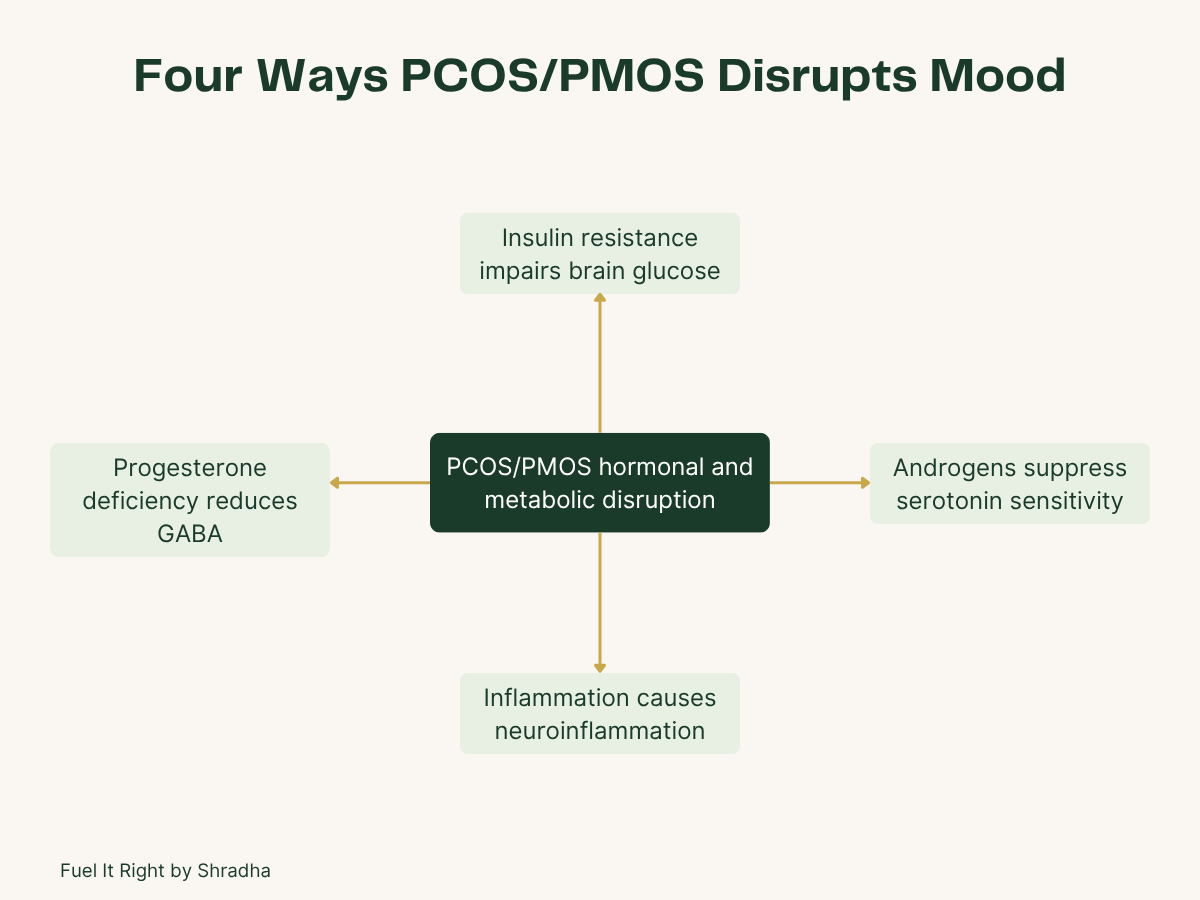
The PCOS/PMOS-mental health connection is mechanistically grounded in four specific biological pathways. This is not about feeling sad because of your diagnosis. This is about the same metabolic disruption affecting the brain with the same directness it affects the ovaries, the liver, and the skin.
Insulin Resistance and Brain Glucose Metabolism
The brain is the most glucose-dependent organ in the body. Insulin resistance impairs brain glucose metabolism directly which is the same cellular insulin signalling defect that prevents muscle cells from taking up glucose also affects neural tissue. The result: energy deficits in specific brain regions associated with mood regulation, motivation, and cognitive function. Brain fog, low motivation, and the flat, depleted feeling many women with PCOS/PMOS describe are not weakness. They are metabolic. For more on how insulin resistance operates systemically, see the blog on insulin resistance and PCOS/PMOS.
Androgen Excess and Mood
Elevated testosterone and DHEA directly affect neurotransmitter systems. High androgens suppress serotonin receptor sensitivity reducing the effectiveness of the brain's primary mood-stabilising neurotransmitter without reducing its production. This is why women with PCOS/PMOS can have apparently normal serotonin levels and still experience significant depression and anxiety: the system is less responsive, not less supplied.
Chronic Inflammation and the Inflammatory Model of Depression
The inflammatory model of depression which is one of the most robust recent developments in psychiatric research, proposes that chronic systemic inflammation directly drives depressive symptoms through microglial activation and neuroinflammation. Women with PCOS/PMOS consistently show elevated TNF-alpha, IL-6, and CRP, the same inflammatory markers now implicated in depression biology. Treating PCOS/PMOS inflammation through food is not just a metabolic intervention. It is a mental health intervention. The blog on PCOS/PMOS and inflammation covers the food protocol for this in detail.
Progesterone Deficiency and GABAergic Function
Anovulation in PCOS/PMOS means irregular or absent progesterone production. Progesterone is converted in the brain to allopregnanolone, a neurosteroid that acts on GABA receptors, producing calming, anti-anxiety effects. Women with PCOS/PMOS who are anovulatory have reduced allopregnanolone, which directly reduces GABAergic tone. The result is a nervous system that is chronically less buffered against anxiety — not from a psychological cause but from a direct neurochemical deficit produced by the metabolic disruption of ovulation.
The HPA Axis, Cortisol, and Emotional Dysregulation
As covered in the blog on PCOS/PMOS and cortisol, cortisol is 54% higher on average in women with PCOS/PMOS than in healthy controls. This chronically elevated cortisol has direct consequences for mental health that compound the hormonal mechanisms above.
Cortisol and Hippocampal Function
Chronic cortisol elevation is toxic to hippocampal neurons which is the brain cells responsible for memory consolidation, emotional regulation, and contextualising fear responses. Prolonged HPA axis activation literally shrinks hippocampal volume, which is one of the most consistent structural brain findings in both PTSD and major depression. Women with PCOS/PMOS who are under chronic occupational and domestic stress are exposing their hippocampal tissue to a cortisol load that directly contributes to their anxiety and low mood, not metaphorically, but through measurable neurological change.
The Sleep-Mood-Cortisol Triangle
Poor sleep elevates cortisol. Elevated cortisol disrupts sleep architecture. Disrupted sleep depletes serotonin and dopamine, directly worsening mood the following day. This triangle, sleep, cortisol, and mood, is one of the most self-reinforcing cycles in PCOS/PMOS. Breaking it requires addressing all three simultaneously.
Thyroid and Mood
Suboptimal thyroid function which is extremely common in Indian women with PCOS/PMOS, independently causes depression, cognitive slowing, motivation deficits, and anxiety. A woman with PCOS/PMOS, subclinical hypothyroidism, and a TSH of 3.5 mIU/L may be experiencing thyroid-driven depression that looks clinically identical to hormonal depression. Both need to be addressed. The blog on PCOS/PMOS and thyroid conditions covers the testing and management in detail.
The clinical gap that matters most Women with PCOS/PMOS who present with depression and anxiety are frequently prescribed antidepressants without any investigation into the metabolic and hormonal drivers of their mood symptoms. An SSRI prescribed to a woman with PCOS/PMOS whose serotonin receptors are being suppressed by elevated androgens, whose brain glucose metabolism is impaired by insulin resistance, and whose neuroinflammation is driven by gut dysbiosis, will produce incomplete results. The medication addresses one downstream pathway. The metabolic drivers continue. |
The Gut-Brain Axis: How Your Microbiome Affects Your Mood
One of the most significant recent developments in PCOS/PMOS mental health research is the growing understanding of the gut-brain connection. The gut and the brain communicate bidirectionally via the vagus nerve, the enteric nervous system, and systemic immune signalling. Gut dysbiosis, consistently present in women with PCOS/PMOS, disrupts this communication in ways that directly affect mood.
Serotonin and the Gut
Approximately 90% of the body's serotonin is produced in the gut, not the brain. Specific gut bacteria are required to produce the tryptophan hydroxylase enzyme that converts dietary tryptophan into serotonin. When gut dysbiosis depletes these bacterial populations, serotonin production falls. This is not a minor contribution, it means that gut health is directly and substantially involved in the serotonin production that determines mood baseline.
LPS, Neuroinflammation, and Depression
Lipopolysaccharides from gram-negative bacteria in a leaky gut enter the bloodstream and cross the blood-brain barrier. Inside the brain, they activate microglial cells, which is the brain's immune cells, producing neuroinflammation. Activated microglia reduce serotonin availability through the kynurenine pathway, diverting tryptophan away from serotonin production toward inflammatory metabolites. This is the specific mechanism through which gut dysbiosis in PCOS/PMOS converts to depressive symptoms.
The Vagus Nerve and Anxiety
The vagus nerve transmits signals from the gut microbiome to the brain that directly influence the amygdala's threat response and the HPA axis's cortisol output. A dysbiotic gut sends a disproportionate number of inflammatory signals via the vagus nerve, maintaining the amygdala in a heightened state of vigilance that feels like anxiety, even when there is no external stressor present. Rebuilding gut health is one of the most direct interventions available for this type of chronic background anxiety.
Your gut health affects your mood more than you think.
Take the free Gut Health Quiz. 2 minutes. Get a personalised read on your gut pattern and receive the free 3-Day Indian Gut Reset straight to your inbox.
The Indian Context: Why Mental Health in PCOS/PMOS Is Even More Complex
For Indian women with PCOS/PMOS, the mental health burden carries additional cultural weight that makes it both more severe and less likely to be addressed.
Years of Medical Dismissal
Being told your symptoms are stress, that you just need to lose weight, or that everything will settle once you are married and pregnant, these are experiences that a significant proportion of Indian women with PCOS/PMOS have had. Years of being dismissed by the healthcare system, of not understanding what is wrong, and of managing visible symptoms like acne and hair fall in a culture that places significant value on appearance, creates a specific and cumulative psychological burden.
The Stigma of Mental Health
In the Indian context, acknowledging anxiety or depression is itself a significant barrier. Mental health support is widely unavailable, stigmatised, or not considered relevant to a hormonal condition. Women managing PCOS/PMOS are often managing significant psychological distress without any framework for understanding it or support for addressing it.
The Fertility Pressure
For many Indian women with PCOS/PMOS, the anxiety is specifically amplified by fertility concerns which is the pressure to conceive, the timeline imposed by family, the fear that the condition will prevent pregnancy. Fertility anxiety in PCOS/PMOS is not irrational, it is a reasonable response to real clinical uncertainty, amplified by cultural pressure, and rarely addressed therapeutically in standard gynaecological consultations.
What this means clinically If you are experiencing depression or anxiety alongside your PCOS/PMOS, this is not a sign of weakness. It is not separate from your hormonal condition. It is a direct consequence of the same biological disruption driving your irregular periods, your acne, and your weight resistance. It deserves the same clinical attention and the same food-first intervention as every other symptom. |
Experiencing anxiety or low mood alongside your PCOS/PMOS?
The team works with clients managing PCOS, PMOS, and the mental health burden that comes with it, through real Indian food and a food-first approach to metabolic health.
+91 7057063984
What Food Does for Mental Health in PCOS/PMOS
Food and PCOS/PMOS mental health are connected through every mechanism described above. Food that addresses insulin resistance reduces brain glucose impairment. Food that addresses gut dysbiosis restores serotonin production. Food that reduces inflammation reduces neuroinflammation. Food that stabilises blood sugar stabilises cortisol and, through cortisol, mood.
The Blood Sugar-Mood Connection
Every glucose crash produces a cortisol response and a transient drop in brain glucose availability. The afternoon low energy, the irritability before meals, the anxiety that appears for no apparent reason between 3pm and 5pm, these are blood sugar events, not psychological ones. Protein-first meals, consistent meal timing, and avoiding refined carbohydrates on an empty stomach directly stabilise the blood sugar pattern that is destabilising mood.
Specific Foods With Direct Mood Evidence
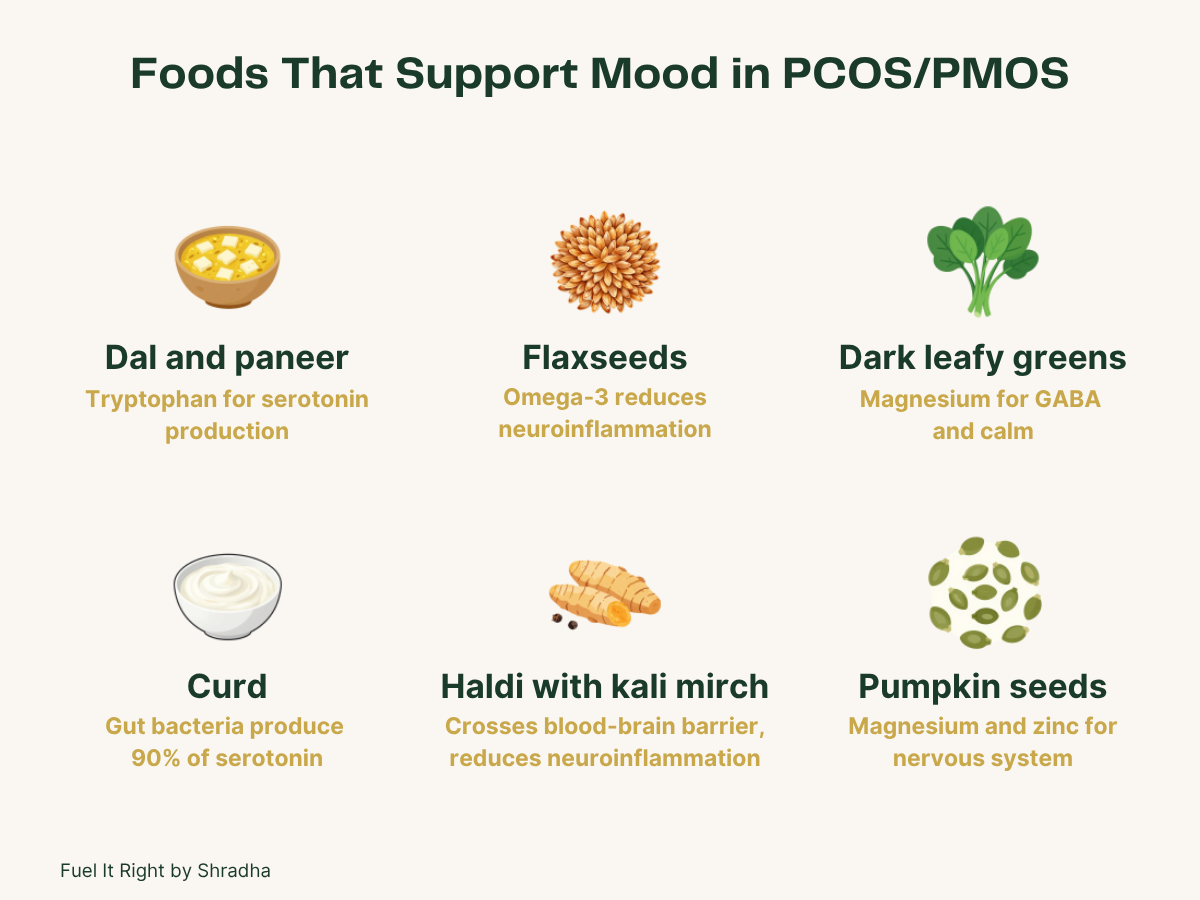
Tryptophan-rich foods | Tryptophan is the dietary precursor to serotonin. Dal, paneer, eggs, pumpkin seeds, and til (sesame seeds) are among the richest Indian sources. Without adequate dietary tryptophan and the gut bacteria to convert it, serotonin production is limited regardless of what other interventions are in place. |
Omega-3 from flaxseeds and walnuts | Omega-3 fatty acids directly reduce neuroinflammation and are among the most evidence-based nutritional interventions for depression. DHA, derived from omega-3, is the primary structural fat in neuronal membranes. Deficiency is strongly associated with depression. Flaxseeds, walnuts, and chia seeds provide alpha-linolenic acid, which partially converts to DHA. |
Magnesium from dark leafy greens and til | Magnesium is required for GABA receptor function, the same receptors that allopregnanolone acts on to produce calming effects. Deficiency, extremely common in Indian women, directly reduces GABAergic tone and worsens anxiety. Palak, methi, rajma, and til are the richest Indian sources. |
Fermented foods for the gut-brain axis | Curd, chaas, and idli-dosa fermented batter directly supply Lactobacillus and other bacteria that support gut serotonin production. A 2022 randomised controlled trial found that probiotic supplementation significantly reduced depression scores in women with PCOS. Fresh homemade curd twice daily is the most consistent food delivery of these bacteria. |
Complex carbohydrates at dinner | Jowar, bajra, and ragi, eaten at dinner, support serotonin synthesis overnight. Serotonin is made from tryptophan more efficiently when a moderate carbohydrate intake accompanies it. This is the hormonal rationale for a controlled carbohydrate at dinner rather than elimination. |
Haldi with black pepper and ghee | Curcumin from haldi crosses the blood-brain barrier and directly reduces neuroinflammation. It inhibits microglial activation and reduces the kynurenine pathway diversion that depletes serotonin. Always with black pepper and fat for absorption. |
What to Do Right Now
If PCOS/PMOS mental health is part of your picture, here is where to start, clinically and practically.
Get the Metabolic Picture First
Ask for fasting insulin, HOMA-IR, TSH, free T3, free testosterone, DHEAS, and hsCRP. These metabolic markers tell you which biological drivers are most active in your specific case. A woman with high DHEAS and normal insulin resistance needs a different food emphasis than a woman with severe insulin resistance and normal androgens. The metabolic picture guides the food protocol. Use the PCOS/PMOS diagnosis checklist blog for the full panel.
Address Blood Sugar Before Anything Else
Protein at breakfast, every morning, before anything else. This is not a general wellness recommendation. It is the most impactful single change for blood sugar stability, cortisol regulation, and brain glucose availability, the three most directly mood-relevant metabolic factors in PCOS/PMOS. One week of consistent protein-first breakfasts produces noticeable changes in afternoon energy and mood stability before any blood test reflects the change.
Rebuild the Gut for Serotonin
Fresh homemade curd twice daily. Dal at every lunch and most dinners. Chaas as the afternoon drink. This is the foundation of the gut-serotonin protocol in an Indian kitchen. It feeds the bacteria that produce serotonin, repairs the gut lining that prevents neuroinflammatory LPS translocation, and rebuilds the vagal tone that regulates the HPA axis.
Consider Professional Mental Health Support Alongside Food
Food addresses the biological substrate. It does not replace psychological support for the accumulated experience of years of chronic illness, medical dismissal, and social pressure. If anxiety or depression is significantly affecting your quality of life, please seek support from a mental health professional alongside your dietary changes. Both are necessary. Neither replaces the other.
Want to understand which metabolic drivers are affecting your mood?
Book a free 30-minute discovery call. Bring your blood report. We will build a food protocol that addresses your PCOS/PMOS mental health picture from the metabolic root.
Conclusion: The Anxiety and Depression in PCOS/PMOS Are Not Separate. They Are Part of It.
PCOS/PMOS and mental health are driven by the same metabolic and hormonal disruption. Insulin resistance impairs brain glucose metabolism. Androgen excess suppresses serotonin sensitivity. Chronic inflammation drives neuroinflammation. Progesterone deficiency reduces GABAergic tone. Cortisol elevation damages hippocampal tissue. Gut dysbiosis depletes serotonin production. All of this is happening simultaneously, in the same body, from the same root.
Telling a woman with PCOS/PMOS to see a psychiatrist for her depression without addressing these metabolic drivers is like prescribing blood pressure medication without addressing the diet causing the hypertension. The medication may help. It will not fix the cause.
Food addresses multiple pathways simultaneously. Protein-first meals stabilise blood sugar and brain glucose. Fermented foods restore gut serotonin production. Omega-3 from flaxseeds and walnuts reduces neuroinflammation. Haldi crosses the blood-brain barrier and directly reduces microglial activation. Magnesium from dark leafy greens restores GABAergic tone.
Start with breakfast. Build the gut. Reduce the inflammation. And if you need support for what years of living with an unmanaged chronic condition has accumulated emotionally, get that too. Both are part of the treatment.
Book a Free 30-Minute Discovery Call
Tell me your symptoms — the physical and the emotional. Bring your blood report. We will build your food protocol from the metabolic root that drives both.
https://calendly.com/shradhajp/30min
Or call/ WhatsApp us: +91 7057063984
FAQs: PCOS, PMOS and Mental Health
Q1. Is the depression in PCOS/PMOS real or just a reaction to having the condition?
Both are present, but the primary driver is biological. The same hormonal and metabolic disruption that drives physical PCOS/PMOS symptoms directly affects brain chemistry, glucose metabolism, neuroinflammation, and neurotransmitter function. The psychological burden of chronic illness, years of medical dismissal, and social stigma compounds the biological depression. They are not the same thing, and they do not require the same intervention.
Q2. Will antidepressants help my PCOS/PMOS depression?
They may partially help, but they address only one pathway, serotonin reuptake, in a multi-pathway biological disruption. If your depression is driven primarily by insulin resistance impairing brain glucose metabolism, androgen excess suppressing serotonin receptor sensitivity, and gut dysbiosis depleting serotonin production, an SSRI will produce incomplete results without addressing the metabolic drivers. Antidepressants alongside metabolic dietary management produce better outcomes than either alone.
Q3. Why does my anxiety get worse before my period?
In the week before menstruation, progesterone production falls. In women with PCOS/PMOS who are anovulatory or have irregular cycles, progesterone is already lower than normal. The premenstrual drop in an already low progesterone baseline reduces allopregnanolone, the calming neurosteroid produced from progesterone, to very low levels. This directly reduces GABAergic tone, producing the heightened anxiety and irritability of premenstrual week. Regulating ovulation through insulin resistance management gradually improves this pattern.
Q4. I feel anxious all the time even when nothing is wrong. Is this my PCOS/PMOS?
Possibly. Chronic background anxiety without a specific trigger is consistent with the PCOS/PMOS biological picture: reduced allopregnanolone from anovulation, elevated cortisol from HPA axis dysregulation, gut dysbiosis sending inflammatory signals via the vagus nerve, and blood sugar fluctuations producing transient glucose deficits in mood-regulating brain regions. Ask for DHEAS, fasting insulin, and hsCRP to assess the metabolic drivers.
Q5. Can food really improve depression in PCOS/PMOS?
Yes, through multiple specific mechanisms that are now mechanistically mapped. Protein-first meals stabilise brain glucose. Fermented foods restore gut serotonin production. Omega-3 from flaxseeds reduces neuroinflammation. Magnesium restores GABAergic tone. Haldi reduces microglial activation. A 2022 RCT found probiotic supplementation significantly reduced depression scores in women with PCOS. These are not general wellness claims, they are mechanisms with specific clinical evidence.
Q6. My doctor says my hormones look normal but I still feel depressed and anxious. What should I do?
Ask for a complete metabolic panel like fasting insulin, HOMA-IR, free testosterone, DHEAS, TSH, free T3, and hsCRP rather than just a standard hormonal panel. The standard panel often misses the metabolic drivers most relevant to mental health in PCOS/PMOS. Also check Vitamin D, deficiency is strongly associated with depression and is extremely common in Indian women. A value below 30 ng/mL warrants supplementation alongside dietary change.
Q7. Is seeking mental health support appropriate for PCOS/PMOS-related depression?
Yes. Professional psychological support for the accumulated experience of chronic illness, medical dismissal, body image concerns, and fertility anxiety is appropriate and important, and it is not a substitute for addressing the metabolic drivers of mood. Both are necessary. Food changes the metabolic substrate. Psychological support addresses the experiential burden. Neither replaces the other.
Q8. How long does it take for food changes to affect mood in PCOS/PMOS?
Blood sugar stabilisation and its mood effects are often noticeable within 1 to 2 weeks of consistent protein-first meals and reduced refined carbohydrate intake. Gut microbiome changes take 3 to 4 weeks to produce measurable shifts in bacterial populations. Neuroinflammation takes 6 to 8 weeks to show changes in hsCRP. Hormonal changes, androgen reduction and its serotonin receptor effects, take 3 to 6 months of consistent metabolic improvement. The subjective mood improvement often precedes the blood test changes.
About the Author
Shradha | Nutritionist and Dietitian | Fuel It Right. Practising out of Goa, India, with a focus on gut health, PMOS/PCOS, thyroid disorders, and weight management using real Indian food. No supplements. No machines. Just food, and the science behind it.
fuel-it-right.com | @fuelitright