
Diet for Glowing Skin: Expert Guide for Readers
The real evidence behind diet and glowing skin: what foods actually help, which myths don't hold up, and a practical Indian meal plan.
Table of Contents
1. Why Your Skin Reflects What You Eat
2. The Foods With Real Evidence Behind Them
3. Busting the Skin-Diet Myths That Won't Die
4. What Actually Drives Breakouts: The Glycemic Connection
5. Your Practical Indian Skin-Health Plate
6. When Diet Isn't Enough
7. Conclusion
8. FAQs
1. Why Your Skin Reflects What You Eat
Skin is often the first place internal problems show up, and that is not just a saying. It is your body's largest organ, and it depends on the same blood supply, hormones, and inflammatory pathways as everything else you are trying to fix through food. A 2026 review from researchers at Lady Irwin College, Delhi, described this as the gut-skin axis: the same gut microbiome that shapes digestion and hormone signalling, the subject of our piece on the gut-skin connection, also appears to influence dermatological outcomes through probiotics and microbial by products.
A separate 2025 review in the journal Nutrients names vitamin A, C, D, E, zinc, omega-3 and omega-6 fats, and polyphenols as the nutrients with the clearest evidence for skin structure, hydration, and elasticity. Largely, this works through two mechanisms: reducing oxidative stress and calming chronic low-grade inflammation, the same two processes behind premature fine lines, dullness, and slow healing.
None of this means any single food is a miracle fix. It means skin responds to patterns over weeks, not single meals, and the patterns with real evidence behind them are specific enough to actually act on. The rest of this guide sticks to those.
Curious what's happening in your gut, and what that means for your skin?
Take the free Gut Health Quiz:
2. The Foods With Real Evidence Behind Them
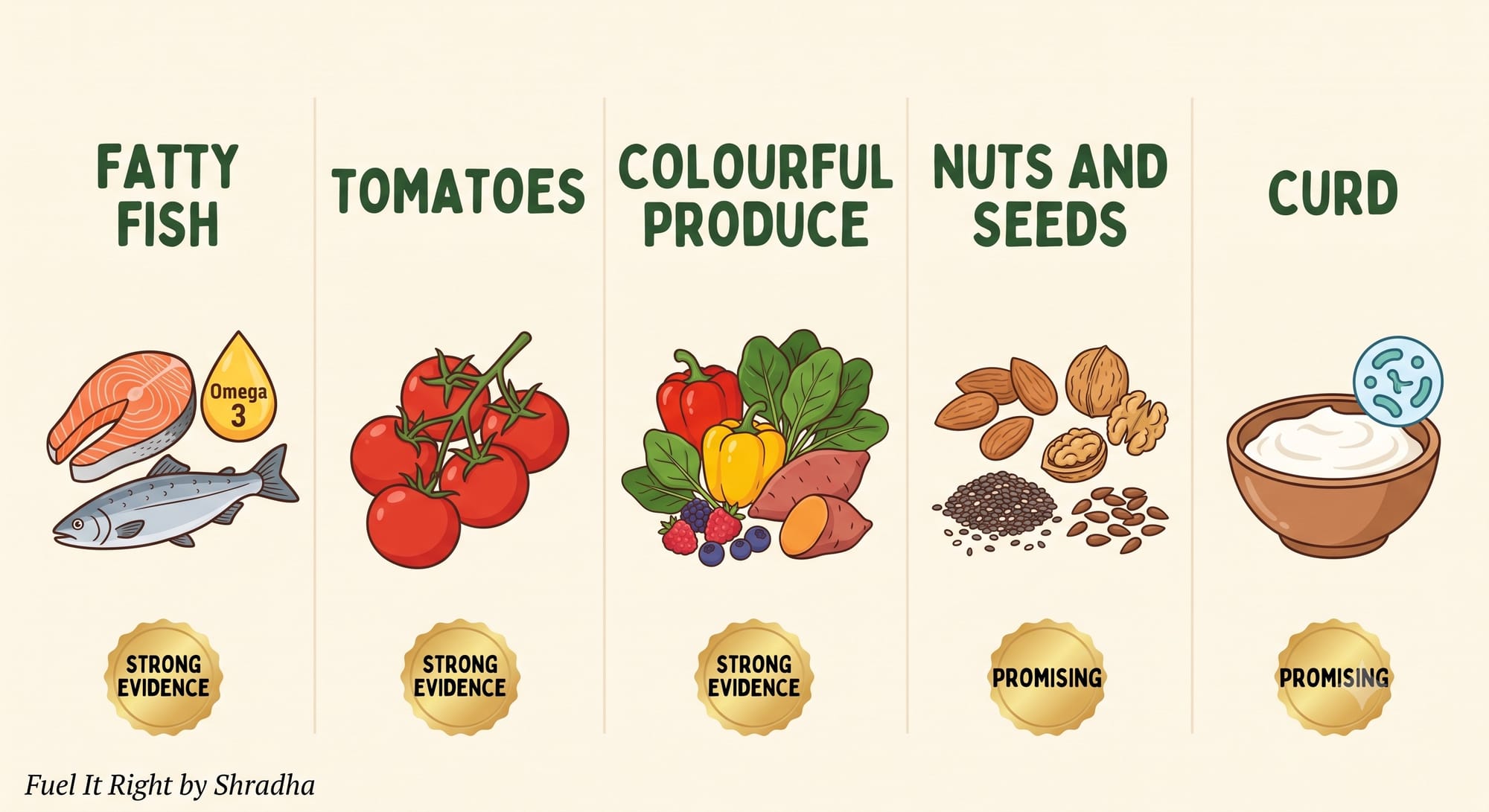
These five come up repeatedly across recent nutrition-dermatology reviews and, in most cases, in actual randomised trials rather than observational guesswork. Each verdict below reflects how strong that evidence currently is, not just how popular the food is on social media.
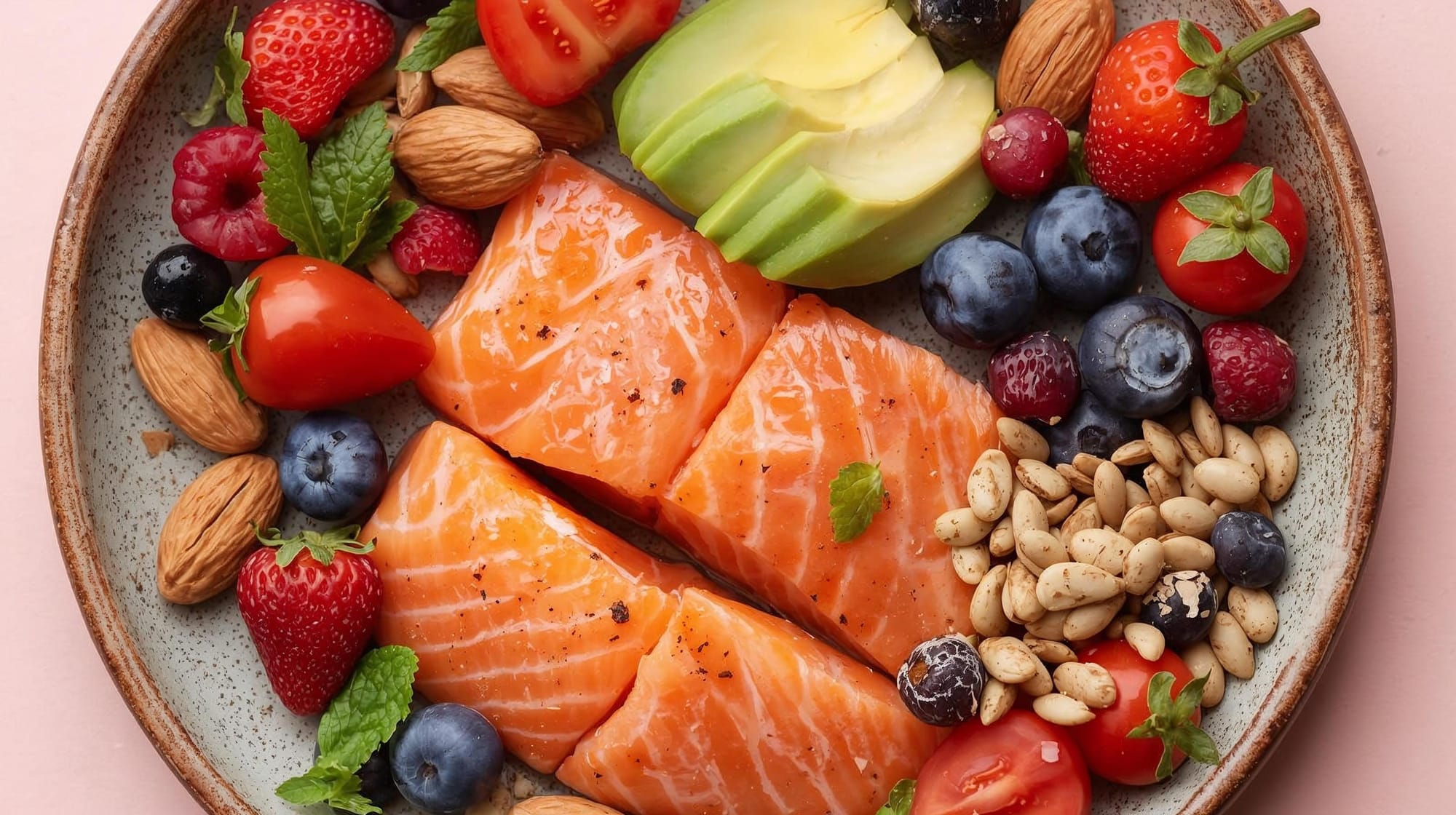
Fatty fish (mackerel, sardines, salmon) STRONG EVIDENCE |
Omega-3 fatty acids are consistently named across nutrition-dermatology reviews for supporting the skin barrier and reducing inflammatory markers linked to dullness and breakouts. How to make it work: Bangda (mackerel) or tarli (sardines) twice a week covers this well and is far more accessible in most Indian kitchens than salmon. Vegetarians can lean on 1-2 tbsp of ground flaxseed or chia daily instead. |
Tomatoes, cooked with a little oil STRONG EVIDENCE |
A 2023 meta-analysis of 21 clinical trials found tomato and lycopene supplementation significantly reduced UV-induced redness and the collagen-degrading enzyme MMP-1, while increasing skin thickness and density. How to make it work: Lycopene is fat-soluble and needs heat plus oil to actually be absorbed. A home-style tomato-onion gravy or dal tadka works better here than a raw tomato salad, contrary to how most people assume 'raw is healthier.' |
Colourful, carotenoid-rich produce (papaya, watermelon, carrots, pink guava) STRONG EVIDENCE |
A 2025 meta-analysis in the Journal of Physiological Anthropology found carotenoid-rich dietary interventions specifically reduced skin redness across pooled trial data. How to make it work: You do not need imported berries for this. Papaya, watermelon, carrots, and pink guava carry the same carotenoid family and are far cheaper and more seasonal in most of India. |
Nuts and seeds (almonds, walnuts, sunflower and pumpkin seeds) STRONG EVIDENCE |
Vitamin E and zinc from these sources are named consistently across nutrition-dermatology reviews for skin structure and reducing oxidative damage. How to make it work: A small handful, about 8-10 almonds or 1 tablespoon of mixed seeds, daily is enough. This is a nutrient-density food, not a portion-size one; a bowlful does not multiply the benefit. |
Fermented foods (curd, buttermilk) PROMISING, NOT PROVEN |
The gut-skin axis is a genuinely emerging research area. Several recent reviews describe probiotics improving skin hydration in trials, but this evidence base is newer and smaller than the antioxidant and omega-3 research above. How to make it work: Home-set curd or buttermilk with meals is a reasonable, low-risk addition, similar to the approach in our Greek Yogurt Smoothie Bowl. Just do not expect it to outperform the better-established foods above. |
Lycopene needs a little oil and heat to actually reach your skin. A raw tomato salad does not do the same work as a cooked tomato gravy.
3. Busting the Skin-Diet Myths That Won't Die
Some skin-diet advice has been repeated so often it sounds settled. It usually is not. Here is what the actual evidence says against three of the most common claims.
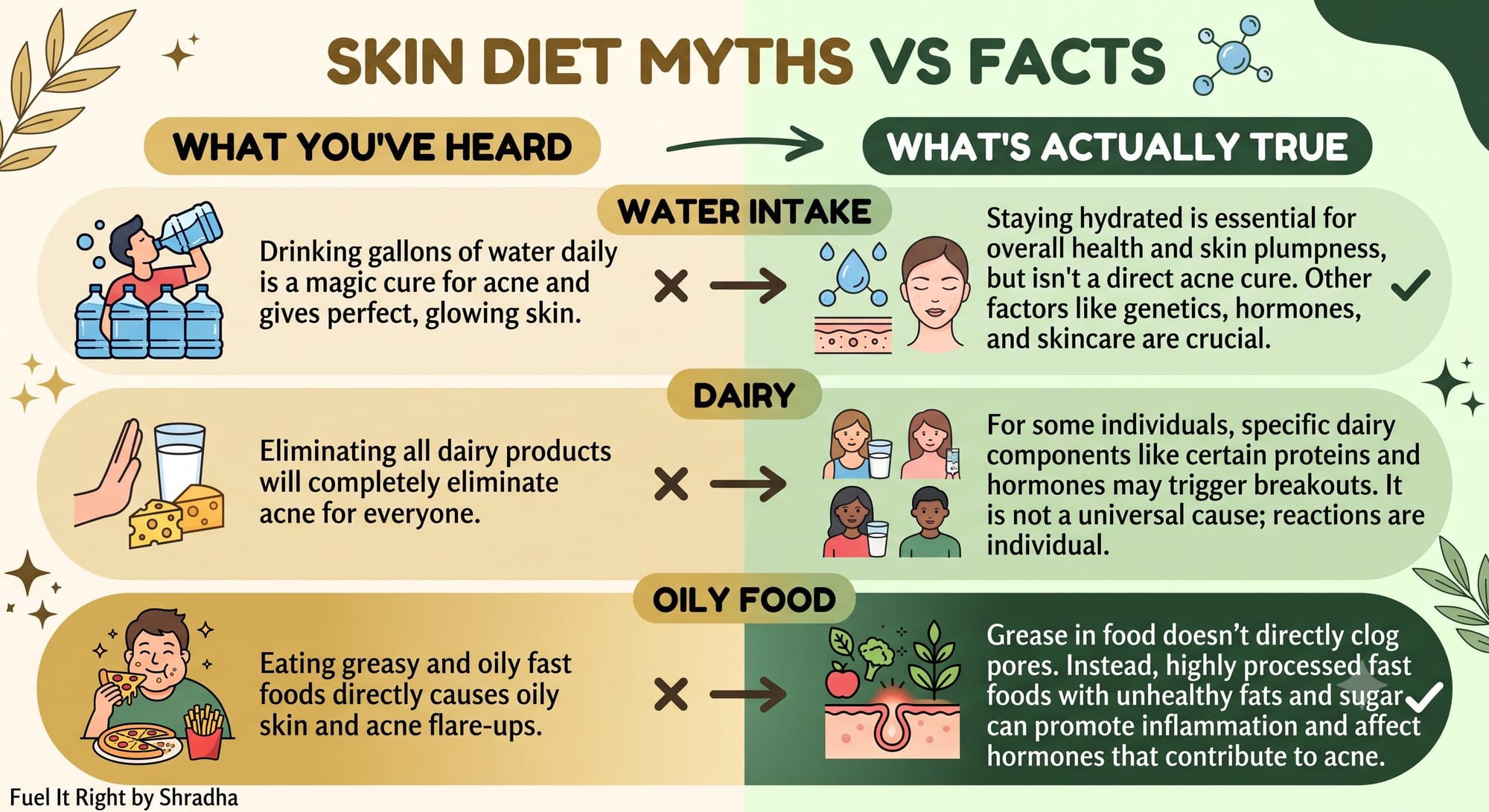
WHAT YOU'VE HEARD Drink 8 glasses of water a day and your skin will glow. |
WHAT'S ACTUALLY TRUE A 2018 systematic review found weak-to-modest evidence overall. Additional water intake does measurably improve skin hydration, but mainly in people who were drinking very little to begin with. It has never been shown to fade dark spots, even out tone, or create visible 'glow' in someone who is already adequately hydrated. |
WHAT YOU'VE HEARD Dairy causes acne, so cut it out completely. |
WHAT'S ACTUALLY TRUE The evidence here has genuinely shifted. Older observational studies linked dairy, especially skim milk, to acne. But a 2025 meta-analysis pooling five recent studies found no statistically significant association between dairy intake and acne risk. If dairy does not visibly correlate with your own breakouts, there is no strong evidence-based reason to eliminate it entirely. |
WHAT YOU'VE HEARD Oily and fried food makes your skin oily and causes breakouts. |
WHAT'S ACTUALLY TRUE The stronger, more consistent evidence points to glycaemic load, how fast a food spikes blood sugar, rather than fat content directly. Refined flour, white rice in large portions, and sugary snacks have more supporting trial evidence against them than ghee or nuts do. Section 4 covers this mechanism in detail. |
4. What Actually Drives Breakouts: The Glycaemic Connection
The mechanism itself is well understood: a high-glycaemic meal spikes blood sugar and insulin, which raises insulin-like growth factor 1 (IGF-1), which in turn increases androgen activity and sebum production, both of which feed acne. That chain is not disputed.
What is more interesting is how the trial evidence has moved. Two separate randomised controlled trials, one published in the American Journal of Clinical Nutrition in 2007 and another in Acta Dermato-Venereologica in 2012, found that participants on a low-glycaemic-load diet had measurably fewer acne lesions after 10-12 weeks. A 2022 systematic review of 34 studies concluded the pro-acne effect of high glycaemic load was 'supported by randomised controlled trials.'
But the newest evidence complicates that picture. An October 2025 meta-analysis pooling 5 studies and 716 participants found no statistically significant association between glycaemic load, glycaemic index, or dairy intake and acne risk, with moderate certainty in the evidence. This is a genuinely unsettled area, and it would be dishonest to present it as fully resolved either way.
The practical takeaway holds regardless of which way the research eventually settles: favouring lower-glycaemic carbohydrates, millets, whole grains, and legumes over refined flour and sugar, carries essentially no downside and supports metabolic health broadly, which is covered in more depth in our guide to low-GI Indian breakfasts. It is a reasonable default, just not a guaranteed acne cure.
5. Your Practical Indian Skin-Health Plate
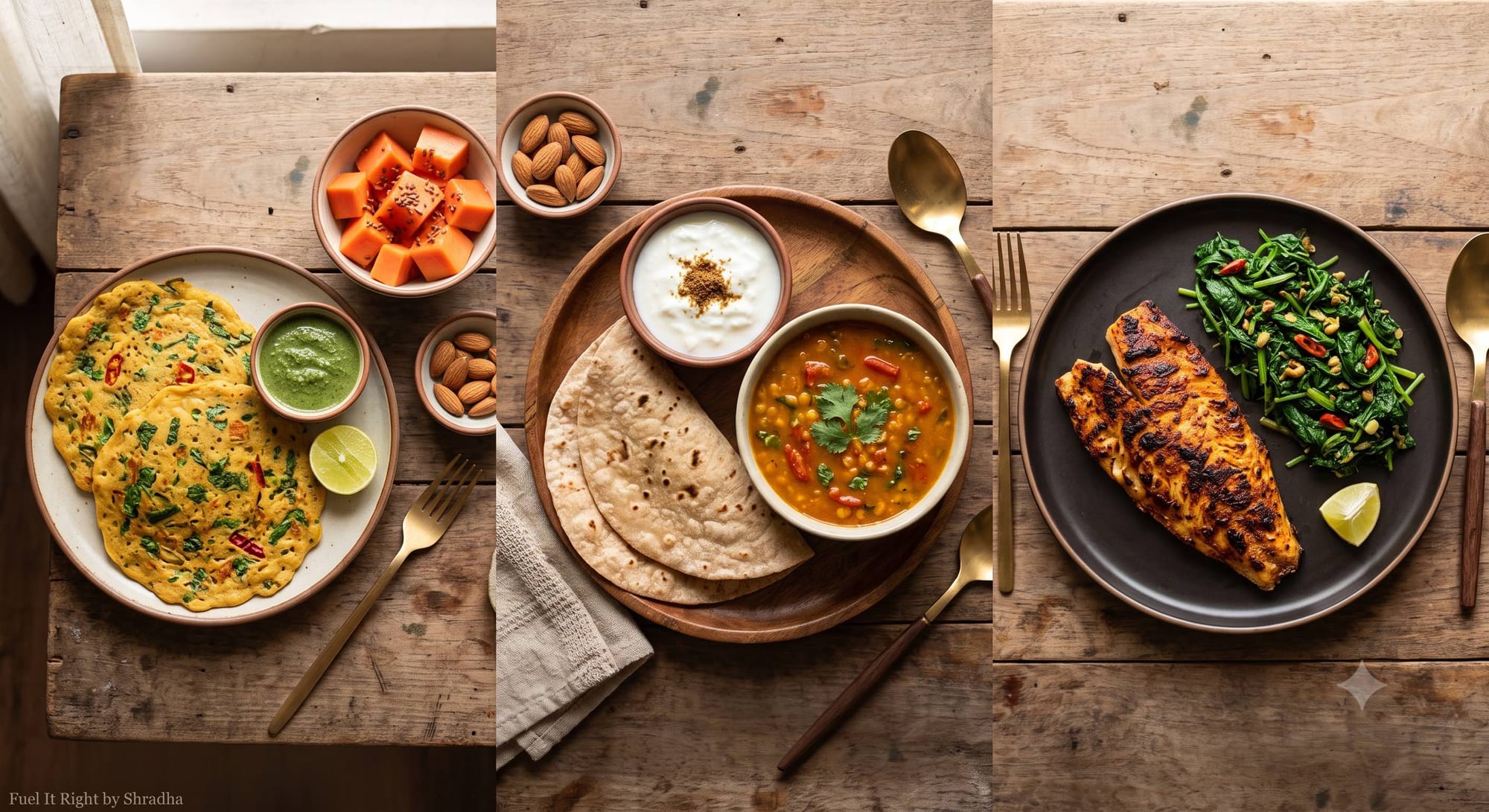
Rather than a generic 'eat more vegetables' instruction, here is what a day built around the evidence above actually looks like.
A Breakfast Built for Skin
1 besan or moong dal chilla for zinc and protein, a small bowl of papaya for carotenoids, and a small handful of soaked almonds for vitamin E.
A Lunch Built for Skin
1-2 rotis with a tomato-based dal tadka finished with a teaspoon of ghee or oil (this is where the cooked lycopene comes in), a side of curd, and a mixed vegetable sabzi with carrots or spinach.
A Dinner Built for Skin
Pan-seared mackerel or sardines, or for vegetarians, a flaxseed and chia chutney alongside sautéed greens, with a small bowl of watermelon or pink guava instead of a sugary dessert.
Want a skin-focused nutrition plan built around your specific concerns?
Book your Initial Nutrition Counselling Session:
Call or WhatsApp: +91 70570 63984 OR
6. When Diet Isn't Enough
Food has a real, evidence-backed role in skin health, but it has a bounded one, and being upfront about that boundary matters more than promising a diet-only fix for everything.
Persistent hormonal acne, particularly along the jawline and chin, is frequently tied to conditions like PCOS or PMOS rather than diet alone. If that sounds familiar, it is worth reading about PMOS-linked inflammation specifically, since the food strategy there is different from general acne advice.
Unexplained dullness or paleness despite eating well is also worth investigating properly rather than assuming it away. Low iron and low vitamin D are two of the most common, testable causes, covered in more depth in our pieces on iron levels and on vitamin D status. A simple blood panel settles the question far faster than months of dietary guesswork.
And for anyone dealing with cystic or scarring acne, this is genuinely a case where a dermatologist should be involved alongside diet, not instead of it. Food-first does not mean food-only.
7. Conclusion
The evidence for diet and skin health is real, but it is also more specific and more modest than most wellness content suggests. Omega-3s, cooked tomatoes, colourful produce, nuts and seeds have genuine trial support. Water helps mostly if you are under-hydrated to begin with. Dairy and glycemic load are more contested than either side of the internet debate admits. None of this replaces sunscreen, sleep, or a dermatologist when one is actually needed, but it is a real, evidence-based place to start.
8. FAQs
How long before diet changes show up in my skin?
Skin cell turnover takes roughly 4-6 weeks in younger adults and slows with age. Most of the trials cited above measured results at 4-12 weeks, so give any change at least a month before judging it.
Does chocolate cause acne?
The evidence for chocolate itself is limited and mixed. It is more likely the added sugar in most chocolate products, not the cocoa, driving any effect, which ties back to the glycemic mechanism in Section 4.
Is eating 2-3 tomatoes a day too much?
No. Trial dosing used roughly 40-55g of cooked tomato paste, about the amount in 2-3 medium tomatoes cooked down with oil, 3-4 times a week. You do not need a large daily quantity.
I already drink a lot of water, why isn't my skin glowing?
If you are already well-hydrated, the marginal benefit from drinking more is small. Sleep, sun protection, and actual skincare are more likely to be the limiting factors at that point.
Can diet alone clear hormonal acne?
Diet can help through the inflammation and glycemic pathways covered above, but it will not fully address a hormonal driver like PCOS-related androgen excess. That needs a proper workup rather than food changes alone.
What tests should I ask for if my skin looks dull despite eating well?
Ferritin (not just haemoglobin), 25-OH vitamin D, and a thyroid panel are the three most common, testable causes of skin dullness and paleness.
Are supplements a shortcut to the same benefits?
Some trial evidence exists for supplements like lycopene and omega-3, but whole foods bring fibre and other nutrients that isolated supplements do not. Food-first remains the safer default, and anyone on medication should check with a professional before adding supplements.
How is this different from a general healthy diet?
It uses the same evidence-backed principles as diet for metabolic health, with specific added emphasis on lycopene-rich, omega-3, and lower-glycemic-load choices where the skin-specific trial evidence is strongest.
About the Author
Shradha | Nutritionist & Dietitian | Fuel It Right
Shradha specialises in food-first, evidence-based nutrition for weight loss, diabetes, gut health, PCOS/PMOS, and hormonal skin concerns, built on nutrition science rather than trends. No supplements, no shortcuts, just what the research actually supports.
👉 Ready to take charge? Subscribe now for weekly expert tips and be the first to access exclusive content. Join over 1,500 readers fuelling their best lives!