
5 Things Your Doctor Told You Wrong Abouat PCOS
Doctors get PCOS and PMOS wrong more often than you think. Here are 5 myths, backed by evidence, and the food-first fix.
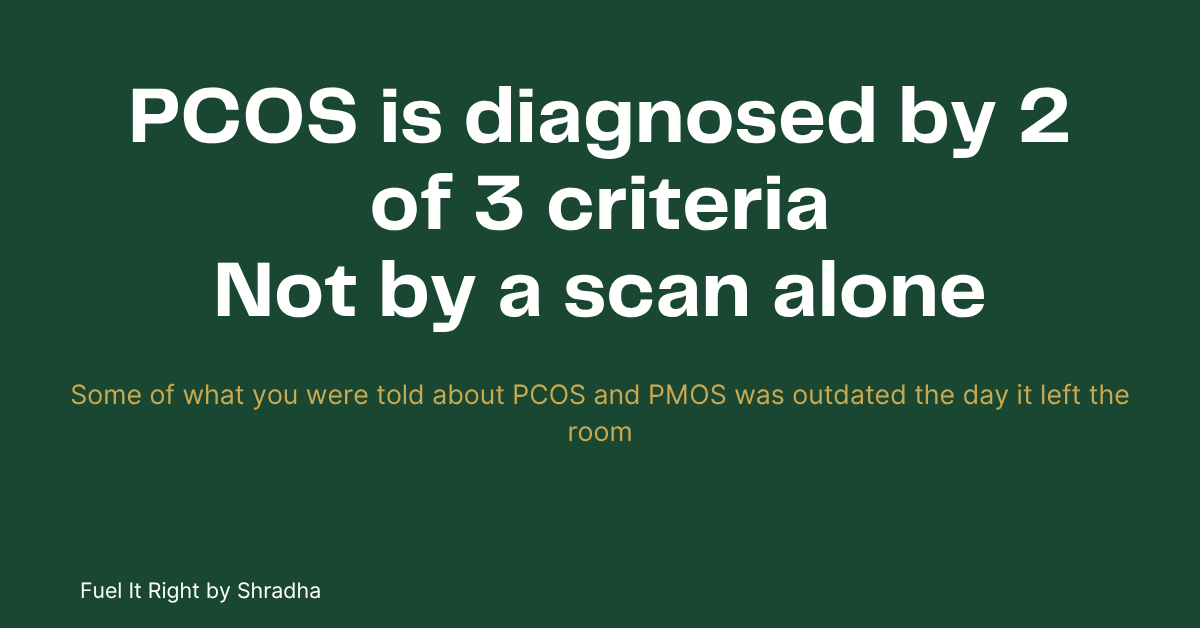
Table of Contents
1. Why These Myths Still Come From Doctors, Not Just the Internet
2. Myth 1: "It Is Just Cysts on Your Ovaries"
3. Myth 2: "Lose the Weight and It Will Fix Itself"
4. Myth 3: "Birth Control Pills Are the Only Way to Manage PCOS"
5. Myth 4: "You Will Struggle to Get Pregnant"
6. Myth 5: "Every PCOS Patient Has the Same Long-Term Risk"
7. Conclusion: What a Food-First, Root-Cause Approach Actually Looks Like
8. FAQs
Why These Myths Still Come From Doctors, Not Just the Internet
PCOS research is moving faster than most clinical training can keep up with. In May 2026 the Lancet Commission renamed the condition Premenstrual Metabolic Syndrome, or PMOS, to better reflect its metabolic roots rather than its appearance on a scan.
A University of Sydney study of 36 clinicians, including GPs, endocrinologists, and gynaecologists, found real gaps in how PCOS risk and diagnosis get explained to patients. Some of the confusion patients carry does not start with misinformation online. It starts in the consultation room.
You were not imagining it. Some of what you were told about PCOS and PMOS was outdated the day it left your doctor's mouth.
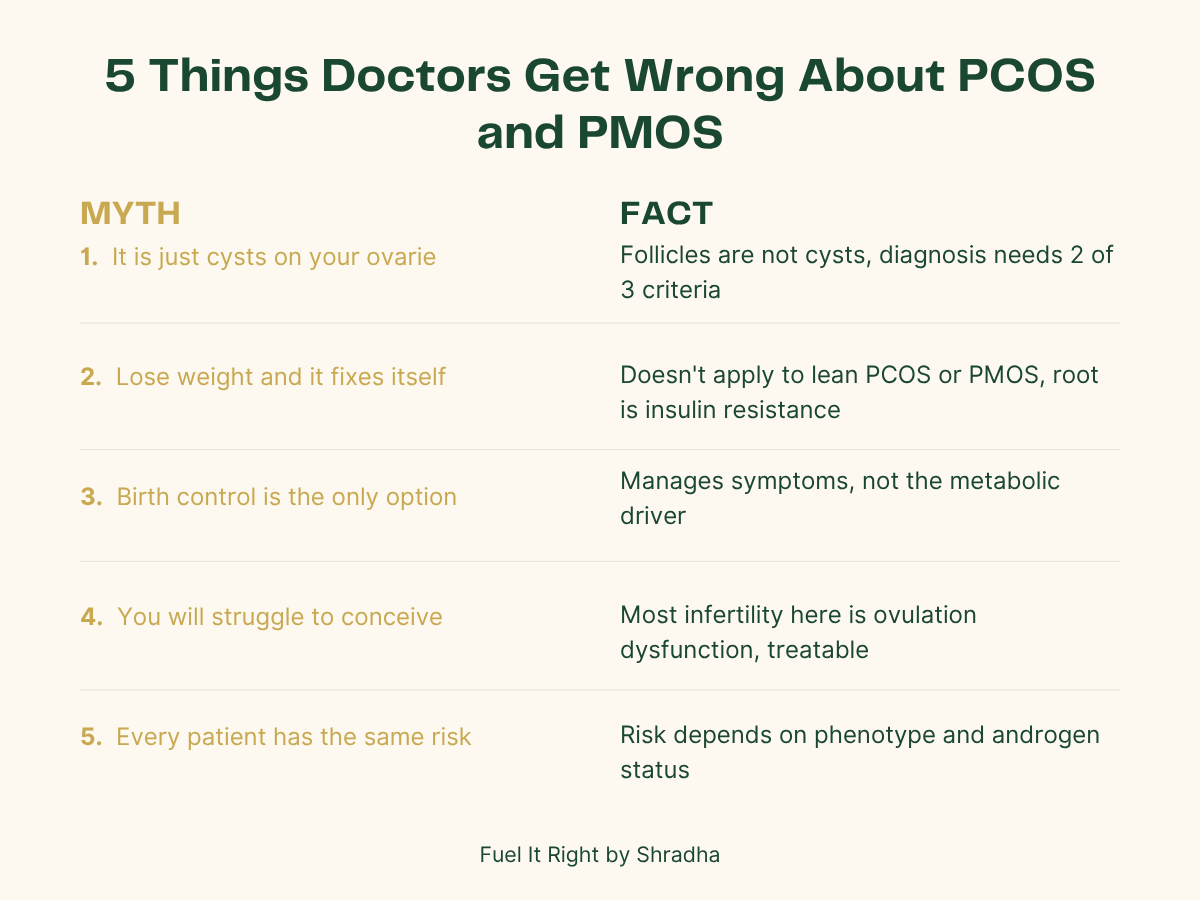
PCOS/PMOS Myth vs Fact: Quick Reference Myth: It is just cysts on your ovaries. Fact: The follicles are not cysts. Diagnosis needs 2 of 3 Rotterdam criteria, not a scan alone. Myth: Lose the weight and it will fix itself. Fact: Weight loss helps some, but does not apply to lean PCOS/PMOS or fix the insulin resistance root. Myth: Birth control is the only way to manage it. Fact: It manages symptoms, not the metabolic driver. Diet is first-line in international guidelines too. Myth: You will struggle to get pregnant. Fact: Most PCOS-related infertility is ovulation dysfunction, which usually responds well to treatment. Myth: Every patient has the same long-term risk. Fact: Risk depends on your phenotype and androgen status. It is not identical for every diagnosis. |
Myth 1: "It Is Just Cysts on Your Ovaries"
PCOS does not require actual cysts. The follicles seen on an ultrasound are small, immature egg sacs, not cysts in the medical sense, and they cause no pain and no cancer risk.
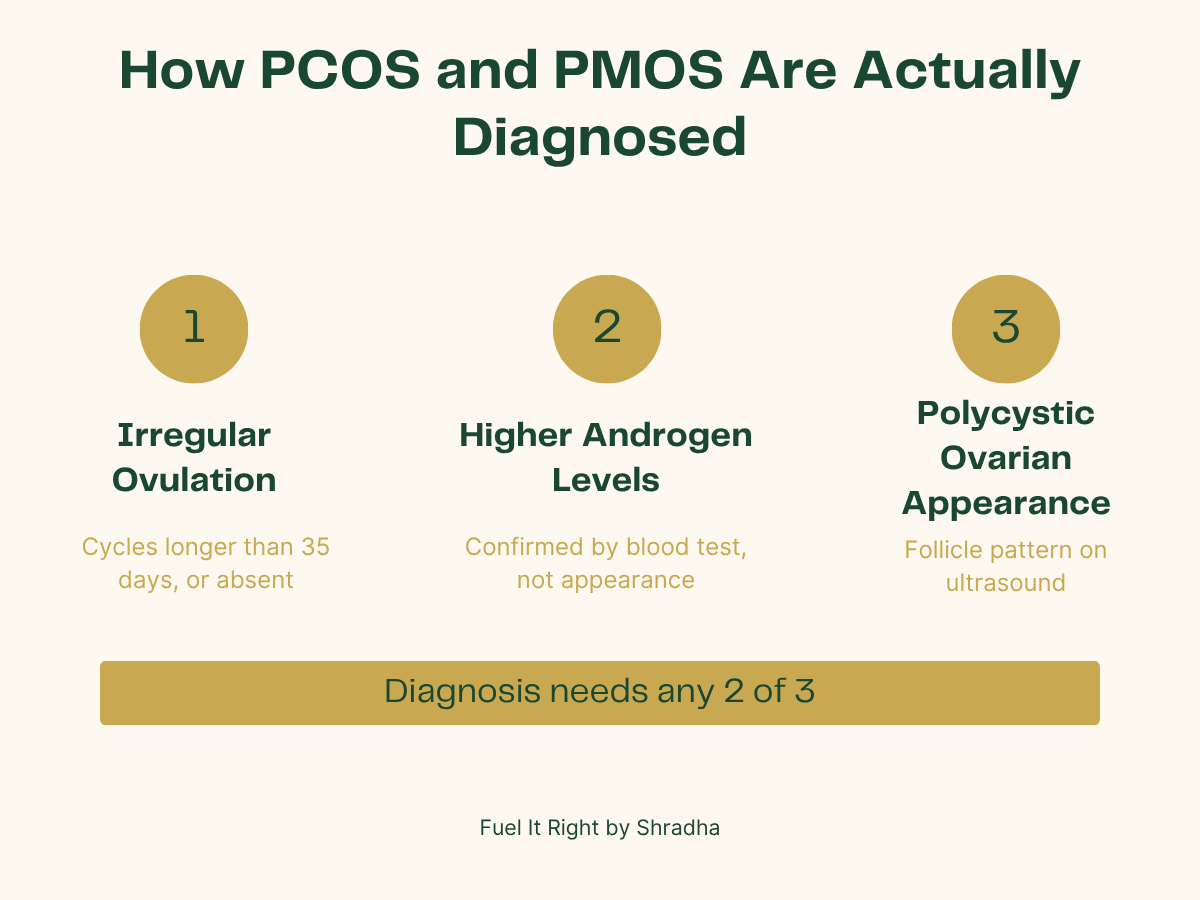
Diagnosis under the Rotterdam criteria needs two of three features: irregular ovulation, higher androgen levels, or polycystic ovarian appearance. A scan alone is not enough. Research shows many women are labelled with PCOS from an ultrasound finding by itself, which can lead to over-diagnosis and needless worry.
Myth 2: "Lose the Weight and It Will Fix Itself"
Weight loss can help. In women carrying excess weight, a 5 to 10 percent reduction can improve cycle regularity and ovulation. But this is a partial fix, not a cure, and it does not apply to lean PCOS and PMOS, where insulin resistance and hormonal imbalance exist without excess weight.
Treating PCOS as purely a weight problem misses the metabolic root and leaves lean patients without real answers. The underlying driver across almost every phenotype is insulin resistance, not body weight on its own.
Myth 3: "Birth Control Pills Are the Only Way to Manage PCOS"
The pill regulates cycles and reduces visible androgen symptoms like acne and excess hair. It does not correct insulin resistance, which current research points to as a common metabolic thread across PCOS and PMOS phenotypes.
International treatment guidelines actually list lifestyle and diet intervention as first-line care, alongside medication where needed, not as an afterthought. When the pill is the only tool used, symptoms frequently return the moment it is stopped.
Curious what your gut and metabolic patterns look like right now?
Take the free 2-minute PMOS Gut Health Quiz and get a personalised starting point, plus the free 3-Day Indian Gut Reset in your inbox.
Myth 4: "You Will Struggle to Get Pregnant"
PCOS is a leading cause of ovulation-related infertility, but for most women this is treatable, not permanent. Many conceive naturally once ovulation is regulated through diet, weight management where relevant, or first-line fertility treatment.
Being told you may never conceive naturally, without that context, causes real anxiety the evidence does not support for most cases.
Myth 5: "Every PCOS Patient Has the Same Long-Term Risk"
PCOS shows up in at least four different phenotypes, and long-term metabolic and cardiovascular risk is not the same across all of them. Women with androgen excess carry a different risk profile than those diagnosed on cycle irregularity and ovarian appearance alone.
The University of Sydney study found many clinicians were unaware of this distinction, meaning some women are told they face risks that do not apply to their specific presentation.
Want your PCOS or PMOS risk assessed properly, not generically?
The Diet Dr Clinic team in Margao builds food-first protocols around your actual phenotype and blood work. Real Indian food. No supplements. No machines.
+91 7057063984
Read the blog on PCOS/PMOS across decades.
Conclusion: What a Food-First, Root-Cause Approach Actually Looks Like
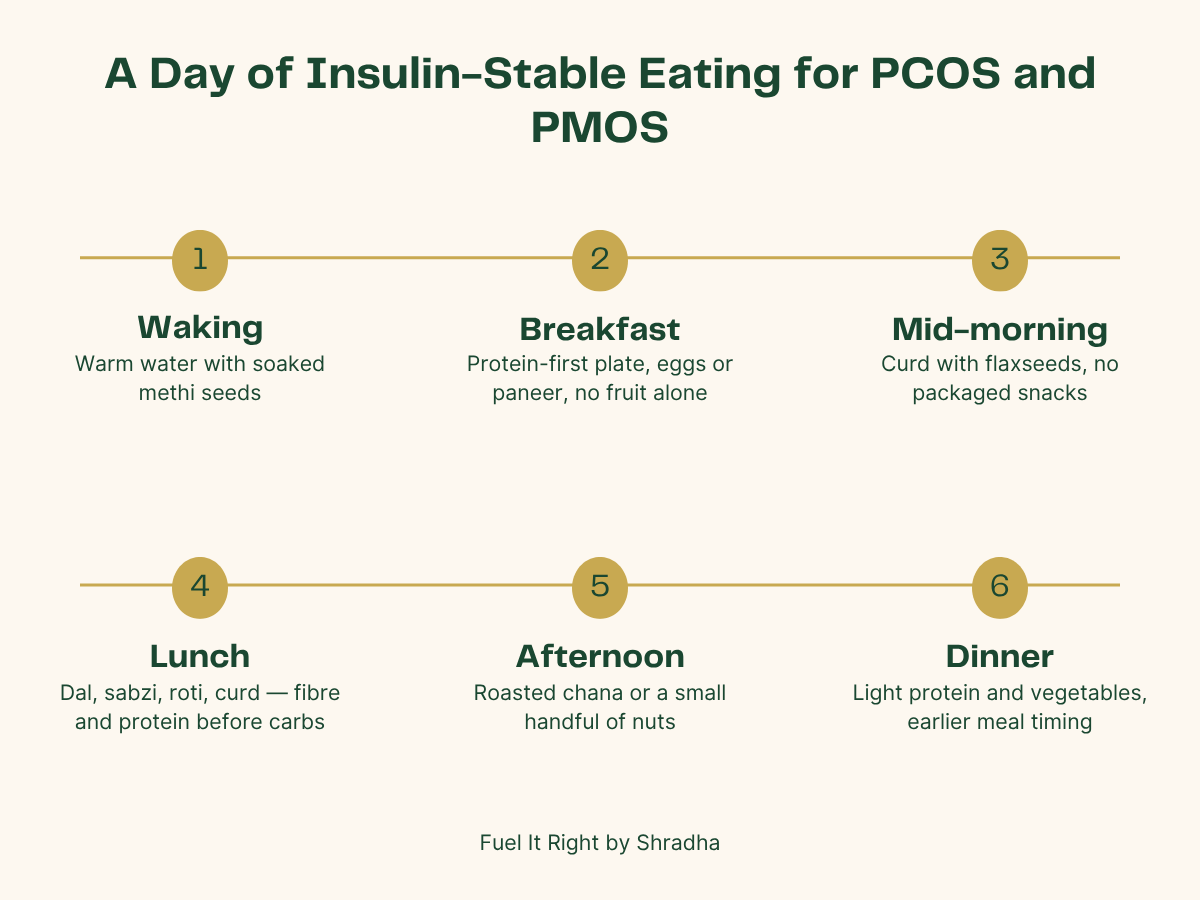
The common thread across PCOS and PMOS phenotypes is insulin resistance, present even in lean patients. A food-first approach anchors every meal around protein and fibre, spaces carbohydrates instead of stacking them, and reduces the blood sugar spikes that keep androgen levels elevated. This works alongside medication, not instead of it, and it is the piece most five-minute consultations do not have time to cover.
How to Advocate for Yourself at Your Next Appointment
Ask which phenotype your diagnosis falls under. Ask whether your androgen levels, not just your cycle or ultrasound, were used to assess your risk. Ask for a referral to a dietitian who works with PCOS and PMOS specifically, not general weight loss advice. A good doctor welcomes these questions rather than resisting them.
PCOS and PMOS management is not about picking a side between your doctor and the internet. It is about closing the gap between fast moving research and a short consultation slot. Pair informed medical care with a root-cause, food-first plan, and you address both the symptoms and the metabolic driver behind them.
Book a Free 30-Minute Discovery Call
Tell us your PCOS/PMOS phenotype and bring your blood report. We will build your food protocol for exactly where you are right now.
FAQs: 5 Things Your Doctor Told You Wrong About PCOS
Q1. Is PCOS the same as PMOS?
Yes. PMOS is the updated name for PCOS, announced by the Lancet Commission in May 2026 to better reflect the condition's metabolic basis rather than its appearance on an ultrasound.
Q2. Can I have PCOS without cysts on my ovaries?
Yes. Diagnosis needs two of three Rotterdam criteria: irregular ovulation, high androgen levels, or polycystic ovarian appearance. Cysts alone are neither required nor sufficient.
Q3. Does losing weight cure PCOS?
No. Weight loss can improve symptoms in those carrying excess weight, but it does not apply to lean PCOS and PMOS, and it does not address the underlying insulin resistance.
Q4. Do I need to be on birth control forever to manage PCOS?
Not necessarily. The pill manages symptoms but not the metabolic root. Many women reduce reliance on medication once a root-cause, food-first protocol is in place, always in coordination with their doctor.
Q5. Will PCOS stop me from getting pregnant?
For most women, no. PCOS-related infertility is usually linked to ovulation dysfunction, which responds well to diet, lifestyle changes, or first-line fertility treatment.
Q6. Am I automatically at high risk for diabetes or heart disease with PCOS?
Not automatically. Risk depends on your specific phenotype and whether androgen excess is present. It is not the same for every diagnosis.
Q7. What is the biggest food-first change for PCOS and PMOS?
Anchoring meals around protein and fibre first, and spacing carbohydrates across the day to reduce insulin spikes, tends to have the most consistent impact.
Q8. How do I know if my PCOS diagnosis was accurate?
Ask your doctor which specific criteria were used to diagnose you and which phenotype you fall under. If it was based on an ultrasound alone, ask for a fuller assessment.
About the Author
Shradha | Nutritionist and Dietitian | Fuel It Right. Practising out of Goa, India, with a focus on gut health, PMOS/PCOS, thyroid disorders, and weight management using real Indian food. No supplements. No machines. Just food, and the science behind it.
fuel-it-right.com | @fuelitright