
PCOS/PMOS and Goan Food: What to Eat and Avoid
Fish curry rice. Sol kadhi. Xacuti. Bebinca. If you have PCOS or PMOS and live in Goa, this is the honest guide to what your local food does for, and against, your hormones.
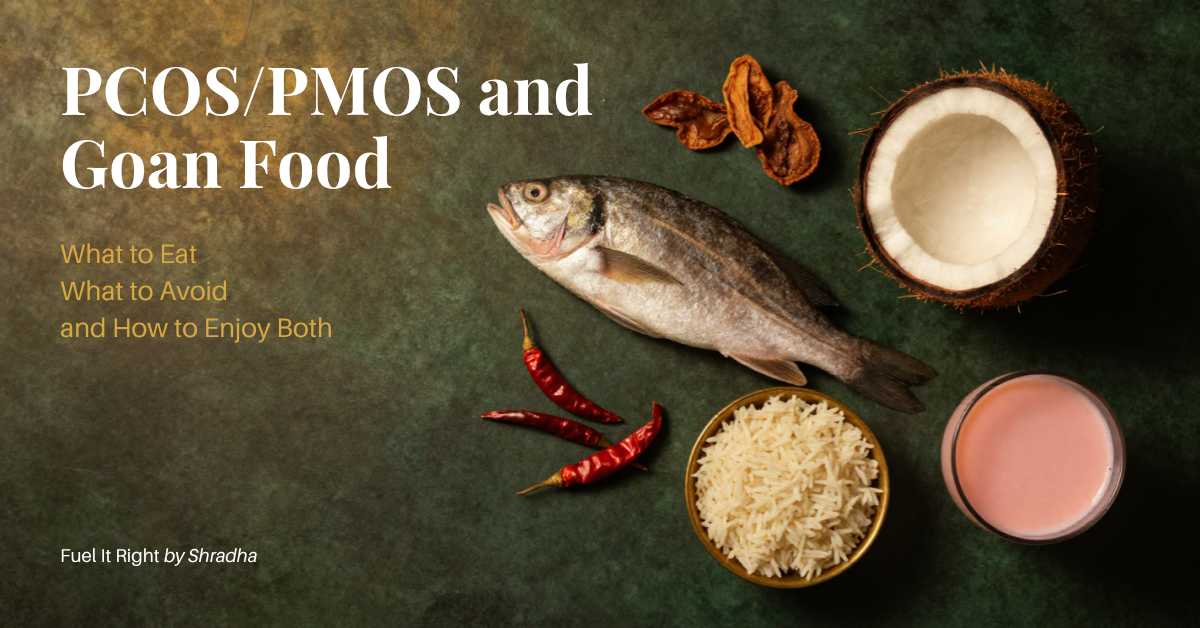
Table of Contents
1. The Good News: Goan Food Has Significant PCOS/PMOS Advantages
2. The Three Pillars of Goan Food and What They Mean for PCOS/PMOS
3. The Goan Dish-by-Dish Assessment
4. What to Order When Eating Out in Goa
5. What to Reduce or Modify
6. The PCOS/PMOS Goan Plate: How to Build It
7. Conclusion
8. FAQs
The Good News: Goan Food Has Significant PCOS/PMOS Advantages
Goan food and PCOS/PMOS are more compatible than most women in Goa realise. Before covering what to avoid, here is the most important point: the traditional Goan diet, fish curry rice eaten daily, coconut in cooking, kokum in curries, fresh seasonal vegetables, fermented foods, has several features that are genuinely beneficial for PCOS/PMOS management.
Seafood is one of the most powerful anti-PCOS/PMOS foods available. Fresh pomfret, mackerel, sardines, prawns, and kingfish eaten regularly provide omega-3 fatty acids, high-quality protein, selenium, zinc, and iodine are all directly relevant to the hormonal and inflammatory picture of PCOS/PMOS. Women with PCOS/PMOS who eat fish regularly have a significant nutritional advantage over those who do not.
The woman who eats fish curry rice every day already has one of the most PCOS/PMOS-appropriate protein and omega-3 sources in her daily diet. The adjustments are smaller than she thinks.
Kokum, the souring agent used in Goan fish curry and sol kadhi, has antioxidant and anti-inflammatory properties. Coconut, the base of most Goan curries, contains medium-chain triglycerides that do not contribute to the same metabolic disruption as long-chain saturated fats. The adjustments required for PCOS/PMOS management within a Goan diet are about quantity, sequence, and avoiding specific preparations, not eliminating the cuisine.
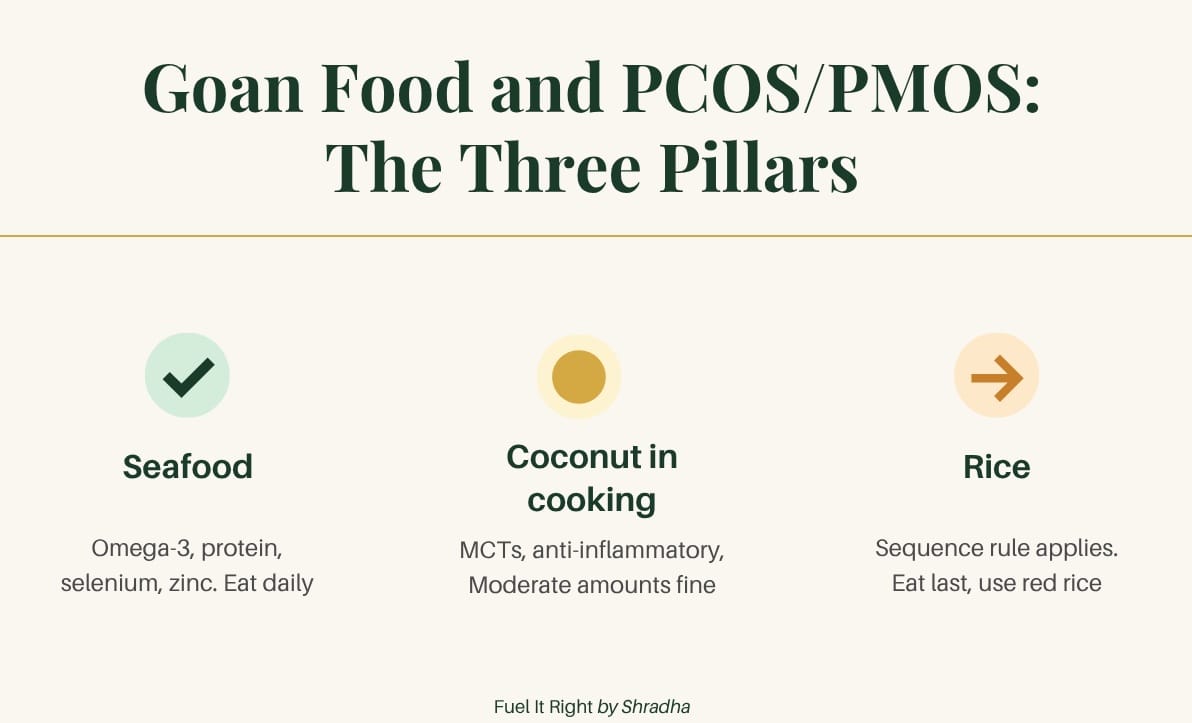
The Three Pillars of Goan Food and What They Mean for PCOS/PMOS
Understanding the nutritional architecture of Goan food makes the specific recommendations much more intuitive.
Pillar 1: Seafood. Highly Beneficial
Fresh Goan seafood is one of the best protein and omega-3 sources available in any regional Indian cuisine. Omega-3 from pomfret, mackerel, sardines, and bangda (Indian mackerel) directly reduces prostaglandin production, systemic inflammation, and improves insulin sensitivity. Selenium from seafood supports thyroid T4 to T3 conversion — highly relevant for the 1 in 5 women with PCOS/PMOS who also have thyroid conditions. Zinc from prawns supports adrenal and reproductive function.
Pillar 2: Coconut. Beneficial in Moderation
Coconut is the defining flavour of Goan cuisine and a frequent concern for women with PCOS/PMOS. Fresh coconut and coconut milk in cooking are appropriate in moderate quantities. The medium-chain triglycerides in coconut are metabolised differently from long-chain saturated fats and do not worsen insulin resistance the way refined oils do. Coconut oil or coconut milk as a cooking base in fish curry or vegetable preparations is nutritionally neutral to mildly beneficial at normal serving sizes. The concern arises with large quantities of sweetened coconut in desserts like bebinca, patoleo, and bolinha, not with coconut in savoury cooking.
Pillar 3: Rice. Manageable With the Sequence Rule
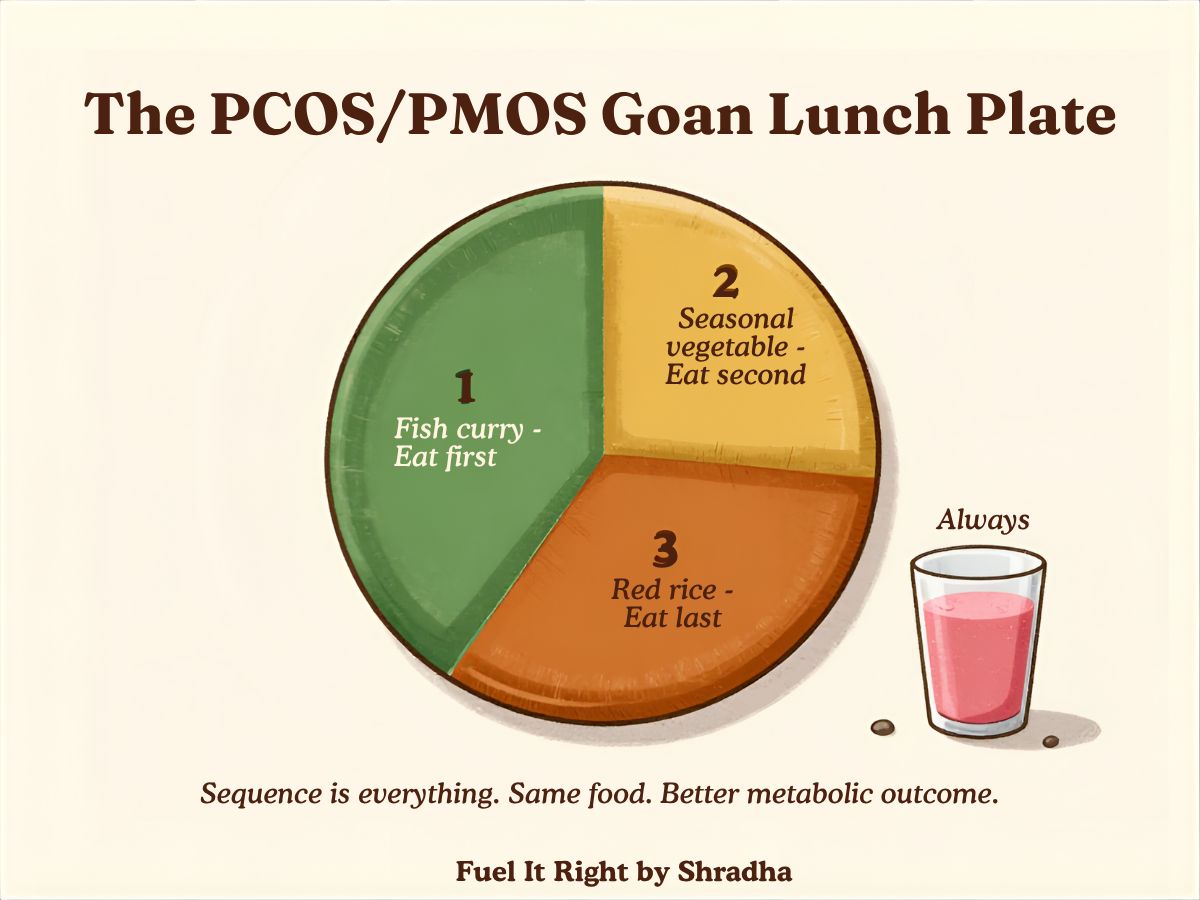
Fish curry rice is the daily staple of Goa and rice is the element most women with PCOS/PMOS are anxious about. The answer, covered in detail in the blog on can women with PCOS/PMOS eat rice, is that rice is not forbidden. The sequence rule applies here exactly as it does everywhere: eat the fish curry first, then the vegetables if present, then the rice. The protein and fat from the fish curry eaten before the rice significantly blunts the glucose spike from the rice. Switching to red Goan rice (ukda chawal) rather than white polished rice further reduces the glycaemic impact.
The Goan Dish-by-Dish Assessment
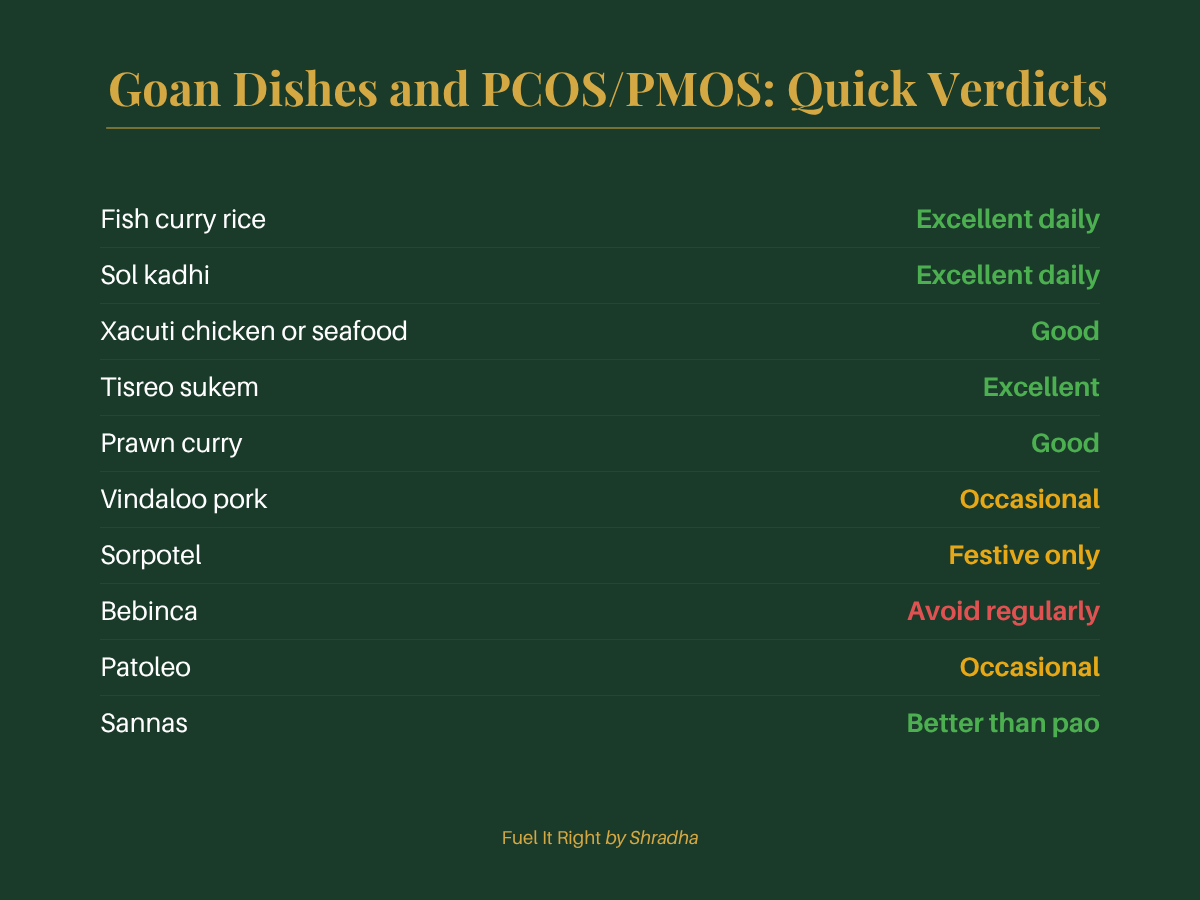
Here is the specific PCOS/PMOS verdict on Goan dishes along with what each does metabolically and how to enjoy it on protocol.
Fish Curry Rice (Xitt Kodi) Excellent: eat daily The foundational Goan meal is genuinely one of the most PCOS/PMOS-appropriate daily meals available. Fresh fish provides omega-3, high-quality protein, selenium, and zinc. The coconut-based gravy eaten with the fish provides fat that slows glucose absorption. The kokum provides antioxidant and anti-inflammatory phytochemicals. The sequence rule applies: eat the fish and curry first, rice last. Use red Goan rice or parboiled rice when possible. How to make it work: Eat the fish first. Rice last. Switch to red rice or ukda chawal. This single combination makes the daily Goan meal a powerful PCOS/PMOS protocol. |
Sol Kadhi Excellent: drink daily Sol kadhi is one of the most underrated PCOS/PMOS foods in Goa. Kokum is rich in hydroxycitric acid, which has anti-inflammatory and antioxidant properties. Coconut milk provides medium-chain triglycerides and healthy fats. The combination is cooling, anti-inflammatory, and gut-supportive. Directly relevant to the gut dysbiosis consistently found in women with PCOS/PMOS. Drink it after meals or alongside rice to reduce the glycaemic impact. |
Xacuti (Chicken or Seafood) Good: choose seafood version Xacuti is a complex curry made with roasted coconut, poppy seeds, and 15 or more spices including star anise, nutmeg, red chillies, and turmeric. The spice complexity is genuinely anti-inflammatory. Seafood xacuti provides the additional omega-3 and protein benefit. Chicken xacuti is nutritionally appropriate as a lean protein source. Eaten with rice using the sequence rule, xacuti is a good PCOS/PMOS meal. Avoid pork xacuti as a regular meal due to the higher saturated fat content. How to make it work: Order or cook seafood or chicken xacuti. Eat the curry first, rice last. Portion the rice to one small bowl. |
Tisreo Sukem (Dry Clam Stir-fry) Excellent Clams are one of the richest sources of zinc, iron, and Vitamin B12 available in Goan cuisine. Zinc supports adrenal and reproductive function directly relevant to PCOS/PMOS management. Iron replenishes what is lost in heavier periods. Vitamin B12 supports neurological function and is often deficient in women with PCOS/PMOS. The dry stir-fry preparation uses minimal oil. An excellent choice for women managing the iron and zinc deficiencies common in PCOS/PMOS. |
Prawn Curry Good: excellent protein Prawns provide high-quality protein, zinc, selenium, and iodine are all beneficial for PCOS/PMOS hormonal and thyroid management. The coconut-based gravy at normal quantities is metabolically neutral. The glucose impact depends entirely on whether it is eaten before or after rice. Prawn curry eaten before rice is an excellent PCOS/PMOS meal. How to make it work: Eat prawn curry before the rice. Keep the rice portion to one small bowl. |
Vindaloo (Pork) Use with caution: occasional Authentic Goan vindaloo is made with pork, vinegar, garlic, and a significant quantity of red chillies. The vinegar and garlic are metabolically beneficial. Vinegar has clinical evidence for reducing post-meal glucose spikes, and garlic has anti-inflammatory and insulin-sensitising properties. The concern is the pork fat content, which is high in arachidonic acid, the prostaglandin precursor that can worsen PCOS/PMOS inflammation when consumed in large quantities. Occasional consumption is appropriate. Weekly large portions are not recommended. How to make it work: A small portion occasionally is fine. Chicken vindaloo is a better regular option. Always eat with the sequence rule which is vindaloo first, rice last. |
Sorpotel Limit: occasional only Sorpotel uses pork offal like liver, heart, kidney and cooked with vinegar and spices. Organ meats are nutritionally dense but extremely high in arachidonic acid and saturated fat. For women with PCOS/PMOS where systemic inflammation is already elevated, regular sorpotel consumption compounds the inflammatory load. The festive preparation is appropriate on special occasions. It is not a regular eating choice for PCOS/PMOS management. How to make it work: Keep to Christmas, weddings, and special occasions. Not a weekly meal. |
Bebinca Avoid as a regular food Bebinca is made with coconut milk, sugar, eggs, and maida. The combination of refined flour (high GI) and significant added sugar produces one of the largest insulin surges of any Goan food. It is not appropriate as a regular dessert for women with PCOS/PMOS. On special occasions, a small piece after a protein-rich meal limits the metabolic impact significantly. As an everyday sweet, it directly worsens insulin resistance. How to make it work: Special occasions only. A small piece after a full meal, not on an empty stomach. |
Patoleo (Steamed turmeric leaf sweet) Occasional: better than bebinca Patoleo is made with rice batter, jaggery, and grated coconut, steamed in turmeric leaves. Jaggery has a lower glycaemic index than refined sugar and provides trace minerals. The turmeric leaves infuse the preparation with anti-inflammatory compounds. The coconut provides medium-chain triglycerides. While still a sweet with significant carbohydrate content, patoleo is nutritionally more appropriate than bebinca and is a festive food by nature rather than a daily one. How to make it work: An occasional traditional sweet that is far preferable to bebinca. Enjoy at festivals without guilt. |
Sannas (Goan steamed rice cakes) Good: better than pao Sannas are fermented steamed rice cakes which is the Goan version of idli. The fermentation process reduces the glycaemic index of the rice, increases resistant starch, and provides probiotic benefit for the gut microbiome. A good alternative to pao (Goan bread) when eating Goan curries. Eat the curry first, sannas second. How to make it work: Choose sannas over pao when having Goan curries. The fermented preparation is significantly more PCOS/PMOS-appropriate than Goan bread. |
What to Order When Eating Out in Goa
Eating out in Goa with PCOS/PMOS is entirely manageable with a clear ordering strategy.
• Order fish or prawn curry as the main protein. Avoid ordering pork as the primary protein at regular meals.
• Ask for a small portion of rice. Most Goan restaurants serve large portions. Half a plate of rice is appropriate.
• Order sol kadhi or chaas alongside the meal. Both are gut-supportive and reduce the overall glycaemic impact of the meal.
• Eat the fish or prawn curry first before touching the rice. Apply the sequence rule regardless of the setting.
• Avoid starting with Goan bread (pao) or poee on an empty stomach. Maida-based Goan bread eaten first drives the largest pre-meal insulin spike.
• For dessert, if at all, choose a small piece of patoleo over bebinca. Or skip dessert and have a glass of sol kadhi or chaas instead.
Is your gut health affecting your PCOS/PMOS symptoms?
Take the free Gut Health Quiz. 2 minutes. Get a personalised read and receive the free 3-Day Indian Gut Reset straight to your inbox.
What to Reduce or Modify
These specific Goan food patterns are the most metabolically problematic for PCOS/PMOS and worth consciously reducing or modifying.
• Pao (Goan bread) for breakfast which is maida-based, high GI, provides no protein. Replace with sannas, eggs, or moong dal preparations.
• Choris pao (chorizo with Goan bread) as a regular breakfast is highly processed pork sausage with refined bread. High arachidonic acid and high refined carbohydrate. An occasional food, not a weekly breakfast.
• Sweetened coconut feni-based drinks or sugary cocktails is fructose from mixed drinks drives hepatic lipogenesis directly. If drinking, dry wine or spirits with soda water are significantly lower in fructose than cocktails.
• Large rice portions twice daily. The sequence rule manages rice, but quantity still matters. One small bowl of rice at one meal per day is appropriate for most women with PCOS/PMOS and mild to moderate insulin resistance.
• Bebinca and other coconut sweets as daily desserts. The sugar and refined flour content is the problem, not the coconut. Reserve for special occasions.
The most common Goan PCOS/PMOS mistake Eating pao with chai for breakfast, then fish curry with a large serving of white rice for lunch, then rice again at dinner. The breakfast is the problem more than the fish curry rice. Replacing the morning pao and chai routine with eggs or moong dal chilla, applying the sequence rule at lunch, and having a smaller rice serving once daily transforms the Goan diet into a highly PCOS/PMOS-appropriate protocol without changing the lunch and dinner dishes at all. |
The PCOS/PMOS Goan Plate: How to Build It
Here is what the PCOS/PMOS Goan plate looks like across a full day. Staying within Goan food traditions while following the protocol.
Breakfast Two eggs any style, or moong dal chilla with green chutney. A small piece of fresh fruit. Chaas or warm water before the meal. Chai only after eating, not before. Lunch (the Goan meal) Fish curry eaten first. Pomfret, bangda, or prawn in coconut-kokum gravy. Sol kadhi on the side. Seasonal Goan vegetables (drumstick, raw banana, taro, bitter gourd) alongside. Red Goan rice or parboiled rice last, one small bowl. This is the complete PCOS/PMOS Goan lunch. Afternoon Sol kadhi or chaas. A small handful of cashews (Goa's own anti-inflammatory nut, raw or lightly roasted, not fried and salted). Fresh kokum sherbet without sugar. Dinner Tisreo sukem (clam stir-fry) or prawn preparation, eaten first. Seasonal vegetable sabzi or khatkhate (Goan mixed vegetable curry), eaten second. One jowar or ragi roti or a small bowl of sannas, eaten last. Curd or chaas on the side. Beverages throughout the day Sol kadhi after meals. Chaas in the afternoon. Jeera water or plain water. Limit chai to after meals. Avoid sweetened coconut drinks, packaged juices, and feni-based cocktails on regular days. |
Managing PCOS or PMOS in Goa and want a personalised protocol?
Book a free 30-minute discovery call with the Diet Dr Clinic team in Margao. We work with Goan clients daily — we know the food, the lifestyle, and the metabolic picture.
Conclusion: Goan Food Is Already on Your Side
PCOS/PMOS and Goan food are far more compatible than most women in Goa realise. The traditional Goan diet, daily fish, coconut, kokum, seasonal vegetables, fermented sannas, and sol kadhi, has many features that directly support the metabolic and hormonal management of the condition.
The adjustments are targeted and practical: replace pao with eggs or moong dal at breakfast, apply the sequence rule at every meal (fish and curry before rice), choose red Goan rice or parboiled rice over white polished rice, limit sorpotel and bebinca to celebrations, and drink sol kadhi and chaas daily.
None of this requires giving up the food that defines your home and your culture. It requires understanding what each dish does and eating it in the right order. The rest stays exactly as it is. For the complete food protocol beyond Goan-specific guidance, see the blog on PCOS and PMOS: what to eat, when, and why.
Book a Free 30-Minute Discovery Call
Based in Goa. Eating Goan food every day. We will build your PCOS/PMOS protocol around your actual meals — not around a generic Indian diet plan.
calendly.com/shradhajp/30min
Or call us at: +91 7057063984
FAQs: PCOS/PMOS and Goan Food
Q1. Is coconut bad for PCOS/PMOS?
No. Fresh coconut and coconut milk in cooking are appropriate in moderate quantities. The medium-chain triglycerides in coconut are metabolised differently from long-chain saturated fats and do not worsen insulin resistance the way refined oils do. The concern is not coconut in savoury cooking, it is the large amounts of sugar combined with coconut in Goan desserts like bebinca. Coconut chutney, coconut fish curry gravy, and sol kadhi are all appropriate.
Q2. Can I eat fish curry rice every day with PCOS/PMOS?
Yes, it is one of the best daily meals available for PCOS/PMOS management. The key is the sequence rule: eat the fish and curry first, rice last. Use red Goan rice or parboiled rice rather than polished white rice. Keep the rice portion to one small bowl. Sol kadhi alongside further reduces the glycaemic impact. This daily Goan meal, eaten with the sequence rule, is metabolically superior to most other Indian regional lunch staples.
Q3. What Goan fish is best for PCOS/PMOS?
Bangda (Indian mackerel) is the highest in omega-3 of the common Goan fish and one of the cheapest and most accessible. Pomfret, sardines, and Indian salmon also provide significant omega-3. Pomfret is the leanest option. All fresh Goan fish eaten regularly are beneficial for PCOS/PMOS management through their omega-3, protein, selenium, and iodine content.
Q4. What should I eat for breakfast in Goa instead of pao and chai?
Eggs, any style, are the most accessible alternative. Two eggs with a small amount of sabzi or sprouts, eaten before the chai. Moong dal chilla is another excellent option and very Goan in spirit with green coconut chutney alongside. A bowl of curd with a small amount of fruit and a handful of cashews is a lighter option on days with low appetite. The priority is protein within one hour of waking, before chai.
Q5. Is sol kadhi good for PCOS/PMOS?
Yes, it is one of the most beneficial Goan foods for PCOS/PMOS. Kokum provides antioxidant and anti-inflammatory phytochemicals. Coconut milk provides medium-chain triglycerides. The combination is cooling, gut-supportive, and anti-inflammatory. Drink it after the main meal or alongside rice to reduce the glycaemic impact. Homemade sol kadhi without added sugar is the optimal preparation.
Q6. Can I eat Goan breakfast foods like poee and unddo with PCOS/PMOS?
Poee and unddo are maida-based Goan breads with a high glycaemic index. Eating them alone or as the first food of the day drives a significant insulin spike. If eating them, pair with eggs, curd, or a protein source, and eat the protein first. As a daily breakfast for women with PCOS/PMOS, they are less appropriate than egg-based or dal-based alternatives. As occasional foods alongside protein at a meal, they are manageable.
Q7. What about Goan Hindu vegetarian food for PCOS/PMOS?
Goan Hindu Saraswat cuisine is excellent for PCOS/PMOS management. Tonak (black-eyed pea or chana in coconut gravy) is a high-protein, high-fibre legume dish. Khatkhate (mixed vegetable curry with coconut) provides fibre, micronutrients, and anti-inflammatory compounds. Tondak (kidney beans in coconut-teppal gravy) provides protein and prebiotics. These traditional Saraswat dishes, eaten with the sequence rule and moderate rice, constitute a strong PCOS/PMOS protocol.
Q8. Are Goan cashews good for PCOS/PMOS?
Goa's cashews, eaten raw or lightly roasted without salt and oil, are an appropriate snack for women with PCOS/PMOS. Cashews provide magnesium, zinc, and healthy monounsaturated fats. A small handful as an afternoon snack is metabolically appropriate. The concern is with the fried and salted cashews sold in packages. Refined oil and excess salt are the problem, not the cashew itself. Fresh Goan cashews in moderation are a good local snack choice.
About the Author
Shradha | Nutritionist and Dietitian | Fuel It Right. Practising out of Goa, India, with a focus on gut health, PMOS/PCOS, thyroid disorders, and weight management using real Indian food. She is based out of Goa, India. No supplements. No machines. Just food, and the science behind it.
fuel-it-right.com | @fuelitright