
PMOS and Fatty Liver: 60% of Women Are Affected
60% of women with PMOS have fatty liver disease. Most have no idea. It is silent, it is progressive, and it is directly connected to the same insulin resistance driving your other PMOS symptoms
Table of Contents
1. The Number Nobody Told You About
2. Why PMOS and Fatty Liver Are the Same Metabolic Problem
3. How Insulin Resistance Builds Fat in Your Liver
4. The Androgen Connection: Why PMOS Specifically Raises Fatty Liver Risk
5. How to Know If Your Liver Is Affected
6. What Happens If Fatty Liver Goes Untreated
7. What Indian Food Does for Fatty Liver in PMOS
8. What to Remove From Your Plate
9. Conclusion
10. FAQs
The Number Nobody Told You About
60% of women with PMOS have fatty liver disease. Not 10%. Not 20%. Six in ten. And the vast majority of them have no idea, because fatty liver in its early stages produces no symptoms. No pain. No visible sign. Nothing that would make you go to a doctor.
The medical name for it is non-alcoholic fatty liver disease, now increasingly called MASLD, metabolic dysfunction-associated steatotic liver disease. The name change happened in 2023, for the same reason PCOS became PMOS: because placing metabolism at the centre is more accurate than describing only what you see.
You do not need to drink alcohol to have fatty liver. You just need to have the metabolic pattern that PMOS creates. And that pattern, left unaddressed, builds fat in your liver silently while everything else looks normal on your blood tests.
60% of women with PMOS have fatty liver. Most find out by accident.
This is not a rare complication. It is the most common co-condition of PMOS. Yet it is one of the least discussed in Indian gynaecology consultations, and one of the most consequential to ignore.
Why PMOS and Fatty Liver Are the Same Metabolic Problem
PMOS and fatty liver are not two separate conditions that happen to co-occur. They share the same metabolic root. Understanding why requires a short detour into what your liver actually does and what happens when that process breaks down. If you want the full picture of the metabolic root, read our earlier piece on PMOS as a metabolism problem.
What the Liver Is Supposed to Do
Your liver manages glucose. When blood sugar rises after a meal, the liver stores the excess glucose as glycogen. When glycogen stores are full, surplus glucose gets converted to fat and exported to adipose tissue for storage. This is a normal, efficient process in a metabolically healthy body.
What Insulin Resistance Does to This Process
When insulin resistance develops, this process goes wrong in a specific way. The liver becomes resistant to insulin's signal to stop producing glucose. It keeps churning out glucose even when blood sugar is already elevated. At the same time, hyperinsulinaemia, the chronically elevated insulin that defines PMOS, signals the liver to convert excess carbohydrates to fat at an accelerated rate. The fat builds up in liver cells faster than the liver can export it. This is fatty liver.
This is the same insulin resistance driving your irregular periods, your acne, your hair fall, and your difficulty losing weight. The liver is simply another organ paying the price of the same root problem. Read more about how insulin resistance works throughout the body in our blog on insulin resistance and PMOS.
How Insulin Resistance Builds Fat in Your Liver
The fatty liver-PMOS connection operates through a specific biochemical pathway that explains why women with PMOS are at such disproportionate risk.
De Novo Lipogenesis: The Fat Factory
When insulin is chronically elevated, it activates a process called de novo lipogenesis in the liver. This is the liver converting carbohydrates directly into fat. In a healthy metabolic state, de novo lipogenesis is a small, regulated process. In insulin-resistant states, it becomes overactive. The liver produces fat far faster than it can package and export it. The surplus accumulates in liver cells as triglyceride droplets. Fatty liver develops.
The Visceral Fat Amplifier
Indian women with PMOS carry disproportionately high visceral fat, even at normal BMI. Visceral fat, stored around internal organs, directly feeds the liver via the portal circulation. Free fatty acids from visceral fat flow continuously into the liver and add to the fat accumulation from de novo lipogenesis. This is why lean Indian women with PMOS can have significant fatty liver despite having a normal BMI and appearing metabolically healthy.
Fructose and the Indian Diet
Sweetened beverages, packaged juices, honey, and high-fructose corn syrup in processed foods all deliver fructose directly to the liver. Unlike glucose, fructose bypasses the normal glycolytic controls and goes straight to de novo lipogenesis. In a liver already under metabolic stress from PMOS, fructose is the most direct dietary driver of fat accumulation. The cold drinks and packaged juices that are standard fare in Indian urban diets are doing more liver damage than most women realise.
One thing to check at your next blood test Ask for ALT and AST. These are liver enzymes that rise when liver cells are under stress. In women with PMOS, an ALT above 30 U/L is considered an early signal of fatty liverwhich is well below the standard lab's normal threshold of 40 or 45 U/L. Do not wait for your ALT to go above the lab's reference range. Check it now and read it in the PMOS context. |
The Androgen Connection: Why PMOS Specifically Raises Fatty Liver Risk
This is what makes the PMOS-fatty liver connection distinct from general metabolic fatty liver. It is not only insulin resistance. The elevated androgens specific to PMOS independently drive fatty liver risk.
A study of 667 women with PCOS published in Scientific Reports found that free testosterone and the free androgen index were independently associated with NAFLD, even after controlling for insulin resistance and BMI. Hyperandrogenism contributes to the progression and development of fatty liver through multiple mechanisms.
How Androgens Drive Liver Fat
• Elevated testosterone directly activates hepatic lipogenic enzymes, accelerating fat production in the liver
• Androgens reduce adiponectin, the anti-inflammatory hormone that protects liver cells from fat accumulation and oxidative stress
• Elevated DHEAS, common in stress-driven PMOS presentations, independently promotes hepatic fat deposition
• Androgen excess worsens visceral fat distribution, increasing the free fatty acid load flowing into the liver
This means that managing PMOS inflammation, covered in detail in our blog on PMOS inflammation and the Indian kitchen, is directly relevant to liver health, not a separate concern.
And because the gut microbiome regulates both androgen metabolism and liver inflammation, the gut-liver axis is a key pathway in this connection. The gut-PMOS connection blog covers the microbiome side of this in detail.
Want to know if your liver is at risk?
Book a free 30-minute discovery call. Bring your ALT, AST, and lipid panel results. We will tell you exactly where you stand and what to eat.
How to Know If Your Liver Is Affected
Fatty liver in PMOS is called a silent disease for a reason. The symptoms, when they do appear, are easy to attribute to everything else the condition causes.
What You Might Notice
• Persistent fatigue that does not improve with rest like liver dysfunction reduces energy production at the cellular level
• A dull ache or heaviness in the upper right abdomen, not always present, but when it is, it is often the first physical sign
• Bloating after meals regardless of what you eat means liver involvement disrupts bile production and fat digestion
• Worsening of all PMOS symptoms despite dietary changes when the liver is compromised, its ability to process and clear hormones is reduced, compounding the hormonal imbalance
• Persistent brain fog, the liver's role in detoxification affects neurological function
The Tests That Tell You
Ask for these at your next consultation. For the full panel with ranges, refer to the PMOS diagnosis checklist.
Test | PMOS flag (not just lab normal) | What it means |
ALT | Above 30 U/L (not 40-45) | Primary liver stress marker. Above 30 in a woman with PMOS warrants investigation. |
AST | Above 30 U/L | Rises alongside ALT in early fatty liver. AST/ALT ratio above 1 suggests progression. |
GGT | Above 25 U/L (women) | Highly sensitive early marker for fatty liver, especially diet-related. |
Triglycerides | Above 100 mg/dL | Elevated triglycerides are both a driver and a marker of fatty liver. |
Fasting insulin | Above 10 mIU/L | The metabolic root. Fatty liver and insulin resistance share this as their primary driver. |
Liver ultrasound | Echogenic liver on scan | The definitive imaging test. Should be ordered when ALT/AST are elevated or triglycerides are high. |
What Happens If Fatty Liver Goes Untreated
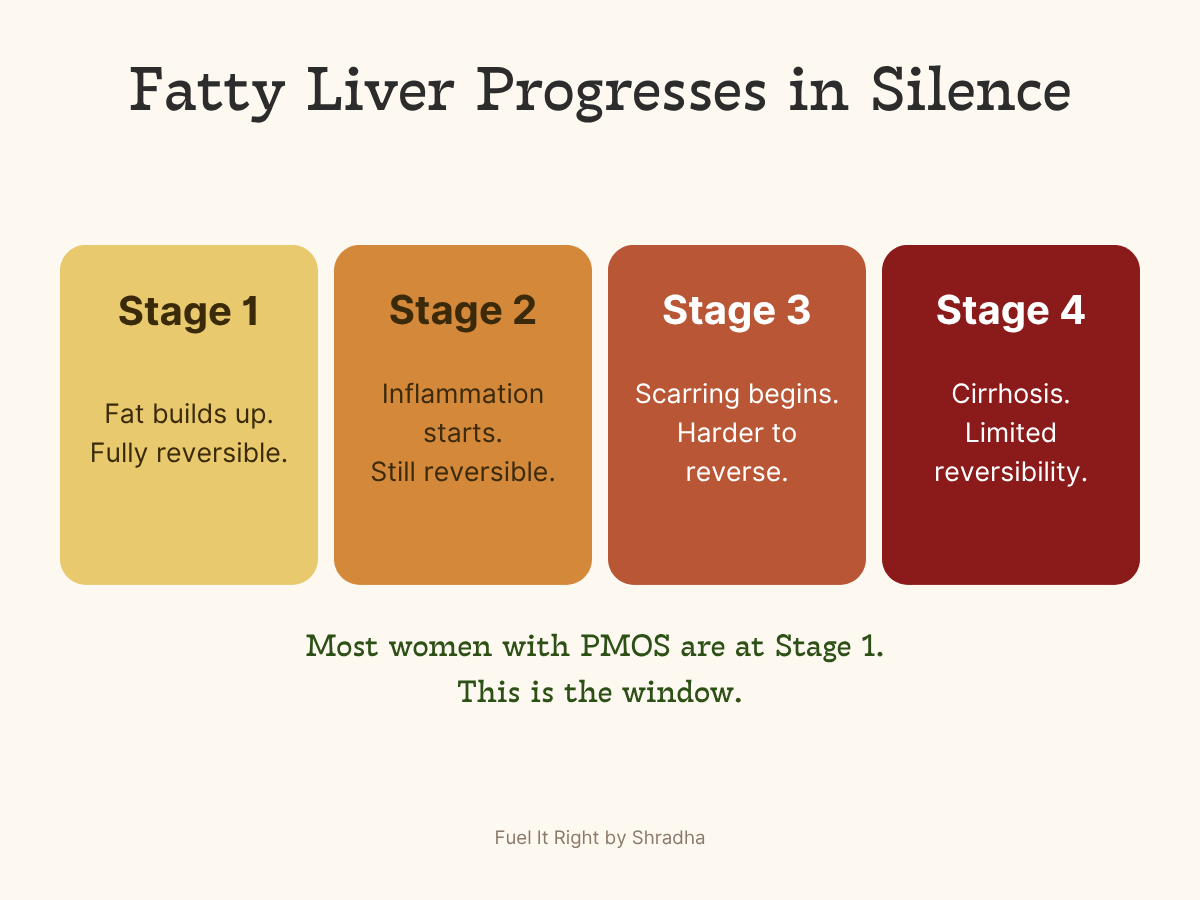
Most cases of fatty liver in PMOS stay at simple steatosis stage — fat accumulation without significant damage. But without dietary intervention, the condition progresses.
Simple fatty liver becomes inflamed liver. Inflamed liver becomes scarred liver. The window to reverse this with food is early.
The Progression Stages
• Stage 1 - Simple steatosis: fat accumulation in liver cells. Fully reversible with dietary change. No permanent damage. This is where most women with PMOS sit.
• Stage 2 - NASH (non-alcoholic steatohepatitis): fat plus inflammation plus liver cell injury. Still largely reversible. Requires more aggressive dietary and possibly pharmacological intervention.
• Stage 3 -Fibrosis: scar tissue begins to replace healthy liver cells. Partially reversible at early stages. More difficult to reverse as fibrosis progresses.
• Stage 4 - Cirrhosis: extensive scarring. Limited reversibility. Significantly elevated risk of liver failure and hepatocellular carcinoma.
The timeline matters A 2023 systematic review found that just 5% weight loss reduces liver fat measurably, and 7 to 10% weight loss reverses NASH in many cases. But this is not only a weight story for Indian women with PMOS. The research also shows that dietary composition and meal timing reduce liver fat independently of weight loss. The food changes are the intervention, not just a side effect of losing weight. |
Prefer to speak to us directly?
Call or WhatsApp the Diet Dr Clinic team. We work with clients managing PMOS, fatty liver, thyroid conditions, and weight through food. No supplements. No machines.
+91 7057063984
What Indian Food Does for Fatty Liver in PMOS
Reversing fatty liver in PMOS through food works through the same three mechanisms that address insulin resistance, inflammation, and gut health. The Indian kitchen has everything needed.
Protein First at Every Meal
Protein at the start of every meal reduces the insulin surge that drives de novo lipogenesis. Dal chilla before poha, eggs before toast, sprout salad before rice. The sequence is as important as the content. Protein also supports liver cell repair and reduces the inflammatory damage from fat accumulation.
Dal Daily for Liver Health
Legume fibre feeds Faecalibacterium prausnitzii and other bacteria that produce butyrate, which directly reduces hepatic inflammation. The gut-liver axis means that gut health is liver health. One cup of cooked dal or legumes daily is as directly relevant to your liver as it is to your hormones and your gut microbiome.
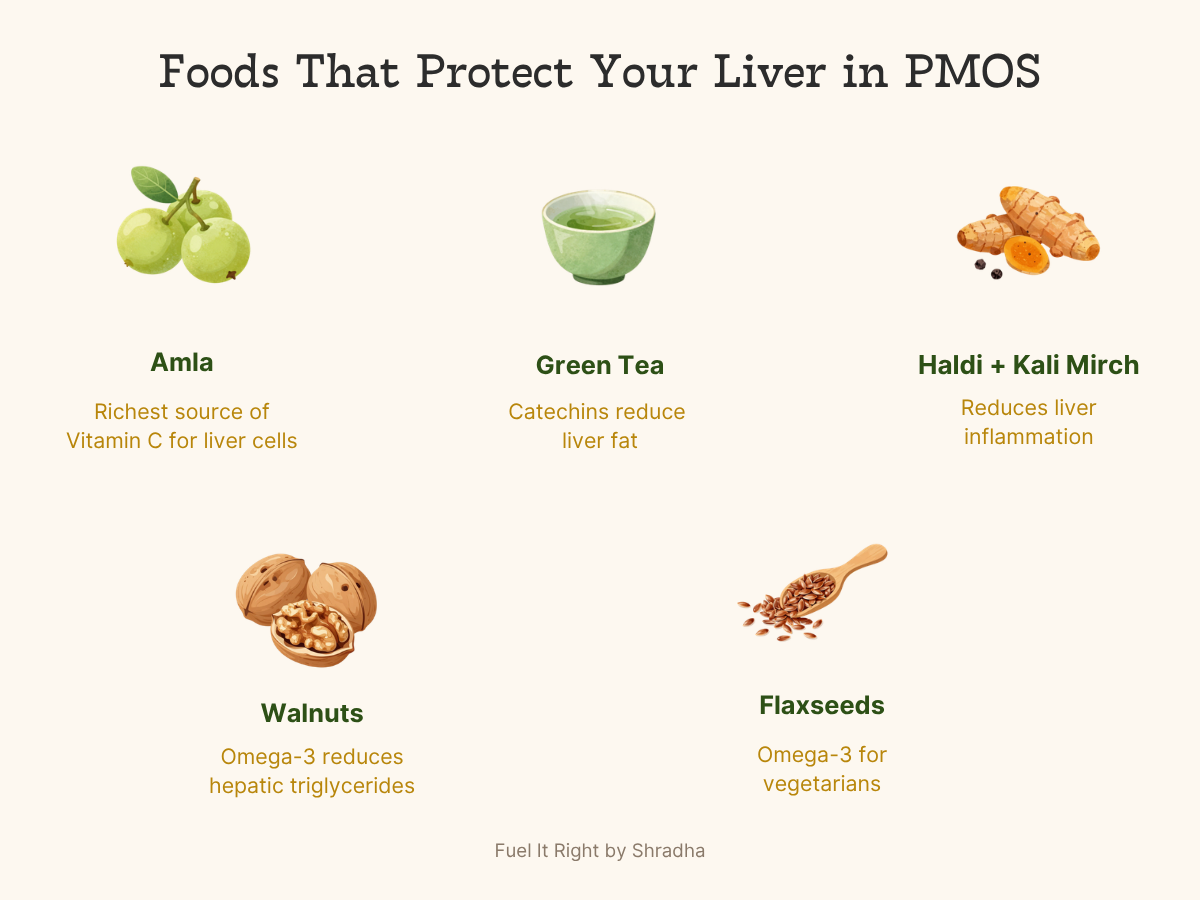
Specific Foods With Direct Liver Evidence
Coffee (filter or black) | Two cups of black coffee daily consistently shows protective effects against liver fibrosis progression in NAFLD research. Chlorogenic acids in coffee reduce hepatic fat deposition and inflammation. No sugar, no full-fat milk additives. |
Amla (Indian gooseberry) | One of the richest sources of Vitamin C and antioxidants available in the Indian kitchen. Amla directly reduces oxidative stress in liver cells, which drives the progression from simple steatosis to NASH. |
Haldi with black pepper and ghee | Curcumin reduces hepatic inflammation and lipid peroxidation. Clinical studies show improvement in ALT and AST with consistent curcumin intake. Always with piperine from black pepper and fat for absorption. |
Green tea | Catechins in green tea reduce hepatic lipid accumulation and improve liver enzyme levels. Three cups daily shows benefit in NAFLD research. |
Flaxseeds and walnuts | Omega-3 fatty acids reduce hepatic triglyceride synthesis and improve liver enzyme levels. Particularly important for vegetarian women with PMOS. |
What to Remove From Your Plate
The removal side of managing fatty liver in PMOS matters as much as the additions. These are the foods that directly accelerate liver fat accumulation.
• Sweetened beverages and packaged juices: the single most damaging category. Fructose goes directly to hepatic de novo lipogenesis. Replace with water, nimbu pani without sugar, jeera water, or black coffee.
• Deep fried foods: oxidised oils from repeated frying create lipid peroxides that directly damage liver cells. Samosa, pakora, puri, bhatura. Not elimination but significant reduction.
• Maida in all forms: rapid glucose spikes from refined flour drive insulin surges that activate hepatic lipogenesis. Bread, biscuits, naan, pav.
• Alcohol: even small amounts significantly accelerate progression from simple steatosis to NASH in people who already have fatty liver. If your ALT is above 30, alcohol is not appropriate.
• Full-fat milk in large quantities: some evidence suggests it may worsen triglycerides and liver fat in the context of PMOS. Curd and paneer in moderate amounts are fine.
The one swap that makes the biggest difference Replace every cold drink, packaged juice, and sweetened beverage with water or unsweetened drinks. This single change removes the most direct dietary driver of hepatic fat accumulation. It does not require cooking knowledge, meal planning, or any additional effort. It just requires a decision. |
Conclusion: Your Liver Is Part of Your PMOS. Treat It That Way.
PMOS and fatty liver are running on the same metabolic engine. The same insulin resistance driving your irregular periods is building fat in your liver. The same androgens causing your acne are elevating your liver enzyme levels. The same gut dysbiosis disrupting your hormone balance is inflaming your liver cells.
The good news is that the same food changes that address your PMOS symptoms also protect and reverse fatty liver. You are not managing two separate conditions. You are managing one metabolic picture, and food is the most powerful tool available for doing that.
Get your ALT and AST tested. Check your triglycerides and fasting insulin. Know where your liver stands today, while the window to reverse it with food is wide open.
Book a Free 30-Minute Discovery Call
Bring your ALT, AST, triglycerides, and fasting insulin. We will build your liver and PMOS food protocol from there.
Or call us: +91 7057063984
FAQs: PMOS and Fatty Liver
Q1. Can I have fatty liver if I do not drink alcohol?
Yes. Non-alcoholic fatty liver disease, now called MASLD, has nothing to do with alcohol consumption. It is caused by metabolic dysfunction, specifically insulin resistance, excess fructose intake, and visceral fat accumulation. Women with PMOS are at significantly higher risk because insulin resistance is central to both conditions. Alcohol abstinence is not sufficient protection, its dietary quality and metabolic health determine fatty liver risk far more than alcohol intake in the PMOS context.
Q2. I am thin. Can I still have fatty liver with PMOS?
Yes. Lean women with PMOS can have significant fatty liver. Indian women store disproportionately high visceral fat at normal BMI, and visceral fat feeds the liver directly via the portal circulation. Additionally, free testosterone independently drives hepatic fat accumulation regardless of body weight. An ALT above 30 U/L in a lean woman with PMOS is an early signal that requires investigation, not reassurance that everything is fine.
Q3. Is fatty liver in PMOS reversible?
Yes, highly reversible in the early stages. A 2023 systematic review confirmed that 5% weight loss reduces liver fat measurably, and 7 to 10% weight loss reverses NASH in many cases. For Indian women with PMOS, dietary composition changes, reducing fructose and refined carbohydrates, increasing protein and fibre, consistent use of anti-inflammatory foods, reduce liver fat independently of weight loss. The earlier intervention happens, the more completely it reverses.
Q4. What tests should I ask for to check my liver?
Start with ALT, AST, GGT, and fasting triglycerides on your next blood panel. In the PMOS context, an ALT above 30 U/L is the threshold for investigation, not the lab's standard 40 to 45 U/L. If these are elevated, ask for a liver ultrasound. If fibrosis is suspected, transient elastography (FibroScan) is the most accurate non-invasive assessment.
Q5. Does Metformin help with fatty liver in PMOS?
Metformin reduces hepatic glucose production and has some evidence for reducing liver fat and improving liver enzyme levels in women with PMOS and NAFLD. It is not a primary treatment for fatty liver but is a reasonable adjunct when insulin resistance is significant. Dietary change, particularly reducing fructose and refined carbohydrate intake, addresses the root more directly.
Q6. How quickly can liver enzymes improve with dietary changes?
ALT and AST typically begin improving within 6 to 8 weeks of consistent dietary changes that reduce the metabolic drivers of liver fat. Significant improvements in liver fat on ultrasound can be seen within 3 to 6 months of consistent intervention. Triglycerides tend to respond fastest, often within 4 to 6 weeks of reducing fructose and refined carbohydrate intake.
Q7. Should I avoid ghee if I have fatty liver and PMOS?
Moderate amounts of ghee are not a problem and may actually support liver health through butyrate content. The evidence suggesting dairy fat worsens fatty liver is primarily about large quantities of full-fat milk, not small amounts of ghee used in cooking. What significantly worsens fatty liver is fructose from sweetened beverages, refined oils from deep-fried foods, and large quantities of refined carbohydrates. Ghee in cooking quantities is not a priority to eliminate.
Q8. I have been told my liver ultrasound shows fatty changes. What should I do?
Do not panic, fatty changes on ultrasound in the context of PMOS are very common and very reversible at this stage. First, get your ALT, AST, GGT, fasting triglycerides, fasting insulin, and HOMA-IR checked if you have not already. This tells you the severity of the metabolic driver. Then start dietary changes immediately: eliminate sweetened beverages and packaged juices, reduce deep-fried foods, increase dal and vegetable intake, use haldi with black pepper and ghee daily. Recheck liver enzymes in 8 weeks.
About the Author
Shradha | Nutritionist and Dietitian | Fuel It Right. Practising out of Goa, India, with a focus on gut health, PMOS/PCOS, thyroid disorders, and weight management using real Indian food. No supplements. No machines. Just food, and the science behind it.
fuel-it-right.com | @fuelitright