
What to eat on your period with PCOS and PMOS
For women with PCOS and PMOS, the period is not just uncomfortable. It is metabolically and hormonally demanding. Here is what to eat, what to avoid, and why it matters specifically for this condition.
Table of Contents
1. Why the Period Is Different With PCOS and PMOS
2. The Biology of Period Pain: What Is Actually Happening
3. The Hormonal Picture During Menstruation in PCOS/PMOS
4. The Five Nutrients Your Body Needs Most During Your Period
5. The Best Indian Foods for Each Symptom
6. What to Avoid During Your Period
7. A Sample Eating Plan for Your Period Days
8. Conclusion
9. FAQs
Why the Period Is Different With PCOS and PMOS
For women with PCOS and PMOS, the menstrual period is not just uncomfortable, it is a significant metabolic and hormonal event that the condition makes more demanding in specific, well-understood ways.
Women with PCOS/PMOS often experience heavier periods after a longer cycle, because the buildup of the uterine lining is greater after an extended follicular phase. They experience more significant pain because elevated prostaglandin production, driven by the same inflammatory environment that characterises the condition, intensifies uterine cramping. And they experience greater fatigue because the hormonal crash from low estrogen and progesterone at menstruation interacts with the already-disrupted cortisol and insulin patterns of PCOS/PMOS.
The period with PCOS/PMOS is heavier, more painful, and more hormonally disruptive than for most women. Food does not make it disappear. It makes it significantly more manageable.
This blog addresses that specific picture, not generic period advice, but what Indian women with PCOS/PMOS specifically need to eat during their period to reduce pain, replenish what is lost, stabilise mood, and support their gut microbiome through a time when all of these systems are under additional stress.
The Biology of Period Pain: What Is Actually Happening
Understanding why period pain happens makes the food choices that address it much more logical.
Prostaglandins: The Pain Driver
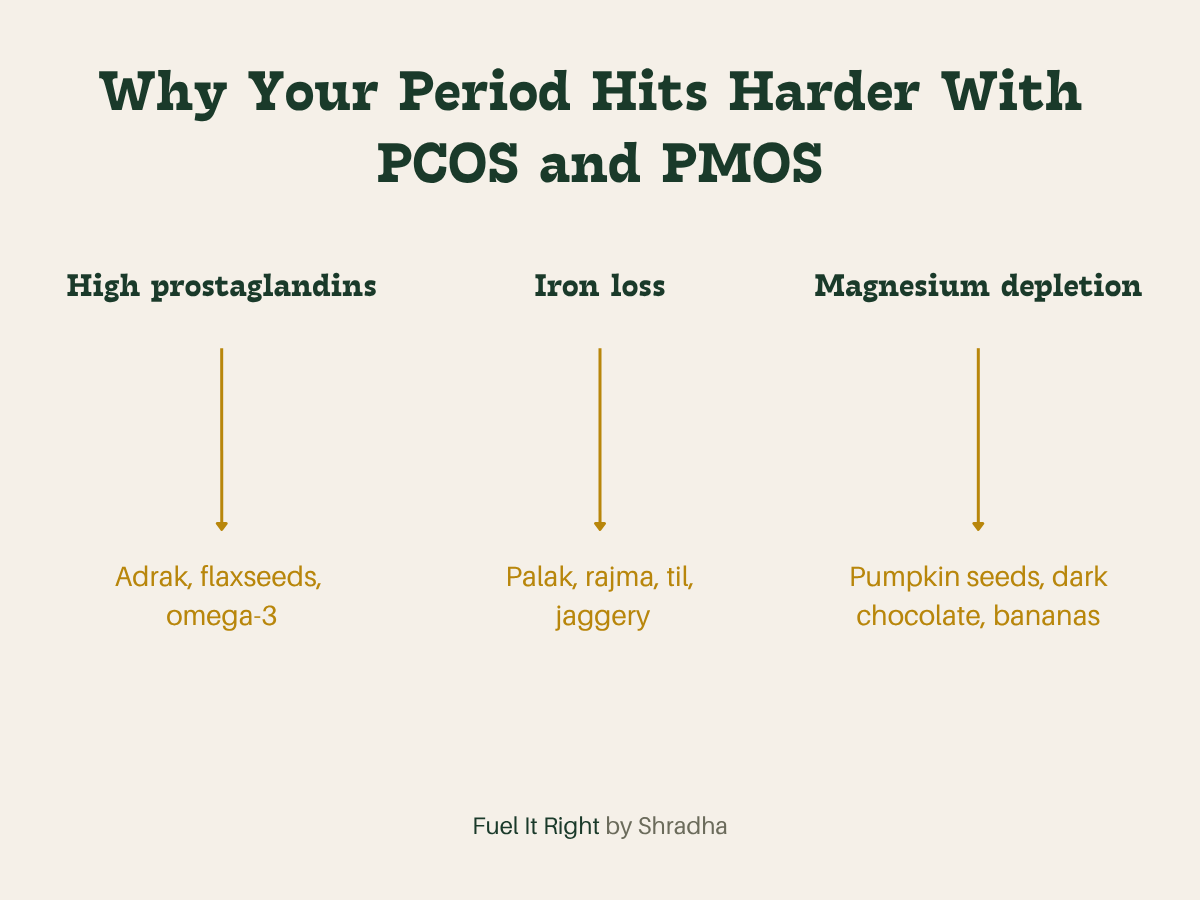
When menstruation begins, the uterine lining releases prostaglandins, lipid compounds that cause the uterus to contract and expel the lining. Higher prostaglandin levels produce stronger contractions, more pain, and more inflammation. Women with PCOS/PMOS have a more pro-inflammatory systemic environment, which amplifies prostaglandin-driven pain. Research confirms that omega-3 fatty acids compete with the arachidonic acid pathway that produces prostaglandins, reducing their production and measurably easing menstrual pain.
Iron Loss and Fatigue
Each period involves blood loss, typically 30 to 80 mL. For women with PCOS/PMOS who have heavier periods after longer cycles, this blood loss is often at the higher end of the range. Iron is lost with every period, and in women already running low on iron, which is extremely common in Indian women with PCOS/PMOS, the period accelerates the deficit. The fatigue of the first two days of a period is often as much iron-related as hormone-related.
Magnesium and Muscle Cramping
Magnesium is required for smooth muscle relaxation. During menstruation, uterine smooth muscle contractions produce the cramping pain. Adequate magnesium reduces the intensity of these contractions by supporting muscle relaxation. Magnesium is depleted rapidly during the stress response, and women with PCOS/PMOS have chronically elevated cortisol. Meaning their magnesium reserves are often lower than normal before the period even begins.
The full inflammatory picture of PCOS/PMOS and how it relates to period pain is covered in the blog on PCOS/PMOS and inflammation.
The Hormonal Picture During Menstruation in PCOS/PMOS
For women with PCOS/PMOS, the hormonal environment during menstruation has specific features that affect mood, energy, and digestion in ways that food can directly address.
Progesterone Crash and Mood
At menstruation, progesterone drops to its lowest point of the cycle. In women with PCOS/PMOS who are already anovulatory or have irregular ovulation, progesterone production during the luteal phase was already lower than normal. The premenstrual and menstrual drop in an already-low progesterone baseline reduces allopregnanolone, the calming GABA neurosteroid, to very low levels. This is why anxiety, irritability, and low mood are heightened during menstruation in PCOS/PMOS. For more on how progesterone deficiency affects mood, see the blog on PCOS/PMOS and mental health.
Cortisol and Blood Sugar Instability
Pain activates the stress response. Period pain in PCOS/PMOS elevates cortisol, which raises blood sugar, which raises insulin, which worsens the very metabolic environment you are trying to manage. This cycle of pain, cortisol, blood sugar spike, insulin surge, worsened hormonal environment, is one reason why period days can feel like a setback in PCOS/PMOS management. Stable blood sugar through protein-first meals reduces this cortisol activation, breaking the cycle. For the cortisol-PCOS/PMOS connection, see the blog on PCOS/PMOS and cortisol.
Gut and Bowel Changes
Prostaglandins produced during menstruation do not stay in the uterus. They also act on the intestines, which is why many women experience loose bowel movements, nausea, or digestive discomfort during the first one to two days of their period. For women with PCOS/PMOS who already have gut dysbiosis, this prostaglandin-gut interaction is more pronounced. Gut-supportive foods like curd, chaas, easy-to-digest warm foods are particularly valuable on period days.
The Five Nutrients Your Body Needs Most During Your Period
These five nutrients address the specific demands of the period in PCOS/PMOS. Heavy bleeding, cramping, fatigue, mood, and gut disruption.
Iron Why it matters: Replaces iron lost through menstrual blood loss. Low iron causes fatigue, dizziness, and reduced concentration. These are symptoms that compound the hormonal fatigue of PCOS/PMOS. The period is the most significant iron-depleting event of the month. Indian sources: Palak (spinach), methi leaves, rajma, moong dal, chana, sesame seeds (til), pumpkin seeds, moringa (drumstick leaves), jaggery. Period focus: Increase iron-rich foods in the 3 to 4 days before and during the period. Always pair with Vitamin C for absorption — nimbu squeezed over palak sabzi doubles the iron absorbed. |
Magnesium Why it matters: Relaxes uterine smooth muscle, directly reducing the intensity of cramping contractions. Also supports GABA production (calming), reduces cortisol reactivity, and improves sleep quality during uncomfortable period nights. Indian sources: Dark leafy greens, pumpkin seeds, til (sesame seeds), rajma, chana, dark chocolate (70% cocoa or above), banana. Period focus: Increase magnesium-rich foods 2 days before and during the period. Pumpkin seeds as a snack and palak sabzi at lunch provide a significant combined dose. |
Omega-3 Fatty Acids Why it matters: Competes with arachidonic acid to reduce prostaglandin production — directly reducing the intensity of uterine cramping. RCT evidence confirms omega-3 intake reduces dysmenorrhoea pain severity. Indian sources: Flaxseeds (ground), walnuts, chia seeds, mustard oil (cold-pressed), fatty fish for non-vegetarians (pomfret, mackerel, sardines). Period focus: Add one tablespoon of ground flaxseeds to curd or roti dough in the days leading up to and during the period. This is the single most impactful anti-prostaglandin dietary intervention available. |
Vitamin C Why it matters: Enhances iron absorption from plant sources. It is essential because most Indian women get their iron from plant foods, which contain non-haem iron that is poorly absorbed without Vitamin C. Also supports adrenal function during the stress of pain and hormonal fluctuation. Indian sources: Amla (Indian gooseberry), guava, capsicum, lemon, tomatoes, orange. Period focus: Squeeze lemon over iron-rich foods at every meal during the period. A small piece of amla or guava alongside iron-containing foods maximises absorption. |
Tryptophan and Complex Carbohydrates Why it matters: Tryptophan is the dietary precursor to serotonin. Combined with a moderate complex carbohydrate, it supports serotonin synthesis directly addressing the mood low of the progesterone crash. This is one context where the carbohydrate at dinner serves a specific therapeutic purpose. Indian sources: Dal and paneer for tryptophan. Jowar roti, bajra roti, or sweet potato as the evening complex carbohydrate. Combined: dal khichdi with jowar, or palak paneer with bajra roti at dinner. Period focus: Protein-rich dinner with a moderate complex carbohydrate supports overnight serotonin recovery from the mood disruption of menstruation. |
Is your gut affecting your period symptoms?
Take the free Gut Health Quiz. 2 minutes.
Get a personalised read on your gut pattern and receive the free 3-Day Indian Gut Reset straight to your inbox.
The Best Indian Foods for Each Symptom
Here is the symptom-by-symptom Indian food guide for period days with PCOS/PMOS.
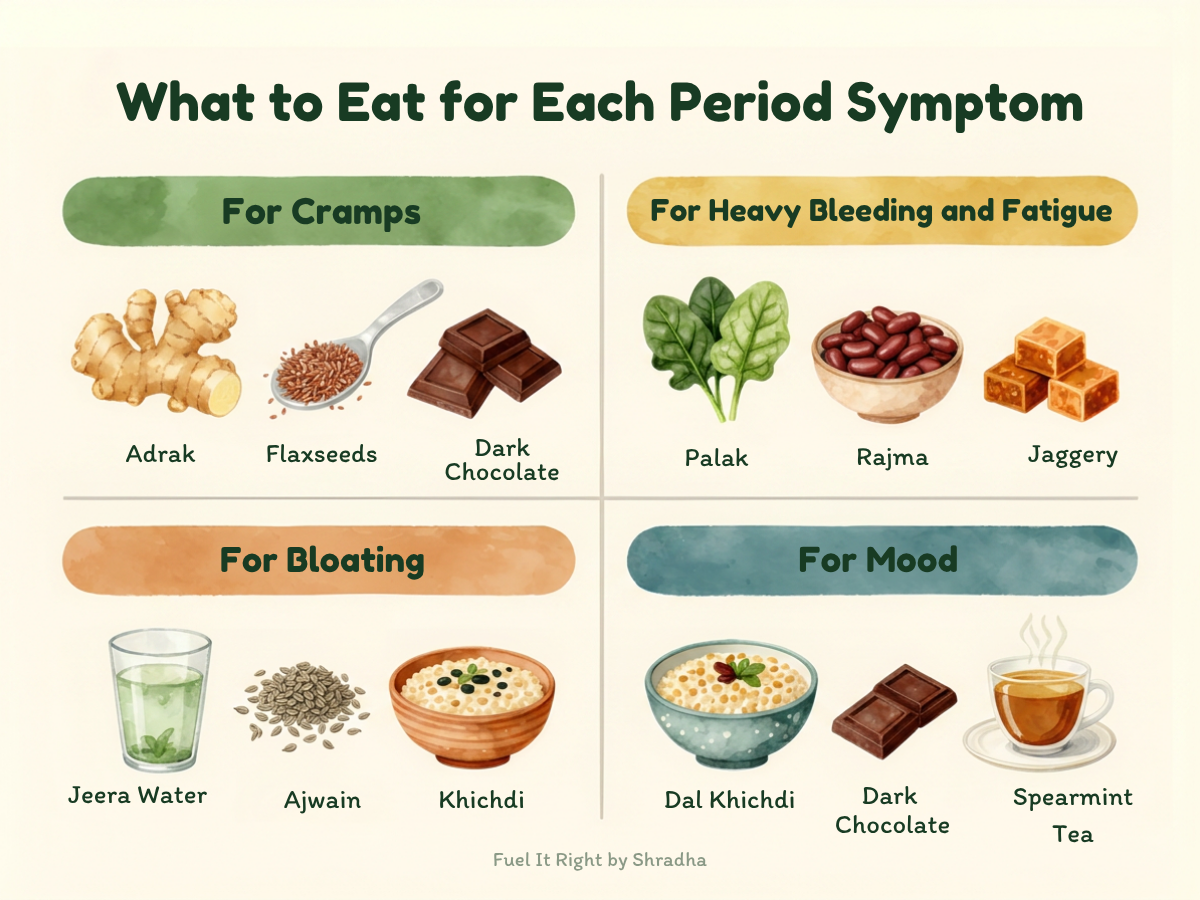
For Cramps
• Adrak chai (without sugar): Gingerols and shogaols in ginger reduce prostaglandin production, with RCT evidence comparable to ibuprofen at effective doses. One to two cups of strong adrak chai on the first two days of the period.
• Ground flaxseeds in curd or roti dough: Omega-3 from flaxseeds reduces prostaglandin-driven cramping. Start 2 days before the period if possible.
• Haldi with ghee and kali mirch: Curcumin reduces systemic inflammation that amplifies prostaglandin pain.
• Dark chocolate with 70% cocoa or above: Provides magnesium for muscle relaxation and satisfies cravings without the glucose spike that worsens pain and cortisol.
For Heavy Bleeding and Fatigue
• Palak sabzi with nimbu: Iron plus Vitamin C for maximum iron absorption. Make this at least once daily during heavy flow days.
• Rajma or chana as a lunch protein: Two of the highest plant-based iron sources in an Indian kitchen.
• Jaggery with til (sesame seeds): Traditional Indian iron combination with clinical rationale. Jaggery provides iron, til provides both iron and magnesium.
• Moringa (drumstick leaves) sabzi: One of the highest iron concentrations of any Indian vegetable. Available fresh in South Indian and Goan kitchens, dried moringa powder available elsewhere.
For Bloating and Digestive Discomfort
• Jeera water before meals: Reduces the intestinal spasm that prostaglandins trigger. Most effective when drunk warm before the first meal of the day.
• Ajwain in a small glass of warm water: Direct antispasmodic for the gut, reduces the cramping and loose motions associated with prostaglandin activity in the intestines.
• Light, warm, easy-to-digest meals: Khichdi, dal rice, moong dal soup. Avoid raw salads and heavy fried food on the first two days when gut prostaglandin sensitivity is highest.
• Chaas after meals instead of plain water: The live cultures and the electrolytes support gut stability during menstruation.
For Mood and Cravings
• Protein at every meal, including breakfast: Stabilises blood sugar and reduces the cortisol spike that amplifies mood disruption.
• Dal khichdi at dinner: Provides tryptophan for serotonin alongside the complex carbohydrate that facilitates its conversion.
• A small piece of dark chocolate (70% cocoa) mid-afternoon: Addresses the magnesium deficit, satisfies the sweet craving, and provides a mood lift without the insulin spike.
• Warm adrak or spearmint tea instead of extra chai: Caffeine on the first two days of a period worsens cramping and increases cortisol. Replacing one or two chai cups with ginger or spearmint tea reduces both.
What to Avoid During Your Period
For women with PCOS/PMOS, certain foods significantly worsen period symptoms through specific mechanisms rather than general unhealthiness.
• Caffeine before food on period days. Caffeine raises cortisol and constricts blood vessels, worsening cramping. After a protein-containing meal, the effect is substantially smaller. Keep chai or coffee to after breakfast.
• Refined sugar and maida on an empty stomach. Spikes blood sugar, raises insulin, raises cortisol, amplifies the inflammatory environment that drives prostaglandin pain. The period is the worst time for biscuits, sweets, or maida snacks as the first food of the day.
• Deep-fried foods on heavy flow days. Refined oils and the inflammatory lipids from deep frying worsen the systemic inflammation that amplifies period pain. Particularly relevant on day one and day two.
• Excess salt. Increases water retention and worsens the bloating that is already elevated during menstruation. Reduce added salt in cooking on period days.
• Red meat in large quantities. Red meat contains arachidonic acid, the precursor to the prostaglandins that drive cramping. Moderate amounts are fine. Large portions of red meat on period days can worsen pain.
• Cold drinks and sweetened beverages. Fructose drives hepatic lipogenesis and worsens the inflammatory load. On period days when inflammation is already elevated from prostaglandins, this compounds pain significantly.
The most common mistake on period days Eating less because of nausea or low appetite on day one and day two. Skipping meals on period days triggers cortisol, worsens blood sugar instability, and depletes the iron and magnesium stores that your body is simultaneously losing through bleeding. Eat small, warm, easy-to-digest meals rather than large ones if appetite is low, but do not skip meals entirely. |
A Sample Eating Plan for Your Period Days
Here is what the PCOS/PMOS period eating plan looks like across a typical day on the first two days of the period, when symptoms are most intense.
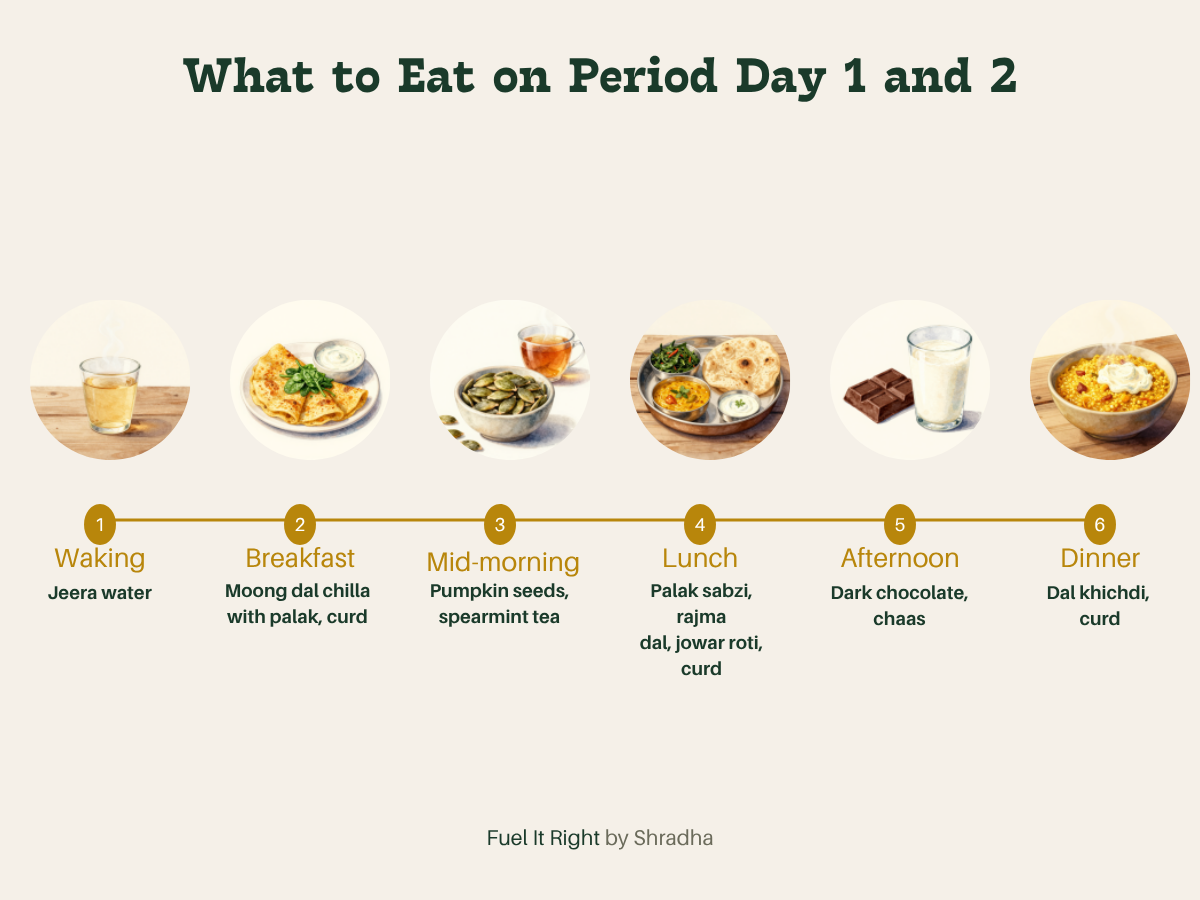
On waking Warm jeera water or ajwain water. Not chai. Not on an empty stomach. Breakfast (within 1 hour) Moong dal chilla with palak stuffing, topped with a small squeeze of lemon. Side of curd. One cup of adrak chai after eating. Mid-morning A small handful of pumpkin seeds and walnuts. Or a piece of guava or amla alongside roasted chana. Spearmint tea. Lunch Palak sabzi with nimbu (iron plus Vitamin C, eat first). Rajma or moong dal (iron plus protein, eat second). One jowar roti (eat last). Curd on the side. This single meal provides significant iron, magnesium, and omega-3 in the right combinations. Afternoon (3 to 4pm) One to two small squares of dark chocolate (70% cocoa). Chaas. This combination provides magnesium, satisfies cravings, and keeps blood sugar stable through the afternoon. Dinner Dal khichdi made with moong dal and a small amount of parboiled rice, cooked with haldi, jeera, and ghee. A tablespoon of ground flaxseeds stirred in. A small bowl of curd. Light, warm, easy to digest. Supports overnight iron and tryptophan replenishment. Before bed (if wanted) Warm adrak chai without sugar, or haldi milk with kali mirch. Not food. Rest. |
Want a personalised period eating plan for your PCOS/PMOS?
Book a free 30-minute discovery call. Tell us your most difficult period symptoms. We will build a food protocol specific to your hormonal and metabolic picture.
Conclusion: Your Period Needs More From You, Not Less
Women with PCOS and PMOS need to eat more strategically during their period, not less. The temptation to eat light, skip meals, or reach for comfort food on difficult days works against the specific nutritional demands the body has during menstruation with this condition.
Iron to replace what is lost. Magnesium to ease the cramping. Omega-3 from flaxseeds to reduce prostaglandin production. Protein to stabilise blood sugar and cortisol. Vitamin C with every iron-rich meal. Adrak and haldi for inflammation. Warm, easy-to-digest food on the heaviest days.
None of this requires special shopping. Palak, rajma, dal, til, flaxseeds, adrak, haldi, curd, everything in this protocol is already in an Indian kitchen. The difference is eating it intentionally on the days when your body needs it most. For the full daily food protocol beyond period days, see the blog on PCOS and PMOS: what to eat, when, and why.
Book a Free 30-Minute Discovery Call
Tell us your period symptoms. We will build a food protocol specific to your PCOS/PMOS hormonal picture.
calendly.com/shradhajp/30min
Or call us: +91 7057063984
FAQs: What to Eat on Your Period With PCOS and PMOS
Q1. Is it normal to have worse periods with PCOS/PMOS?
Yes. Women with PCOS/PMOS often experience heavier periods, more painful periods, and more significant mood disruption than women without the condition. This is driven by specific mechanisms: heavier bleeding after a longer cycle due to more uterine lining buildup, higher prostaglandin production from the pro-inflammatory environment of PCOS/PMOS, and a sharper hormonal crash from lower progesterone levels at menstruation. These are biological features of the condition, not signs of something additional going wrong.
Q2. Why do I crave sugar so intensely during my period?
The progesterone crash at menstruation lowers allopregnanolone, the calming GABA neurosteroid, producing anxiety and low mood. The body seeks quick-relief serotonin, which sugar temporarily provides. In women with PCOS/PMOS, this craving is amplified by already-disrupted insulin and cortisol patterns. The solution is not to deny the craving but to redirect it: dark chocolate provides magnesium and a small serotonin precursor without the glucose spike, and protein at every meal reduces the depth of the serotonin trough that drives the craving.
Q3. Does ginger actually help with period cramps?
Yes. Ginger contains gingerols and shogaols that inhibit prostaglandin and leukotriene synthesis through cyclooxygenase inhibition, the same pathway targeted by ibuprofen, at a different potency. Multiple RCTs have confirmed that ginger consumption during the first three days of menstruation reduces pain intensity compared to placebo. Effective dose is approximately 1 to 1.5g of fresh ginger daily, equivalent to a thumb-sized piece of fresh adrak in chai or cooking.
Q4. Should I avoid exercise during my period with PCOS/PMOS?
Gentle movement like walking, yoga, light stretching, improves circulation, reduces prostaglandin levels, and releases endorphins that reduce pain perception. These are appropriate and beneficial on period days. High-intensity exercise on day one and day two, when pain and fatigue are most significant, raises cortisol and is generally not recommended for women with PCOS/PMOS who already have elevated cortisol. Listen to your body, movement that feels manageable is beneficial. Movement that causes significant fatigue or worsened pain is not.
Q5. I have very heavy periods. What should I focus on eating most?
Iron and Vitamin C are the priority. The combination of palak sabzi with nimbu, rajma or chana dal as the lunch protein, and til or pumpkin seeds as a snack provides significant dietary iron. The Vitamin C from lemon, guava, or amla alongside these foods doubles the absorption of the non-haem iron from plant sources. If your periods are consistently very heavy, ask for serum ferritin to be tested, a level below 30 ng/mL warrants further investigation beyond dietary management.
Q6. Is it normal to have loose bowel movements during my period?
Yes. Prostaglandins produced during menstruation act on intestinal smooth muscle as well as uterine muscle. This causes increased intestinal motility, loose stools, nausea, or urgency in the first two days of the period for many women. For women with PCOS/PMOS who already have gut dysbiosis, this effect is often more pronounced. Warm, easy-to-digest foods like khichdi, dal soup, warm chaas, and avoiding raw vegetables and high-fibre foods on the first two days reduces the gut irritation.
Q7. Can the food I eat before my period affect how bad it is?
Yes, significantly. The 5 to 7 days before the period are the most impactful for nutritional preparation. Starting flaxseeds 3 to 4 days before the period increases the omega-3 available to compete with prostaglandin production. Increasing magnesium-rich foods before the period reduces the cramping severity. Reducing refined sugar and refined carbohydrates in the premenstrual week lowers the inflammatory baseline before prostaglandins begin to rise. Most of the anti-period pain food work happens before the period, not during it.
Q8. My periods are irregular with PCOS/PMOS. Does this eating plan still apply?
Yes. The eating plan applies on whatever days your period arrives, however irregular they are. The only difference is that the preparatory foods in the 5 to 7 days before cannot always be timed in advance. Building consistent daily habits like flaxseeds every day, magnesium-rich foods every day, iron-rich foods regularly, means your body is always nutritionally prepared regardless of when the period arrives. This is one more reason why the daily PCOS/PMOS food protocol matters beyond just period days.
About the Author
Shradha | Nutritionist and Dietitian | Fuel It Right. Practising out of Goa, India, with a focus on gut health, PMOS/PCOS, thyroid disorders, and weight management using real Indian food. No supplements. No machines. Just food, and the science behind it.
fuel-it-right.com | @fuelitright