
PCOS and PMOS: What to Eat, When, and Why
The complete Indian food protocol for PCOS and PMOS. What to eat, what to avoid, when to eat it, and why each choice works at the metabolic root of the condition.
Table of Contents
1. Why This Is Different From Every PCOS Diet You Have Seen Before
2. The Three Principles That Underpin Everything
3. The Sequence Rule: Why What You Eat Matters More Than What You Eat
4. The Full Protocol: What to Eat at Each Meal
5. What to Avoid and What to Eat Instead
6. The Spice Cabinet as Medicine
7. A Sample Day on the Protocol
8. Conclusion
9. FAQs
Why This Is Different From Every PCOS Diet You Have Seen Before
The PCOS and PMOS food protocol you are about to read is not a list of foods to eat and foods to avoid. It is a mechanistically grounded protocol based on how each food choice affects the three root drivers of the condition: insulin resistance, gut dysbiosis, and systemic inflammation.
Most PCOS diet advice you will find online is one of two things: a generic low-carb plan not designed for Indian eating patterns, or a broad list of good and bad foods with no explanation of why or when. Neither addresses the actual metabolic root. Neither tells you that the sequence in which you eat your food matters as much as what you eat. Neither explains that the same dal you already cook every day is doing more for your PCOS/PMOS than any supplement you could buy.
This protocol is built entirely around real Indian food. No substitutions. No imported ingredients. No elimination of entire food groups. The goal is to give you a framework that is sustainable because it fits the way Indian women actually cook and eat, rather than an idealised Western protocol that lasts three weeks.
Before applying this protocol, it helps to know your metabolic baseline. The PCOS/PMOS diagnosis checklist covers the blood tests that tell you where your insulin resistance, inflammation, and hormones currently sit.
The Three Principles That Underpin Everything
Every food choice in the PCOS/PMOS protocol serves at least one of three purposes. Understanding these principles is more valuable than memorising a food list, because they allow you to make good decisions at any meal, even when the ideal food is not available.
Principle 1: Reduce the insulin surge at every meal
Insulin resistance is the root of PCOS/PMOS. Every meal that produces a large glucose spike worsens it. Every meal that produces a small, slow glucose rise helps reverse it. The difference between these two outcomes is determined by protein and fibre presence, the glycaemic index of carbohydrates chosen, and the sequence in which food is eaten. See the blog on insulin resistance and PCOS/PMOS for the full mechanism.
Principle 2: Feed the gut bacteria that manage hormones
Your gut microbiome directly regulates androgen clearance, insulin sensitivity, and systemic inflammation. Women with PCOS/PMOS consistently show depleted populations of the specific bacteria that do this work. Feeding these bacteria through fibre, fermented foods, and anti-inflammatory spices is a direct hormonal intervention. The blog on the gut-PCOS/PMOS connection covers this in detail.
Principle 3: Reduce the inflammatory load at every meal
Chronic inflammation worsens insulin resistance, disrupts the HPO axis, and drives the mood, skin, and fatigue symptoms of PCOS/PMOS. Every meal is an opportunity to either add to the inflammatory load or reduce it. Anti-inflammatory spices, seasonal vegetables, and omega-3 sources do the reducing. Refined oils, packaged snacks, and refined flour do the adding.
A clinical study found that 95% of women on a low-GI diet reported menstrual cycle regularity, compared to 63% on a conventional healthy diet.
The Sequence Rule: Why What You Eat First Matters More Than What You Eat
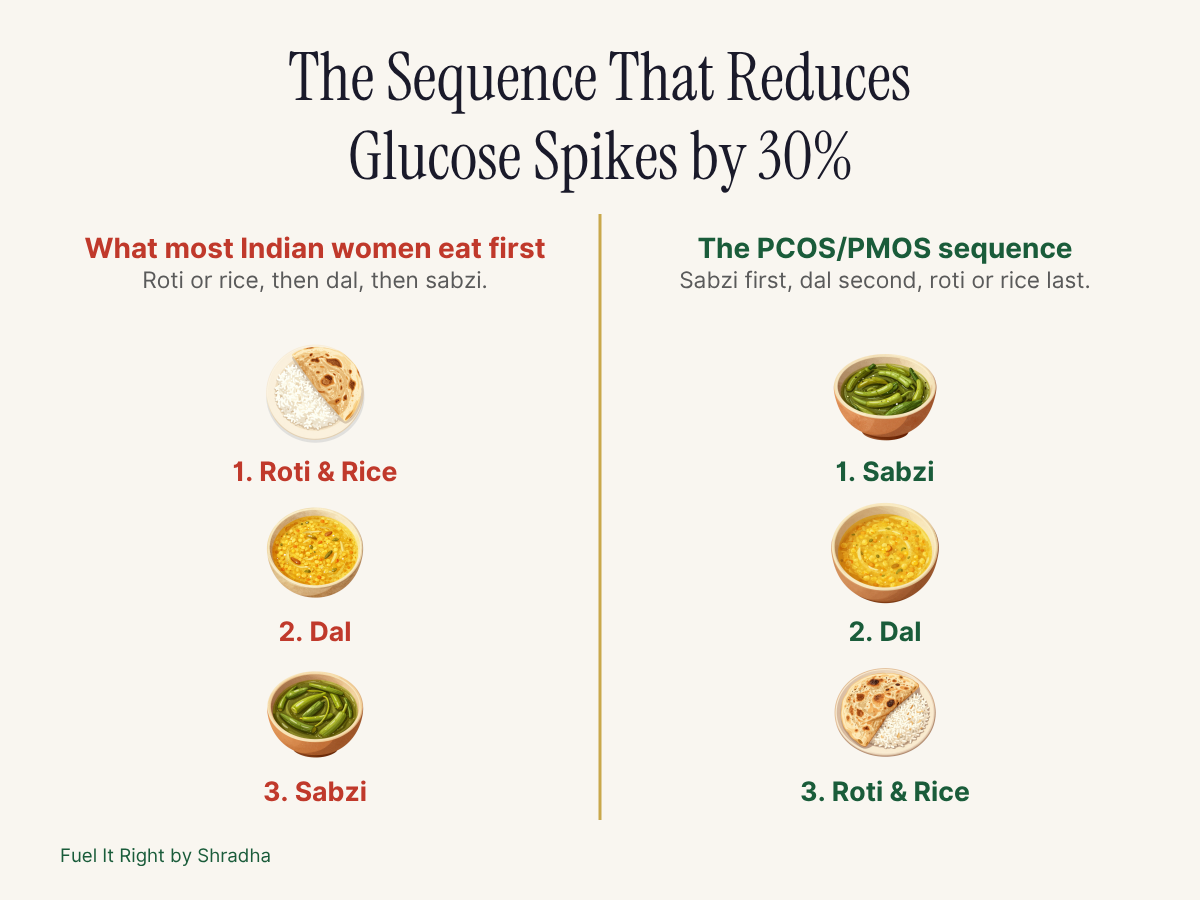
Meal sequencing is the single most underappreciated tool in PCOS/PMOS management. Research consistently shows that eating vegetables and protein before carbohydrates at the same meal reduces the post-meal glucose spike by up to 30%, even when the total food eaten is identical.
The Rule
Vegetables first. Protein second. Dal third. Carbohydrates last. This is the sequence. At every meal. Not sometimes. Every meal.
In a standard Indian meal this means: eat your sabzi first, then your dal, then your roti or rice. The fibre from vegetables slows the gastric emptying of everything that follows. The protein triggers GLP-1 and GIP secretion, which blunts the insulin response. By the time the carbohydrate reaches your bloodstream, the spike is significantly smaller.
What This Looks Like in Practice
• Before rice and dal: eat a bowl of sabzi or a salad first.
• Before roti: finish your sabzi and dal before touching the roti.
• At breakfast: eat eggs, chilla, or curd before any bread, paratha, or fruit.
• Never eat fruit, juice, or sweetened chai as the first thing in the morning.
• If only one thing changes this week, make it this: eat something with protein within 30 minutes of waking before anything else.
The Full Protocol: What to Eat at Each Meal
The PCOS/PMOS Indian food protocol is structured by meal rather than by food category. Each meal has a specific metabolic purpose beyond just nutrition.
Meal | What to eat | Why it works |
Waking (within 30 min) | Half tsp methi seeds soaked overnight in water. Or a glass of warm water with a pinch of haldi and kali mirch. | Methi seeds reduce fasting glucose and improve insulin sensitivity through galactomannan fibre. Sets a lower insulin baseline before the first meal. |
Breakfast (within 1 hour of waking) | Protein first: moong dal chilla, 2 eggs any style, sprout salad with curd, paneer bhurji with 1 roti. Protein must be the dominant component. | Morning cortisol and insulin are naturally elevated. A protein-first breakfast stabilises both for the following 6 to 8 hours. Skipping breakfast or eating only carbohydrates is the most consistent daily driver of insulin resistance in PCOS/PMOS. |
Mid-morning (if hungry) | Roasted chana, a handful of walnuts, a small fruit with curd, chaas, jeera water. | Light, low-glycaemic, high-fibre or probiotic. Prevents the blood sugar drop that triggers cortisol and cravings. Skip this meal entirely if not hungry — do not eat out of habit. |
Lunch (main meal of the day) | Sequence: sabzi first, then dal or protein, then 1 to 2 rotis or 1 small bowl of rice. Curd on the side every day. | Largest meal at midday aligns with the body's peak insulin sensitivity. The sequence rule is most important at this meal. Curd provides live cultures for gut health. |
Evening (4 to 5pm) | Chaas, green tea, spearmint tea, makhana, a small handful of pumpkin seeds, cucumber with lemon. | Prevents the evening glucose crash that triggers cortisol. Spearmint tea reduces free testosterone. Pumpkin seeds provide magnesium and zinc. |
Dinner (by 8pm ideally) | Lighter than lunch. Dal with sabzi and 1 roti. Include a complex carbohydrate at dinner specifically — jowar, bajra, or sweet potato support serotonin production overnight. | Eating late drives nocturnal insulin peaks that worsen insulin resistance regardless of what is eaten. The complex carbohydrate at dinner supports sleep-related serotonin production. |
Want this protocol built specifically for your metabolic picture?
Book a free 30-minute discovery call. Bring your blood report. We will build your personalised PCOS/PMOS food protocol around your specific insulin resistance, gut health, and hormone levels.
What to Avoid and What to Eat Instead
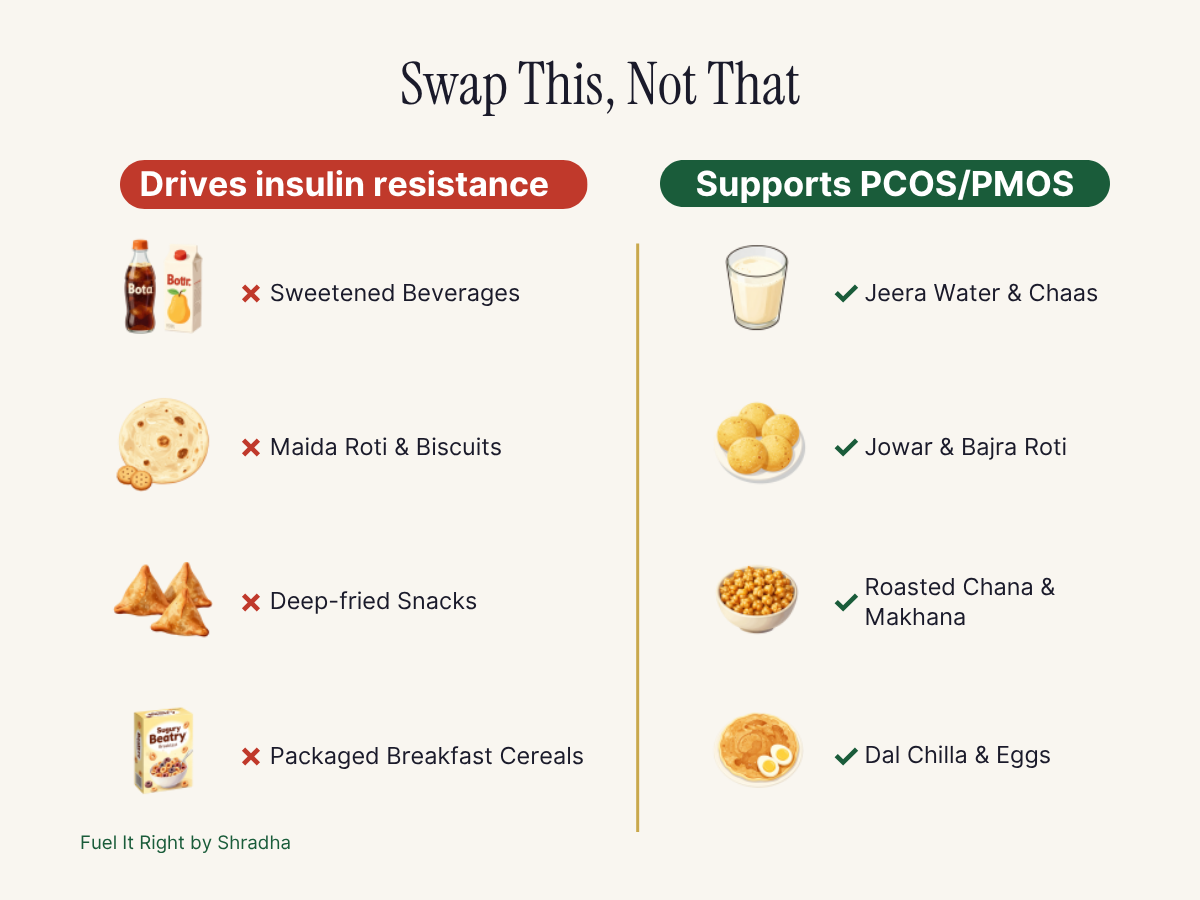
This is not an elimination list. It is a substitution framework, for every food that worsens PCOS/PMOS, there is an Indian alternative that addresses the same craving or nutritional role without the metabolic cost.
Avoid or reduce | Why it worsens PCOS/PMOS | Eat instead |
White rice (as first food) | Rapid glucose spike when eaten without protein or vegetables first. Fine as the last food at lunch after sabzi, dal, and protein. | Same white rice, eaten last after sabzi and dal. Or switch one serving daily to millet, jowar, or ragi. |
Maida roti, bread, biscuits, pav | Refined flour has no fibre, spikes glucose fast, and provides no protein. Biscuits combine refined flour with refined oil, double driver of inflammation. | Jowar roti, bajra roti, multigrain roti, ragi dosa. One at a time, do not eliminate, replace. |
Sweetened beverages, packaged juices | Fructose goes directly to hepatic de novo lipogenesis, the process that builds fat in the liver and worsens insulin resistance. The single most damaging dietary category. | Jeera water, nimbu pani without sugar, chaas, plain water, green tea, spearmint tea. |
Full-fat milk in large quantities | Bovine androgens and IGF-1 in milk worsen acne and hair fall in PCOS/PMOS. The link is with large quantities of full-fat milk specifically. | Curd and chaas are better tolerated. Moderate paneer is fine. Replace morning milk with a protein-containing breakfast instead. |
Deep-fried snacks (samosa, pakora, chips) | Oxidised oils from deep frying create lipid peroxides that drive systemic inflammation directly. Combined with maida is the worst possible combination for PCOS/PMOS. | Roasted chana, makhana, cucumber with hummus, a boiled egg, a handful of nuts. |
Packaged breakfast cereals, instant oats | Often high-GI despite appearing healthy. Many are loaded with sugar. Low in protein. Drives morning insulin spike without any protein buffer. | Homemade oats with nuts and curd. Or skip the oats and have a dal chilla or eggs instead. |
Skipping meals | Triggers cortisol. Cortisol raises blood sugar. Blood sugar raises insulin. Meal skipping worsens insulin resistance even in the absence of food. | Three consistent meals with protein at each. The first within one hour of waking. |
The Spice Cabinet as Medicine
The Indian spice cabinet is the most underutilised tool in PCOS/PMOS management. These are not flavour additions. They are specific anti-inflammatory, insulin-sensitising, and androgen-lowering interventions with clinical evidence.
Haldi (turmeric) | Daily, cooked in ghee with a pinch of kali mirch. Curcumin inhibits NF-kB, reduces TNF-alpha, IL-6, and hsCRP. Reduces ovarian inflammation. Kali mirch increases curcumin absorption by up to 2000%. |
Methi seeds | Half a teaspoon soaked overnight, taken on waking. Galactomannan fibre reduces fasting glucose and post-meal insulin spike. Prebiotic for anti-inflammatory gut bacteria. |
Jeera (cumin) | Daily in cooking and as jeera water on waking. Inhibits COX-1 and COX-2 inflammatory enzymes. Improves digestion, reduces bloating driven by gut dysbiosis in PCOS/PMOS. |
Dalchini (cinnamon) | Half a teaspoon daily in chai, oats, or any cooked dish. Mimics insulin action at the cellular level. Clinical studies show consistent reduction in fasting blood sugar and improvement in insulin sensitivity. |
Adrak (ginger) | Daily in cooking, chai, or grated over meals. Reduces TNF-alpha, has anti-androgenic properties in research, and improves gut motility. |
Spearmint tea | Two cups daily. Clinical evidence for reducing free testosterone and hirsutism within 30 days. The most evidence-based food-based androgen intervention available. |
Not sure where to start with your gut health?
Take the free Gut Health Quiz. 2 minutes.
Get a personalised read on your gut pattern and receive the free 3-Day Indian Gut Reset straight to your inbox.
https://www.fuel-it-right.com/gut-quiz/
A Sample Day on the Protocol
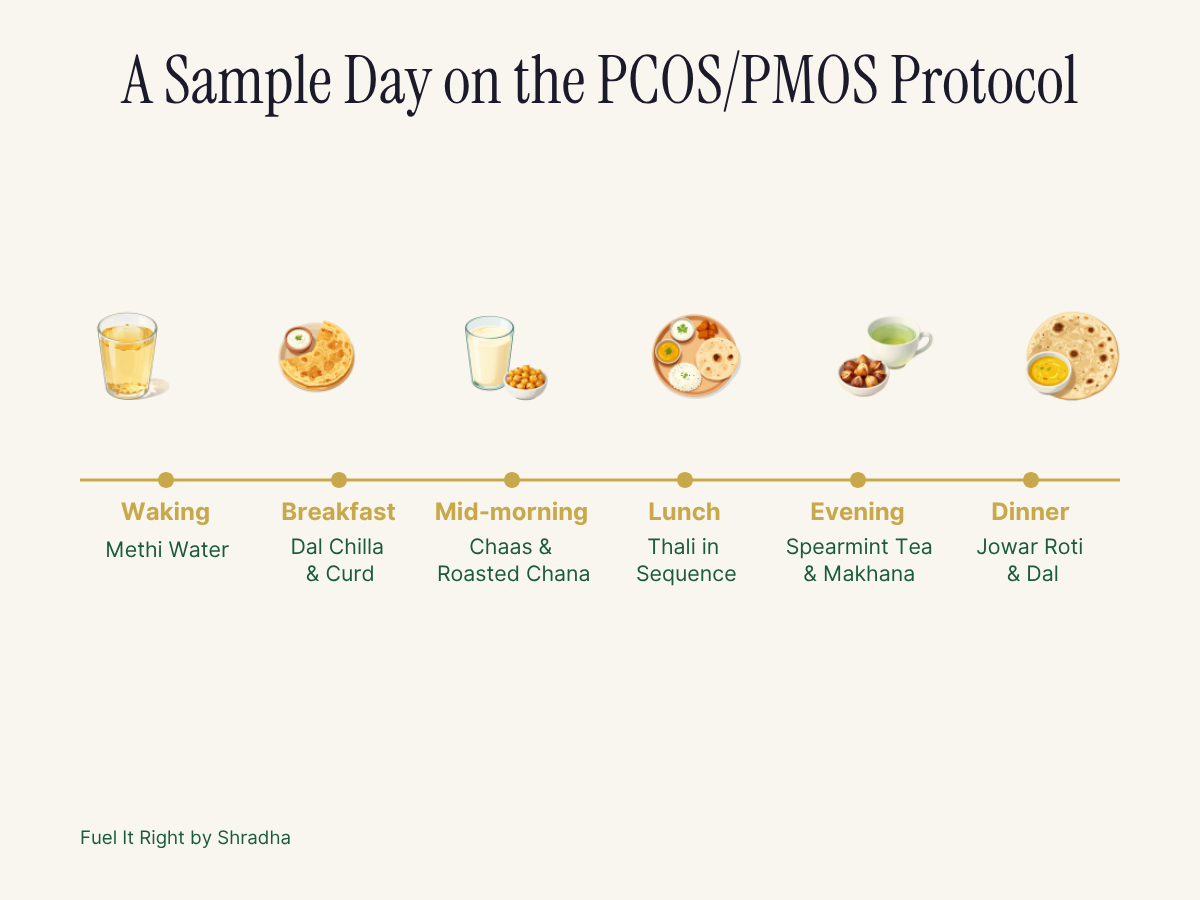
Here is what the PCOS/PMOS food protocol looks like as a complete day. This is a template, not a prescription. The principles matter more than the exact foods.
On waking Half tsp methi seeds soaked overnight. Or warm water with a pinch of haldi and kali mirch. Breakfast (within 1 hour) 2 moong dal chillas with green chutney and a small bowl of curd. Protein first, carbohydrate minimal or absent. No fruit juice. No sweetened chai until after eating. Mid-morning (only if hungry) A handful of roasted chana or walnuts. Chaas with curry leaves. Spearmint tea. Lunch Sequence: sabzi first (one full serving), then dal (one cup), then 2 rotis or 1 small bowl of rice. Curd on the side. One teaspoon ghee on the roti. Evening Chaas or spearmint tea. A small bowl of makhana or a handful of pumpkin seeds. No biscuits, chips, or packaged snacks. Dinner (by 8pm) Dal with seasonal sabzi. One jowar or bajra roti. No rice at dinner, the complex grain provides the evening carbohydrate for serotonin without the rapid glucose spike. Before bed A small cup of haldi doodh (with kali mirch) if wanted. Or nothing. Do not eat after 9pm. |
Conclusion: The Protocol Is Already in Your Kitchen
The PCOS/PMOS food protocol described here does not require new ingredients, expensive supplements, or changes to the way your household cooks. Dal, sabzi, curd, haldi, jeera, methi, and ghee are already in your kitchen. The changes are in sequencing, timing, and proportions.
The sequence rule is the most impactful change: vegetables first, protein second, dal third, carbohydrates last. The timing rule is the second: eat breakfast within one hour of waking. The gut rule is the third: curd twice daily, dal at every lunch.
These three changes, applied consistently, reduce insulin surges, feed the gut bacteria that manage hormones, and lower the inflammatory load that drives every PCOS/PMOS symptom. Not perfectly. Not overnight. But measurably, progressively, and without any downside.
If you want a protocol built around your specific blood work, your household's cooking style, and your own symptom picture, book a free 30-minute discovery call. Bring your most recent blood report.
Book a Free 30-Minute Discovery Call
Bring your blood report. We will build your personalised PCOS/PMOS Indian food protocol from the metabolic root up.
Call us: +91 7057063984
FAQs: PCOS, PMOS and the Indian Food Protocol
Q1. Can I eat rice with PCOS/PMOS?
Yes. Rice is not the enemy. Insulin resistance is. Rice eaten last in a meal, after sabzi and dal, produces a significantly lower glucose spike than rice eaten first. One cup of cooked rice at lunch, after a full serving of sabzi and dal, is metabolically very different from a plate of plain rice eaten on its own. Switching one serving daily to millet or jowar adds fibre and reduces the glycaemic load further, but rice is not forbidden.
Q2. I am vegetarian. How do I get enough protein?
Dal is your most important protein source, one full cup of cooked dal at lunch and dinner. Paneer, curd, and sprouts add protein between meals. Moong dal chilla at breakfast. Rajma and chana as occasional options. Eggs, if you eat them, are the most efficient protein addition. The goal is protein at every meal, not large quantities of it. 20 to 25g per meal is enough to blunt the insulin response to subsequent carbohydrates.
Q3. How long before I see results from the food protocol?
Blood sugar stabilisation and reduced afternoon cravings are often noticeable within 1 to 2 weeks. Gut health improvements take 3 to 4 weeks. Hormonal changes like reduced acne, better cycle regularity, take 3 to 6 months of consistent application. Consistency matters more than perfection. Applying the protocol 80% of the time consistently produces better results than applying it 100% for three weeks and stopping.
Q4. Do I need to count calories on the PCOS/PMOS protocol?
No. The protocol is not calorie-based. It is insulin-based and sequence-based. The metabolic goal is to reduce the insulin surge at each meal, not to restrict calories. Women with PCOS/PMOS who focus on calorie restriction alone often see limited results because the composition and sequence of what they eat has more metabolic impact than the quantity.
Q5. What should I eat for breakfast if I am not a morning person and cannot cook?
Easiest options that require zero morning cooking: soak methi seeds the night before and drink the water on waking, keep roasted chana or a handful of walnuts ready, eat leftover curd from the previous night with a small amount of any available food. The priority is protein before any carbohydrate within one hour of waking. Even a handful of nuts and a small bowl of curd is sufficient to set the morning insulin pattern correctly.
Q6. Is a low-carb diet better for PCOS/PMOS?
A low-GI diet is supported by strong evidence for PCOS/PMOS. A very low-carbohydrate diet has shown short-term improvements in weight and insulin resistance but is difficult to sustain with Indian eating patterns and may worsen cortisol in women with already elevated HPA axis activity. The Indian protocol described here is low-GI, not low-carb. It retains dal, roti, and rice while optimising sequence, timing, and fibre to reduce their glycaemic impact.
Q7. Can I follow this protocol while on Metformin or the pill?
Yes. The food protocol addresses the metabolic root that medication manages symptomatically. Metformin reduces hepatic glucose production. The food protocol reduces the glucose being produced by the meal in the first place. They work through different mechanisms and complement each other. The pill suppresses androgen symptoms while the food protocol reduces androgen production at the source.
Q8. My household cooks with refined oil. Does it matter?
Yes, significantly. Refined vegetable oils, especially when used for deep frying at high temperatures, produce oxidised lipids and trans fats that directly drive systemic inflammation. Switching to ghee or cold-pressed coconut oil for cooking, and using refined oil only where necessary in small quantities, is one of the most impactful household changes for PCOS/PMOS inflammation. Ghee also provides butyrate, which directly supports the gut lining.
About the Author
Shradha | Nutritionist and Dietitian | Fuel It Right. Practising out of Goa, India, with a focus on gut health, PMOS/PCOS, thyroid disorders, and weight management using real Indian food. No supplements. No machines. Just food, and the science behind it.
fuel-it-right.com | @fuelitright