
Ozempic for Weight Loss in India: Results, Costs & Risks
Ozempic is now available in India. Before you consider it, here is what the results actually show, what it costs in 2026, the real risks, and the questions no one is asking, especially if you have PCOS or PMOS.
Table of Contents
1. What Is Ozempic and Why Is Everyone Talking About It Now
2. What the Clinical Results Actually Show
3. What It Costs in India in 2026
4. Ozempic and PCOS/PMOS: What the Evidence Shows
5. The Real Risks: What You Need to Know Before Starting
6. Who It Is, and Is Not, Right For
7. Food-First Foundation: Why It Matters Even If You Take Ozempic
8. Conclusion
9. FAQs
What Is Ozempic and Why Is Everyone Talking About It Now
Ozempic is the brand name for semaglutide, a once-weekly injectable medicine originally developed and approved for type 2 diabetes. It belongs to a class of drugs called GLP-1 receptor agonists which is medicines that mimic a gut hormone called glucagon-like peptide-1, which regulates blood sugar, slows digestion, and reduces appetite.
Semaglutide became a global conversation in 2022 when its weight loss effects, dramatically larger than almost anything seen before in pharmaceutical weight management, became widely publicised. Wegovy, the higher-dose version approved specifically for weight management, became one of the fastest-selling drugs in pharmaceutical history. Ozempic, the diabetes-approved version, followed as an off-label weight loss option.
In India, the conversation has accelerated in 2026 for a specific reason. Semaglutide's core patents expired in India in March 2026, triggering a wave of generic launches from Indian pharmaceutical companies including Cipla, Sun Pharma, Dr Reddy's, Biocon, Zydus, and Mankind Pharma. What was previously a premium import available to a small number of patients is becoming significantly more accessible, and that is producing both opportunity and risk.
What the Clinical Results Actually Show
The results from Ozempic and semaglutide are clinically significant, more so than most weight loss interventions that have preceded them. Here is what the evidence shows, without the hype in either direction.
Weight Loss Results
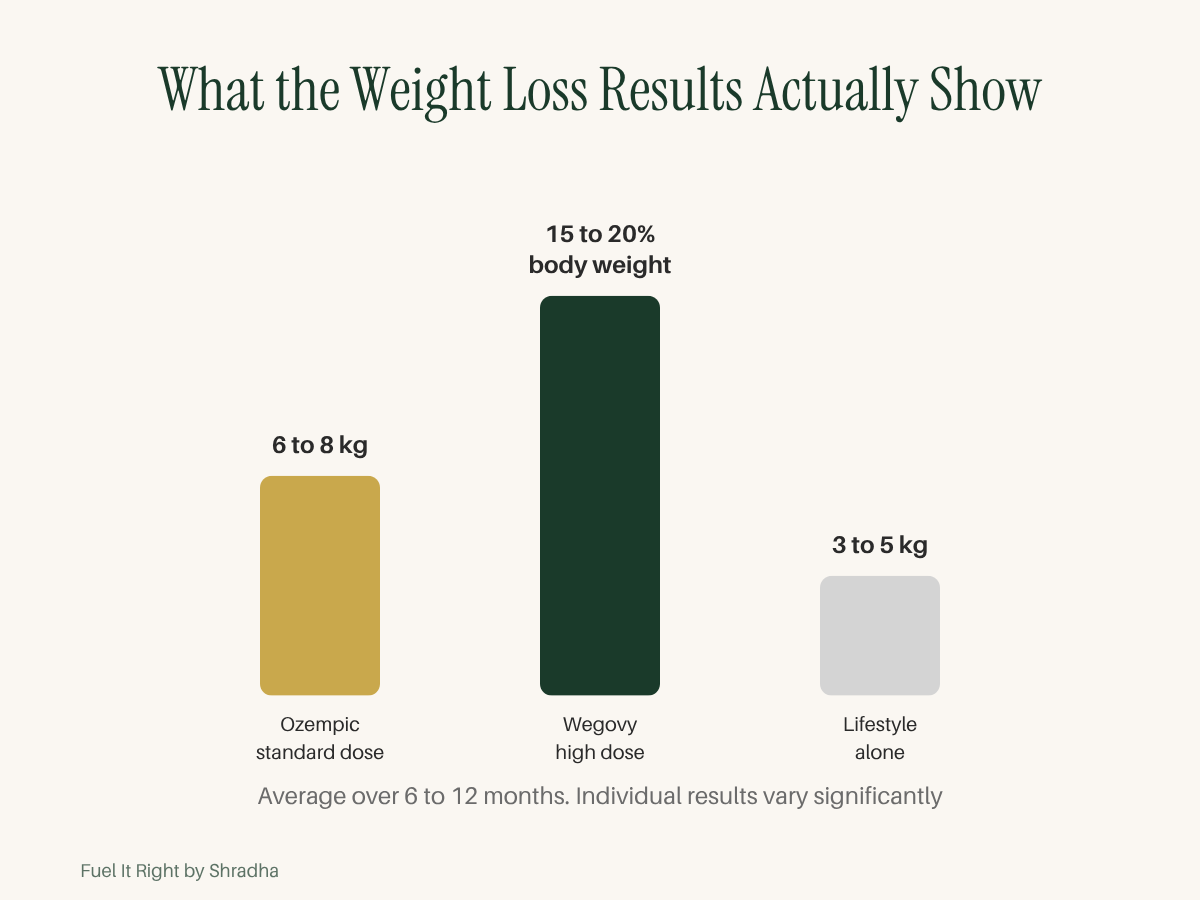
• Clinical studies show average weight loss of 6 to 8 kg in people with type 2 diabetes using standard Ozempic doses
• Higher-dose semaglutide (Wegovy formulation, 2.4 mg weekly) produces average weight loss of 15 to 20% of body weight over 68 weeks in people with obesity which is approximately 15 to 17 kg for a 90 kg person
• Results are dose-dependent and highly variable. Some people see dramatic results. Others see modest effects. The clinical trial averages are not universal outcomes
• Results are most pronounced in the first 6 months and typically plateau at 12 to 18 months
The Critical Finding: Weight Returns After Stopping
A 2024 Frontiers in Endocrinology study followed 25 women with PCOS and obesity who completed 16 weeks of semaglutide and then stopped, continuing only with metformin and lifestyle guidance. Significant weight regain occurred in the 2 years after stopping. This is consistent with the wider semaglutide literature: the weight loss effects are sustained only as long as the drug is taken. This is not a failure of the drug, it is its mechanism. Semaglutide suppresses appetite through GLP-1 receptor activation. Stop the drug, the suppression lifts, and the biological drives toward weight regain reassert themselves.
This is the most important piece of information missing from most Ozempic conversations in India. It is not a course of treatment with a defined end. For most people, it is an indefinite commitment, or a temporary change that reverses when the drug stops.
Ozempic works while you take it. The clinical question is what happens when you stop, and the answer, for most people, is that the weight returns.
Cardiovascular and Metabolic Benefits
Beyond weight loss, semaglutide has strong evidence for reducing cardiovascular events, improving insulin sensitivity, reducing liver fat in NAFLD, and improving blood pressure and lipid profiles. These benefits are independent of the weight loss effect and are clinically significant, particularly for people with existing metabolic disease.
What It Costs in India in 2026
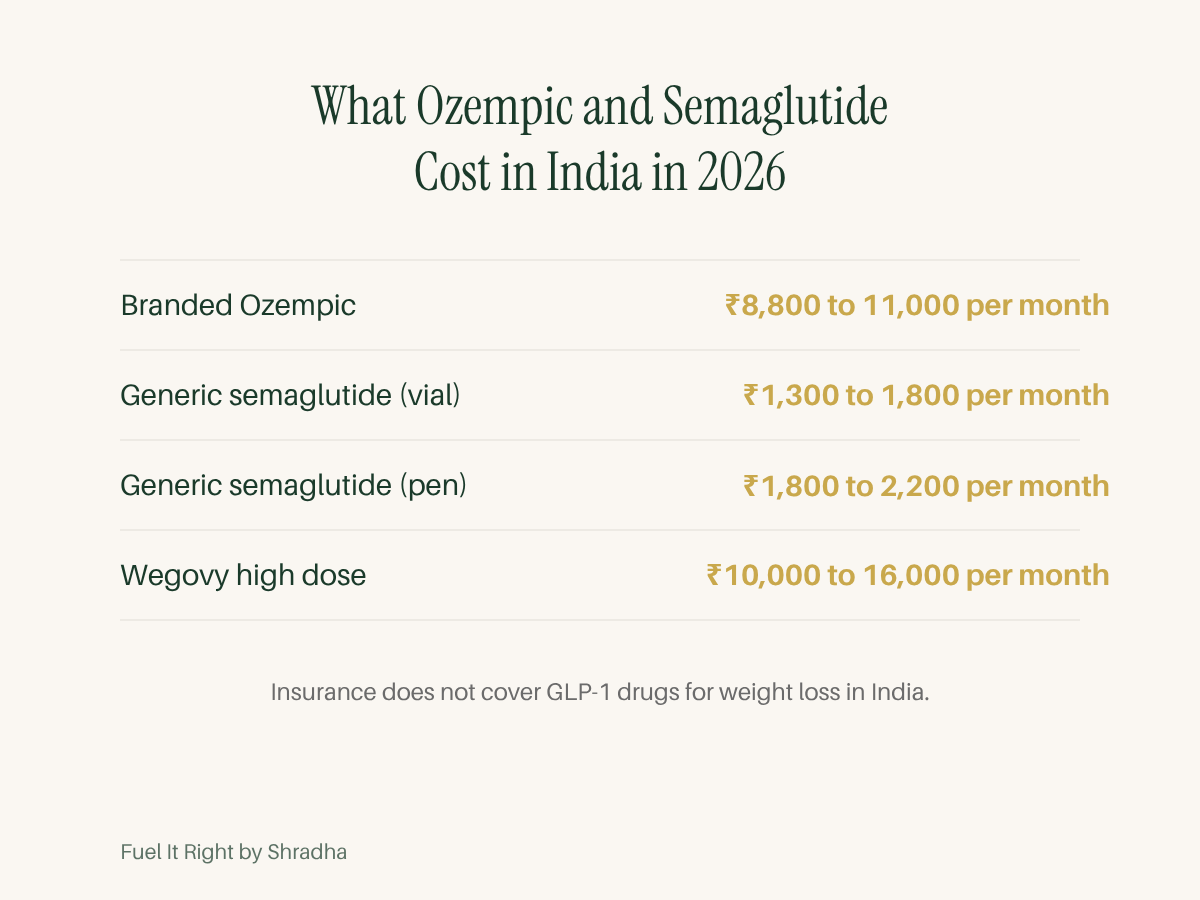
The cost of Ozempic and semaglutide in India has changed significantly in 2026 with generic launches. Here is the current pricing landscape, with the important caveat that prices are still stabilising and vary between pharmacies and brands.
Product | Monthly cost (approx) | Notes |
Ozempic (Novo Nordisk branded) | Rs 8,800 to 11,000 | Starting dose 0.25mg to maintenance 1mg. Available at Apollo, MedPlus, Netmeds with prescription. Prices have fallen from Rs 15,000+ in 2025. |
Wegovy (branded, high dose) | Rs 10,000 to 16,000 | Higher dose 2.4mg formulation specifically for weight management. Price reduced 37% in late 2025 to compete with Mounjaro. |
Generic semaglutide (Indian brands) | Rs 3,000 to 5,500 | Multiple Indian pharma brands launched March 2026 after patent expiry. Prices expected to fall further to Rs 3,000 to 5,000 range as competition increases. |
Mounjaro (tirzepatide) | Rs 12,000 to 20,000 | Dual GIP and GLP-1 agonist. Launched India 2025. Different mechanism, more potent weight loss in trials. Higher cost. |
For context: Indian insurance plans do not currently cover GLP-1 medications for weight loss unless specifically justified for diabetes management. This means the full monthly cost is out of pocket. At Rs 5,000 per month for generic versions, annual cost is Rs 60,000. At Rs 10,000 for branded versions, annual cost is Rs 1,20,000, and that is assuming the drug is taken indefinitely, which the evidence suggests is required to maintain results.
The Generic Landscape
With semaglutide patents expiring, major Indian pharmaceutical companies are racing to launch competitive generic versions. Dr Reddy's plans to launch in 87 countries. Biocon, Cipla, and Sun Pharma all have products in or approaching the market. Pharmexcil projects generic monthly costs could fall to Rs 3,000 to 4,000 within the next year, with further reductions to roughly Rs 3,500 in the medium term as competition deepens.
Ozempic and PCOS/PMOS: What the Evidence Shows
For women with PCOS or PMOS considering Ozempic, there is now a meaningful and growing body of evidence specific to this population, and it is more nuanced than either the enthusiasts or the sceptics suggest.
What the Research Shows
A 2023 study published in the Journal of Clinical Medicine found that in people with PMOS and obesity, semaglutide produced the following outcomes: 80% normalised their blood sugar levels, 78% achieved at least 5% body weight reduction, and 71% of those who lost 5% or more of body weight saw menstrual cycle normalisation.
A 2026 study published in Metabolism and Target Organ Damage found that approximately 87% of women with PMOS taking semaglutide alongside metformin saw menstrual cycles normalise after 20 weeks, compared to 60% on metformin alone. In overweight PMOS patients specifically, almost 95% achieved menstrual cycle normalisation.
A newly published July 2026 study in the Journal of Clinical Medicine examined 96 women with PMOS and BMI above 25. After 6 months of semaglutide, ovulatory cycles were observed in 52.5% of previously anovulatory women. Results were best in overweight patients, with nearly 95% achieving menstrual normalisation.
Why It Works in PCOS/PMOS
Semaglutide's benefit in PCOS/PMOS goes beyond weight loss. It directly reduces insulin resistance — the root of the condition. As covered in the blog on insulin resistance and PCOS/PMOS, hyperinsulinaemia drives androgen excess, which drives ovulatory disruption, acne, and hair fall. Semaglutide reduces fasting insulin, HOMA-IR, and androgen levels directly — independently of the weight loss it also produces.
For women with PCOS/PMOS and fatty liver disease, semaglutide also reduces hepatic fat accumulation, addressing one of the most underdiagnosed co-conditions of PCOS/PMOS.
What the Evidence Does Not Yet Show
Semaglutide is not approved for PCOS/PMOS. It is prescribed off-label. The trials so far are relatively small and short in duration. Long-term outcomes in the PCOS/PMOS population, beyond 2 years, are not yet established. The optimal dose for PCOS/PMOS specifically, versus the doses used in diabetes and obesity trials, has not been determined.
The critical gap in the PCOS/PMOS and Ozempic conversation Most of the positive PCOS/PMOS trial data is in women with BMI above 25. The evidence for lean women with PCOS/PMOS, 75% of whom have significant insulin resistance, is significantly thinner. The July 2026 study specifically enrolled women with BMI above 25. Lean women considering Ozempic for PCOS/PMOS are making a decision with very limited specific evidence for their population. This does not mean it is wrong. It means it requires more careful clinical judgement. |
The Real Risks: What You Need to Know Before Starting
The risks of Ozempic and semaglutide are real, well-documented, and frequently underemphasised in the social media conversation around these drugs. Here is the complete picture.
Common Side Effects Experienced by Most Users
• Nausea: the most common side effect, affecting 15 to 44% of users. Usually worst in the first 4 to 8 weeks and on dose escalation. Can be severe enough to disrupt daily functioning
• Vomiting: reported in 5 to 24% of users at therapeutic doses
• Diarrhoea and constipation: both reported, often alternating, particularly in the early weeks
• Stomach discomfort and bloating: driven by the slowed gastric emptying mechanism that also produces the satiety effect
• Fatigue: common in the early weeks as the body adjusts to reduced calorie intake and altered digestion
Serious Risks: Less Common but Clinically Significant
• Pancreatitis: rare but serious. Semaglutide has a boxed warning regarding pancreatitis risk. Seek immediate medical attention for severe abdominal pain while on the drug
• Gallbladder disease: rapid weight loss from any cause increases gallstone risk. Semaglutide trials show increased rates of gallbladder-related events
• Kidney complications: dehydration from gastrointestinal side effects can worsen kidney function, particularly in those with pre-existing kidney disease
• Thyroid concerns: animal studies showed thyroid C-cell tumours with semaglutide at very high doses. Human risk appears low (less than 1% in trials) but the drug carries a warning for those with personal or family history of medullary thyroid carcinoma or MEN2 syndrome
• Muscle loss: significant weight loss from any mechanism, including GLP-1 drugs, can involve loss of lean muscle mass alongside fat. Without adequate protein intake and resistance training, the composition of weight lost may be unfavourable
Specific Risks for Indian Women With PCOS/PMOS
• Nutritional deficiency: appetite suppression significantly reduces food intake. For Indian women with PCOS/PMOS who often already have deficiencies in Vitamin D, iron, and B12, reduced eating amplifies the risk without careful nutritional monitoring
• Rebound weight gain: the most consistent finding across the post-discontinuation literature. Most of the weight returns within 1 to 2 years of stopping, particularly without a dietary protocol to sustain the metabolic changes
• Unknown long-term effects in PCOS/PMOS: the condition-specific trial data does not extend beyond 2 years. The long-term hormonal, reproductive, and metabolic effects in this population are not established
• Pregnancy safety unknown: semaglutide must be stopped at least 2 months before attempting conception. Its safety in pregnancy has not been established. For women with PCOS/PMOS where fertility is a concern, this requires careful timing and contraceptive planning
The grey market risk in India With rising demand and falling prices, grey market and counterfeit semaglutide products are already appearing in India. Purchasing semaglutide without a valid prescription or from unverified sources carries serious risks, incorrect dosing, contaminated products, and no medical monitoring of side effects. This is a prescription medication that requires baseline blood work, ongoing monitoring, and medical supervision. It is not a wellness supplement. |
Click here to know the PCOS/PMOS diagnosis checklist.
Who It Is, and Is Not, Right For
This is the most important section. Ozempic and semaglutide are not appropriate for everyone, and the current social media conversation significantly underemphasises the criteria for appropriate candidacy.
Who Is Likely Appropriate
• Adults with type 2 diabetes and inadequate blood sugar control on oral medications, this is the approved indication.
• Adults with BMI above 30, or BMI above 27 with weight-related health conditions (hypertension, type 2 diabetes, cardiovascular disease), the approved weight management indication.
• Women with PCOS/PMOS and significant obesity (BMI above 30) where lifestyle intervention has not produced adequate metabolic improvement and insulin resistance remains severe: off-label, with careful medical supervision.
• Individuals with established NAFLD and significant metabolic disease where the hepatoprotective effects of semaglutide are clinically indicated.
Who Is Likely Not Appropriate
• Lean women with PCOS/PMOS (BMI below 25). The evidence base for this population is very thin, the side effect profile is the same, and the food-first approach addresses the same mechanisms with significantly less risk.
• Anyone seeking it as a cosmetic weight loss tool without metabolic disease. The risk-benefit calculation does not support this use.
• Women planning pregnancy in the near term. Must be stopped 2 months before attempting conception.
• Anyone with personal or family history of medullary thyroid carcinoma or MEN2 syndrome, contraindicated.
• Anyone with a history of pancreatitis should use with extreme caution.
• Individuals who cannot commit to adequate protein intake and nutritional monitoring alongside the drug. Without this, the muscle loss and nutritional deficiency risks are significantly amplified.
My team works with clients navigating PCOS, PMOS, weight management, and metabolic health. We will give you an honest assessment of where medication and food each belong in your protocol.
+91 7057063984
The Food-First Foundation: Why It Matters Even If You Take Ozempic
Here is where I want to be direct about the relationship between Ozempic and food in PCOS/PMOS management. Semaglutide is a pharmacological tool that works through the same mechanisms as several dietary interventions, particularly protein-first meals, which naturally stimulate GLP-1 secretion, at a dramatically amplified level.
If you decide with your doctor that semaglutide is appropriate for your situation, the dietary foundation matters more, not less. Here is why:
• Appetite suppression without protein guidance leads to muscle loss. Without intentional protein at every meal, weight loss includes significant lean muscle mass.
• The weight loss from semaglutide is reversed when the drug stops. The only thing that prevents this reversal is having built the dietary habits and metabolic. improvements that persist beyond the drug. Semaglutide buys time and metabolic improvement. Food makes it permanent.
• Gut health determines how well GLP-1 mechanisms work. A healthy microbiome produces more endogenous GLP-1, amplifying the drug's mechanism.
• Nutritional deficiencies from reduced appetite require proactive management. Vitamin D, iron, B12, and magnesium are all at risk. Without deliberate food choices and possibly targeted supplementation, reduced intake compounds existing deficiencies common in Indian women with PCOS/PMOS.
The honest position on Ozempic and food-first Semaglutide is a clinically meaningful tool for the right patients. It is not the answer to PCOS/PMOS management broadly. The food-first approach addresses the same metabolic root through mechanisms that are sustained, have no side effects, and produce no rebound when you stop eating well. For women with severe insulin resistance, significant obesity, and PCOS/PMOS who have tried dietary interventions consistently and not achieved adequate results, semaglutide under medical supervision is a reasonable consideration, not a shortcut, but a legitimate clinical tool. For lean women, mild-to-moderate insulin resistance, and women who have not yet tried a structured food protocol consistently, food remains the stronger first choice. |
Conclusion: The Honest Assessment
Ozempic and semaglutide in India are arriving into a market that badly needs honest, evidence-based information rather than social media enthusiasm or reflexive scepticism. The clinical results are real and clinically significant. The costs are falling to accessible levels. The risks are well-documented and manageable with proper medical supervision. The rebound after stopping is the most important fact that is consistently left out of the conversation.
For women with PCOS/PMOS specifically, the evidence is promising and growing, particularly for those with significant obesity and failed prior interventions. The 2026 trial data showing 87% menstrual cycle normalisation with semaglutide plus metformin, and 95% cycle normalisation in overweight PCOS/PMOS patients, represents a meaningful clinical advance.
What it is not: a replacement for the dietary foundation that makes any metabolic intervention, pharmaceutical or food-based, sustainable. Whether you take semaglutide or not, the insulin resistance driving your PCOS/PMOS responds to protein-first meals, gut health, anti-inflammatory eating, and consistent meal timing. That is not a marketing claim. It is the same mechanism the drug is working through, at a different scale.
If you are considering Ozempic and want an honest assessment of whether your specific metabolic picture makes you a good candidate, and what role food should play alongside or instead of it, book a free 30-minute discovery call.
Book a Free 30-Minute Discovery Call
Bring your blood report and your questions about Ozempic. We will give you an honest, personalised assessment of what makes sense for your metabolic picture.
Call or WhatsApp: +91 7057063984
OR
FAQs: Ozempic for Weight Loss in India
Q1. Is Ozempic approved for weight loss in India?
Ozempic (semaglutide) is approved in India for type 2 diabetes management, not specifically for weight loss. Wegovy, the higher-dose semaglutide formulation specifically indicated for weight management, is also now available. Ozempic is frequently prescribed off-label for weight loss, particularly in people with obesity and metabolic disease. This is common clinical practice and not illegal, but it means the weight loss use is outside the formally approved indication.
Q2. How much weight can I expect to lose on Ozempic?
Standard Ozempic doses (0.5 to 1 mg weekly) produce average weight loss of 6 to 8 kg over 6 to 12 months. Higher-dose Wegovy formulations (2.4 mg weekly) produce average weight loss of 15 to 20% of body weight over 68 weeks, approximately 13 to 18 kg for a 90 kg person. These are averages from clinical trials. Individual results vary significantly. Some people see very little effect. Some people lose more than the average. The drug works best alongside dietary changes and medical supervision.
Q3. Will I regain the weight when I stop Ozempic?
Most people regain significant weight after stopping. This is consistent across the semaglutide literature and is driven by the biological mechanisms the drug was suppressing — appetite and glucose regulation, reasserting themselves when the drug stops. A 2-year follow-up study of PCOS patients after stopping semaglutide showed significant weight regain despite continued metformin and lifestyle guidance. This does not mean the drug is not useful, it means it should be considered as a long-term commitment rather than a course of treatment.
Q4. Is Ozempic safe for women with PCOS/PMOS?
The available evidence suggests semaglutide is reasonably safe for women with PCOS/PMOS and produces meaningful improvements in insulin resistance, menstrual cycle regularity, and androgenic symptoms, particularly in those with significant obesity. It must be stopped 2 months before attempting conception as its safety in pregnancy has not been established. Side effects, particularly gastrointestinal, are the same as in the general population. Medical supervision, regular monitoring, and adequate protein intake are essential.
Q5. Can I buy semaglutide without a prescription in India?
Technically semaglutide requires a prescription. In practice, availability varies. Purchasing it from unverified sources without a prescription and without medical supervision carries serious risks, incorrect dosing, product quality issues, and no monitoring of side effects. The gastrointestinal side effects alone can be severe enough to require medical management. This is a drug that needs a doctor's involvement, not just a pharmacist.
Q6. How does Ozempic compare to the food-first approach for PCOS/PMOS?
Semaglutide works through GLP-1 receptor activation, reducing appetite, slowing gastric emptying, and improving insulin sensitivity. A protein-first diet naturally stimulates GLP-1 secretion, as does gut microbiome health through short-chain fatty acid production. The food-first approach addresses the same mechanisms at a lower magnitude but with no side effects, no cost, no rebound on stopping, and with benefits that are permanent when sustained. For women with severe insulin resistance and significant obesity who have not responded adequately to dietary intervention, semaglutide adds meaningful clinical benefit. For most others, food remains the more appropriate first intervention.
Q7. What does Ozempic cost in India in 2026?
Branded Ozempic (Novo Nordisk) costs approximately Rs 8,800 to 11,000 per month depending on dose. Generic semaglutide from Indian manufacturers, launched in March 2026 following patent expiry, is available for approximately Rs 3,000 to 5,500 per month, with prices expected to fall further. Wegovy, the weight-management formulation, costs Rs 10,000 to 16,000 per month. Indian insurance plans do not currently cover GLP-1 drugs for weight loss unless prescribed for diabetes.
Q8. Should I take Ozempic instead of changing my diet?
No, and this distinction matters. Semaglutide produces weight loss and metabolic improvement. It does not rebuild the gut microbiome. It does not reduce systemic inflammation unless through the secondary effect of weight loss. It does not provide the specific nutrients required for PCOS/PMOS management. And the results reverse when the drug stops. The dietary foundation is necessary whether you take semaglutide or not. For appropriate candidates, semaglutide alongside food produces better outcomes than either alone. Semaglutide instead of food produces results that disappear when the prescription ends.
About the Author
Shradha | Nutritionist and Dietitian | Fuel It Right. Practising out of Goa, India, with a focus on gut health, PMOS/PCOS, thyroid disorders, and weight management using real Indian food. No supplements. No machines. Just food, and the science behind it. This blog is for educational purposes. Semaglutide is a prescription medication. All decisions about starting, changing, or stopping it should be made with a qualified medical professional.
fuel-it-right.com | @fuelitright