
Avocado for Gut Health and Blood Pressure: 2 Recipes I Actually Eat
Avocado for gut health and blood pressure, the evidence behind both, and two recipes I actually eat: a vegetable-loaded toast and an avocado date smoothie.
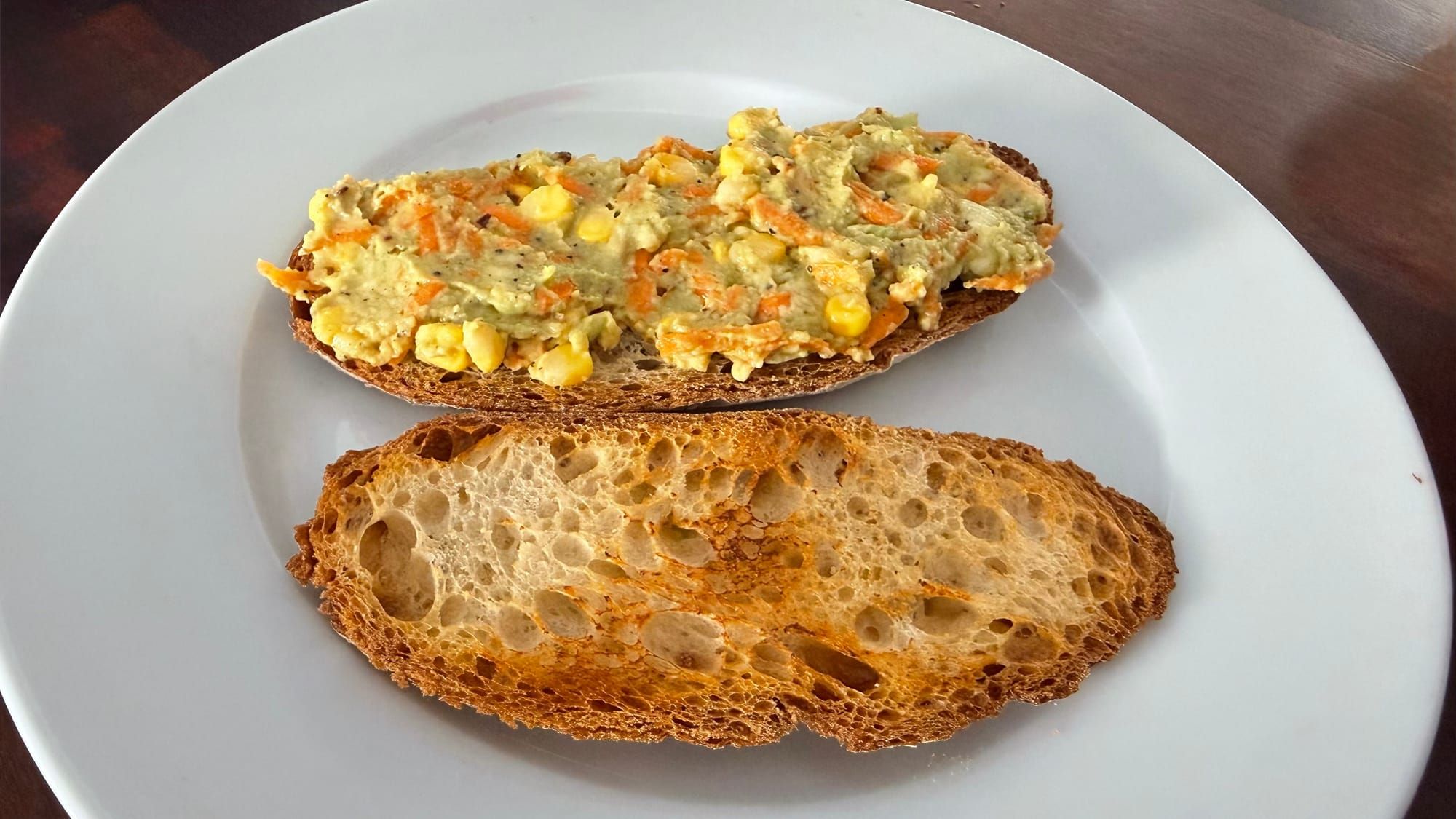
Table of Contents
1. Why Avocado Earns a Place on a Food-First Plate
2. The Gut Health Case: Fibre and Fermentable Substrate
3. The Blood Pressure Case: Potassium and Healthy Fat
4. Recipe 1: Vegetable-Loaded Avocado Toast
5. Recipe 2: Avocado Date Smoothie
6. Why Dates Over Refined Sugar and the Moderation Caveat
7. Who Should Watch Portions Closely
8. Where Each Recipe Fits Into a Full Day
9. Conclusion
10. FAQs
Why Avocado Earns a Place on a Food-First Plate
Avocado for gut health is not just a trend. It is one of the few whole foods with genuinely useful evidence behind it for both digestion and blood pressure, two areas that matter significantly for the clients I work with.
Most conversations about avocado stop at healthy fat. That is true but incomplete. Half an avocado provides roughly 7 grams of fibre, most of it the fermentable kind that gut bacteria actually use. It provides more potassium than a banana, relevant for blood pressure management. And the monounsaturated fat it carries slows the absorption of everything else you eat with it, reducing post-meal glucose spikes.
These are not exotic nutrients requiring special sourcing. They are the kind of thing that, when you understand the mechanism, changes how you look at a simple breakfast or afternoon snack.
The two recipes below use avocado as the base and build around it with ingredients most kitchens already have. No powders, no imported superfoods, no supplements.
The Gut Health Case: Fibre and Fermentable Substrate
Avocado for gut health works primarily through fibre. Specifically, the soluble fermentable fibre in avocado, including pectin and other prebiotic compounds, is broken down by gut bacteria into short-chain fatty acids, particularly butyrate.
Butyrate is the primary fuel for the cells lining your colon. It supports the gut barrier, reduces intestinal inflammation, and is one of the most studied compounds in gut health research. You cannot buy butyrate as a supplement and expect it to reach the colon intact, the right food is the most reliable delivery mechanism.
Pairing avocado with vegetables, as in the toast recipe below, widens the fibre variety further. Diverse fibre sources, not a single hero ingredient, is what actually shifts gut bacteria composition over weeks. Carrot, corn, and capsicum each feed different bacterial populations. Combined with the avocado, the toast delivers more gut diversity than most commercially produced probiotic products.
For the full picture of how gut health connects to hormonal balance and metabolic symptoms, see the blog on gut health and PCOS/PMOS.
The Blood Pressure Case: Potassium and Healthy Fat
Half an avocado provides approximately 485mg of potassium, more than a medium banana at roughly 422mg. Potassium supports blood pressure by helping the kidneys excrete sodium and by relaxing the walls of blood vessels.
The monounsaturated fat in avocado, primarily oleic acid, the same fat predominant in olive oil, has consistent associations with better cardiovascular outcomes in dietary pattern research. It does not raise LDL cholesterol the way saturated fat does, and some evidence suggests it improves HDL cholesterol profile.
Neither of these effects requires medicinal quantities of avocado. Half an avocado eaten several times a week, as part of an otherwise reasonable diet, provides a meaningful contribution to both gut fibre diversity and potassium intake.
Recipe 1: Vegetable-Loaded Avocado Toast
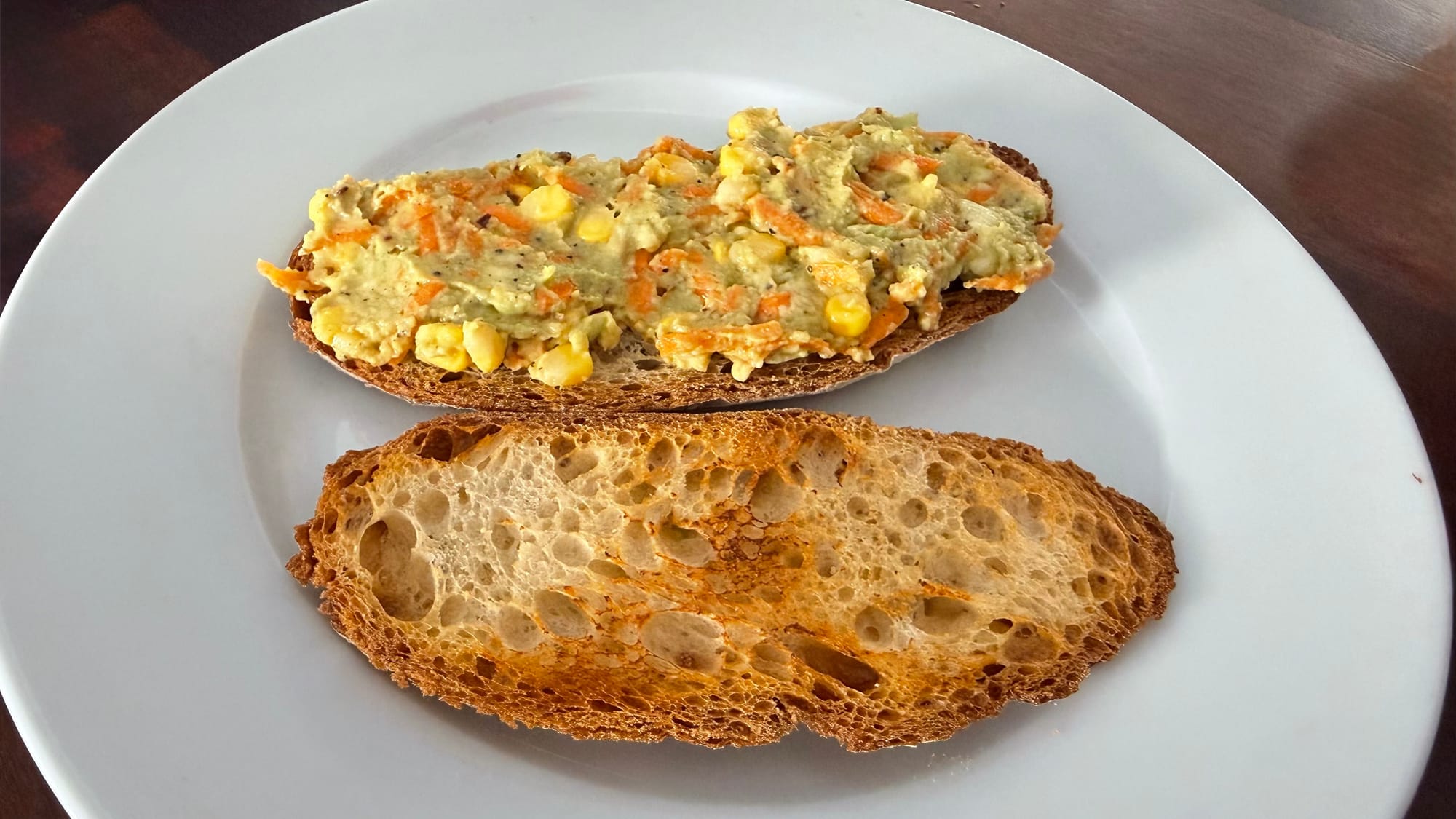
Vegetable-Loaded Avocado Toast Serves 1 | Prep time: 10 minutes |
Ingredients • 1 slice sourdough bread, toasted • Half a ripe avocado • Small handful of grated or julienned carrot • 2 tablespoons of corn (boiled or tinned, drained) • Quarter of a capsicum, finely sliced • Juice of half a lemon • Salt to taste • Fresh coriander or microgreens to finish (optional) |
Method 1. Toast the sourdough until golden and firm enough to hold the toppings. 2. Scoop the avocado into a small bowl. Add lemon juice and a pinch of salt. Mash with a fork, keep it textured, not completely smooth. 3. Spread the avocado mash evenly over the toast. 4. Layer the carrot, corn, and capsicum over the avocado. 5. Finish with fresh coriander or microgreens if using. Eat immediately. |
Why sourdough specifically: The long fermentation in sourdough reduces the phytate content of the bread, improving mineral absorption. The lower glycaemic response of sourdough compared to standard white or multigrain bread also makes it more appropriate as a breakfast base for clients managing blood sugar. If sourdough is not available, a seeded multigrain loaf is the next best option.
Why these vegetables: Carrot provides beta-carotene and prebiotic fibre. Corn provides resistant starch. Capsicum provides Vitamin C, which improves absorption of the non-haem iron in the bread. Each topping adds gut and nutritional value, not just colour.
Recipe 2: Avocado Date Smoothie
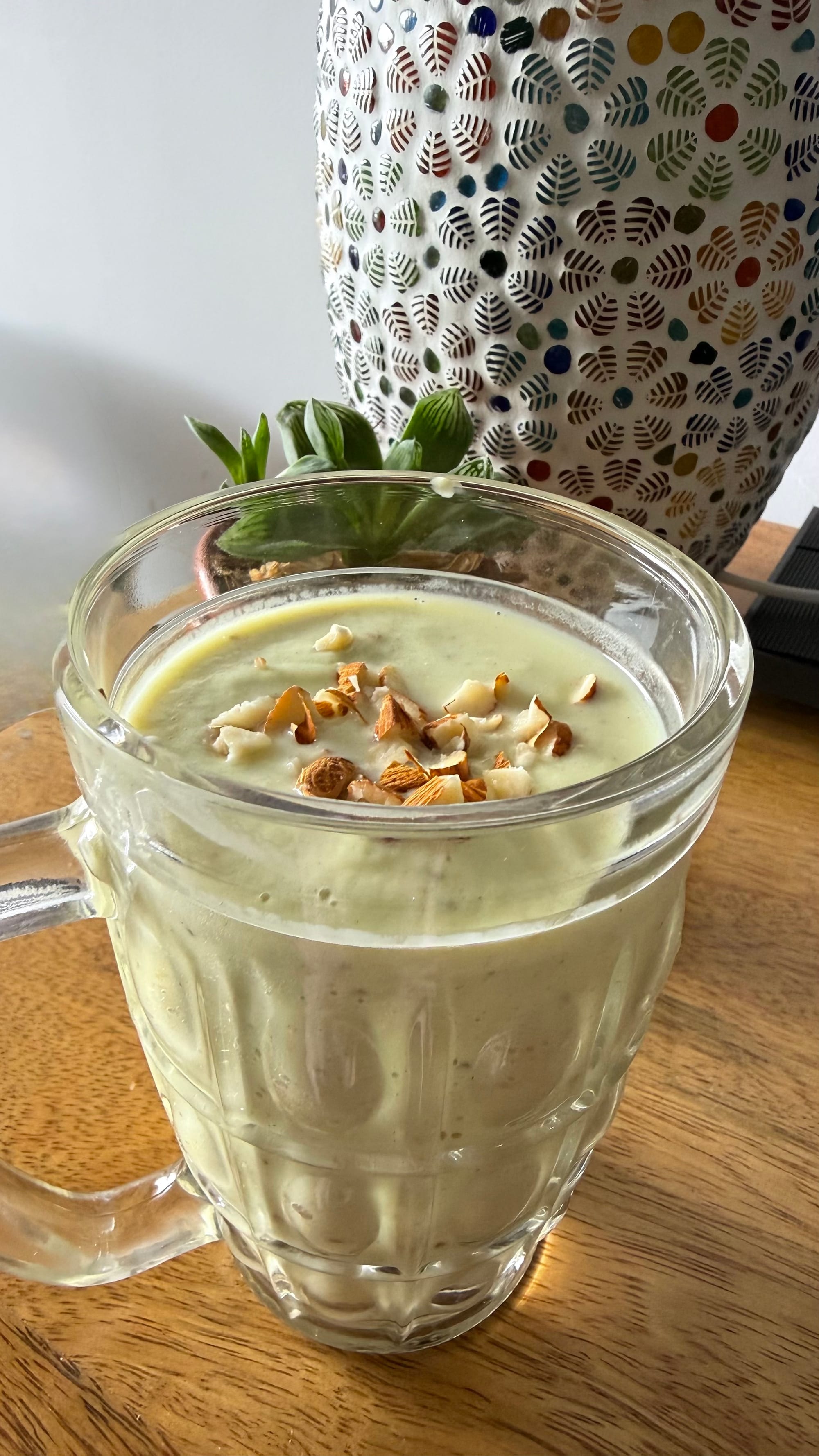
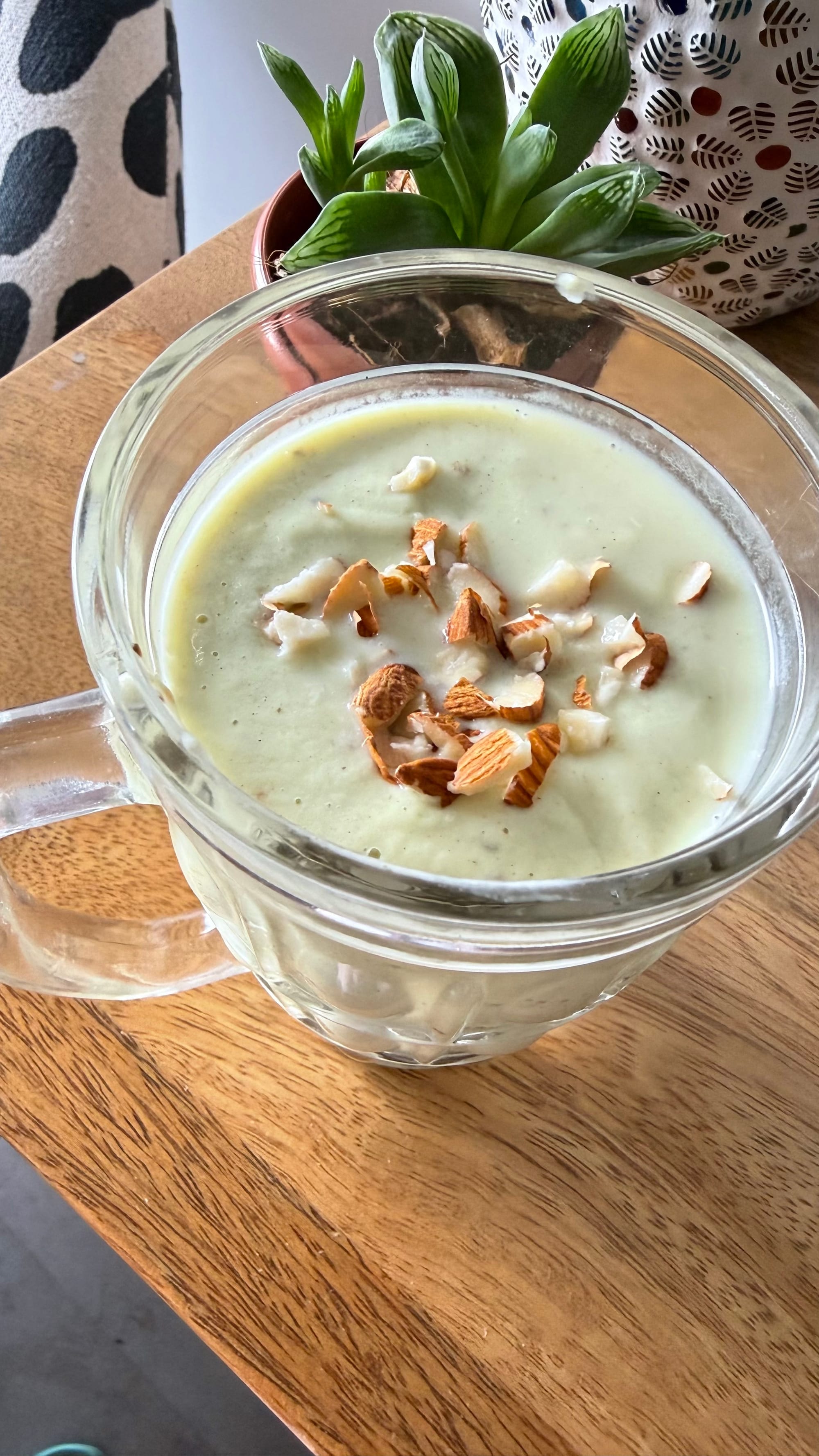
Avocado Date Smoothie Serves 1 | Prep time: 5 minutes |
Ingredients • Half a ripe avocado • 3 to 4 Medjool dates, pitted (or 5 to 6 regular dried dates soaked for 10 minutes) • 150g thick Greek yogurt or hung curd • 100 to 150ml cold water or milk (adjust for consistency) • A small pinch of cardamom (optional) • Crushed almonds for topping |
Method 1. Remove the pit from the dates. If using regular dried dates, soak in warm water for 10 minutes and drain. 2. Blend avocado, dates, Greek yogurt, and water or milk together until completely smooth. Adjust liquid for your preferred consistency. 3. Pour into a glass. Top with crushed almonds. 4. Drink immediately, avocado oxidises quickly once blended. |
Why Dates Over Refined Sugar and the Moderation Caveat
The smoothie uses dates as the sweetener rather than honey, sugar, or any processed alternative. Dates have a glycaemic index of approximately 50, moderate rather than low, but significantly better than refined sugar at 65 or higher. They also provide fibre, potassium, magnesium, and small amounts of iron alongside the sweetness.
The moderation caveat is honest: dates are still a concentrated source of natural sugar, and three to four Medjool dates in one smoothie is a meaningful carbohydrate load, approximately 45 to 55 grams. For clients managing significant blood sugar dysregulation, starting with two dates and adjusting from there is the more appropriate approach.
For clients with diabetes or prediabetes The Greek yogurt in this recipe adds protein that buffers the glucose response from the dates, and the avocado's fat slows gastric emptying. These two factors make the smoothie more metabolically balanced than a date smoothie made with juice or water. That said, start with two dates rather than four and monitor how your blood sugar responds.The whole food form of the dates makes this a better choice than a sweetened commercial smoothie, but better than refined sugar does not mean unlimited. |
Who Should Watch Portions Closely
Avocado is calorie-dense by food standards, half an avocado provides approximately 120 calories, almost entirely from fat. This is not a reason to avoid it, but it is a reason to be intentional about portions, particularly for clients where total calorie intake is a clinical variable.
• Women with PCOS/PMOS managing weight: one half of an avocado per serving is appropriate. The fat content is beneficial for hormonal production and the fibre for gut health, but a whole avocado at one meal is more fat than most meals need.
• Clients with kidney disease or hyperkalemia: the high potassium content of avocado requires caution. If you have been advised to follow a low-potassium diet, discuss avocado intake with your doctor before adding it regularly.
• Anyone tracking food as medicine rather than pleasure: avocado works best as part of a varied diet, not as a daily non-negotiable. Rotate it with other healthy fat sources like walnuts, flaxseeds, coconut in cooking.
Where Each Recipe Fits Into a Full Day
The avocado toast works well as breakfast. Sourdough plus avocado plus vegetables provides fibre, healthy fat, and micronutrients that set a stable glucose baseline for the morning. Add a boiled egg or a small bowl of curd alongside for protein, and it becomes a complete protein-first breakfast rather than a carbohydrate-led one.
The avocado date smoothie works better as a mid-morning meal or a post-workout option than as a breakfast replacement. The date sugar content means it is not the most appropriate first food of the day for clients managing insulin resistance. After a protein-containing breakfast, the smoothie is a nutritionally dense and satisfying mid-morning option that provides fibre, protein from the yogurt, potassium, and healthy fat in one glass.
For the full daily food protocol and how to build meals around these principles, see the blog on PCOS and PMOS: what to eat, when, and why.
Want to know how your gut health is right now?
Take the free Gut Health Quiz. 2 minutes. Get a personalised read on your gut pattern and receive the free 3-Day Indian Gut Reset straight to your inbox.
Conclusion: Simple Food, Clear Reasoning
Avocado for gut health and blood pressure does not require a complicated protocol. Half an avocado several times a week, eaten with real whole foods, sourdough, seasonal vegetables, Greek yogurt, dates, delivers meaningful fibre diversity for gut bacteria, potassium for blood vessel health, and monounsaturated fat for hormonal support.
The recipes above are not elaborate. They are the kind of thing that takes ten minutes and fits into a real working day. The clinical reasoning behind them is sound. The ingredients are accessible. The flavour, based on the photos, speaks for itself.
Start with the toast if you want something immediately satisfying. Start with the smoothie if you want something you can blend and take with you. Either way, you are feeding your gut bacteria something they can actually use.
Book a Free 30-Minute Discovery Call
Want a food protocol built around your specific gut health, blood pressure, or hormonal picture? Bring your blood report.
calendly.com/shradhajp/30min
Or call us: +91 7057063984
FAQs: Avocado for Gut Health and Blood Pressure
Q1. How much avocado should I eat per day?
Half an avocado per serving, two to four times a week, is an appropriate range for most people. Daily consumption of half an avocado is reasonable for those who enjoy it and have no potassium restrictions. A whole avocado at one sitting is more fat than most meals require and is not necessary to achieve the gut health or blood pressure benefits.
Q2. Is avocado good for gut health specifically?
Yes. The fermentable fibre in avocado, including pectin, feeds the gut bacteria that produce butyrate — the primary fuel for colon cells and a key compound in gut barrier health. A 2021 randomised controlled trial found that daily avocado consumption significantly increased gut bacteria diversity and beneficial bacterial populations compared to a control diet, with measurable changes in short-chain fatty acid production.
Q3. Can I eat avocado if I have PCOS or PMOS?
Yes. Avocado is beneficial for women with PCOS and PMOS through multiple pathways: the fibre supports the gut microbiome that regulates androgen clearance, the monounsaturated fat supports hormonal production, and the potassium supports blood vessel health. Portion awareness applies — half an avocado is the appropriate serving.
Q4. Is the avocado date smoothie suitable for weight loss?
It is a nutritionally dense whole food smoothie, not a low-calorie option. Half an avocado plus dates plus Greek yogurt provides approximately 350 to 400 calories, appropriate as a meal, not a snack. For weight management, it works best as a mid-morning meal that replaces rather than adds to the day's eating. Starting with two dates rather than four reduces the carbohydrate load without significantly changing the flavour.
Q5. Where can I find ripe avocados in India?
Avocados are now widely available in major Indian cities at supermarkets including Nature's Basket, Lulu, Spencer's, and large format stores. In Goa specifically, avocados are available at most large supermarkets in Panaji and Margao. Ripe avocados are dark green to black with slight give when pressed gently. Unripe green avocados can be ripened at room temperature over two to three days, or faster in a paper bag with a banana.
Q6. Can I use regular yogurt instead of Greek yogurt in the smoothie?
Yes. Regular homemade curd works well. The smoothie will be slightly less thick and slightly less high in protein per serving, but the gut health and nutritional benefit remains. Avoid flavoured or sweetened packaged yogurt, the added sugar negates the benefit of using dates as a whole food sweetener. Hung curd (drained overnight through a muslin cloth) is the closest Indian equivalent to Greek yogurt and works identically.
Q7. Why sourdough rather than regular bread?
Sourdough's long fermentation process reduces phytates, compounds in grains that bind to minerals and reduce their absorption. This means the minerals in sourdough are more bioavailable than in standard bread. Sourdough also has a lower glycaemic response than standard white bread, producing a smaller and slower glucose rise. If sourdough is not available, a seeded multigrain loaf is the next best option. Avoid white sandwich bread, which has neither the fermentation benefit nor the lower GI.
Q8. How do I stop avocado from going brown after cutting?
The browning is caused by oxidation when the cut surface meets air. The lemon juice in the toast recipe significantly slows this. For the smoothie, blend and drink immediately, avocado smoothie held for more than 30 minutes will oxidise. If storing half an avocado, keep the seed in, rub the cut surface with lemon juice, press cling film directly onto the surface, and refrigerate. Use within 24 hours.
About the Author
Shradha | Nutritionist and Dietitian | Fuel It Right. Practising out of Goa, India, with a focus on gut health, PCOS/PMOS, thyroid disorders, and weight management using real food. No supplements. No machines. Just food, and the science behind it.
fuel-it-right.com | @fuelitright