
Vegetable Poha Recipe for Weight Loss
Light, filling, and ready in 10 minutes. Here's how to make vegetable poha that genuinely supports fat loss.
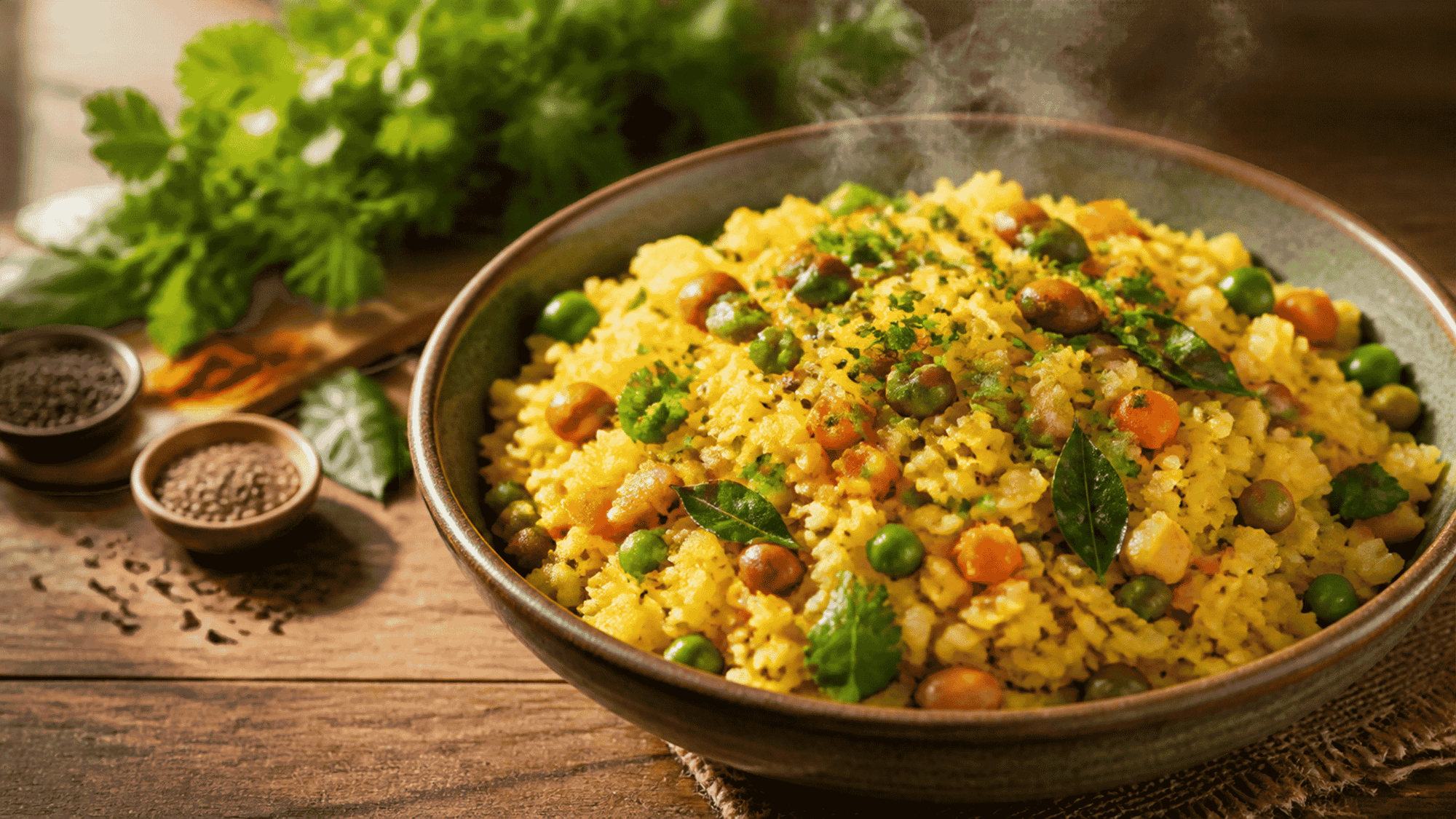
When you think of Indian breakfast for weight loss, Poha comes to mind as it is light, tasty, and satisfying. This humble dish, made from flattened rice, is not only easy to prepare but also highly versatile. With the right tweaks, it becomes a perfect weight-loss friendly breakfast that fuels your day without unnecessary calories.
👉 Book your Initial Nutrition Counselling Session here
call/WhatsApp us at +91 7057063984.
Why Poha Works for Weight Loss
- Light on digestion – won’t make you sluggish in the morning.
- Customizable – add vegetables, peanuts, or sprouts for extra nutrition.
- Low calorie yet filling – balances carbs with fiber and protein.
- Quick to prepare – ideal for busy mornings.
💡 If you liked poha, don’t miss our complete guide on Best Indian Breakfasts for Weight Loss for 10 more delicious options.
What Makes Poha Different From Regular Rice
Poha is parboiled and then flattened, which changes how your body processes it compared to cooked rice. The parboiling process drives nutrients from the bran into the grain, making poha richer in iron and B vitamins than plain white rice. More importantly, the flattening process partially breaks down the starch structure, which means poha digests at a moderate pace rather than causing a sharp blood sugar spike.
For women managing PCOS, pre-diabetes, or insulin resistance, this matters. A breakfast that causes a rapid glucose rise leads to energy crashes by mid-morning and stronger hunger signals throughout the day. Poha, especially when prepared with vegetables and peanuts, has a more gradual effect on blood sugar than plain idlis or bread.
The rinsing step before cooking is not just for cleaning – it softens the poha and removes a small amount of surface starch, further lowering the glycaemic load of the final dish.
The Role of Peanuts
Peanuts in poha are often treated as a garnish, but they serve a real nutritional function. One tablespoon of roasted peanuts adds approximately 4 grams of protein and 4 grams of healthy fat to the dish. This combination slows gastric emptying, meaning the meal stays with you longer. If you tend to feel hungry again within 90 minutes of breakfast, increasing the peanut portion slightly (to 1.5 tablespoons) is worth trying before adding another serving of poha.
For anyone with a nut sensitivity, roasted chana dal is a good substitute with similar protein content.
Recipe:
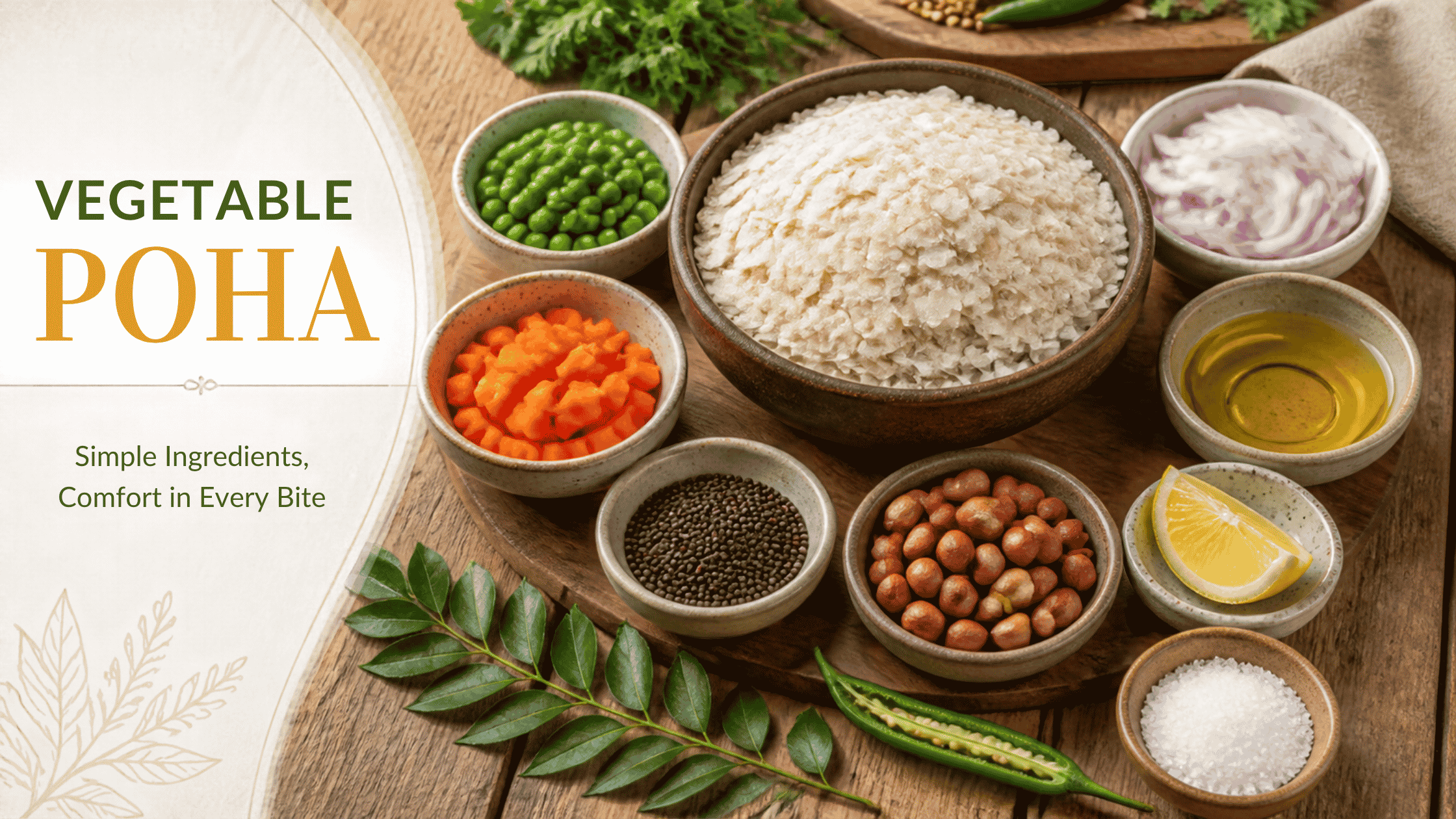
Ingredients (Serves 2)
- Flattened rice (poha): 1 cup
- Onion: 1 small, chopped
- Green peas: 2 tbsp
- Carrot: 2 tbsp, chopped
- Curry leaves: 6-8
- Mustard seeds: ½ tsp
- Green chili: 1 (slit)
- Roasted peanuts: 1 tbsp
- Lemon juice: 1 tsp
- Salt: to taste
- Oil: 1 tsp
Method
- Rinse poha lightly under running water. Drain and keep aside.
- Heat oil in a pan, add mustard seeds and curry leaves.
- Sauté onion, peas, and carrots until slightly tender.
- Add poha, salt, and toss gently.
- Sprinkle peanuts and squeeze lemon before serving.
Nutritional Value (per serving)
- Calories: ~220 kcal
- Protein: 6 g
- Fiber: 4 g
- Healthy fats: from peanuts
Best Time to Eat Poha
Poha works best as a breakfast between 7 and 9 AM or as a mid-morning snack around 11 AM if you eat a very early breakfast. Because it is relatively light in calories for a grain-based dish, it is not ideal as the only meal before a long physical workday. In that case, pair it with a glass of buttermilk or a small portion of curd to increase the protein and satiety of the meal.
If you work out in the morning, poha makes a good post-workout breakfast within 30 to 45 minutes of finishing exercise. The carbohydrates help replenish muscle glycogen and the peanuts provide a small amount of protein to support recovery. Keep the portion to one serving and add curd on the side for additional protein.
Avoid poha as a dinner choice if you are actively trying to lose weight. The carbohydrate proportion is better suited for earlier in the day when you are more active and your insulin sensitivity is higher.
Tips to Make Poha Healthier
- Add sprouts for an extra protein boost. Toss them in at the end so they stay slightly crunchy.
- Use minimal oil (1 tsp is sufficient for 2 servings).
- Include more vegetables like capsicum, beans, and corn all work well.
- Pair with buttermilk for a more filling, balanced meal.
- Use thick poha rather than thin poha as it holds together better and has a lower glycaemic index.
📅 Want dietitian-designed portion sizes for everyday Indian foods? Schedule a consultation here.
Common Mistakes to Avoid
The most common error is eating poha without any protein source alongside it. Plain vegetable poha is predominantly carbohydrate-heavy. The peanuts in the recipe help, but adding sprouts or pairing with curd significantly improves the protein balance of the meal.
The second mistake is over-rinsing poha until it turns soggy. A quick rinse of 10 to 15 seconds is all it needs. Over-rinsed poha breaks apart during cooking and loses texture, which makes portion control harder because the volume appears smaller than it is.
🌱 Explore More Healthy Indian Breakfasts for Weight Loss
Looking for more tasty, weight-loss friendly breakfast ideas? Check out these recipes 👇
- 🥗 Sprouts Salad Recipe
- 🥞 Moong Dal Chilla Recipe
- 🥄 Oats Upma Recipe
- 🍲 Vegetable Dalia Recipe
- 🥪 Healthy Vegetable Sandwich Recipe
- 🥬 Besan Chilla Recipe
- 🌾 Ragi Dosa Recipe
- 🥥 Idli-Sambar Recipe
- 🍓 Greek Yogurt Bowl Recipe
👉 Or head back to the main guide: Best Indian Breakfasts for Weight Loss
The Bottom Line
Poha is not just a comfort food. Tt is a wholesome, low-calorie breakfast that becomes genuinely effective for weight loss with the right additions. The key is treating peanuts and vegetables as essential components, not optional toppings, and pairing the dish with a protein source when you can.
👉 Want to start your wellness journey to keep yourself healthy, fit and strong?
📞 Call/WhatsApp us at +91 7057063984
📅 Book your Initial Nutrition Counselling Session