
Diabetes Reversal in India: What the Evidence Shows
Diabetes reversal is real for many, not all. Here's what current Indian research shows works, and what it actually means to reverse type 2 diabetes with food.
Table of Contents
- Diabetes in India: The Numbers Behind the Epidemic
- What "Reversal" Actually Means (and What It Doesn't)
- The Food-First Protocol: What the Research Shows Works
- Common Mistakes That Stall Reversal
- Who Reversal Works For (and Who It Doesn't)
- Building Your Diabetes Reversal Plate: A 7-Day Starting Framework
- Conclusion
- FAQs
1. Diabetes in India: The Numbers Behind the Epidemic
Type 2 diabetes reversal is possible for a real share of people, but deciding if it's realistic for you starts with accurate numbers, not conviction. The 2023 ICMR-INDIAB study, the largest population survey of its kind, screened over 113,000 adults across every Indian state and found a weighted diabetes prevalence of 11.4% and prediabetes of 15.3%. Hypertension sat at 35.5%, abdominal obesity at 39.5%, and dyslipidaemia at 81.2% of those tested.
These conditions cluster in the same person more often than they occur alone, which is exactly why a food-first, root-cause approach tends to outperform single-symptom fixes for Indian patients specifically.
The phrase "diabetes reversal" gets used loosely online, often by people with no clinical training, promising outcomes that oversell what food alone can do. Before we get to protocol, we need to be precise about what the evidence actually supports.
2. What "Reversal" Actually Means (and What It Doesn't)
Clinically, diabetes remission means an HbA1c below 6.5% sustained for at least three months without glucose-lowering medication. That definition comes from DiRECT, the UK's Diabetes Remission Clinical Trial led by Professor Roy Taylor and Professor Mike Lean, published in The Lancet in 2017, and still the most rigorous trial run in this space.
DiRECT put 149 people through a structured low-calorie food-replacement and reintroduction programme and compared outcomes to 149 people on standard care. At 12 months, 46% of the intervention group reached remission against 4% of controls. Nearly a quarter lost 15kg or more, something no control-group participant achieved. A five-year extension published in The Lancet Diabetes & Endocrinology in 2024 found that of those who'd sustained over 10kg of weight loss at two years, 81% were still in remission.
Remission is a maintained state, sustained by an ongoing pattern, not a cure you achieve once and forget.
Professor Taylor's Twin Cycle Hypothesis, developed alongside DiRECT, explains the mechanism. Sustained calorie and carbohydrate reduction lowers fat stored in the liver and pancreas, restoring the pancreas's ability to release insulin normally. Weight loss amount, not any single food, is DiRECT's strongest predictor of remission.
Insulin resistance is the same underlying mechanism DiRECT's data points to, and it's also the root driver behind PMOS (formerly PCOS). If you're a woman managing a family history of diabetes alongside PMOS symptoms, that overlap isn't a coincidence. It's worth working through the PMOS diagnosis checklist to see if insulin resistance is showing up on both fronts.
Not sure where your gut and insulin resistance fit into this?
Take the free Gut Health Quiz
3. The Food-First Protocol: What the Research Shows Works
DiRECT was run in UK primary care, on a population and food culture different from India's. A retrospective analysis from India's Freedom from Diabetes Clinic followed 2,384 people with type 2 diabetes through a one-year lifestyle intervention combining a personalised plant-forward diet, physical activity, and stress management. 31.2% achieved remission. Those who reached remission lost more weight and showed sharper drops in HbA1c and fasting insulin than those who didn't.
The two studies point to the same conclusion through different methods. DiRECT used aggressive calorie restriction, the Indian cohort used a sustained plant-forward plate. In both, the amount of weight lost and how long the pattern was sustained mattered more than the specific method.
The Plate Method
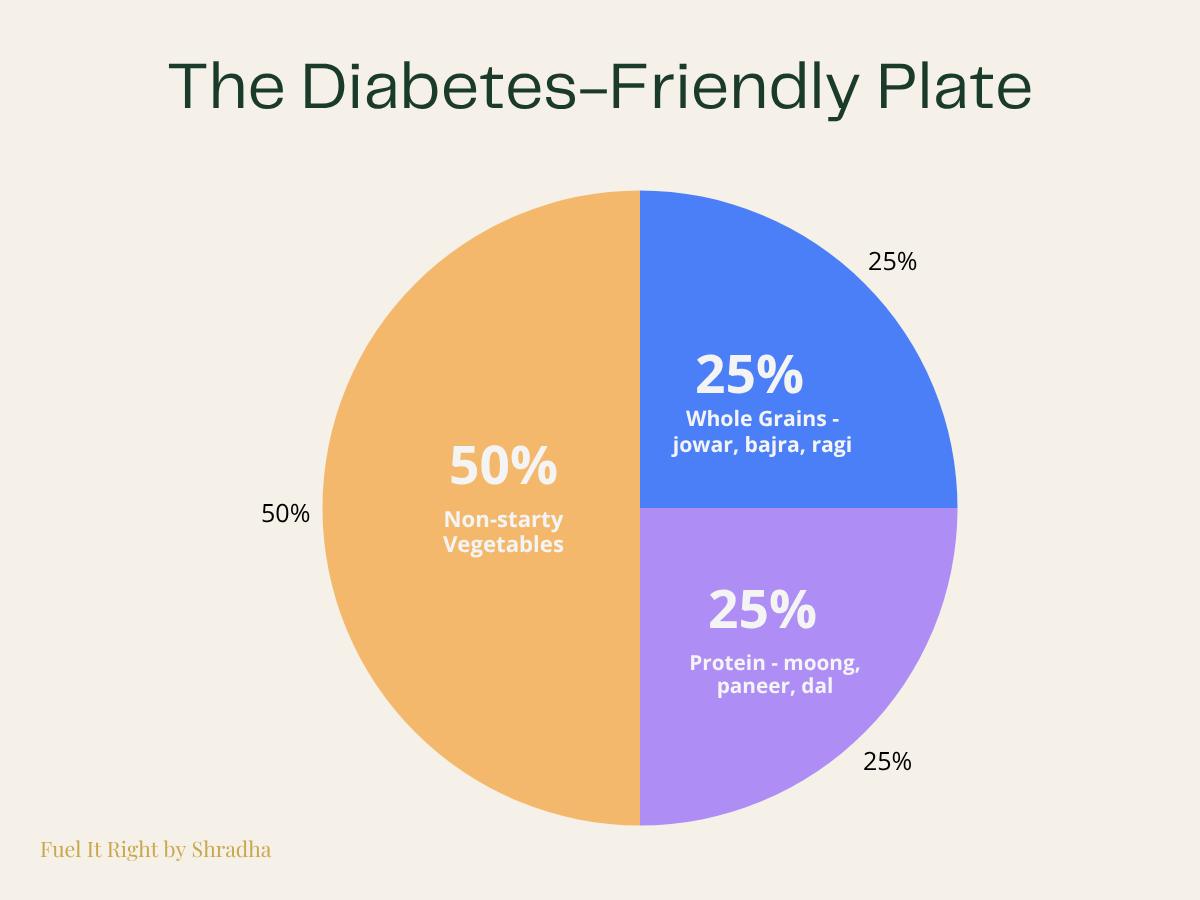
Half the plate non-starchy vegetables, a quarter lean protein such as moong or paneer, a quarter complex grains like jowar or bajra instead of polished rice or maida. This structural change does more for post-meal glucose than any single "superfood." For vegetarians building a complete plate with the right sources breaks down realistic quantities by Indian food group.
Glycemic Index in Practice
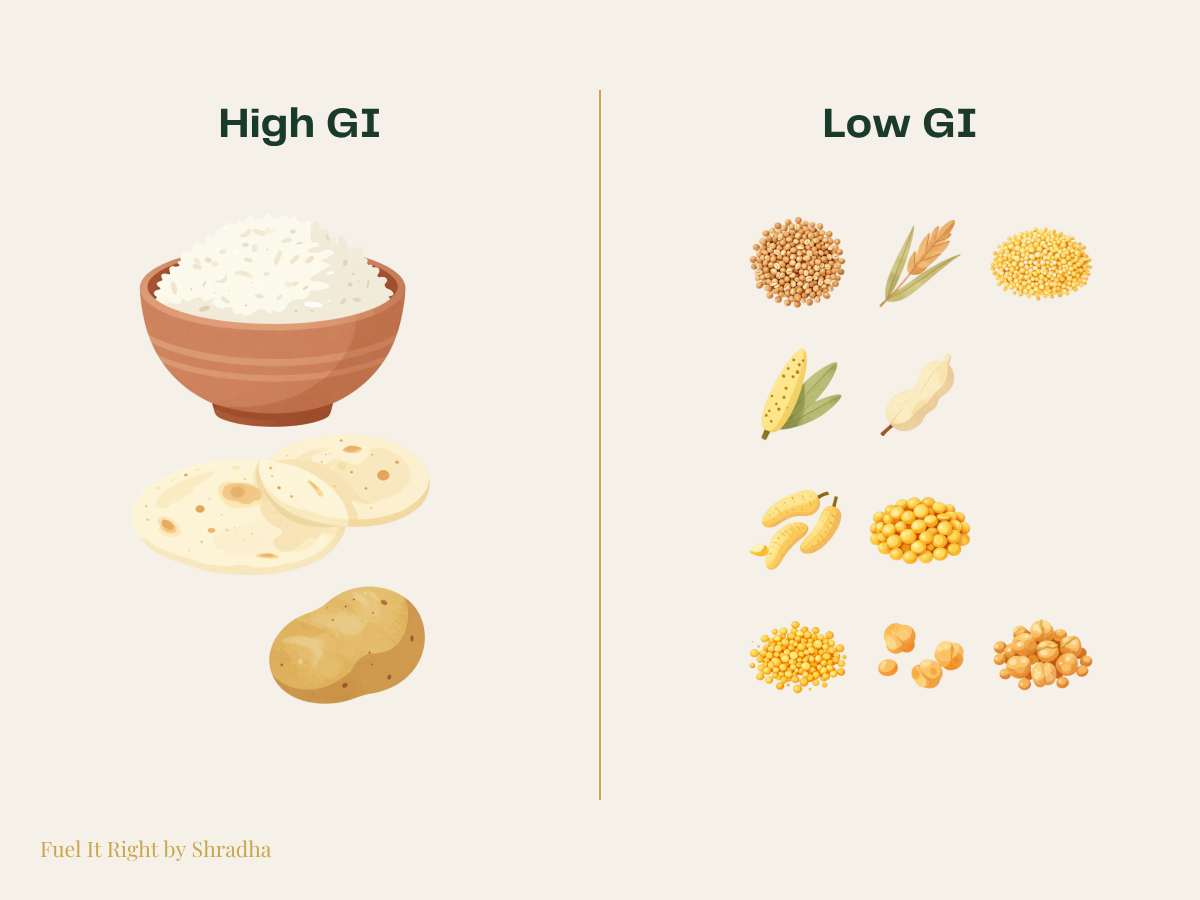
Most Indian dals sit in a low GI range of roughly 26 to 38, per the National Institute of Nutrition's dietary guidelines. Millets like ragi, jowar, and bajra outperform polished rice and refined flour on the same scale, which is why swapping the grain portion matters as much as swapping the oil.
Meal Sequencing: The Order You Eat In Matters
A 2015 Weill Cornell Medicine study, published in Diabetes Care under senior author Dr Louis Aronne, tested food order in people with type 2 diabetes. When protein and vegetables were eaten before carbohydrates in the same meal, glucose was lower by roughly 29%, 37%, and 17% at the 30, 60, and 120-minute marks, with insulin levels significantly lower too. The clinical guidance that followed wasn't "don't eat that." It was "eat this before that."
4. Common Mistakes That Stall Reversal
● Cutting rice and roti entirely instead of right-sizing the portion and sequencing it correctly within the meal.
● Treating fruit as forbidden rather than portioning whole, ripe fruit sensibly.
● Abandoning the plan at week three when DiRECT's own data took a full 12 months to show its clearest effect.
● Ignoring sleep and stress, both of which raise fasting glucose independent of food.
● Undiagnosed thyroid dysfunction quietly stalling weight loss. If a plateau persists despite consistent effort, it's worth ruling out with Your Thyroid Isn't Lazy, Your Diet Might Be.
● Following generic diet charts that ignore individual medication, activity level, and existing complications.
5. Who Reversal Works For (and Who It Doesn't)
Neither DiRECT nor the Indian cohort data showed universal remission. In DiRECT, people with shorter diabetes duration and greater early weight loss were more likely to reach remission; those with diabetes for many years responded less predictably. The Indian cohort showed a similar pattern tied to baseline medication load and how early the intervention started.
Longer-standing diabetes, advanced complications, or certain medications make remission unrealistic, and control, not reversal, becomes the honest, still valuable, goal.
The right goal for you depends on your history, not a headline.
6. Building Your Diabetes Reversal Plate: A 7-Day Starting Framework
This is a starting structure, not a prescription. Anyone on glucose-lowering medication should not change their diet significantly without their doctor and dietitian adjusting doses alongside it, since improved food choices can drop blood sugar fast enough to cause hypoglycemia on unchanged medication.
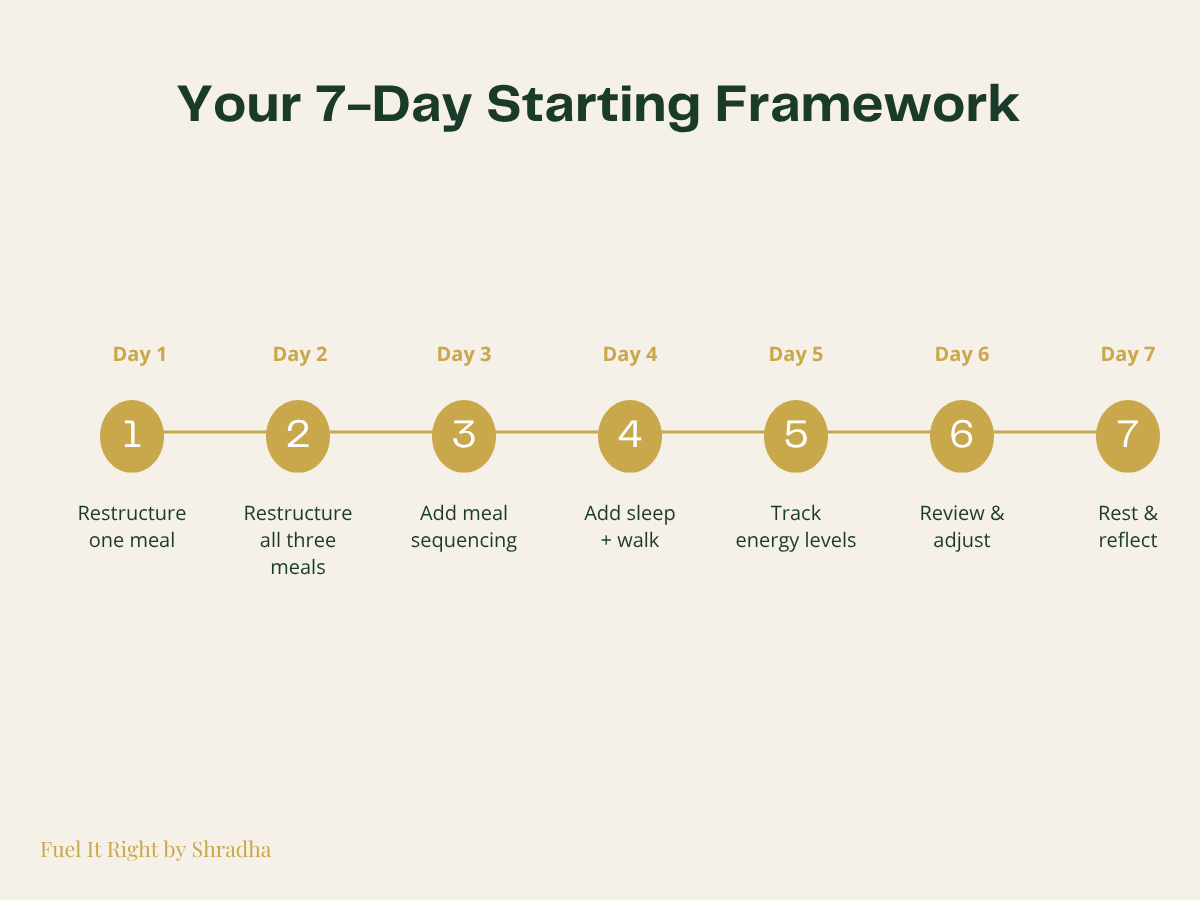
● Days 1-2: Restructure the plate (half vegetables, quarter protein, quarter millet or whole grain) at just one meal.
● Days 3-4: Extend the plate structure to all three main meals.
● Day 5: Add meal sequencing (vegetables and protein before the grain portion).
● Days 6-7: Layer in a consistent sleep window and a 15 to 20 minute walk after the largest meal.
Ready for a food-first plan built around your numbers?Book a 30-minute consult
Conclusion
Diabetes reversal is real for a meaningful share of people, evidenced by DiRECT's 46% one-year remission rate and the Indian cohort's 31.2%, but it isn't a guarantee for everyone and never something to attempt by cutting medication on your own. What both trials support is a structured, food-first plate approach sustained over months to a year, matched to your individual history. That's a slower, less dramatic story than what gets promised online, and it's the one that actually holds up.
FAQs
1. Can type 2 diabetes really be reversed with diet alone?
For some people, yes. DiRECT showed 46% remission at one year using structured calorie restriction; an Indian cohort study showed 31.2% remission using a plant-forward lifestyle programme. Neither found it universal, and both tied success closely to how much weight was lost and sustained.
2. How long does diabetes reversal typically take?
DiRECT tracked outcomes over a full year, with a five-year extension confirming that results held for people who sustained their weight loss. Expect months of consistent change, not weeks.
3. Is rice completely off-limits for diabetes reversal?
No. Portion, sequencing, and grain choice matter more than complete elimination. A quarter-plate portion of a lower GI grain, eaten after vegetables and protein, is workable for most people.
4. Can I stop my diabetes medication once my sugar readings improve?
Never without your doctor's guidance. Improved food choices can lower blood sugar quickly enough to cause dangerous lows if medication isn't adjusted alongside diet changes.
5. Do millets actually help control blood sugar?
Millets like ragi, jowar, and bajra have a lower glycemic impact than polished rice or refined flour per National Institute of Nutrition data, and can support better post-meal glucose control when substituted appropriately.
6. What is HbA1c and why does it matter for reversal?
HbA1c reflects average blood sugar over roughly three months. Clinical remission, per DiRECT's definition, is HbA1c below 6.5% sustained for at least three months without glucose-lowering medication.
7. Does the order I eat food in actually change my blood sugar?
Yes. A Weill Cornell Medicine study found glucose levels up to 37% lower when protein and vegetables were eaten before carbohydrates in the same meal, compared with the reverse order.
8. Is diabetes reversal the same as being cured?
No. Remission means sustained control without medication, not that the underlying tendency toward insulin resistance is gone permanently. The food pattern that achieved remission needs to continue.
About the Author
Shradha | Nutritionist & Dietitian | Fuel It Right. Food-first, evidence-based nutrition for real, sustainable results.