
Your Thyroid Isn't Lazy — Your Diet Might Be
42 million Indians live with thyroid disease — yet most are never told how food affects thyroid function. Here's what the research actually says, and what to put on your plate.
The Diagnosis Nobody Saw Coming
She came in exhausted. Gaining weight despite eating 'carefully'. Hair falling in clumps, brain fog so thick she'd forget words mid-sentence. Her doctor had already run the tests — TSH was high, T3 and T4 were low.
The prescription: thyroxine, lifelong.
What nobody told her was why her thyroid had slowed down. And nobody asked what she was eating.
That's where I come in.
India Has a Thyroid Problem Nobody's Talking About Loudly Enough
An estimated 42 million people in India suffer from thyroid diseases, making it one of the most widespread health conditions in the country. Yet it remains drastically underdiagnosed, especially in women. NCBI
Approximately 10–12% of women in India are affected by hypothyroidism, with a higher incidence in those over 35. And here's what that number doesn't capture: the millions more with subclinical hypothyroidism — where TSH is slightly elevated, symptoms are vague, and doctors say "let's watch and wait." nih
Watch and wait while you gain weight, lose hair, feel tired, and stop feeling like yourself. If you've been told your thyroid is 'borderline' or that your TSH is 'slightly high but not concerning' — this blog is especially for you.
Subclinical hypothyroidism is not a safe zone. It is an early signal your body is sending, and food is one of the most powerful ways to respond to it.
What Your Thyroid Actually Does (And Why It Matters So Much)
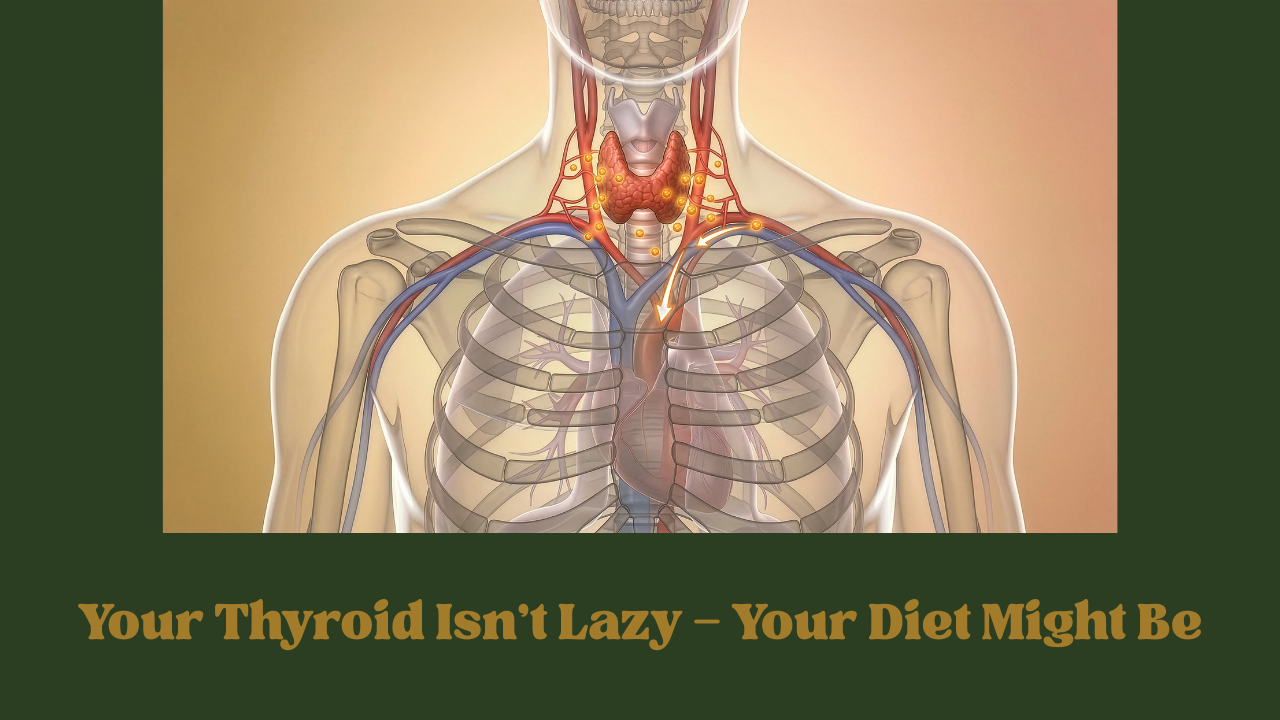
Your thyroid is a small butterfly-shaped gland at the base of your throat. But its job is enormous. Thyroid hormones (T3 and T4) regulate:
- How fast your cells burn energy (metabolism)
- Body temperature
- Heart rate
- Digestive speed
- Mood and brain function
- Menstrual cycle regularity
- Hair and skin turnover
When the thyroid underperforms, everything slows. This is why hypothyroidism feels like your entire body has been put on low battery mode.
But here's what most people — and frankly, many clinicians — miss: your thyroid doesn't malfunction in isolation.The food you eat, the gut you have, and the nutrients you're absorbing (or not) play a direct role in how well your thyroid functions every single day.
The Diet–Gut–Thyroid Axis: The Connection Nobody Explains to You
Thyroid function is closely linked to nutrition through the diet–gut–thyroid axis. Micronutrients such as iodine, selenium, iron, zinc, copper, magnesium, vitamin A, and vitamin B12 influence thyroid hormone synthesis and regulation throughout life. Dietary changes can alter the gut microbiota, leading not just to dysbiosis and micronutrient deficiency, but also to changes in thyroid function through immunological regulation, nutrient absorption, and epigenetic changes. PubMed Central
Read that again. A disrupted gut doesn't just cause bloating or acidity — it can impair thyroid function by reducing nutrient absorption and triggering immune dysregulation.
This is exactly why so many of my clients who come in for thyroid issues also have gut complaints they've been ignoring: constipation, bloating, slow digestion, food sensitivities. The gut and the thyroid are in constant conversation.
And what you put on your plate determines the quality of that conversation.
Not sure which nutrients you're actually deficient in? That's exactly what a personalised nutrition consultation can map out for you.
Book a free 30-minute call
A Note on Hashimoto's — When Your Immune System Is the Problem
Most people assume hypothyroidism is simply a "weak thyroid." In the majority of urban Indian cases, it's actually something more specific — Hashimoto's thyroiditis, an autoimmune condition where your own immune system mistakenly attacks the thyroid gland.
This distinction matters enormously from a nutrition standpoint. With Hashimoto's, the goal isn't just to support hormone production — it's to calm the immune response driving the damage in the first place. This is why gut health is so central: roughly 70% of your immune system lives in your gut. A leaky or inflamed gut doesn't just impair nutrient absorption — it actively fuels the autoimmune attack on your thyroid.
If your blood reports show elevated anti-TPO antibodies, you likely have Hashimoto's. And if nobody has told you that food can influence those antibody levels — now you know.
The Nutrients Your Thyroid Desperately Needs (And Where to Find Them in Indian Food)
1. Iodine — The Building Block
Iodine is the raw material from which thyroid hormones are literally made. No iodine = no T3, no T4.
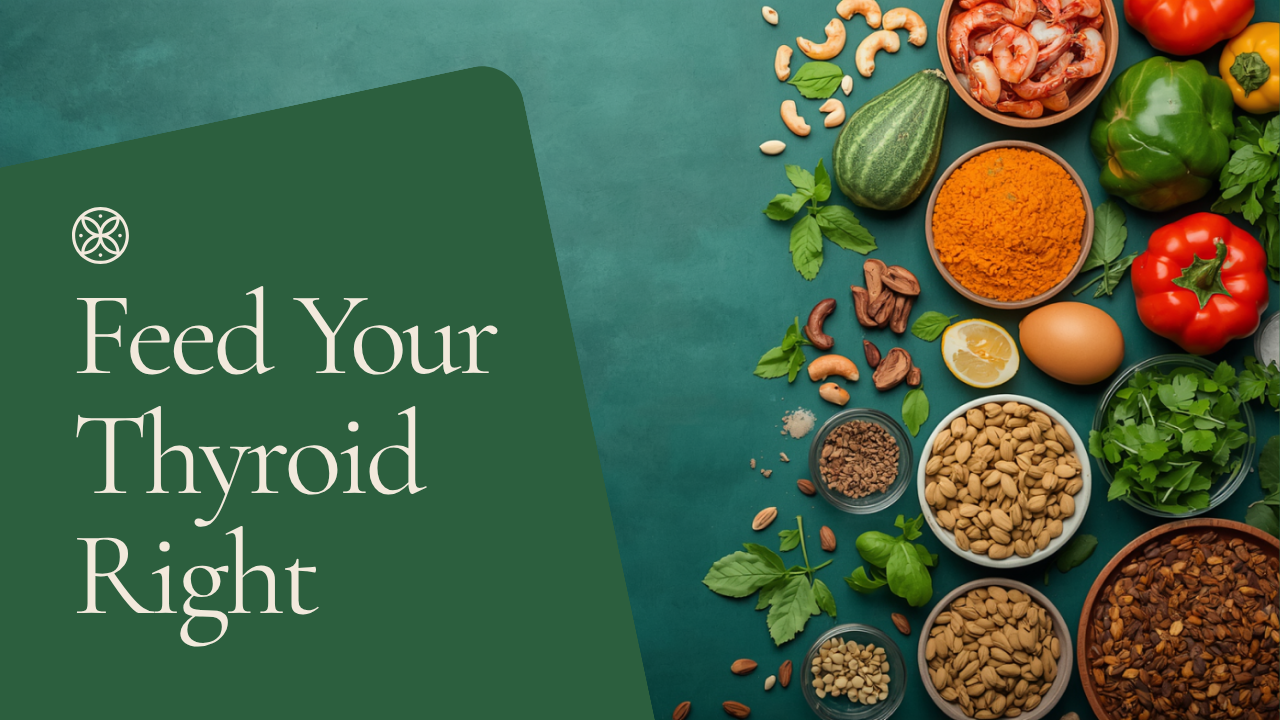
Indian sources: Iodised salt (non-negotiable as your primary salt), seafood (particularly relevant if you're in coastal areas like Goa — fish, prawns, mussels), dairy milk.
⚠️ A word on pink Himalayan salt: Exclusive use of pink (Himalayan) salt may worsen or precipitate hypothyroidism due to its low and inconsistent iodine content. Iodised salt remains essential for maintaining adequate iodine intake and normal thyroid hormone synthesis. If you've switched entirely to Himalayan salt because it 'looks healthier' — please reconsider. nih
2. Selenium — The Protector
Selenium is critical for converting inactive T4 into active T3 — the form your body actually uses. It also protects the thyroid gland from oxidative damage and plays a key role in Hashimoto's thyroiditis management.
Indian sources: Brazil nuts (2 per day is all you need), sunflower seeds, eggs, fish, mushrooms, whole grains like brown rice and barley.
3. Iron — The Overlooked One
Nutritional imbalance can lead to thyroid dysfunction and/or disorders such as hypothyroidism and hyperthyroidism, and possibly contribute to autoimmune thyroid diseases. Iron deficiency specifically impairs the enzyme that synthesises thyroid hormones — yet iron is routinely low in Indian women due to menstruation, low absorption from plant-based diets, and chronic gut inflammation. MDPI
Indian sources: Kulthi dal (horse gram), rajma, kala chana, methi leaves, drumstick leaves (moringa), jaggery with a source of vitamin C to improve absorption.
4. Zinc — The Signal Sender
Zinc is needed for the production of TSH (the signal your brain sends to the thyroid to work). Low zinc = weak signal = sluggish thyroid.
Indian sources: Pumpkin seeds, sesame seeds (til), chickpeas, moong dal, eggs, chicken.
5. Magnesium — The Calmer
Magnesium regulates inflammation and supports the conversion of T4 to T3. Many Indian diets are magnesium-depleted due to refined grains, excess sugar, and low vegetable variety.
Indian sources: Bajra (pearl millet), jowar, dark leafy greens, cashews, almonds, dark cocoa.
6. Vitamin D — The Immune Modulator
The combined role of selenium, iodine, and vitamin D in reducing cardiovascular disease risk and inflammation in autoimmune thyroid disorders remains an important area of research, particularly for Hashimoto's, the most common cause of hypothyroidism in urban India. Vitamin D deficiency is rampant across Indian cities despite abundant sunshine, because most of us spend our days indoors. MDPI
Indian sources: Fatty fish, egg yolks, fortified milk — and genuine outdoor sun exposure for 20–30 minutes daily.
What's Silently Hurting Your Thyroid
🚫 Excessive Raw Goitrogenic Vegetables
Cruciferous vegetables like cauliflower, broccoli, cabbage, and radish contain goitrogens — compounds that can interfere with iodine uptake when eaten raw and in large quantities. Cooking deactivates most of these compounds. This doesn't mean avoid these vegetables — they're nutritious and important. It means don't be blending raw cabbage into daily smoothies when you already have thyroid issues.
🚫 Soy in Excess
Soy isoflavones can interfere with thyroid hormone synthesis, particularly when iodine intake is already low. Occasional tofu or soy milk is generally fine. Daily, high-dose soy supplementation is not advisable for those with thyroid conditions.
🚫 Ultra-Processed Foods and Refined Sugar
These drive gut dysbiosis, increase systemic inflammation, and deplete the micronutrients your thyroid needs. The connection between chronic inflammation and autoimmune thyroid disease (Hashimoto's) is well-established.
🚫 Skipping Meals
Your thyroid is deeply tied to your metabolic rate. Erratic eating, skipping breakfast, or surviving on chai all morning suppresses metabolic function — the exact opposite of what a struggling thyroid needs.
What an Indian Thyroid-Friendly Day Actually Looks Like
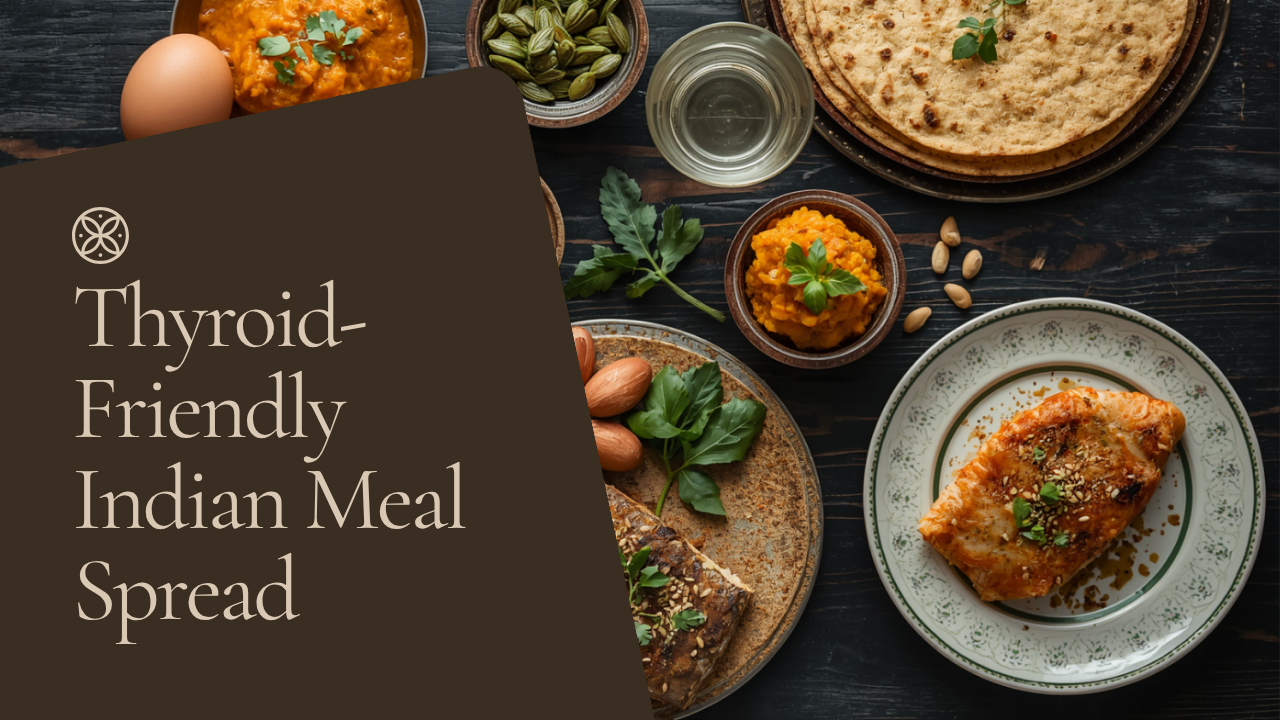
This isn't about exotic superfoods or expensive supplements. It's about intelligent food combining with ingredients already in most Indian kitchens.
Morning: 2 eggs + methi paratha made with bajra or jowar flour + small cup of milk (Selenium + iron + zinc + iodine + magnesium — before 9 am)
Mid-morning: A handful of pumpkin seeds or 2 Brazil nuts + seasonal fruit
Lunch: Kulthi dal or rajma + brown rice + sabzi with drumstick or palak + a small piece of fish if non-vegetarian
Evening: Roasted chana + a small piece of jaggery
Dinner: Light — moong dal khichdi with ghee, or ragi dosa with sambhar
What to drink: Water consistently through the day. Limit more than 2 cups of tea or coffee — excessive caffeine raises cortisol, which suppresses T3 conversion.
The Medication Question
If you're already on thyroid medication (levothyroxine / eltroxin), none of the above replaces it. What it does is create an internal environment where the medication can work more effectively — and where you may, over time and with monitoring, require less.
Always take your thyroid medication on an empty stomach, at least 30–60 minutes before eating. Calcium-rich foods, high-fibre foods, and certain supplements can interfere with absorption if taken simultaneously.
So Is Your Thyroid Lazy?
No. Your thyroid is doing the best it can with what it's been given.
It needs specific nutrients to make hormones. It needs a healthy gut to absorb those nutrients. It needs low systemic inflammation to convert those hormones into a usable form. And it needs consistent, nourishing food — not crash diets, not detoxes, not extreme elimination.
Personalised nutrition plans are needed to manage thyroid disorders effectively — because there is no single thyroid diet that works for everyone. The right approach depends on your specific nutrient deficiencies, your gut health, whether you have an autoimmune component, and your overall health picture. NutraIngredients.com
That's exactly the kind of work I do with clients — build food-first protocols that support thyroid function from the inside out.
Ready to Give Your Thyroid What It Actually Needs?
If you've been diagnosed with hypothyroidism, subclinical hypothyroidism, or Hashimoto's — or if you've been experiencing the symptoms without a clear diagnosis — a structured nutritional approach can make a significant difference.
Book a consultation: calendly.com/shradhajp/30min
Or reach me directly on WhatsApp: +91 70570 63984
Real Food. Real Results.