
Thyroid Weight Loss: What the Real Numbers Show
Thyroid weight loss expectations often outpace what the evidence shows. A landmark study found normalising TSH barely moved the scale. Here's what the real numbers say, including a new twist from GLP-1 research published just days ago.
Table of Contents
1. Thyroid Weight Loss Basics: What Gets Blamed and What's Real
2. Thyroid Weight Loss: The Study That Changed the Conversation
3. Thyroid Weight Loss: Why the Weight Is Often Water, Not Fat
4. Thyroid Weight Loss: What Normal Treatment Actually Does
5. Thyroid Weight Loss: Why Hyperthyroidism Tells the Opposite Story
6. Thyroid Weight Loss: The New GLP-1 Twist
7. Thyroid Weight Loss: When It's Genuinely Worth Checking
8. Thyroid Weight Loss: A Realistic Approach
Thyroid Weight Loss: The Takeaway
Thyroid Weight Loss: Frequently Asked Questions
Expectations for thyroid weight loss are often higher than the evidence actually supports. Often, patients expect that normalization of an underactive thyroid will finally unlock the number on the scale. A landmark study following this directly found something much more modest than most people expect. This piece walks through the real numbers with a truly novel twist from GLP-1 research published just days ago.
What Thyroid Weight Loss Actually Looks Like
1. Thyroid Weight Loss Basics: What Gets Blamed and What's Real
Thyroid weight loss conversations usually start with a fair assumption. Hypothyroidism does slow metabolism somewhat, and Framingham data found small TSH increases linked to roughly 2.3kg gained in women and 1.4kg in men over three and a half years. That's real, but it's modest, not the dramatic swing many patients describe experiencing.
2. Thyroid Weight Loss: The Study That Changed the Conversation
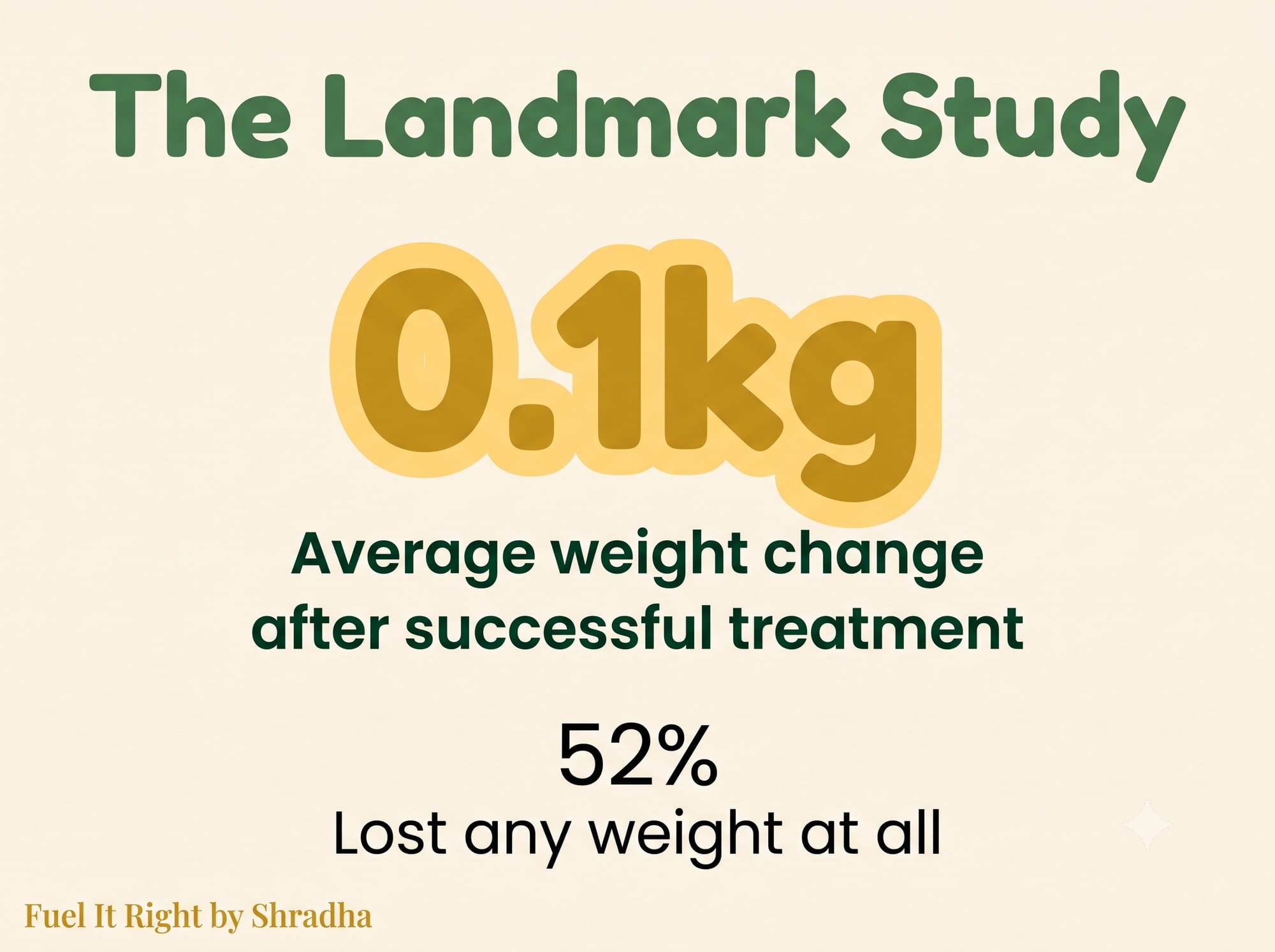
The most clear thyroid weight loss data is from an American Thyroid Association study from 2013. It followed patients whose TSH dropped after treatment, from a median of 48 to 2.3. The average weight change across the group was just 0.1kg. Only 52% lost any weight at all and even among those the average loss was 3.8kg not a transformation.
3. Thyroid Weight Loss: Why the Weight Is Often Water, Not Fat
The American Thyroid Association points to another reason expectations run high. Most extra weight gained with hypothyroidism reflects salt and water retention, not new fat tissue. Massive weight gain genuinely tied to thyroid function alone is rare. This distinction matters because water weight and fat respond to completely different interventions.
What Actually Happens When Treatment Starts
4. Thyroid Weight Loss: What Normal Treatment Actually Does
A 2021 study from Iraq found something patients don’t often hear upfront about thyroid weight loss. Weight reduction was in no way correlated with properly treated hypothyroidism where TSH was in range. Anyway, patients either did not get worse or kept getting better slowly. Reversal is possible, about 2.3kg in one small trial of more severe cases, a separate review found.
5. Thyroid Weight Loss: Why Hyperthyroidism Tells the Opposite Story
An overactive thyroid flips this pattern entirely, something covered in Overactive Thyroid Diet: What to Know First. Hyperthyroidism can cause dramatic weight loss. Treating it successfully often reverses that loss, with patients gaining back roughly 4kg a year once hormone levels normalise. The direction of change depends entirely on which condition you actually have.
6. Thyroid Weight Loss: The New GLP-1 Twist
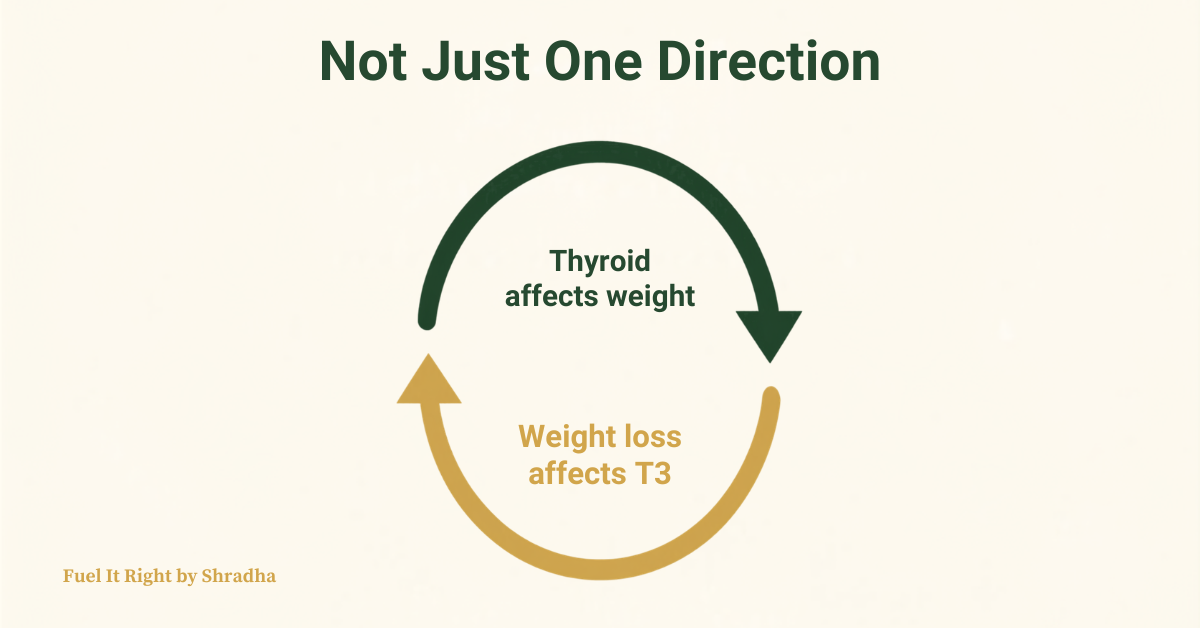
Research published just days ago adds real nuance here, relevant to what we covered in GLP-1 Muscle Loss: What the Scary Number Misses. Hypothyroid patients who lost the most weight on semaglutide saw their T3 levels drop significantly, while TSH stayed stable. Weight loss appears to influence thyroid markers too, not only the reverse.
Frustrated that your treated thyroid still isn't moving the scale?
Let's build a realistic plan together:
Call or WhatsApp: +91 70570 63984
What This Means for Your Own Weight Loss Plan
7. Thyroid Weight Loss: When It's Genuinely Worth Checking
That doesn't mean thyroid function never matters for weight. It does merit a TSH test, along with unexplained weight change, fatigue, feeling cold or thinning hair. The point of looking at thyroid weight loss data is not that thyroid doesn't matter. It’s that the real story of contribution is more modest and slower than most people have been told.
8. Thyroid Weight Loss: A Realistic Approach
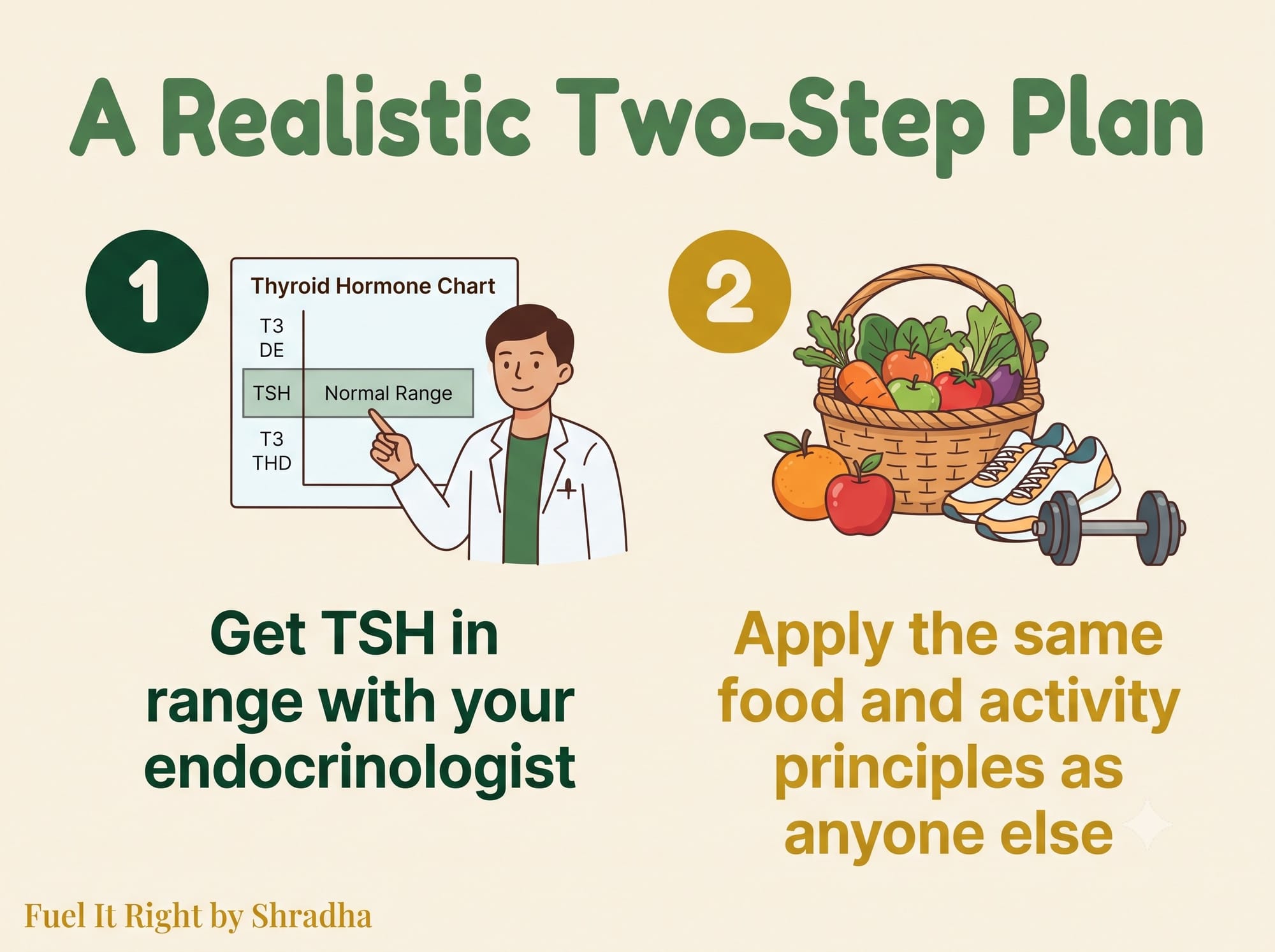
A realistic thyroid weight loss plan treats medication as necessary but not sufficient on its own. Get TSH into range with your endocrinologist first. Then apply the same food and activity principles that work for anyone else, since a properly treated thyroid responds to weight loss efforts the same way an unaffected one does.
Thyroid Weight Loss: The Takeaway
Honest recalibration of thyroid weight loss. The best evidence we have suggests that on average normalizing TSH makes little difference to the scales and even well treated patients often see no reduction at all. That doesn’t mean thyroid function isn’t important to weight. This means the contribution is smaller and slower than is generally assumed. Get the thyroid right and then standard evidence-based weight strategies with it.
Thyroid Weight Loss: Frequently Asked Questions
Thyroid weight loss questions come up in nearly every consultation, so here are direct answers to what patients ask most.
Does treating hypothyroidism actually cause weight loss?
Not reliably. The clearest thyroid weight loss study found average weight change after successful treatment was just 0.1kg, and only 52% of patients lost any weight at all. Treatment normalises hormone levels; it doesn't guarantee the scale moves.
How much weight does hypothyroidism actually cause?
Over three and a half years, women with small increases in TSH gained about 2.3kg, and men gained 1.4kg, according to Framingham data, which is a modest amount, not the dramatic swing many people describe.
Is thyroid-related weight gain mostly fat or water?
Mostly water and salt retention, according to the American Thyroid Association. Massive fat gain genuinely caused by thyroid function alone is rare, which is why the weight often shifts once treatment begins.
Why didn't I lose weight after my thyroid medication was adjusted?
It is common, not unusual. A study in 2021 found that there was no association at all between adequately treated hypothyroidism and weight loss, with many patients remaining steady or continuing to slowly gain weight regardless.
Does an overactive thyroid cause the opposite effect?
Yes. Hyperthyroidism can cause dramatic weight loss, and treating it successfully often reverses that, with patients gaining back roughly 4kg a year as hormone levels return to normal.
Can losing weight actually affect my thyroid levels?
But new research says it does. The relationship is reciprocal, too: Among hypothyroid patients taking GLP-1 medication, those with the greatest weight loss had significantly lower levels of T3 and stable TSH levels.
When should I actually get my thyroid checked for weight changes?
If weight change comes alongside fatigue, cold sensitivity, or hair thinning, a TSH test is genuinely worth requesting, rather than assuming thyroid function explains weight changes on its own.
What actually works for weight loss with a treated thyroid?
Real thyroid weight loss is driven by the same evidence-based food and activity principles that work for anyone else. Once TSH is normalized, a well-managed thyroid responds to weight loss efforts like a normal thyroid.
About the Author
Shradha | Nutritionist & Dietitian | Fuel It Right. Food-first, evidence-based nutrition for real, sustainable results.