
Insulin Resistance vs Diabetes: What's the Difference
Insulin resistance and diabetes are not the same diagnosis, and in India, you don't need to be overweight to have either. Here's the real difference, and what the research says about catching it early.
1. Insulin Resistance and Diabetes Are Not the Same Thing
2. The Indian Body Doesn't Follow the Global Rulebook
3. How Doctors Actually Measure Insulin Resistance
4. What Happens If Insulin Resistance Goes Unaddressed
5. What the Prevention Trials Show: Lifestyle vs Medication
6. Building Your Insulin-Resistance Food Framework: A 7-Day Starting Point
7. Conclusion
8. FAQs
1. Insulin Resistance and Diabetes Are Not the Same Thing
Insulin resistance and diabetes get used interchangeably online, but they describe two different points on the same timeline. Insulin resistance means your cells respond poorly to insulin, so your pancreas compensates by producing more of it. Blood sugar can stay normal for years during this phase, because the extra insulin is doing the work. Diabetes is what happens after the pancreas can no longer keep up.
This distinction matters clinically. Someone can have significantly elevated insulin levels, a HOMA-IR score well above normal, and completely normal fasting glucose and HbA1c. Standard blood work that only checks glucose and HbA1c will miss this person entirely, sometimes for a decade or more before diabetes is finally diagnosed.
2. The Indian Body Doesn't Follow the Global Rulebook
In a widely cited 2004 Lancet commentary, researchers Chittaranjan Yajnik and John Yudkin illustrated what's now called the Y-Y paradox using their own bodies. Both men had an identical BMI of 22.3, comfortably in the "normal" range. But Yajnik, of Indian origin, carried 21.2% body fat, more than double Yudkin's 9.1%, despite looking like the leaner of the two.
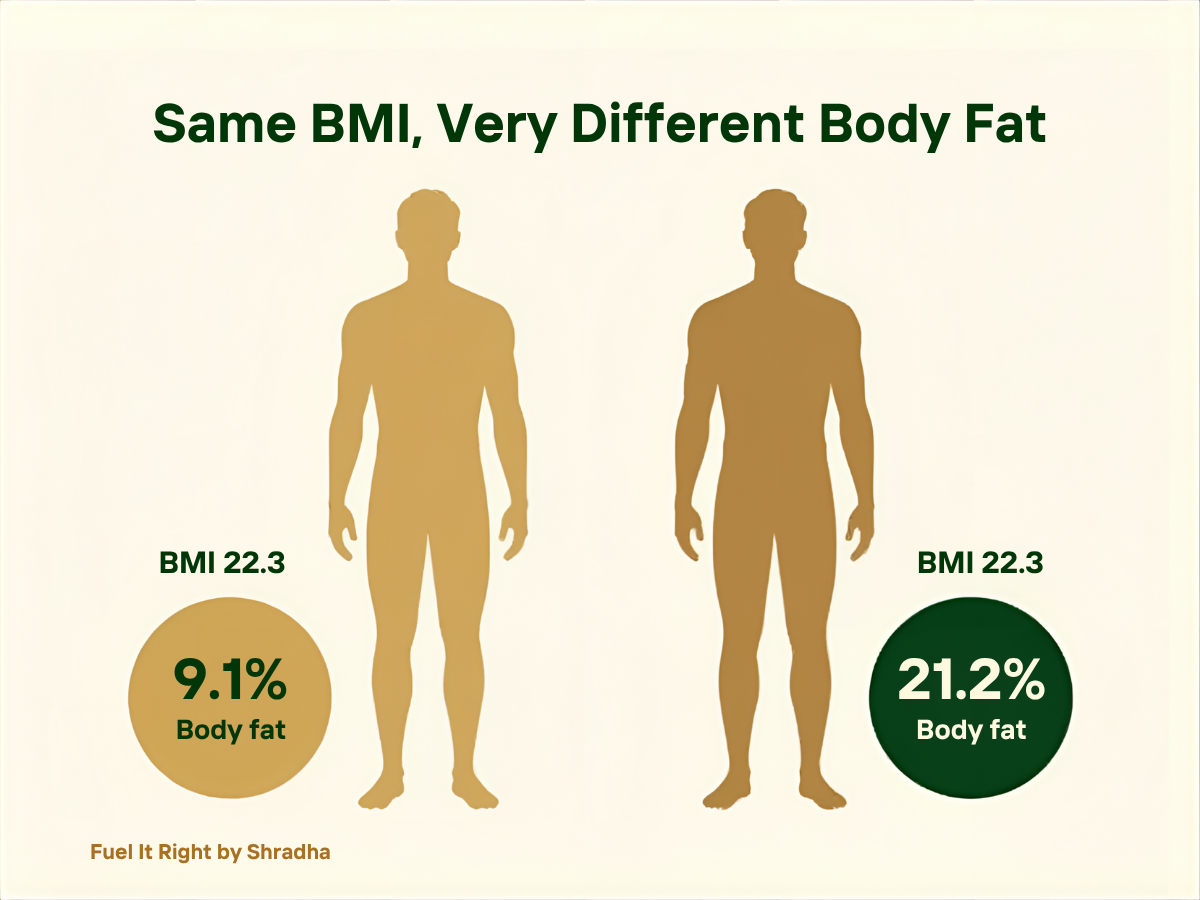
This is the thin-fat Indian phenotype: for any given BMI, Indians carry more total body fat, more visceral fat, and less muscle mass than Caucasian populations, and this shows up from birth. A nationwide Indian diabetes registry found that among patients with a "normal" BMI, one in three still had an obese body fat percentage. The number on the weighing scale was reassuring. The body composition underneath wasn't.
The same mechanism sits underneath PMOS in most Indian women. If you've been told your weight is "fine" but still have PMOS symptoms, insulin resistance driven by body composition, not visible weight, is often the missing piece. The PMOS diagnosis checklist walks through how to check.
3. How Doctors Actually Measure Insulin Resistance
Fasting glucose and HbA1c, the two tests most people get in a routine check-up, are diabetes tests. They only turn abnormal once the pancreas has started losing the fight. To catch insulin resistance itself, you need a fasting insulin level alongside fasting glucose, used to calculate HOMA-IR (homeostatic model assessment of insulin resistance).
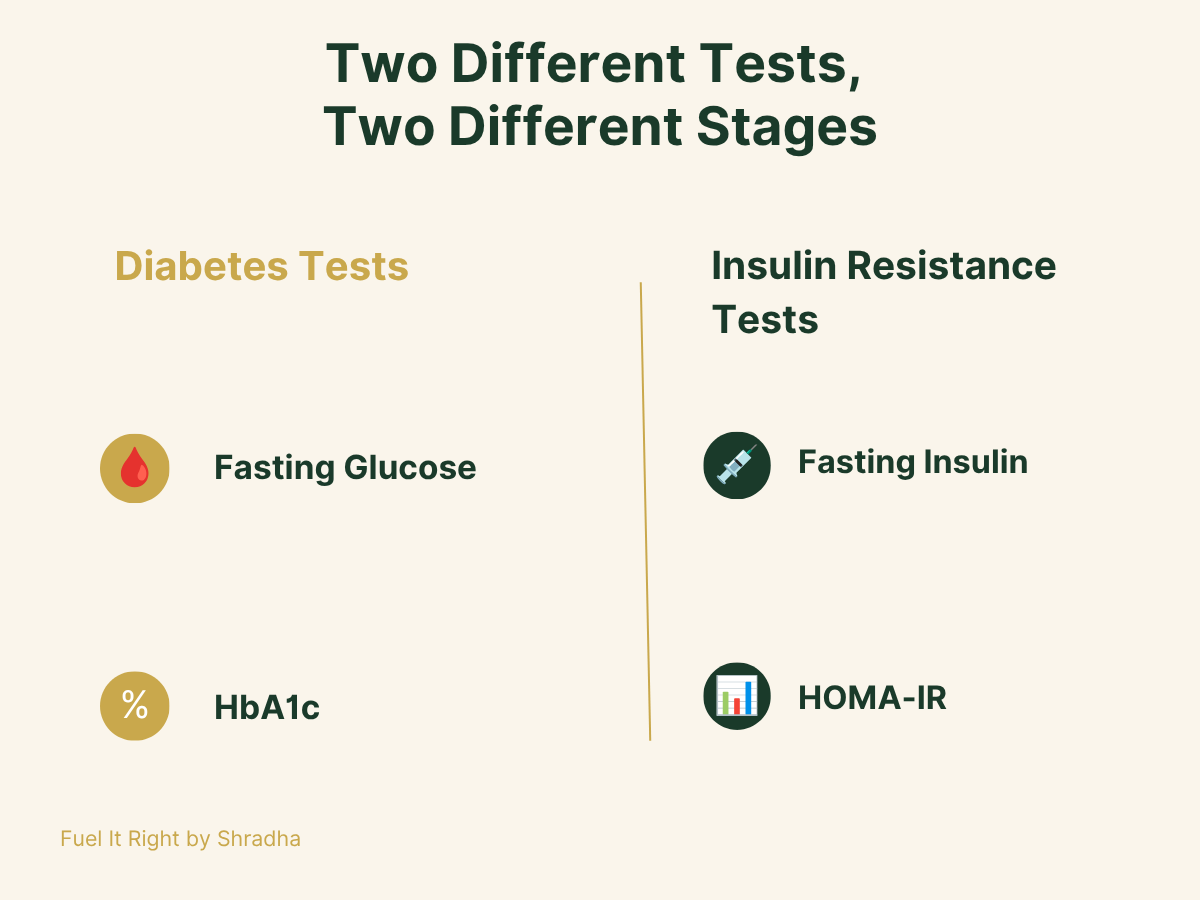
Indian studies have generally used a HOMA-IR cut-off around 2.5 to flag insulin resistance, though there's no single nationally validated threshold yet. A simpler, cheaper proxy some Indian centres use is the triglyceride-to-HDL ratio, since both numbers are already part of a standard lipid panel.
None of these tests are part of a routine annual check-up by default. If you have a family history of diabetes, PMOS, a waistline that doesn't match your weight, or unexplained fatigue after meals, ask specifically for a fasting insulin test alongside your glucose panel.
Wondering if insulin resistance is already part of your picture?
Take the free Gut Health Quiz:
4. What Happens If Insulin Resistance Goes Unaddressed
Insulin resistance alone isn't a diagnosis you treat once and forget. Left unaddressed, people with prediabetes carry an estimated 74% lifetime risk of eventually developing type 2 diabetes. The progression isn't guaranteed, but it isn't rare either.
This is also the same underlying mechanism we covered in Can Type 2 Diabetes Really Be Reversed in India? and Fatty Liver Has a New Name. Insulin resistance, diabetes risk, and fatty liver risk move together, because they share the same root cause. Addressing one through food genuinely helps the others.
5. What the Prevention Trials Show: Lifestyle vs Medication
The US Diabetes Prevention Program, a landmark 3,234-person randomised trial, found that intensive lifestyle intervention, roughly 7% weight loss plus 150 minutes of weekly activity, cut diabetes incidence by 58% compared to placebo. Metformin alone managed 31%. A 22-year follow-up found the lifestyle group still carried a 25% lower risk decades later.
The Indian Diabetes Prevention Programme ran a similar design on Asian Indian subjects with impaired glucose tolerance. Lifestyle modification alone produced a 28.5% relative risk reduction, meaningfully lower than the US figure. Researchers point to the thin-fat phenotype and a stronger role for beta-cell decline, not just insulin resistance, in Indian progression to diabetes, which may explain part of the gap.
Lifestyle change works in Indian bodies too. It just isn't solving the identical problem it solves in Western trials.
This is precisely why generic, translated Western diet advice underperforms for Indian patients. The starting biology is different enough that the same protocol doesn't reliably produce the same result.
6. Building Your Insulin-Resistance Food Framework: A 7-Day Starting Point
This is a starting structure for someone with confirmed insulin resistance but normal glucose, not a diabetes protocol. If you already have diabetes, follow the plate method and meal sequencing covered in Can Type 2 Diabetes Really Be Reversed in India? instead, since it's built for that stage specifically.
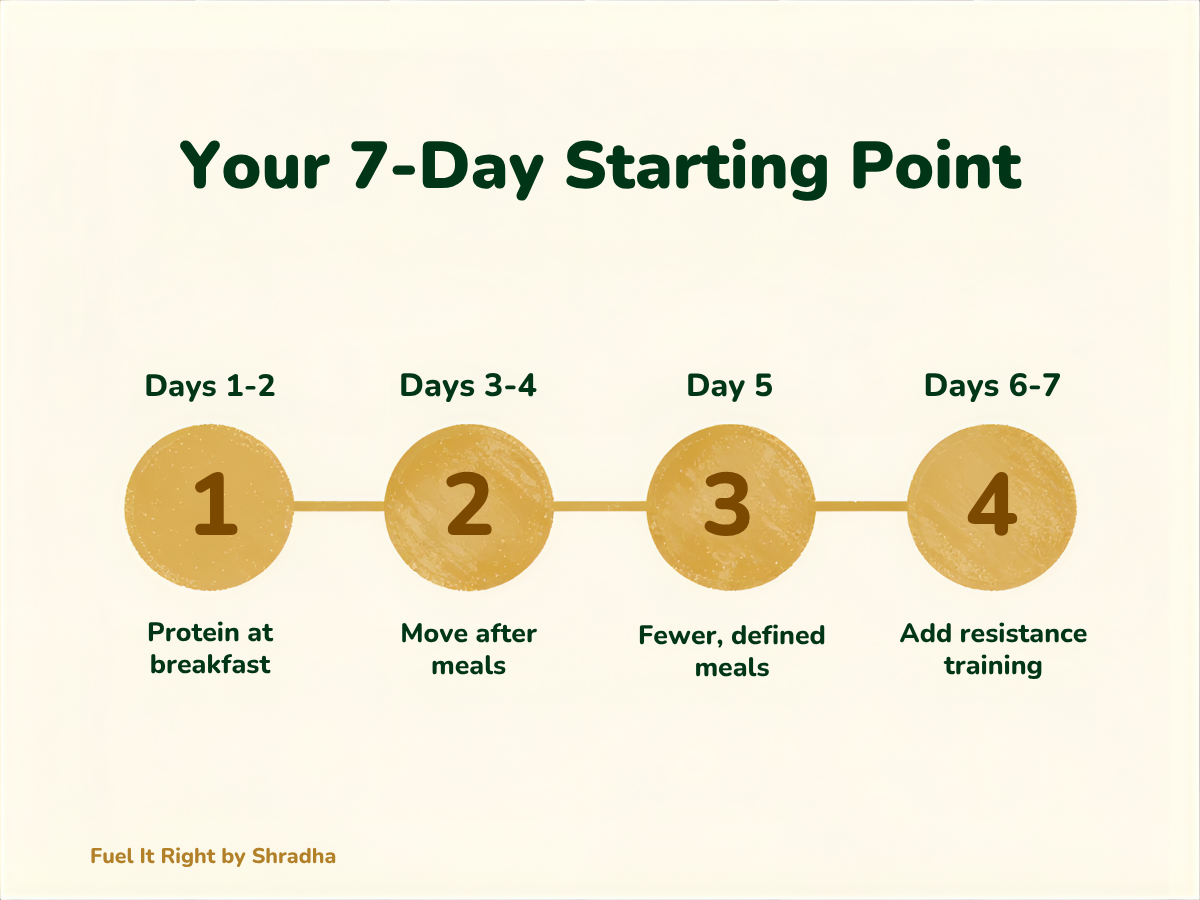
● Days 1-2: Add a source of protein to breakfast (egg, paneer, moong) instead of starting the day with only tea and carbohydrate.
● Days 3-4: Move 20-30 minutes of movement to within an hour after your largest meal, since post-meal activity specifically improves insulin sensitivity.
● Day 5: Reduce grazing between meals to 2-3 defined eating windows, since constant small inputs keep insulin elevated continuously.
● Days 6-7: Add resistance activity twice this week; muscle is the largest site of glucose disposal in the body, and more of it directly improves insulin sensitivity.
Ready for a food-first plan built around your numbers?
Book a 30-minute consult:
Conclusion
Insulin resistance and diabetes are related, but they are not the same condition, and in India, the distinction matters more than in most populations. The thin-fat phenotype means a normal BMI or a reassuring number on the scale doesn't rule out insulin resistance the way it might elsewhere. The prevention trial data is real but more modest for Indian bodies than the widely quoted Western numbers, which makes catching this early, through the right tests, not just a feeling of good health, worth the effort.
FAQs
1. What is the difference between insulin resistance and diabetes?
Insulin resistance means cells respond poorly to insulin while the pancreas still compensates, often keeping blood sugar normal. Diabetes is diagnosed once the pancreas can no longer compensate and blood sugar itself rises.
2. Can you have insulin resistance with normal blood sugar?
Yes. This is the most common presentation. Elevated insulin levels compensate for years before glucose or HbA1c shows any abnormality, which is why insulin resistance is frequently missed on routine testing.
3. What is the Y-Y paradox?
It refers to a comparison by researchers Yajnik and Yudkin showing that at an identical BMI of 22.3, an Indian man carried more than double the body fat percentage of a Caucasian man, illustrating why BMI alone underestimates metabolic risk in Indians.
4. Which blood test checks for insulin resistance?
A fasting insulin test alongside fasting glucose, used to calculate HOMA-IR, is the standard approach. The triglyceride-to-HDL ratio from a routine lipid panel is a simpler proxy some Indian clinicians use.
5. Can thin people have insulin resistance in India?
Yes. Indian registry data found that one in three patients with a "normal" BMI had an obese body fat percentage, consistent with the thin-fat Indian phenotype documented across multiple studies.
6. Does insulin resistance always turn into diabetes?
Not always, but the risk is substantial. People with prediabetes carry an estimated 74% lifetime risk of developing type 2 diabetes, and structured lifestyle intervention has been shown to meaningfully reduce that risk.
7. Does lifestyle change work as well for Indians as in Western studies?
It works, but the magnitude differs. The US Diabetes Prevention Program showed a 58% risk reduction with lifestyle change; the Indian Diabetes Prevention Programme showed 28.5% in Asian Indian subjects, likely reflecting differences in body composition and beta-cell function.
8. What's the fastest way to check if I might be insulin resistant?
Waist circumference and waist-to-hip ratio are useful bedside screens, since Indians accumulate visceral fat disproportionately. Beyond that, ask your doctor for a fasting insulin test alongside your next glucose panel.
About the Author
Shradha | Nutritionist & Dietitian | Fuel It Right. Food-first, evidence-based nutrition for real, sustainable results.