
Hashimoto's Thyroiditis Diet: What to Know First
Hashimoto's thyroiditis diet advice online treats gluten removal as nearly mandatory. Multiple systematic reviews disagree, and a major trial is testing this directly right now. Here's what a newly diagnosed patient actually needs to know, including how common this is in India.
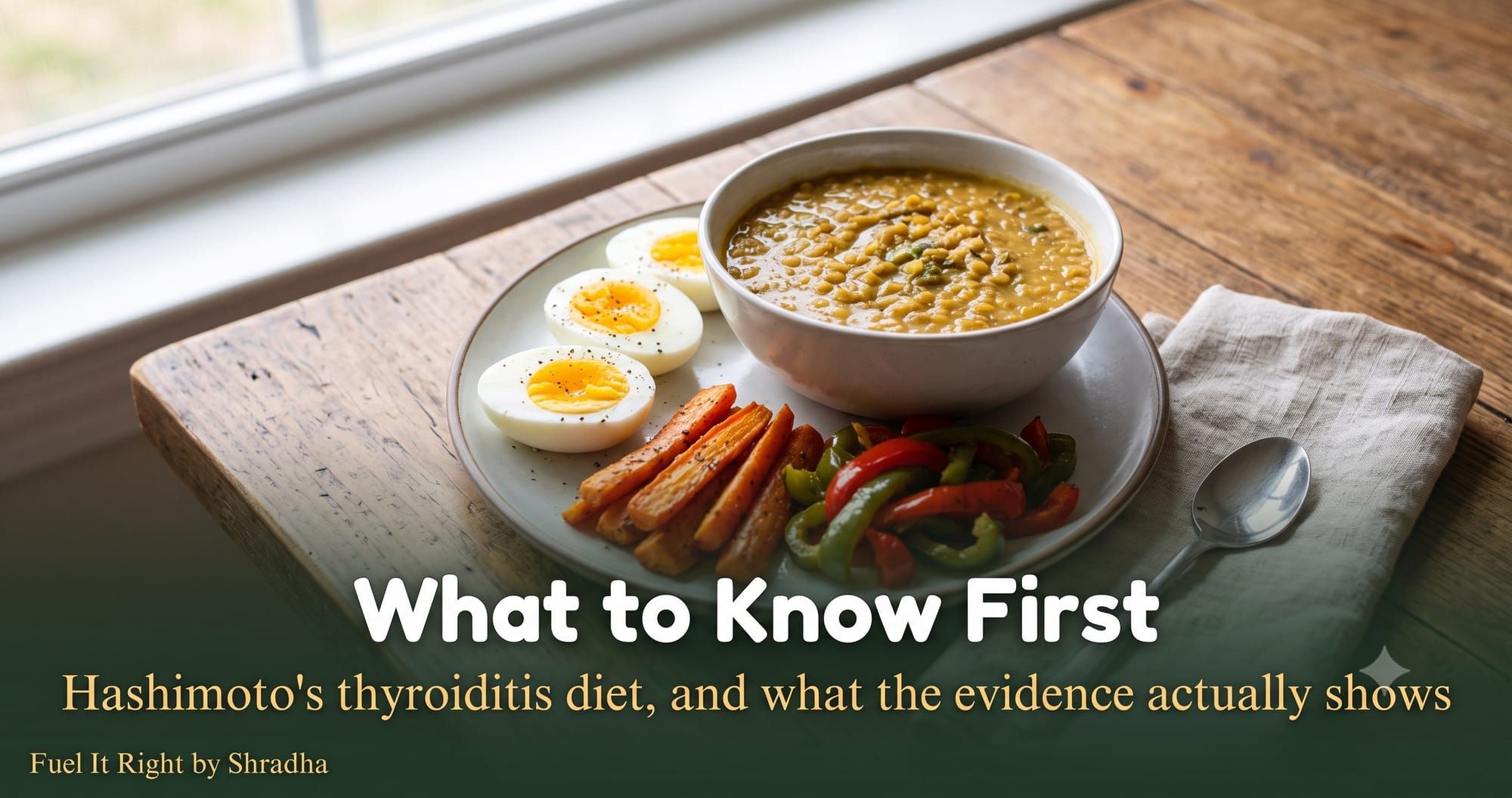
Table of Contents
1. Hashimoto's Thyroiditis Diet Basics: What's Actually Happening in Your Body
2. Hashimoto's Thyroiditis Diet and Weight: The Real Connection
3. Hashimoto's Thyroiditis Diet: How Common Is This in India?
4. Hashimoto's Thyroiditis Diet: Why Gluten-Free Isn't a Settled Answer
5. Hashimoto's Thyroiditis Diet: The Trial Still Running Right Now
6. Hashimoto's Thyroiditis Diet: What Selenium Actually Adds
7. Hashimoto's Thyroiditis Diet: The Pattern With More Consistent Evidence
8. Hashimoto's Thyroiditis Diet: A Realistic Daily Structure
Hashimoto's Thyroiditis Diet: The Takeaway
Hashimoto's Thyroiditis Diet: FAQ
Questions about a Hashimoto’s thyroiditis diet usually start with a bold statement: cut out gluten right away. Most hypothyroidism in India and worldwide is actually caused by this specific autoimmune disorder, not just iodine deficiency, distinct from the Overactive Thyroid Diet: What to Know First we covered at the start of this series. It’s the immune system attacking the thyroid gland itself, which affects what food can actually do. This article takes an honest look at what the evidence really supports, including a large trial still ongoing today.
What Hashimoto's Thyroiditis Diet Needs to Address
1. Hashimoto's Thyroiditis Diet Basics: What's Actually Happening in Your Body
Hashimoto's thyroiditis diet planning starts with the underlying mechanism. This is an autoimmune disease, meaning the immune system mistakenly attacks thyroid tissue, gradually reducing hormone production. It's the leading cause of hypothyroidism in places with adequate iodine, including much of India today. Genetics and environment both play a role, and family history matters more here than most people realise.
2. Hashimoto's Thyroiditis Diet and Weight: The Real Connection
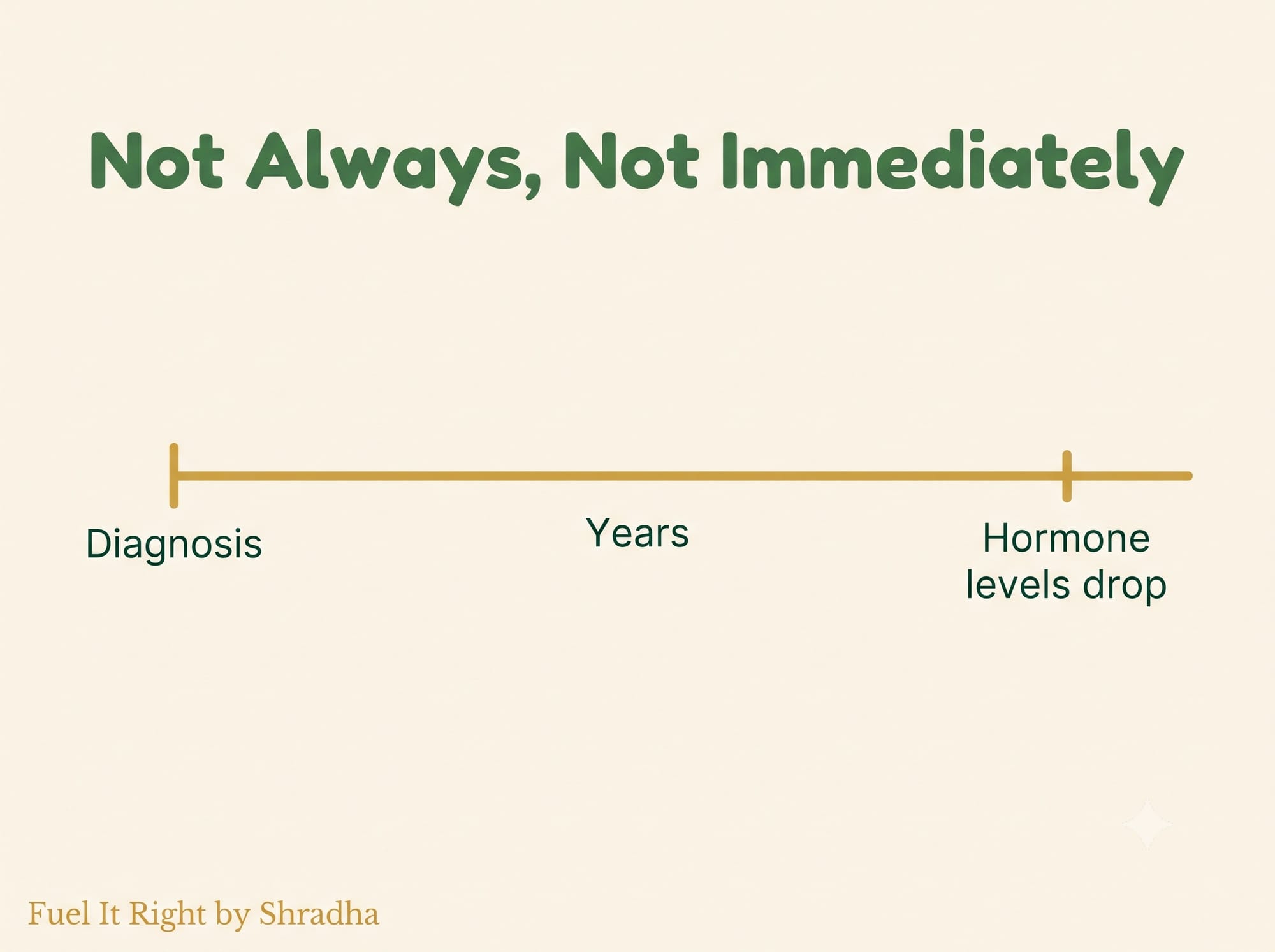
Weight gain is often blamed on Hashimoto’s thyroiditis, sometimes rightly, sometimes not. When hypothyroidism develops, the lowered hormone level can modestly slow metabolism, which can contribute to some weight gain. However, many patients remain euthyroid for years before symptoms develop, and attributing every change in weight to thyroid function alone often overlooks other real factors that need to be checked.
3. Hashimoto's Thyroiditis Diet: How Common Is This in India?
An Indian tertiary care study found Hashimoto's thyroiditis present in 48% of all patients with thyroid disorders, nearly half. Most were euthyroid or only subclinical at diagnosis, meaning symptoms hadn't shown up yet. A separate Indian study found first-degree relatives carry a 9-fold higher risk than the general population. Family history genuinely matters here.
The Gluten Question in a Hashimoto's Thyroiditis Diet
4. Hashimoto's Thyroiditis Diet: Why Gluten-Free Isn't a Settled Answer
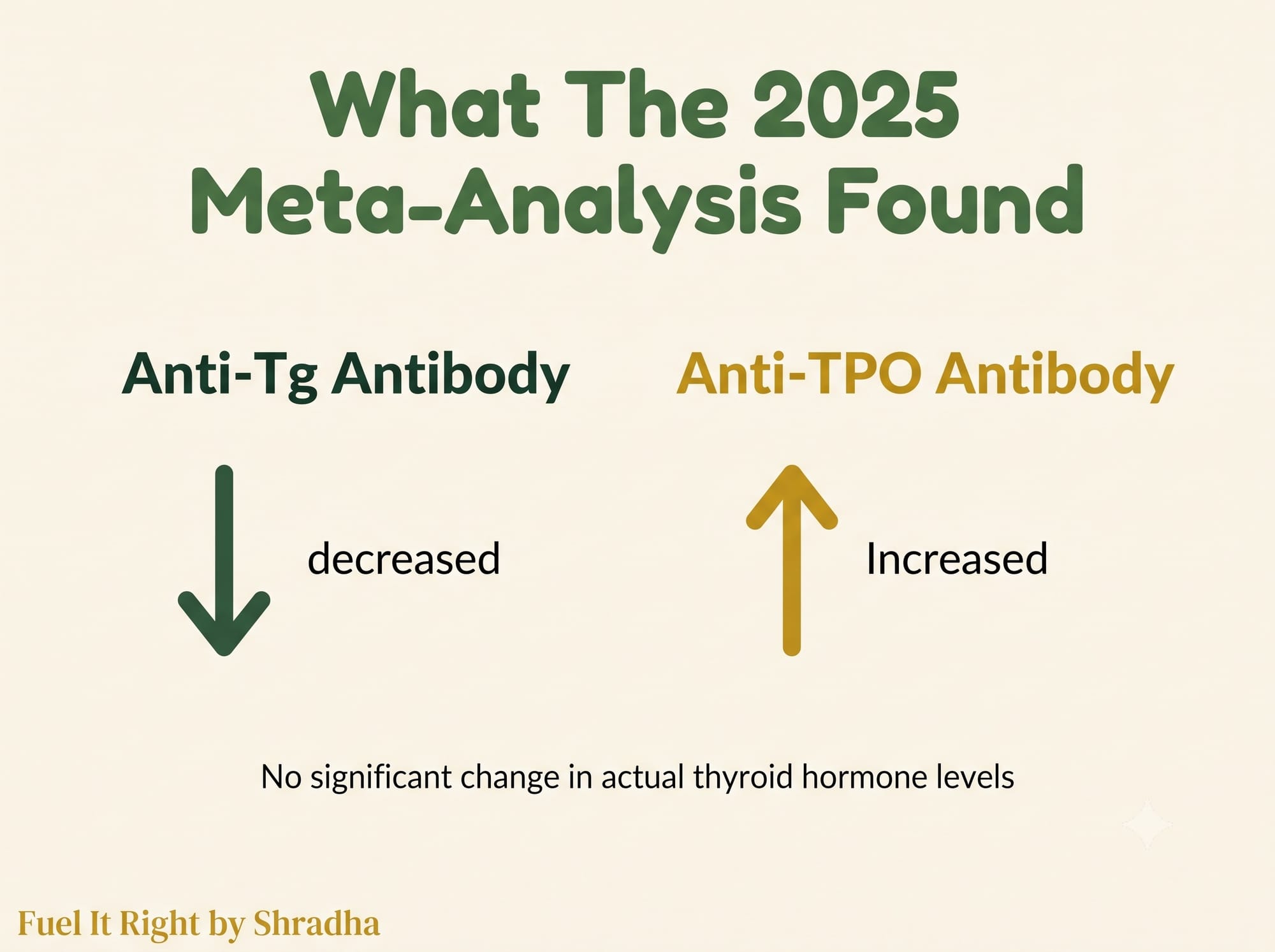
Online diet advice for Hashimoto’s thyroiditis treats gluten removal as almost obligatory. But several systematic reviews disagree, saying there is not enough evidence to recommend a gluten-free diet to all patients. A 2025 meta-analysis found that gluten removal decreased one type of antibody. But it increased another type of antibody and had no significant effect on the thyroid hormone levels most closely tracked by doctors.
5. Hashimoto's Thyroiditis Diet: The Trial Still Running Right Now
The uncertainty is real enough that Cleveland Clinic is running an active randomised trial. It's specifically testing gluten-free eating against Hashimoto's symptoms, expected to finish by the end of 2026. That's worth knowing before committing to an expensive, restrictive diet based on confidence the actual research doesn't have yet. Gluten-free packaged products are often lower in nutrients too.
6. Hashimoto's Thyroiditis Diet: What Selenium Actually Adds
Selenium has better support than gluten removal alone. Research associates higher levels of selenium with a lower risk of developing Hashimoto’s thyroiditis period, and some studies combining selenium with dietary modifications show greater antibody improvement than either alone. Selenium sources and dosing specifically deserves its own space, so a dedicated post later in this series speaks to it.
Newly diagnosed with Hashimoto's and want a food plan built around your actual labs?
Let's build one together:
Call or WhatsApp: +91 70570 63984 Or
Building a Real Hashimoto's Thyroiditis Diet Day
7. Hashimoto's Thyroiditis Diet: The Pattern With More Consistent Evidence
A broader anti-inflammatory pattern has more consistent results than any single elimination. Diets high in antioxidants, omega-3 fats, and minerals, and lower in ultra-processed animal foods, show up across multiple reviews as more reliably helpful than gluten removal by itself. This is the same food-first approach this blog takes everyplace else, not a Hashimoto's-specific exception.
8. Hashimoto's Thyroiditis Diet: A Realistic Daily Structure
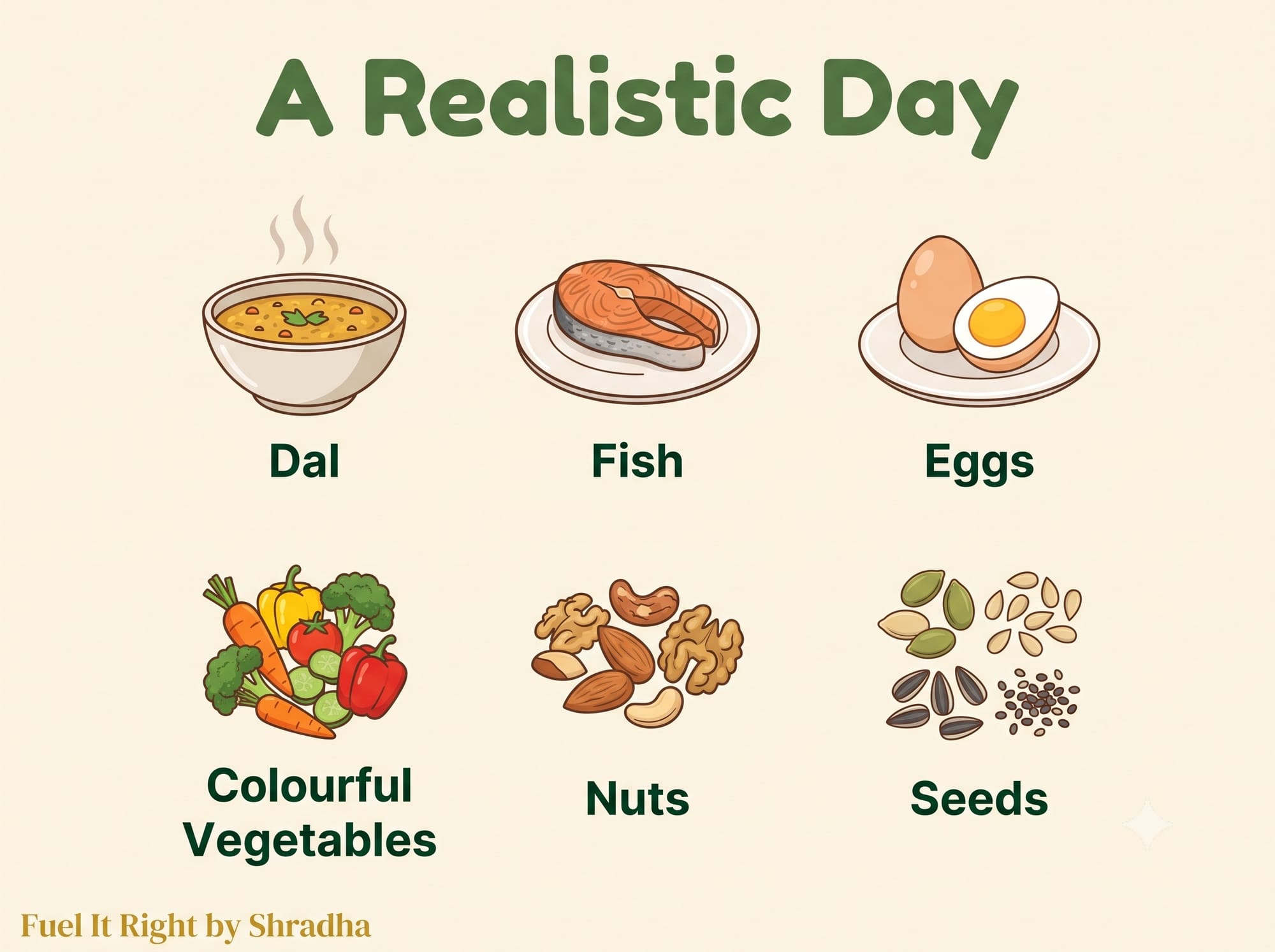
A realistic Hashimoto's thyroiditis diet day skips dramatic elimination and focuses on consistency instead. Dal, fish or eggs, colourful vegetables, nuts, and seeds cover the anti-inflammatory bases without an expensive gluten-free aisle. Levothyroxine timing still matters more than any single food choice, so keep following the medication guidance from Hypothyroidism: The Breakfast Mistake Costing You.
Hashimoto's Thyroiditis Diet: The Takeaway
Hashimoto’s thyroiditis diet choices require more nuance than a blanket gluten-free edict. The best evidence now suggests a broader anti-inflammatory pattern and sufficient selenium over strict elimination, and a major trial now ongoing should answer the gluten question more definitively in the next year. Food helps thyroid health here. It is not a substitute for levothyroxine or your endocrinologist’s monitoring.
Hashimoto's Thyroiditis Diet: FAQ’s
Hashimoto's thyroiditis diet questions come up constantly, so here are direct answers to what patients ask most often.
Should I go gluten-free for Hashimoto's thyroiditis?
Not automatically. Multiple systematic reviews found insufficient evidence to recommend gluten-free eating for every Hashimoto's patient, and a major trial is still testing this directly. Discuss it with your doctor before committing to a restrictive, often expensive diet.
How common is Hashimoto's thyroiditis in India?
An Indian tertiary care study found it present in 48% of patients with thyroid disorders, and most were symptom-free or only mildly affected at diagnosis. First-degree relatives face a 9-fold higher risk than the general population.
Does Hashimoto's thyroiditis always cause weight gain?
Not always, and not right away. Many patients are euthyroid for years before hormone levels drop enough to affect metabolism, so weight changes deserve their own investigation rather than being automatically attributed to thyroid function.
Does selenium actually help with Hashimoto's thyroiditis?
The evidence here is firmer than for gluten removal. Higher selenium levels are linked to lower risk of developing the condition, and some trials show added benefit when selenium is combined with dietary changes.
What diet pattern has the strongest evidence for Hashimoto's thyroiditis?
A broader anti-inflammatory pattern, rich in antioxidants, omega-3 fats, and minerals, shows more consistent results across reviews than eliminating any single food group like gluten by itself.
Is Hashimoto's thyroiditis genetic?
Genetics does play a real role along with environmental triggers. An Indian family study found that first degree relatives of patients carry a 9 fold higher risk of developing the condition than the general population.
Can diet alone treat Hashimoto's thyroiditis?
No. Diet supports thyroid health but doesn't replace levothyroxine when hormone levels actually drop. Food choices work alongside medication and regular monitoring, not instead of them.
When will we know if gluten-free diets actually help Hashimoto's thyroiditis?
A Cleveland Clinic randomized trial studying this directly is expected to wrap up by the end of 2026 and should give a clearer, more definitive answer than the mixed evidence available today.
About the Author
Shradha | Nutritionist & Dietitian | Fuel It Right. Food-first, evidence-based nutrition for real, sustainable results.