
Hypothyroidism: The Breakfast Mistake Costing You
A systematic review found ordinary breakfast timing mistakes can swing thyroid medication absorption by up to 30%, enough to cause symptoms even when your dose looks right on paper. Here's what an Indian hypothyroid breakfast actually needs to get right.
Table of Contents
1. Hypothyroidism in India: More Common Than You'd Expect
2. The Breakfast Mistake That Silently Cuts Your Dose
3. Morning or Bedtime? What the Evidence Actually Says
4. The Goitrogen Myth: What You Don't Actually Need to Avoid
5. Building the Right Hypothyroid Breakfast: Verdict by Verdict
6. Building a Hypothyroid-Smart Morning: Three Real Moments, Fully Assembled
Conclusion
FAQs
1. Hypothyroidism in India: More Common Than You'd Expect
Hypothyroidism affects an estimated 11% of Indian adults, compared to 2 to 5% in many affluent countries, with roughly 10 to 12% of Indian women affected specifically. Iodine deficiency, once the dominant cause, has largely been addressed through iodised salt programmes; autoimmune thyroid disease is now increasingly recognised as the major driver behind current numbers. We've covered the broader picture in Your Thyroid Isn't Lazy, Your Diet Might Be; this piece goes deeper into one specific, under-discussed piece: what happens at breakfast.
Most hypothyroid management advice focuses on what to eat generally. Far less attention goes to when, specifically relative to medication, despite evidence that this timing has a measurable, sometimes significant effect on whether the prescribed dose is actually working as intended.
2. The Breakfast Mistake That Silently Cuts Your Dose
A 2023 systematic review in Therapeutics and Clinical Risk Management examined 63 studies on substances that interfere with levothyroxine's bioavailability, the proportion of the drug that actually gets absorbed and put to use. The list of interfering foods and supplements is longer than most patients realise: calcium-rich dairy, soy, iron, high-fibre meals, walnuts, grapefruit, and coffee all reduce absorption when taken too close to a dose.
The scale of the effect is what makes this worth taking seriously. Endocrinologists interviewed on this topic note that a single dietary shift, adding a calcium supplement or increasing dairy intake, can swing levothyroxine absorption by as much as 30%, enough to cause symptoms to flare even though the prescribed dose on the label hasn't changed at all.
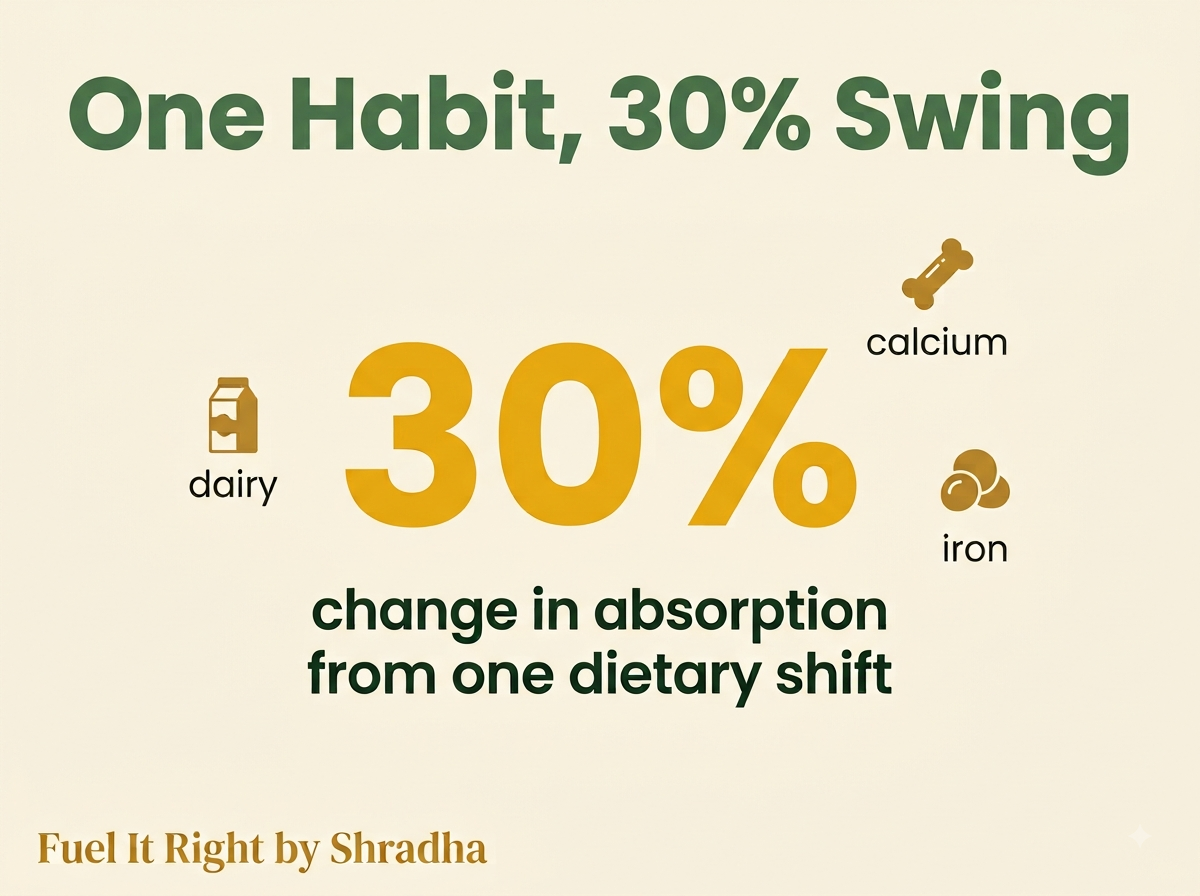
A stable dose on paper doesn't guarantee a stable dose in your bloodstream. What you eat around it decides that.
3. Morning or Bedtime? What the Evidence Actually Says
The standard instruction, take levothyroxine on an empty stomach 30 to 60 minutes before breakfast, or at least 3 to 4 hours after your last meal, is well supported. What's less well known is that this window doesn't have to be the morning specifically.
That same 63-study systematic review found morning and bedtime dosing to be equally effective, provided bedtime dosing genuinely means an empty stomach, roughly 4 hours after the last meal of the day. For anyone who consistently struggles with the pre-breakfast wait, rushing out the door, taking other morning medications, an evidence-backed bedtime alternative exists. It's not a compromise, it's a genuinely equivalent option.
Wondering if your gut and iron levels are part of the picture too?
Take the free Gut Health Quiz:
4. The Goitrogen Myth: What You Don't Actually Need to Avoid
WHAT YOU'VE HEARD: You should avoid cabbage, cauliflower, and soy completely if you have hypothyroidism. |
WHAT'S ACTUALLY TRUE: These foods contain goitrogenic compounds that can interfere with iodine uptake in large, raw, uncooked quantities. Cooking substantially deactivates these compounds, and typical dietary amounts have negligible effect in people who are otherwise iodine-sufficient, which describes most of India post-iodisation. Blanket avoidance isn't supported by the evidence at ordinary intake levels. |
WHAT YOU'VE HEARD: Taking your thyroid pill with your morning chai is fine as long as it's before you eat anything else. |
WHAT'S ACTUALLY TRUE: Milk specifically, not just solid food, interferes with levothyroxine absorption due to its calcium content. Chai taken alongside or shortly after the dose defeats the purpose of an empty-stomach window, even if no solid food is involved. |
5. Building the Right Hypothyroid Breakfast: Verdict by Verdict
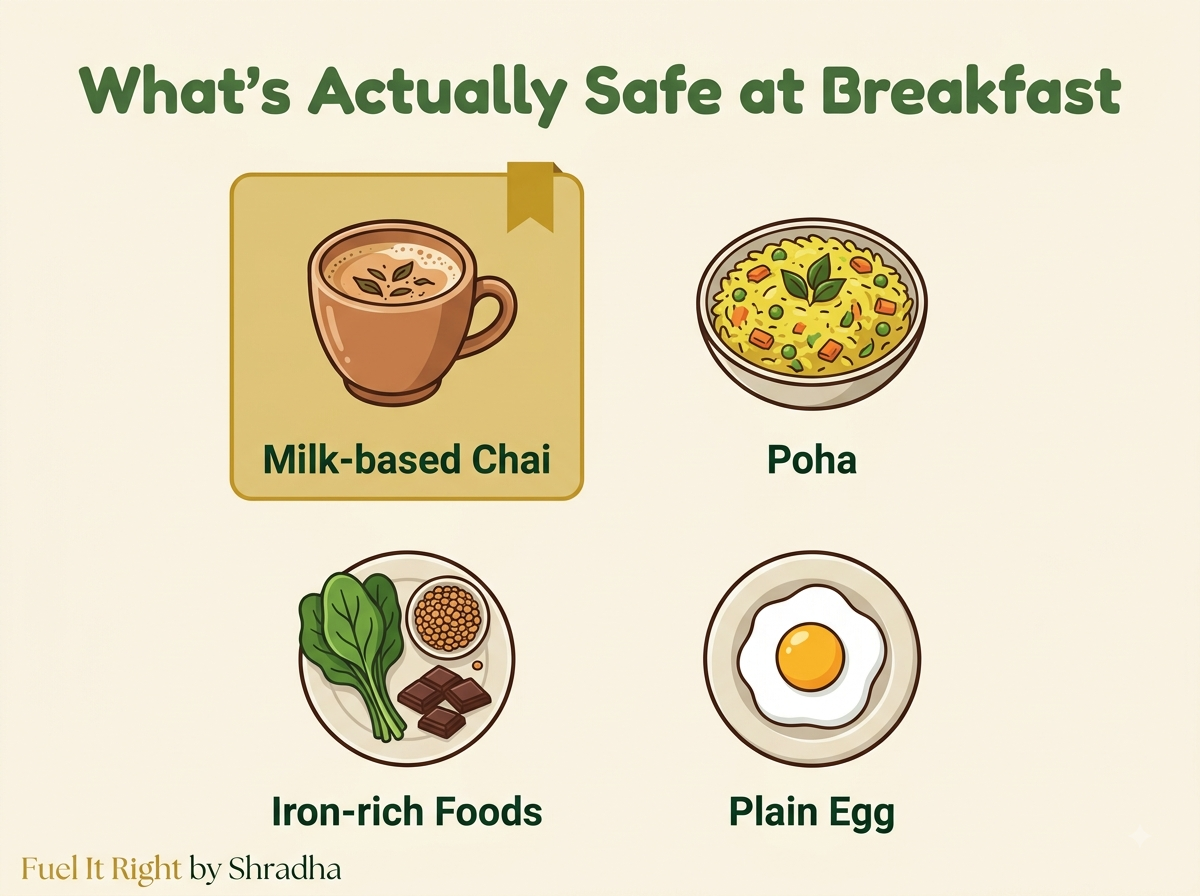
Plain Black Tea or Coffee STILL WAIT |
Caffeine itself, separate from any milk added, can reduce levothyroxine absorption if consumed too close to dosing. How to make it work: Wait the full 30-60 minutes even for a plain black tea or coffee; don't treat it as an exception to the rule. |
Milk-Based Chai BIGGEST OFFENDER |
Combines both caffeine and calcium-rich dairy, two separate interfering factors, in one cup. How to make it work: This is the single most common way the morning dose gets quietly undermined in Indian households; hold it until well after the wait window. |
Poha, Upma, or Other High-Fibre Breakfasts DELAY REQUIRED |
High-fibre meals are specifically flagged in the interaction literature as reducing absorption when eaten too soon after dosing. How to make it work: These are fine breakfast choices, just keep them within the same wait window as any other meal, not sooner. |
Iron-Rich Foods and Supplements SEPARATE FURTHER |
Iron interferes with levothyroxine absorption independently, which matters given how often iron deficiency and hypothyroidism occur in the same person. How to make it work: If you're also following the guidance in Iron Deficiency in India: Fix the Chai Timing First, keep your iron-focused meal and your thyroid dose on separate timing windows, not stacked together. |
Plain Egg (No Dairy) SAFER OPTION |
Doesn't carry the same calcium or fibre load as many traditional breakfast staples once the wait window has passed. How to make it work: A straightforward option once your dosing window has cleared, without extra timing complications to track. |
Read the Blog on Iron Deficiency In India here.
6. Building a Hypothyroid-Smart Morning: Three Real Moments, Fully Assembled
This is a starting structure, not a substitute for your endocrinologist's specific guidance, especially if your dose has needed frequent adjustment despite consistent timing.
Your Hypothyroid-Smart Checklist, At a Glance |
Take levothyroxine on a genuinely empty stomach, with plain water only |
Wait 30-60 minutes before any food, or consider a bedtime dose 4 hours after your last meal if mornings are difficult |
Hold milk-based chai and coffee until well after the wait window, not just solid food |
Don't stack an iron-rich breakfast on the same timing as your thyroid dose |
Stop avoiding cooked cabbage, cauliflower, and soy in normal quantities; that fear isn't well supported by the evidence |
Three Real Moments, Fully Assembled
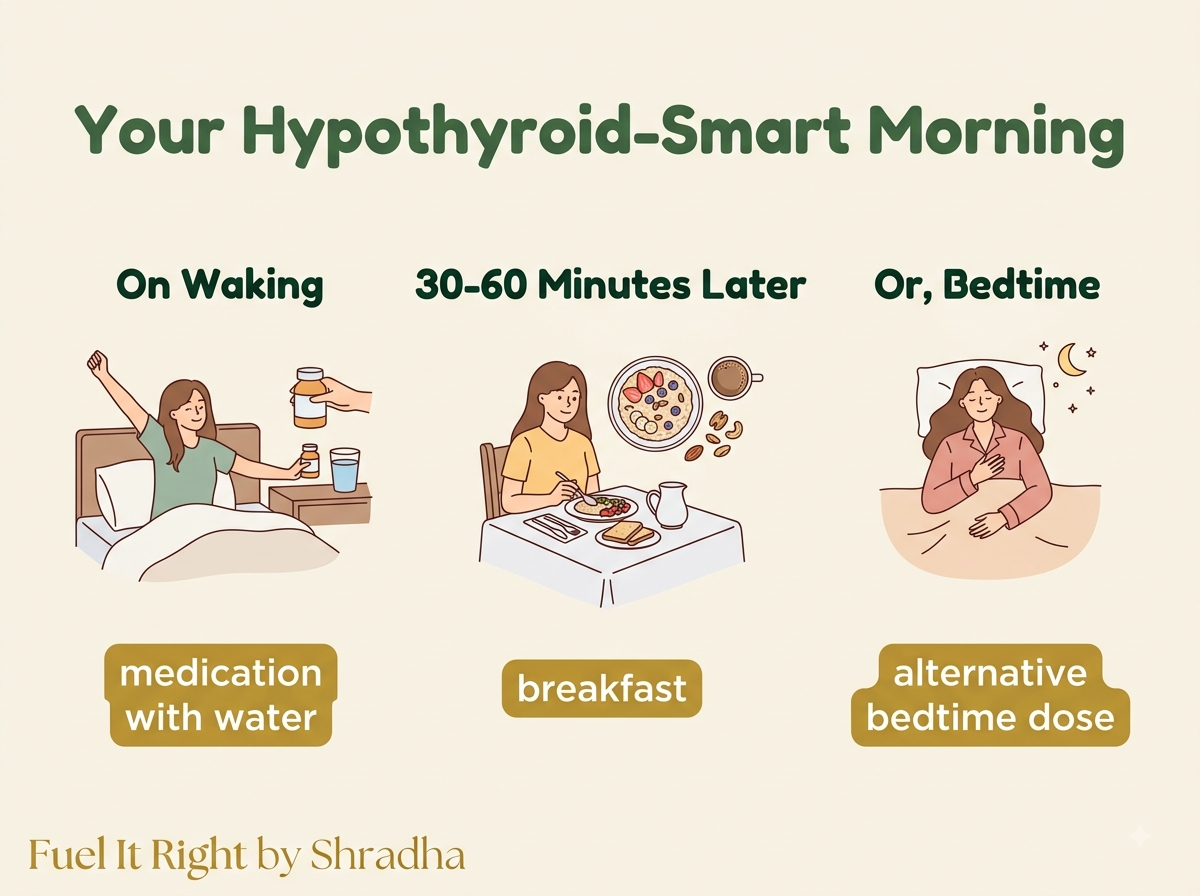
On waking | Levothyroxine with plain water only, nothing else, timer set for the wait window rather than guessing. |
30-60 minutes later | Breakfast as usual, poha, upma, dosa, or eggs, all genuinely fine choices at this point. |
Alternative: bedtime | If mornings are consistently rushed, the dose instead at bedtime, 4 hours after the last meal of the day, as an equally supported option. |
Bring your last thyroid panel and your actual morning routine.
We'll check if timing is quietly working against you
Book Online appointment: https://calendly.com/shradhajp/30min
OR
Call/ WhatsApp: +91 70570 63984
Conclusion
Hypothyroidism in India is common enough, and the medication timing details fiddly enough, that a well-prescribed dose can still underperform simply because of what's happening at breakfast. Milk-based chai, high-fibre foods, and iron all interfere with absorption when taken too close to your dose, sometimes by as much as 30%. The evidence also offers more flexibility than most patients realise, bedtime dosing works just as well as morning, and the cruciferous-vegetable fear many people carry isn't well supported at ordinary intake. None of this requires a dramatically different diet. It requires getting the timing right.
FAQs
1. How common is hypothyroidism in India compared to other countries?
An estimated 11% of Indian adults are affected, notably higher than the 2 to 5% typically reported in many affluent countries, with roughly 10 to 12% of Indian women affected specifically.
2. How much can breakfast timing actually affect my thyroid medication?
A single dietary shift, such as added calcium or increased dairy intake, can swing levothyroxine absorption by as much as 30% according to endocrinologists tracking this pattern, enough to cause symptoms despite an unchanged prescribed dose.
3. Can I take my thyroid medication at night instead of the morning?Yes. A systematic review of 63 studies found morning and bedtime dosing equally effective, provided bedtime dosing means a genuinely empty stomach, roughly 4 hours after your last meal.
4. Is milk really that big a problem for thyroid medication?
Yes, specifically because of its calcium content, independent of it being a liquid or solid food. Milk-based chai taken close to your dose is one of the most common, underrecognised ways absorption gets reduced in Indian households.
5. Do I really need to avoid cabbage, cauliflower, and soy?
Not in typical cooked, dietary quantities. Cooking deactivates most of the goitrogenic compounds in these foods, and normal intake has negligible effect on people who are otherwise iodine-sufficient.
6. Why does iron matter for thyroid medication timing specifically?
Iron independently interferes with levothyroxine absorption, and iron deficiency and hypothyroidism frequently occur in the same person, making it easy to accidentally stack an iron-rich meal on top of your thyroid dose's timing window.
7. How long do I need to wait after coffee before taking my dose, or after my dose before coffee?
Caffeine itself can reduce absorption, so the same 30-60 minute wait applies to plain black tea or coffee as it does to food, not just to milk-based drinks.
8. What if my dose has needed frequent adjustment despite consistent timing?
That's worth raising directly with your endocrinologist rather than continuing to self-adjust, since frequent dose changes despite consistent food and medication timing may point to something beyond a simple absorption interaction.
About the Author
Shradha | Nutritionist & Dietitian | Fuel It Right. Food-first, evidence-based nutrition for real, sustainable results.