
Fatty Liver Has a New Name: What MASLD Means If You're Indian
Fatty liver has a new name, MASLD, and new India-specific criteria. Here's what the rename means, how common it actually is, and a food-first recovery protocol backed by the weight-loss research.
Table of Contents
- Fatty Liver Has a New Name: Why MASLD Replaced NAFLD
- How Common Is Fatty Liver in India, Really?
- What the Landmark Weight-Loss Research Shows
- The Food-First Protocol: Diet Pattern, Sugar, and Coffee
- Common Mistakes That Stall Recovery
- Building Your Fatty Liver Recovery Plate: A 7-Day Starting Framework
- Conclusion
- FAQs
1. Fatty Liver Has a New Name: Why MASLD Replaced NAFLD
Fatty liver diet advice in India now starts with a naming problem most people haven't heard about yet. In June 2023, a 200-plus expert Delphi consensus across AASLD, EASL, and other liver societies retired the term non-alcoholic fatty liver disease (NAFLD) in favour of metabolic dysfunction-associated steatotic liver disease (MASLD). "Non-alcoholic" is gone, and "fatty," considered stigmatising, went with it.
This isn't cosmetic. The new criteria require hepatic steatosis plus at least one cardiometabolic risk factor, and critically for Indian patients, they formally adopt the lower South Asian BMI threshold of 23 kg/m² for the overweight criterion, instead of the global 25 kg/m² cutoff. Indian hepatologists had been applying this informally for years. It's now standard.
Practically, someone with a BMI of 23.5 and mild fatty change on ultrasound, who would have been labelled "normal weight with incidental NAFLD" under the old criteria, now meets the diagnostic threshold for MASLD. More people qualify for early intervention, not because more people got sick overnight, but because the definition finally matches Indian body composition data.
2. How Common Is Fatty Liver in India, Really?
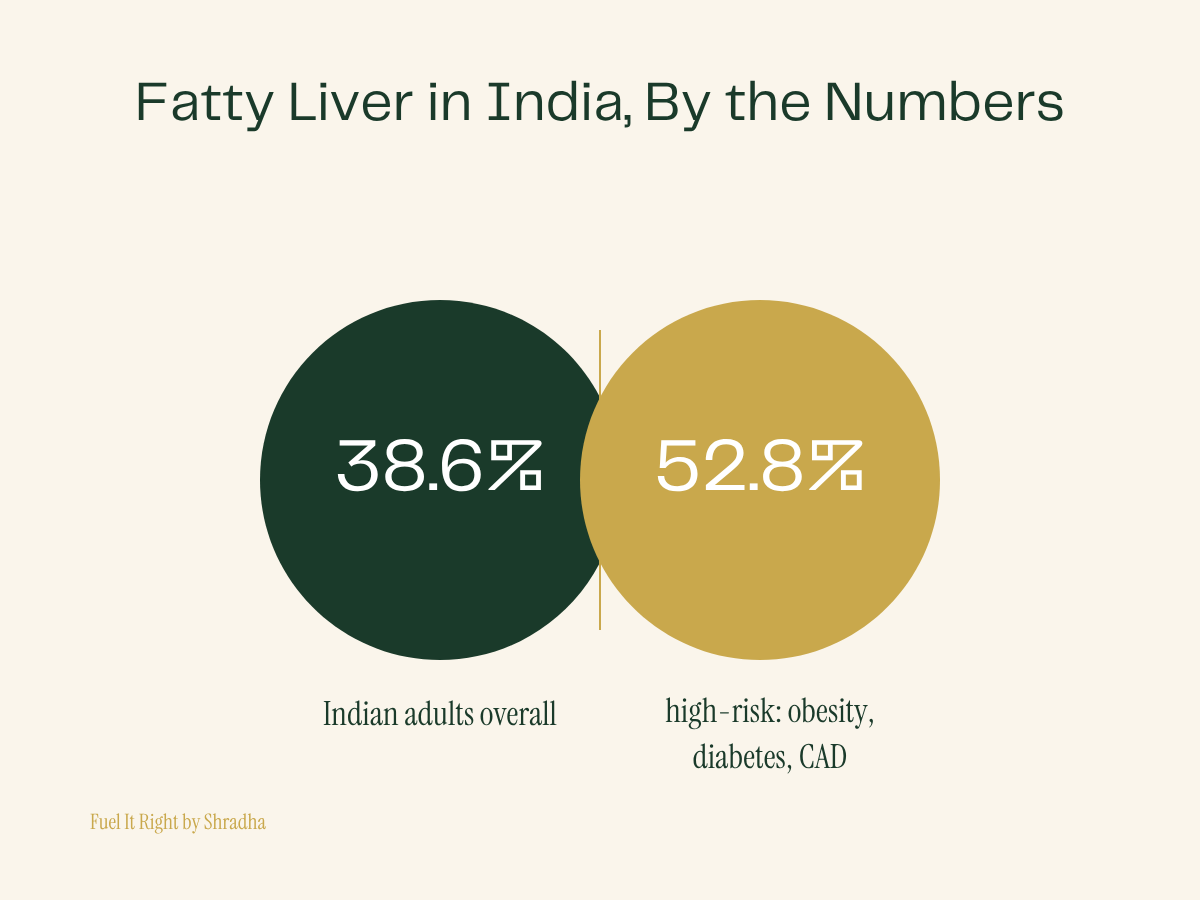
A 2022 systematic review and meta-analysis published in the Journal of Clinical and Experimental Hepatology pooled 50 Indian studies covering 23,581 adults. The estimated prevalence was 38.6%, meaning roughly one in three Indian adults have fatty liver. In people already living with obesity, diabetes, or coronary artery disease, prevalence rose to 52.8%.
Community-based screening found lower rates (28.2%) than hospital-based data (40.8%), which suggests a meaningful share of cases are still being caught only after symptoms or complications appear, not through routine screening.
Fatty liver rarely causes symptoms in its early stages, which is exactly why it's often found incidentally on an abdominal ultrasound done for something else. If you have prediabetes, PMOS, high triglycerides, or a BMI above 23, it's worth asking your doctor whether a liver ultrasound belongs in your annual bloodwork.
3. What the Landmark Weight-Loss Research Shows
The most detailed data on how much weight loss actually changes liver tissue comes from Vilar-Gomez and colleagues, published in Gastroenterology in 2015. Their team tracked 293 patients with confirmed steatohepatitis through a 52-week lifestyle programme, with liver biopsies taken at the start and end.
The relationship was clearly dose-dependent. A 5% body weight loss was enough to reduce hepatic steatosis. 7-10% improved liver inflammation. At 10% or more, 90% of patients achieved resolution of steatohepatitis, and 45% showed measurable regression of fibrosis, meaning existing scarring actually reversed.
Below 5% weight loss, the liver barely notices. Above 10%, the tissue itself starts to heal.
This dose-response curve exists because fatty liver and insulin resistance drive each other in a loop. Liver fat worsens insulin resistance, and insulin resistance pushes more fat into the liver. Breaking the loop from the food side works for both conditions at once.
Wondering if insulin resistance is behind your numbers too?
Take the free Gut Health Quiz:
4. The Food-First Protocol: Diet Pattern, Sugar, and Coffee
Mediterranean-Style Eating, Indianised
A 2018 randomised trial in Hepatology by Properzi and colleagues compared a Mediterranean diet against a standard low-fat diet in 56 people with fatty liver, measuring liver fat directly with MRI spectroscopy over 12 weeks. Both diets significantly reduced hepatic steatosis, with no meaningful difference between them. The takeaway isn't that one diet pattern is magic. It's that sustained, high-quality eating of either kind outperforms no structured change at all.
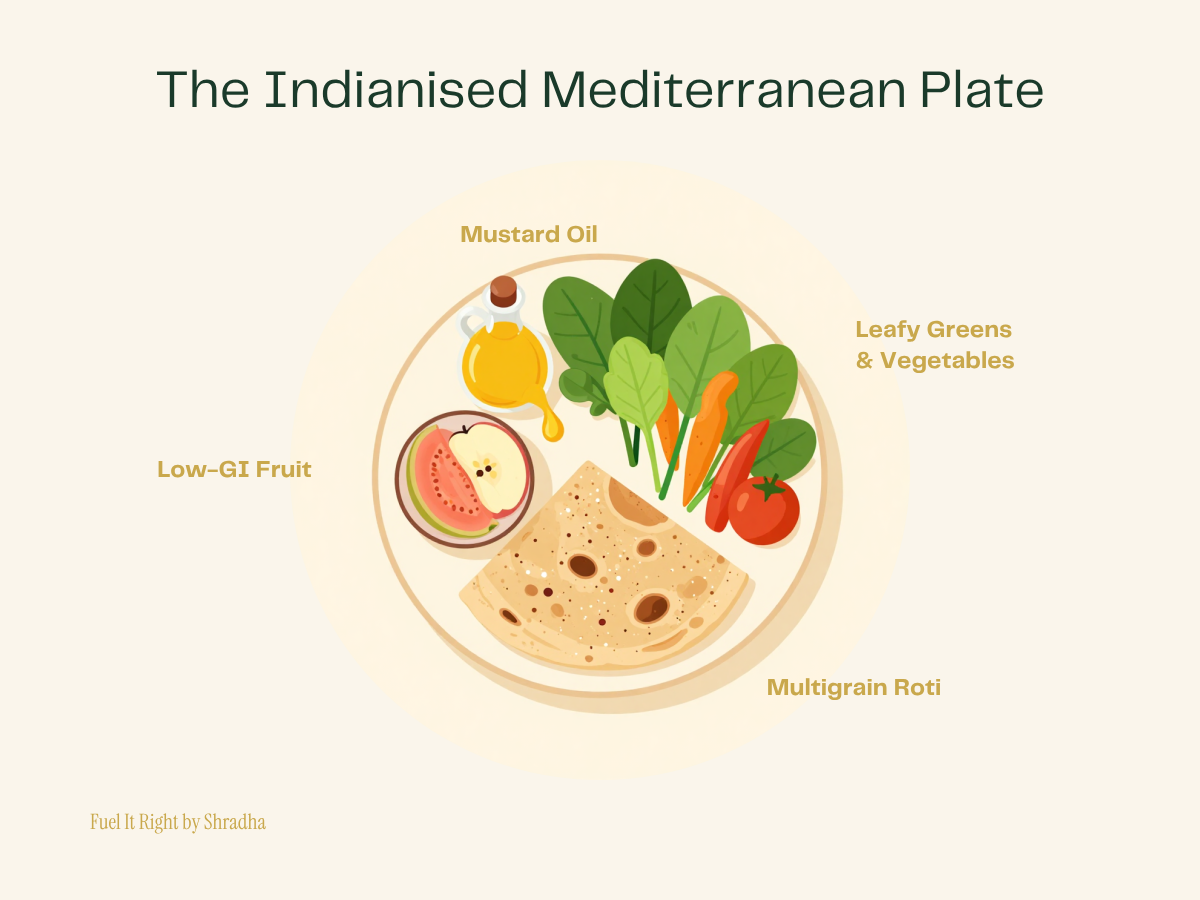
An ongoing Indian trial at the Institute of Liver and Biliary Sciences is testing an Indianised Mediterranean approach specifically, built around mustard oil instead of olive oil, low-glycemic fruits over high-sugar ones, and multigrain atta over refined flour. It's a closer match to what an Indian kitchen can sustain long-term than the original Mediterranean template.
The Fructose and Added Sugar Problem
Fructose is processed almost entirely in the liver, where it converts directly into triglycerides through a pathway called de novo lipogenesis. Sweetened chai taken multiple times a day, packaged fruit juice, and mithai around festivals are the biggest fructose sources in a typical Indian diet, more than table sugar itself. Cutting these down tends to move the needle faster than any single "liver-cleansing" food.
Coffee's Surprising Role
A meta-analysis of 11 epidemiological studies found regular coffee consumption associated with lower liver stiffness and slower fibrosis progression. The effect appears linked to coffee's polyphenol content, not caffeine specifically. This isn't a reason to start drinking coffee if you don't already, but black coffee or coffee with minimal sugar is a reasonable inclusion for those who do.
5. Common Mistakes That Stall Recovery
● Crash dieting for rapid weight loss instead of a steady, sustainable path to the 7-10% mark the research actually supports.
● Treating a "mildly fatty liver" ultrasound finding as trivial and never repeating the scan to track progress.
● Continuing regular alcohol intake, which the 2023 consensus places in a separate MetALD category requiring even stricter management.
● Ignoring the insulin-resistance overlap with PMOS. If you're a woman managing both, insulin resistance may be the shared root, worth checking against the PMOS diagnosis checklist.
● Skipping strength or resistance activity, which improves liver fat independent of weight change.
6. Building Your Fatty Liver Recovery Plate: A 7-Day Starting Framework
This is a starting structure, not a substitute for hepatology follow-up. If you have diagnosed steatohepatitis or fibrosis, monitoring should stay with your specialist alongside these changes, and very rapid weight loss beyond roughly 1kg a week should be avoided, since it can occasionally worsen liver inflammation in the short term.
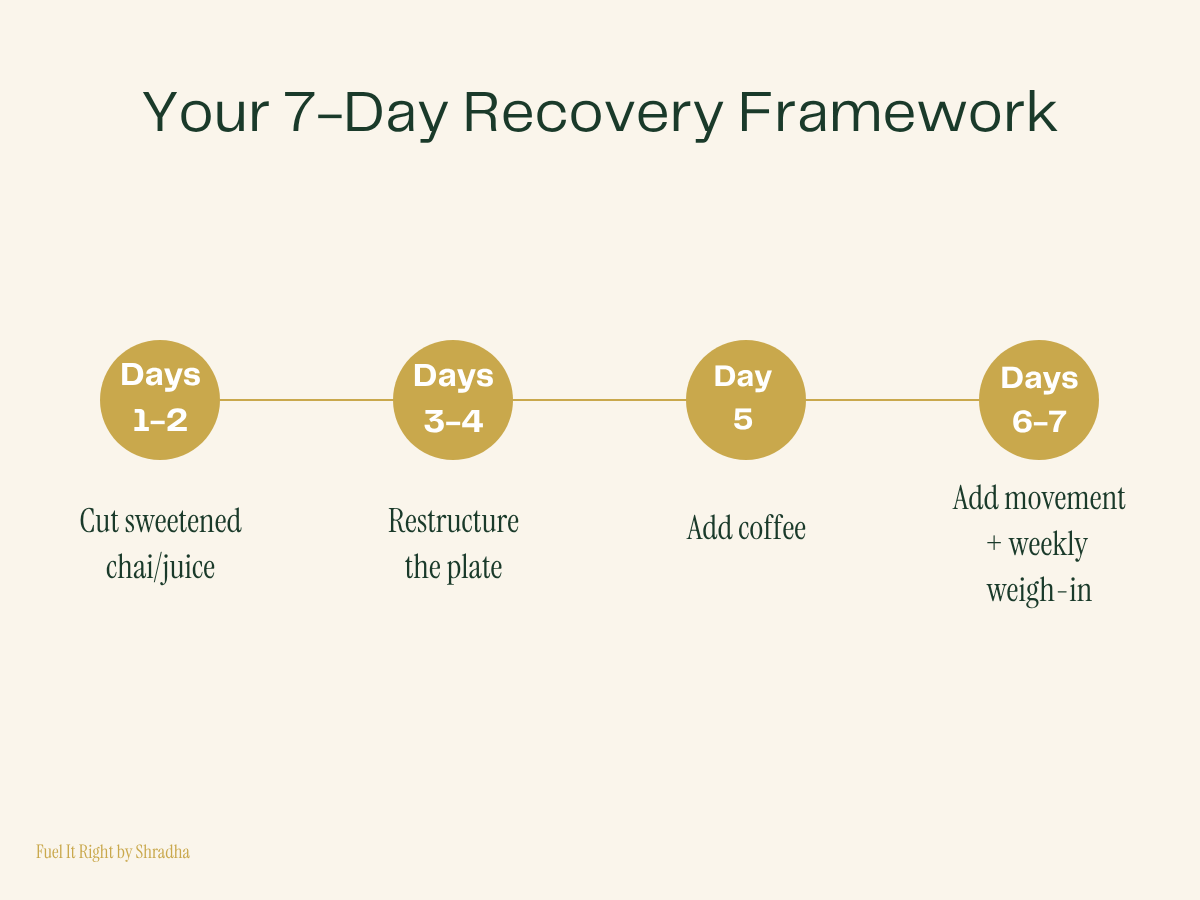
● Days 1-2: Cut sweetened chai or coffee to once daily and swap packaged juice for whole fruit.
● Days 3-4: Restructure meals using the diabetes reversal plate method: half vegetables, a quarter protein sources for vegetarians, a quarter whole grain.
● Day 5: Add 2-3 cups of black or lightly sweetened coffee daily if you're already a coffee drinker.
● Days 6-7: Add 20-30 minutes of resistance or brisk activity most days, and track weight weekly rather than daily.
Ready for a food-first plan built around your numbers?
Book a 30-minute consult
Conclusion
Fatty liver's rename to MASLD isn't just a terminology update. It reflects better diagnostic criteria for Indian bodies and a clearer picture of what actually reverses it: gradual weight loss in the 7-10% range, sustained over months, built around any consistent, high-quality eating pattern rather than a single trendy diet. With roughly one in three Indian adults affected, this is worth screening for even without symptoms, and it's a condition where food genuinely changes the underlying biology, not just the number on a scale.
FAQs
1. What is MASLD and how is it different from NAFLD?
MASLD (metabolic dysfunction-associated steatotic liver disease) is the term that replaced NAFLD in a June 2023 multi-society consensus. It requires hepatic steatosis plus at least one cardiometabolic risk factor, and uses a lower BMI threshold (23 kg/m²) for South Asians.
2. How much weight loss is needed to reverse fatty liver?
Research shows a dose-response relationship: 5% body weight loss reduces steatosis, 7-10% improves liver inflammation, and 10% or more leads to steatohepatitis resolution in 90% of patients and fibrosis regression in 45%.
3. Is fatty liver reversible?
Yes, particularly at earlier stages, with structured and sustained weight loss. Even measurable fibrosis has shown regression in patients who lost 10% or more of their body weight and maintained it.
4. Does coffee help fatty liver?
Observational data links regular coffee consumption to lower liver stiffness and slower fibrosis progression, likely due to polyphenol content. It's a reasonable addition for existing coffee drinkers, taken without excess sugar, not a treatment on its own.
5. Is the Mediterranean diet necessary, or will any diet work?
A randomised trial found Mediterranean and low-fat diets both significantly reduced liver fat, with no meaningful difference between them. Consistency and diet quality appear to matter more than which specific pattern you follow.
6. How common is fatty liver in India?
A meta-analysis of 50 Indian studies estimated prevalence at 38.6% among adults, rising to 52.8% in people with obesity, diabetes, or coronary artery disease.
7. Can fatty liver happen at a "normal" BMI?
Yes. Under the revised South Asian threshold of BMI 23 kg/m², many Indians previously considered normal weight now meet the overweight criterion used in MASLD diagnosis, and non-obese fatty liver is well documented in Indian data.
8. Should I get screened even without symptoms?
Yes, if you have risk factors such as prediabetes, PMOS, high triglycerides, or a BMI above 23. Fatty liver is typically silent in its early stages, which is exactly when intervention works best.
About the Author
Shradha | Nutritionist & Dietitian | Fuel It Right. Food-first, evidence-based nutrition for real, sustainable results.