
Cutting Salt Isn't Enough: The Ratio That Lowers BP
Cutting salt is only half the equation. An Indian clinical trial found a simple one-ingredient swap lowered blood pressure by as much as some medications, and most of the benefit came from potassium, not less sodium.
Table of Contents
1. Hypertension and Salt in India: The Numbers
2. Why "Just Eat Less Salt" Misses Half the Story
3. The Indian Trial That Changed the Recommendation
4. Why This Works: The 75% Finding
5. Who Should (and Shouldn't) Try a Salt Substitute
6. Building a Sodium-Potassium-Smart Day: Three Real Meals, Fully Assembled
Conclusion
FAQs
1. Hypertension and Salt in India: The Numbers
A 2023 ICMR study found the average Indian consumes roughly 8 grams of salt a day, well above the WHO's recommended limit of 5 grams. Hypertension affects an estimated 24% of Indian men and 21.3% of Indian women, and India has formally committed to a 30% reduction in population sodium intake by 2025. This isn't a niche concern; it clusters closely with the same metabolic conditions we covered in Can Type 2 Diabetes Really Be Reversed in India?, where hypertension showed up in over a third of the population studied.
The standard advice, eat less salt, isn't wrong. It's just incomplete, and the gap in that advice turns out to matter more than most people realise.
2. Why "Just Eat Less Salt" Misses Half the Story
Blood pressure doesn't respond to sodium alone. The WHO and ICMR-NIN both recommend a sodium-to-potassium intake ratio below 1, alongside a potassium intake of at least 3,510 mg a day, because the balance between the two minerals predicts blood pressure better than either one in isolation. Most Indian diets run in the opposite direction: high sodium, comparatively low potassium.
This also changes where the fix needs to happen. In many Western countries, most dietary sodium comes from packaged and processed food, so cutting namkeen and packaged snacks does most of the work. In India, researchers at The George Institute for Global Health found a large proportion of dietary salt comes from salt added directly during home cooking, not packaging. Reading labels alone won't fix an Indian diet's sodium problem the way it might elsewhere.
The fix isn't hiding in a packet you're not buying. It's usually in the dabba on your own kitchen shelf.
3. The Indian Trial That Changed the Recommendation
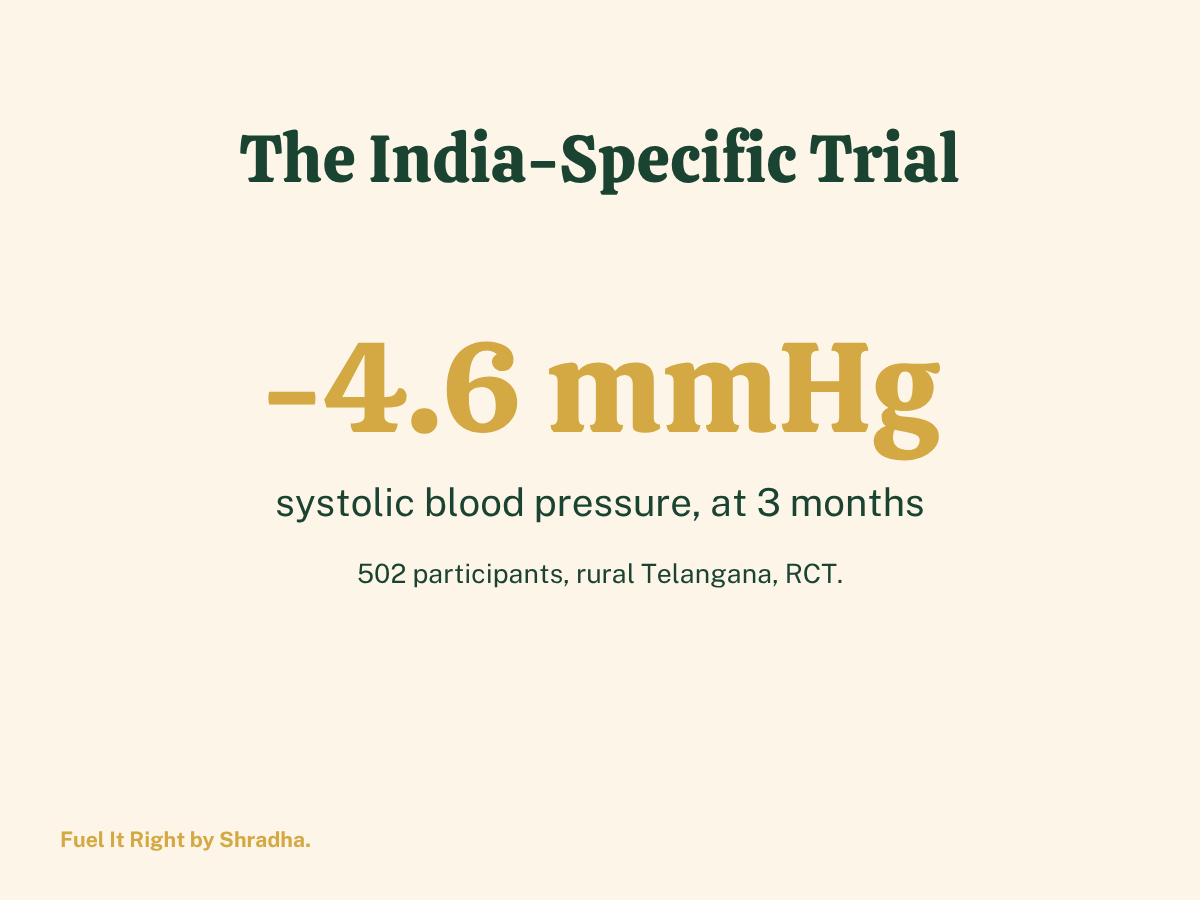
The Salt Substitute in India Study (SSiIS), run by The George Institute for Global Health India in the Siddipet region of Telangana, enrolled 502 adults with hypertension across seven villages. Participants were randomised to use either regular salt (100% sodium chloride) or a substitute blend (70% sodium chloride, 30% potassium chloride) for all home cooking, in a double-blind, controlled design.
At three months, the substitute group's systolic blood pressure had dropped by an average of 4.6 mmHg more than the regular salt group, with a smaller but real 1.1 mmHg drop in diastolic pressure too. Researchers noted this effect is comparable to what some prescribed anti-hypertensive medications achieve, from a single ingredient swap that didn't require participants to change how their food tasted.
This sits alongside the largest study of its kind globally, the Salt Substitute and Stroke Study, which followed nearly 21,000 people across 600 villages in rural China for close to five years and found a potassium-enriched salt substitute reduced stroke risk by 14%, major cardiovascular events by 13%, and overall mortality by 12%.
Curious how your everyday plate stacks up on sodium and potassium?
Take the free Gut Health Quiz:
4. Why This Works: The 75% Finding
WHAT YOU'VE HEARD: Just eat less salt and your blood pressure will come down. |
WHAT'S ACTUALLY TRUE: Reducing sodium alone helps, but researchers analysing these salt-substitute trials found that roughly 75% of the blood-pressure-lowering benefit came from the increase in potassium, not simply from consuming less sodium. Ratio matters more than restriction alone. |
WHAT YOU'VE HEARD: Avoiding packaged and processed food is enough to fix sodium intake in India. |
WHAT'S ACTUALLY TRUE: Unlike diets where processed food dominates sodium intake, a large share of Indian dietary salt comes from what's added during home cooking. Cutting namkeen and packaged snacks helps, but it doesn't address the primary source for most Indian households: the hand adding salt to the pot. |
This is why a straightforward salt swap outperforms simply eating smaller amounts of the same salt. It changes the ratio directly, rather than asking people to permanently under-season food they've cooked the same way for years.
5. Who Should (and Shouldn't) Try a Salt Substitute
Potassium-enriched salt substitutes aren't right for everyone. People with advanced chronic kidney disease are at risk of dangerously high potassium levels (hyperkalemia) if they increase potassium intake without medical supervision. Anyone on medications that affect potassium levels, including certain blood pressure drugs, should check with their doctor before switching.
For most people without kidney disease, food-first potassium sources are a lower-risk starting point alongside, or instead of, a salt substitute.
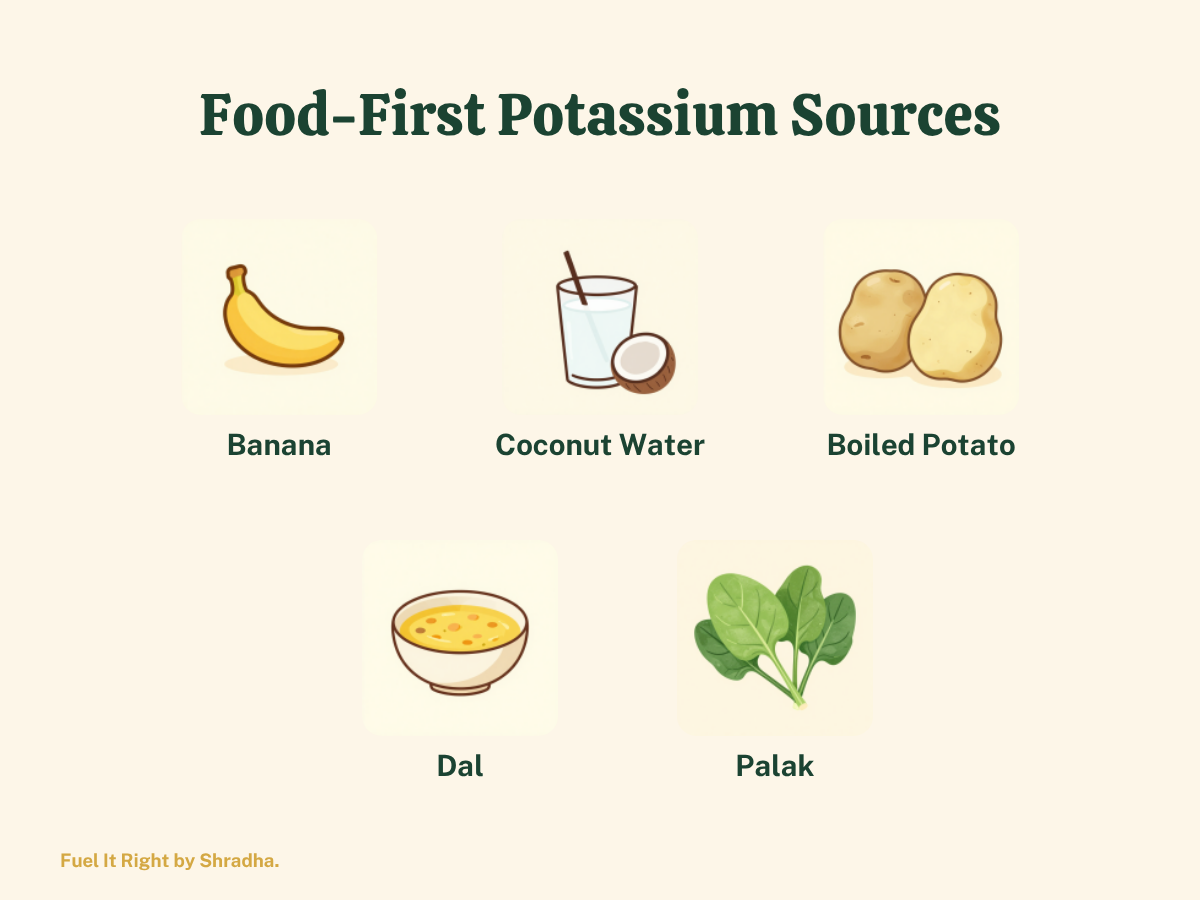
Banana STRONG CHOICE |
One of the most accessible, potassium-dense everyday foods in an Indian diet. How to make it work: A daily banana is a simple, low-effort way to move toward the 3,510mg potassium target. |
Coconut Water STRONG CHOICE |
Naturally high in potassium and widely available fresh across India. How to make it work: Fresh, unsweetened coconut water is preferable to packaged versions with added sugar. |
Potato (Boiled, With Skin) GOOD CHOICE |
Much of the potassium sits close to the skin; peeling and frying both reduce the benefit. How to make it work: Boil or steam with the skin on rather than deep-frying, which also adds unrelated sodium and fat. |
Dal and Lentils STRONG CHOICE |
A daily staple that's already potassium-rich without requiring any change to how it's cooked. How to make it work: No special preparation needed; this is already working in most Indian diets, which is worth recognising. |
Potassium-Enriched Salt Substitute STRONG, WITH MEDICAL CHECK |
Directly addresses the sodium-potassium ratio at the source, with RCT evidence specifically from an Indian population. How to make it work: Check with your doctor first if you have kidney disease or take medications affecting potassium; not a food-first swap to make without that conversation if either applies. |
6. Building a Sodium-Potassium-Smart Day: Three Real Meals, Fully Assembled
This is a starting structure, not medical advice to replace a prescribed treatment plan. If you have kidney disease or are on blood pressure medication, involve your doctor before changing your salt source specifically.
Your Sodium-Potassium-Smart Checklist, At a Glance |
Focus on the ratio, not just cutting salt: add potassium-rich foods alongside reducing sodium |
Remember most Indian dietary sodium comes from home cooking, not packaging; the salt dabba matters more than the snack aisle |
Ask your doctor about a potassium-enriched salt substitute if you don't have kidney disease |
Build in a daily banana, coconut water, or dal, all genuinely easy potassium sources |
Boil or steam potatoes with the skin on rather than peeling and frying them |
Three Real Meals, Fully Assembled
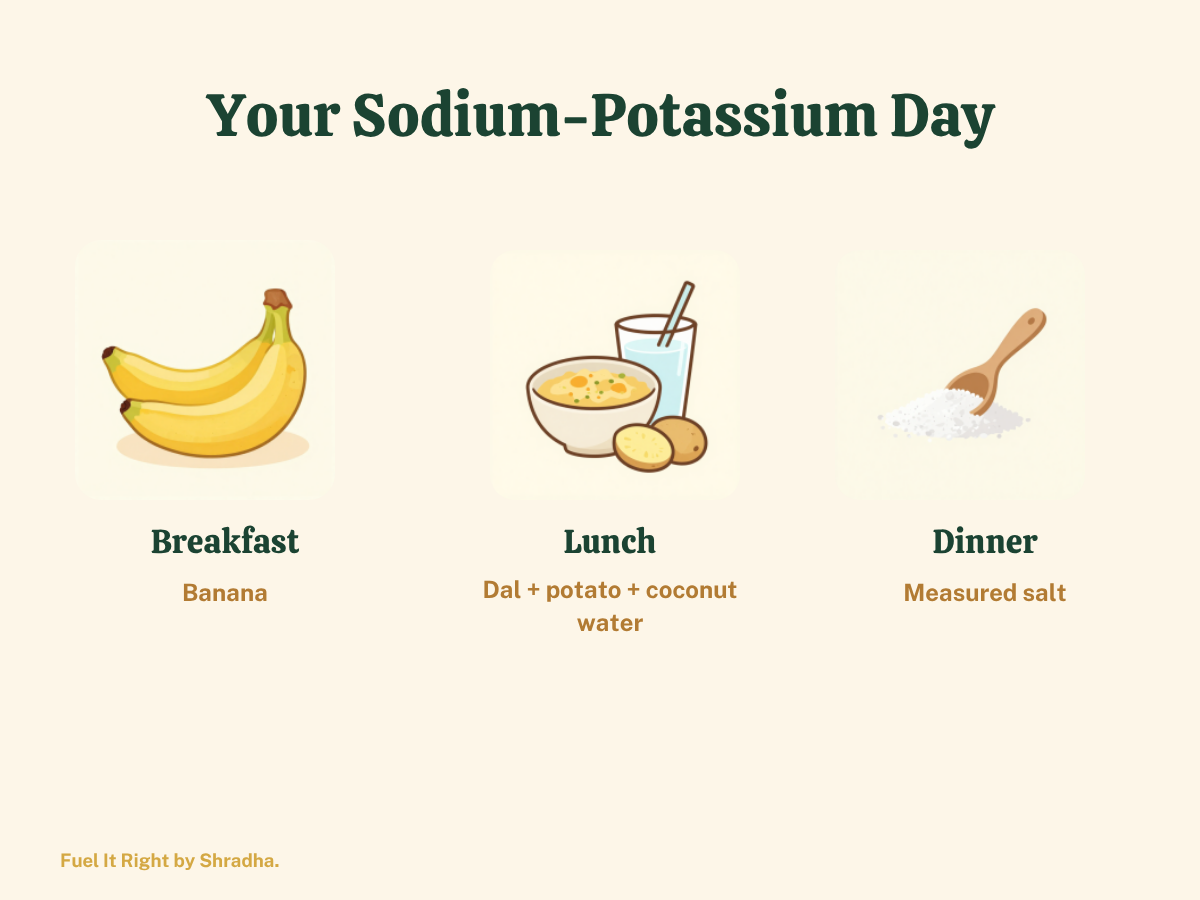
Breakfast | A banana alongside your usual breakfast, and if cooking at home, salt measured with a spoon rather than added by eye. |
Lunch | Dal as the base, a boiled potato sabzi cooked with the skin on, and a glass of coconut water instead of a packaged drink. |
Dinner | A smaller pinch of salt than usual during cooking, adjusted gradually over a few weeks rather than all at once, since taste preferences shift slowly. |
Bring your last few blood pressure readings, whatever they show.
We'll build a plan around your actual numbers:
Call/ WhatsApp: +91 70570 63984
OR
Conclusion
Hypertension in India is common enough, and salt intake high enough, that "eat less salt" became the default advice almost by necessity. But an Indian clinical trial now shows a more specific, more effective lever: the ratio between sodium and potassium, not sodium reduction alone. A one-ingredient swap lowered blood pressure by an amount comparable to some medications, with roughly three-quarters of that benefit coming from potassium, not restriction. For most people without kidney disease, that's a more achievable, evidence-backed target than simply eating blander food indefinitely.
FAQs
1. How much salt do Indians actually eat compared to the recommendation?
A 2023 ICMR study found the average is around 8 grams a day, well above the WHO's recommended limit of 5 grams.
2. Does cutting salt alone lower blood pressure enough?
It helps, but research analysing salt-substitute trials found roughly 75% of the blood-pressure benefit came from increased potassium intake, not sodium reduction alone. The ratio matters more than restriction by itself.
3. What is a potassium-enriched salt substitute?
A blend, typically around 70% sodium chloride and 30% potassium chloride, that replaces regular table and cooking salt without significantly changing taste, directly improving the sodium-to-potassium ratio.
4. Is the evidence for salt substitutes specific to India?
Yes. The Salt Substitute in India Study, a randomised controlled trial in rural Telangana with 502 hypertensive participants, found a 4.6 mmHg drop in systolic blood pressure after three months of using the substitute.
5. Who should NOT use a potassium-enriched salt substitute?
People with advanced chronic kidney disease, and anyone on medications affecting potassium levels, should check with their doctor first, since increased potassium intake carries a real risk of hyperkalemia in those groups specifically.
6. Why doesn't avoiding packaged food fix India's salt problem the way it might elsewhere?
Because a large share of Indian dietary sodium comes from salt added during home cooking, not from packaged or processed food. Reading labels helps less in India than addressing how much salt goes into the pot at home.
7. What are good food sources of potassium in an Indian diet?
Banana, coconut water, dal and lentils, and potatoes boiled or steamed with the skin on are all accessible, everyday sources without requiring specialty ingredients.
8. How much potassium should I aim for daily?
WHO and ICMR-NIN guidelines recommend at least 3,510 mg of potassium a day for the general adult population, alongside keeping the sodium-to-potassium ratio below 1.
About the Author
Shradha | Nutritionist & Dietitian | Fuel It Right. Food-first, evidence-based nutrition for real, sustainable results.