
Goitrogenic Foods and Thyroid: The Real Numbers
Goitrogenic foods like cabbage and broccoli get blamed for worsening thyroid function. The actual dose needed to matter sits far above ordinary cooked servings. Here's the real threshold, why cooking changes everything, and why iodine status decides most of it.
Table of Contents
1. Goitrogenic Foods Basics: The Mechanism Behind the Fear
2. Goitrogenic Foods and Iodine: Why This Only Matters Sometimes
3. Goitrogenic Foods: The Threshold Nobody Quotes
4. Goitrogenic Foods: What Actually Happened in the Case Reports
5. Goitrogenic Foods: What a Real Human Trial Found
6. Goitrogenic Foods: Not All Vegetables Are Equal
7. Goitrogenic Foods: Why Cooking Changes the Whole Picture
8. Goitrogenic Foods: A Realistic Daily Approach
Goitrogenic Foods: The Takeaway
Goitrogenic Foods: Frequently Asked Questions
Goitrogenic foods like cabbage and broccoli carry a scary reputation among hypothyroid patients. Many people quietly stop eating entire vegetable categories after a single warning from a well-meaning friend or forum post. The actual dose-response data tells a far more forgiving story than that fear suggests. This piece walks through the real numbers behind that warning, not just the warning itself.
What Goitrogenic Foods Actually Do
1. Goitrogenic Foods Basics: The Mechanism Behind the Fear
Goitrogenic foods contain compounds like goitrin and thiocyanate that can interfere with thyroid hormone production. Cruciferous vegetables, cabbage, broccoli, cauliflower, kale, and Brussels sprouts, get named most often. The mechanism is real at a chemical level. Whether it matters at the table depends entirely on quantity, something most warnings skip over.
2. Goitrogenic Foods and Iodine: Why This Only Matters Sometimes
The risk from goitrogenic foods rises mainly alongside untreated iodine deficiency, something we touched on in Overactive Thyroid Diet: What to Know First. With adequate iodine intake, common across much of India today, the measurable effect drops sharply. This single factor explains why the same vegetable can matter for one person and not another.
3. Goitrogenic Foods: The Threshold Nobody Quotes
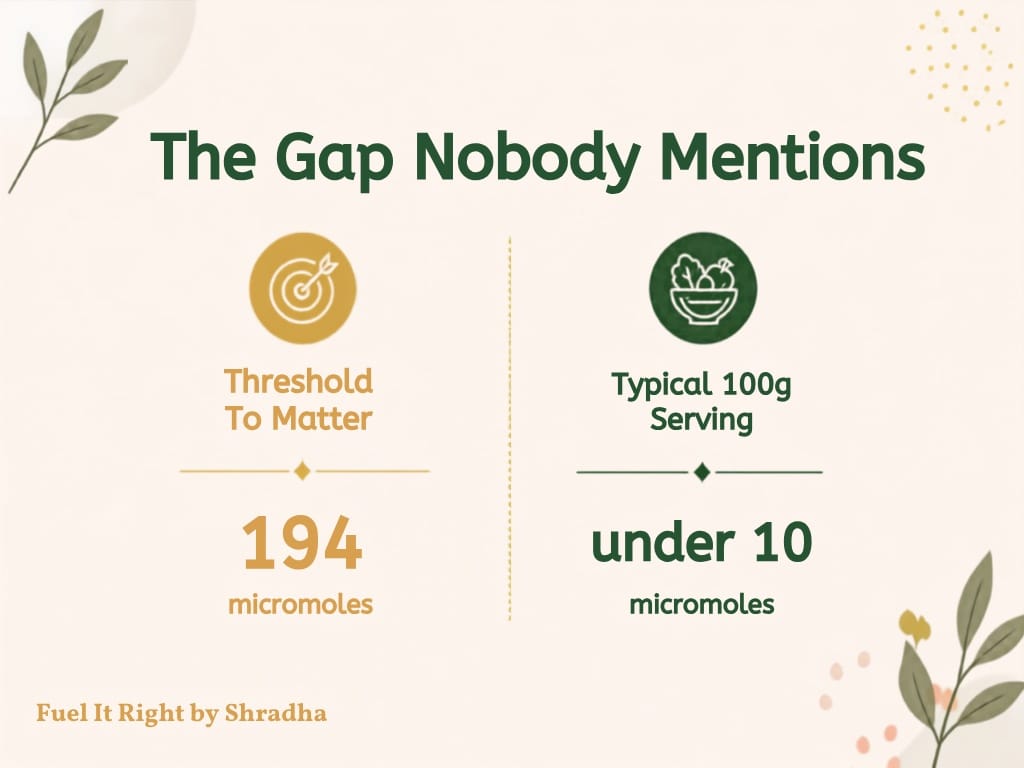
A specific number matters more than any warning. Roughly 194 micromoles of goitrin are needed to meaningfully inhibit iodine uptake. Commercial broccoli and kale contain less than 10 micromoles per 100 grams. That gap means reaching a genuinely concerning dose through ordinary cooked servings is close to impossible for most people
The Real Evidence on Goitrogenic Foods
4. Goitrogenic Foods: What Actually Happened in the Case Reports
The documented harm cases are genuinely extreme, not everyday eating. One case report involved 1 to 1.5kg of raw bok choy daily for months. Older observational data involved children drinking milk from cows fed unusually high-glucosinolate crops. Neither resembles a normal plate of cooked vegetables at dinner.
5. Goitrogenic Foods: What a Real Human Trial Found
A controlled study gave participants 150 grams of cooked Brussels sprouts daily for four weeks, a genuinely realistic serving. Thyroid parameters showed no negative change. That's a meaningfully different picture from folklore claiming a single serving of cabbage can quietly sabotage thyroid medication overnight.
6. Goitrogenic Foods: Not All Vegetables Are Equal
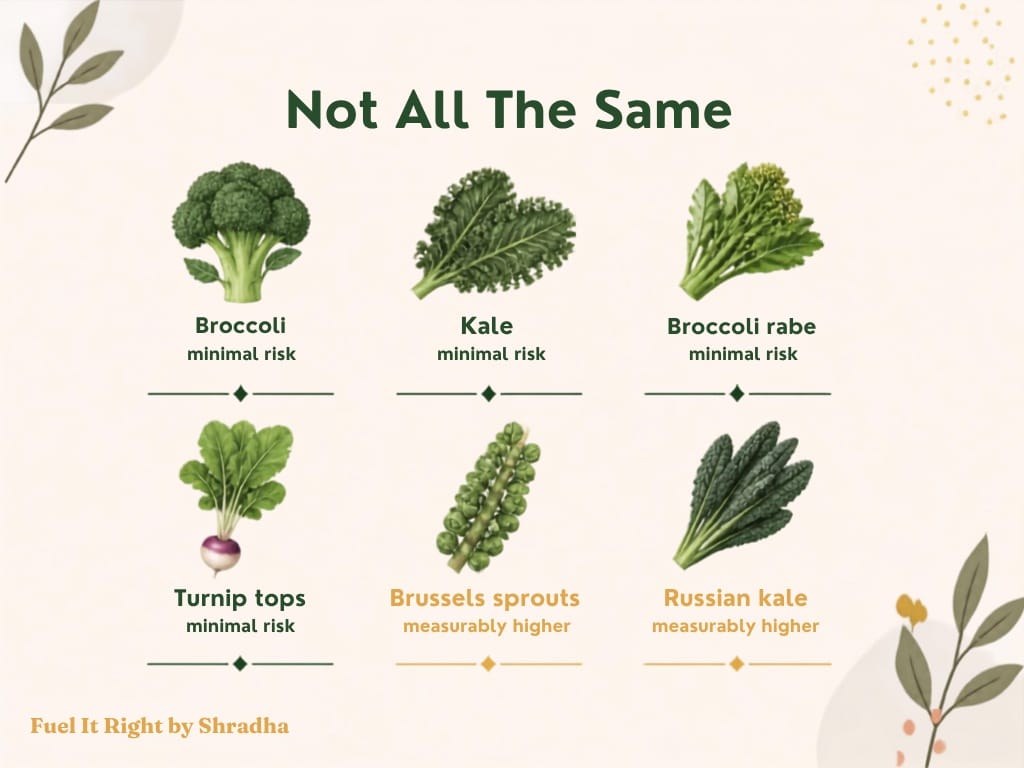
Species matter more than the blanket category when it comes to goitrogenic foods. Broccoli, kale, broccoli rabe, and turnip tops all fall under 10 micromoles of goitrin per serving, minimal risk territory. Brussels sprouts and some Russian kale varieties run measurably higher. Treating every cruciferous vegetable as identically risky oversimplifies genuinely different foods.
Been avoiding whole vegetable categories out of thyroid fear?
Let's build a plan around actual evidence
Call or WhatsApp: +91 70570 63984 Or
Building a Realistic Approach to Goitrogenic Foods
7. Goitrogenic Foods: Why Cooking Changes the Whole Picture
Cooking is the single biggest lever available against goitrogenic foods. Steaming vegetables until fully cooked reduces goitrogen activity by roughly two-thirds. Boiling for thirty minutes can destroy up to ninety percent. Even five minutes of steaming cuts activity by about thirty percent. Raw consumption in large quantities is where the actual documented risk concentrates.
8. Goitrogenic Foods: A Realistic Daily Approach
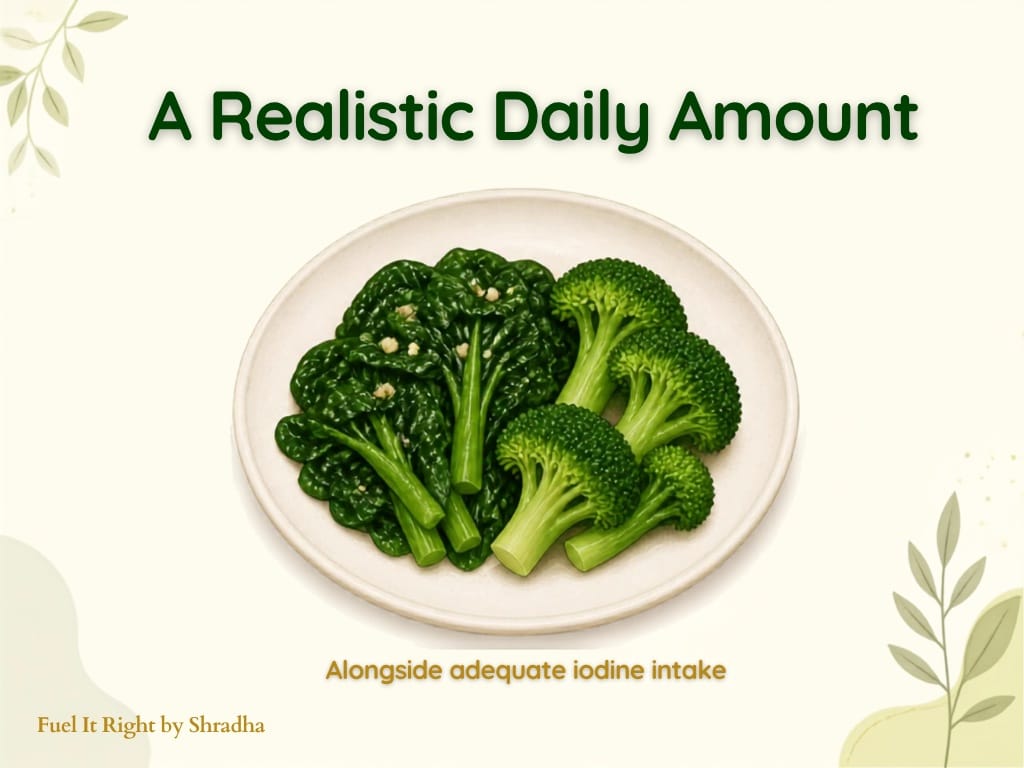
One to two servings of cooked goitrogenic foods daily fits comfortably within what the evidence actually supports, especially alongside adequate iodine intake. There's no genuine need to eliminate cabbage, broccoli, or cauliflower from an otherwise balanced Indian plate. Cook them properly and eat them without the fear most warnings imply.
Goitrogenic Foods: The Takeaway
Goitrogenic foods deserve a far calmer response than the internet typically gives them. The threshold for real harm sits many multiples above ordinary cooked servings, documented harm cases involve extreme raw consumption, and cooking itself destroys most of the goitrogenic activity anyway. Adequate iodine intake closes the gap further. Eliminating cabbage and broccoli from your diet isn't necessary for most hypothyroid patients.
Goitrogenic Foods: Frequently Asked Questions
Goitrogenic foods questions come up constantly, so here are direct answers to what patients ask most.
Do I need to avoid cabbage and broccoli with hypothyroidism?
Not usually. The dose needed to meaningfully affect thyroid function sits far above what ordinary cooked servings provide, and one to two servings daily fits comfortably within the evidence.
How much goitrin actually causes a problem?
Roughly 194 micromoles are needed to meaningfully inhibit iodine uptake, while a 100 gram serving of commercial broccoli or kale contains less than 10 micromoles, a large gap.
Does cooking actually reduce goitrogens?
Yes, substantially. Steaming until cooked reduces activity by roughly two-thirds, boiling for thirty minutes can destroy up to ninety percent, and even five minutes of steaming helps meaningfully.
Are all cruciferous vegetables equally risky?
No. Broccoli, kale, broccoli rabe, and turnip tops fall under the minimal-risk threshold, while Brussels sprouts and some Russian kale varieties run measurably higher in comparison.
What actually caused documented cases of goitrogen-related harm?
Extreme consumption, not ordinary eating. One case involved over a kilogram of raw bok choy daily for months, far beyond typical cooked vegetable servings.
Does iodine status change the goitrogen risk?
Significantly. The measurable effect concentrates mainly in untreated iodine deficiency, and adequate iodine intake, common across much of India, sharply reduces any real impact.
Is raw cruciferous vegetable consumption riskier than cooked?
Yes. Documented harm cases involved large quantities eaten raw. Cooking destroys most goitrogenic activity, making cooked servings meaningfully safer than the same vegetable eaten raw.
How many servings of cruciferous vegetables are actually safe daily?
One to two cooked servings daily fits comfortably within current evidence, especially alongside adequate iodine intake, without needing to eliminate these vegetables entirely.
About the Author
Shradha | Nutritionist & Dietitian | Fuel It Right. Food-first, evidence-based nutrition for real, sustainable results.