
Cortisol Cocktails: What the Science Actually Says
The cortisol cocktail trend has racked up over 800 million TikTok views, and cortisol face isn't real the way it's being sold. Here's what actual endocrinology says, and what genuinely supports a healthy cortisol rhythm.
Table of Contents
1. The Cortisol Cocktail Is Everywhere Right Now
2. What "Cortisol Face" Actually Means in Medicine
3. Does the Cocktail Actually Lower Cortisol?
4. The Real Cost Isn't the Drink
5. What Actually Supports a Healthy Cortisol Rhythm: Verdict by Verdict
6. Building a Cortisol-Smart Morning: Three Real Moments, Fully Assembled
Conclusion
FAQs
1. The Cortisol Cocktail Is Everywhere Right Now
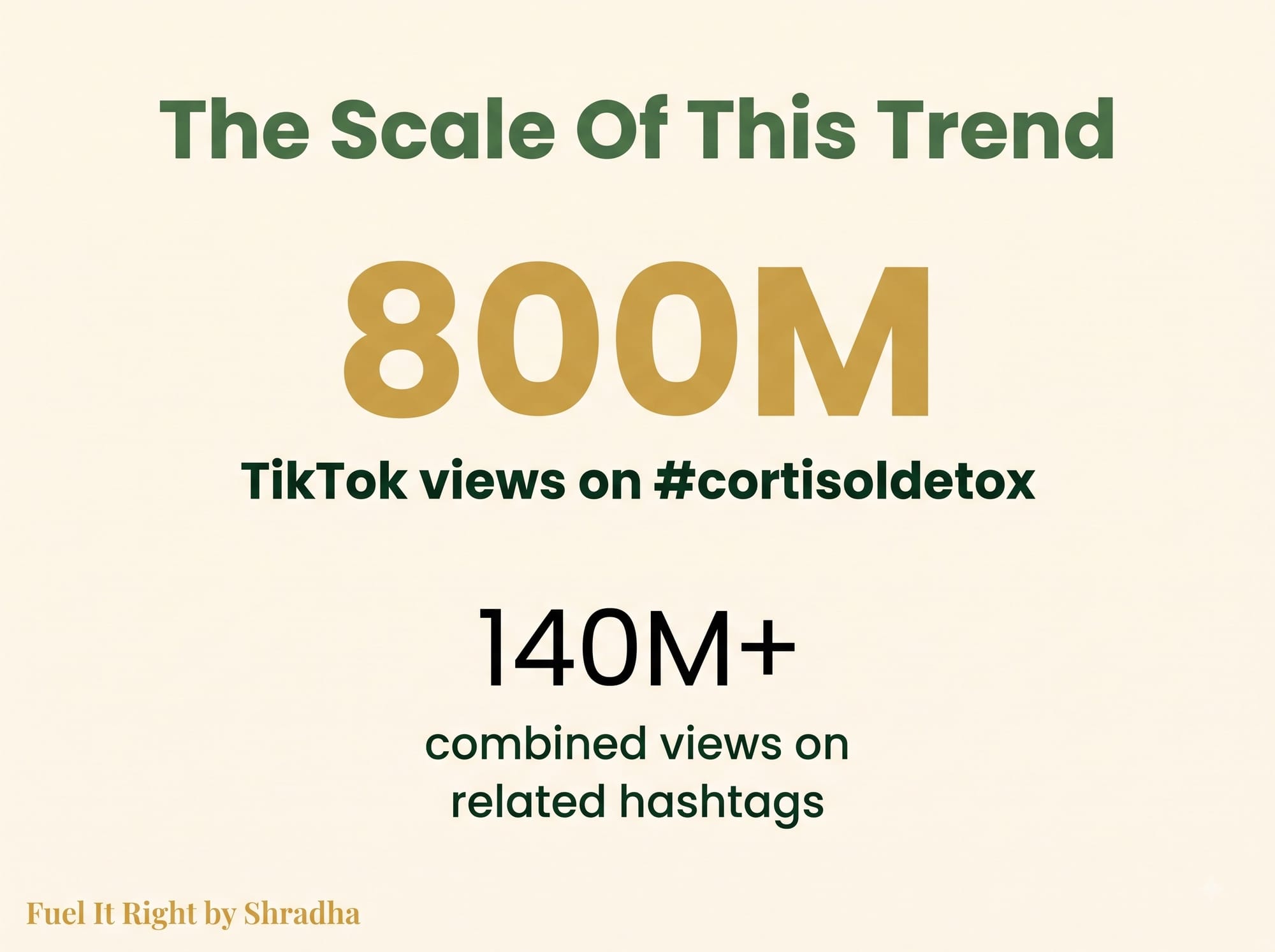
The cortisol cocktail, usually orange juice, coconut water, a pinch of salt, and sometimes added magnesium, has become one of the defining wellness trends of 2026. Trade coverage from July 2026 reported the hashtag #cortisoldetox had accumulated close to 800 million views on TikTok, with #HowToReduceCortisol and #CortisolLevels together adding more than 140 million more. Times of India covered the trend directly in 2025, confirming it's landed firmly in Indian wellness content too, not just a US phenomenon.
The pitch is specific: this drink will fix your stress, your sleep, your bloating, and your "cortisol face" in a matter of days. Given how much reach this claim has, it's worth actually checking what cortisol does, what the drink can and can't do, and where the real evidence points instead.
2. What "Cortisol Face" Actually Means in Medicine
WHAT YOU'VE HEARD: Cortisol face is a real medical condition that everyday stress, like a demanding job, can cause. |
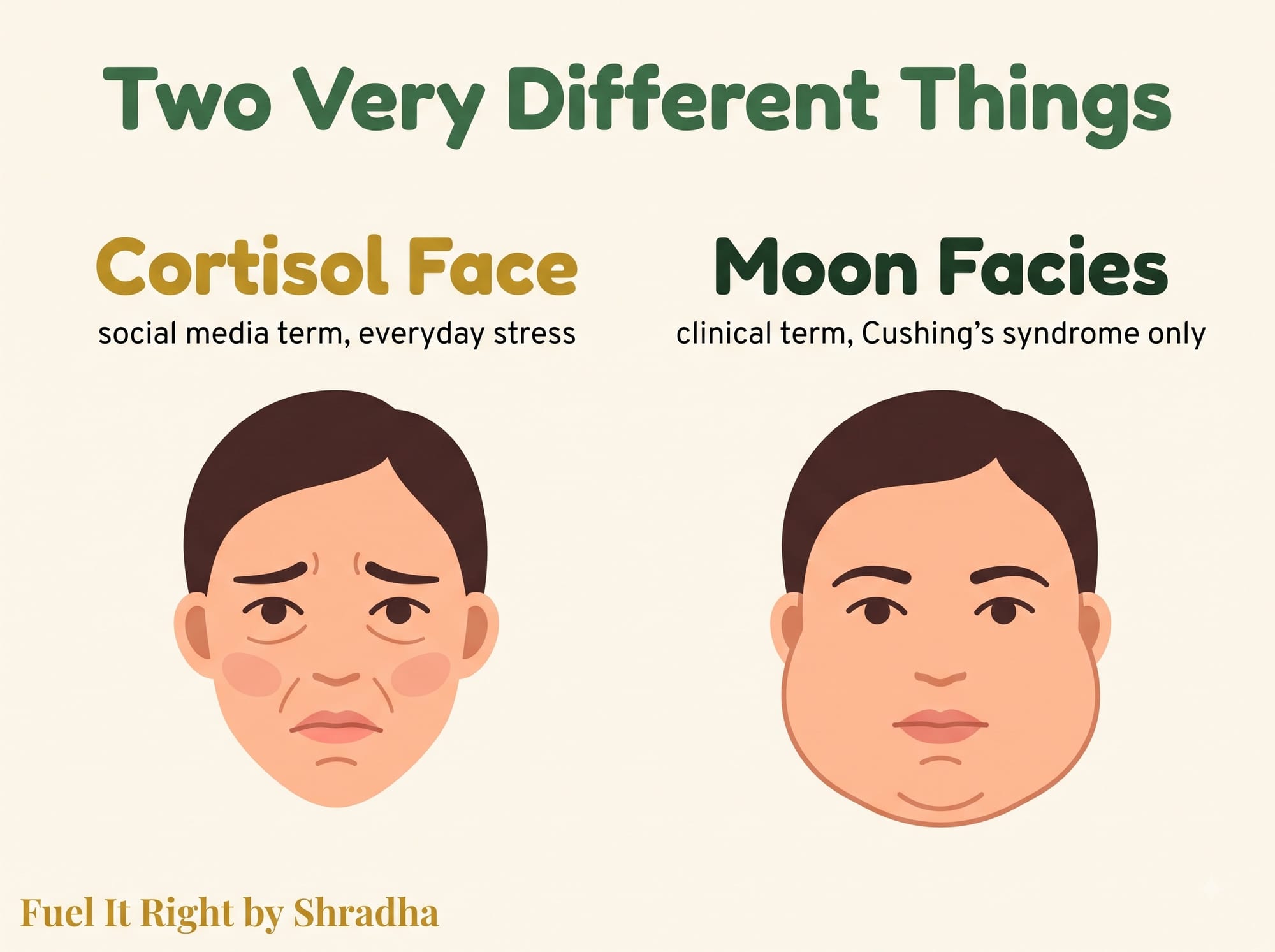
WHAT'S ACTUALLY TRUE: "Cortisol face" and "moon face" are social media terms, not clinical ones. The actual clinical terms are moon facies, facial rounding from fat redistribution, and facial plethora, increased blood flow and swelling. These are findings seen in Cushing's syndrome, a state of pathologically elevated cortisol from a pituitary or adrenal tumour, or from long-term high-dose steroid medication, not something everyday stress produces. |
Endocrinologist put it plainly in an interview: ordinary stress does not raise cortisol to levels sufficient to produce facial changes. The trend takes a genuine sign of severe endocrine disease and applies it to a demanding week at work, a leap the underlying science doesn't support.
Borrowing a real disease's symptom and applying it to an ordinary Tuesday isn't science. It's a good story wearing a lab coat.
3. Does the Cocktail Actually Lower Cortisol?
WHAT YOU'VE HEARD: The cortisol cocktail (orange juice, coconut water, salt) measurably lowers your cortisol levels. |
WHAT'S ACTUALLY TRUE: There isn't strong human clinical evidence that this specific combination lowers cortisol. The drink does contain real nutrients, vitamin C, potassium, sometimes magnesium, involved in systems that regulate stress hormones generally, but that's a long way from the drink itself blocking or lowering cortisol on contact. It also typically contains around 16 grams of sugar, mostly from the orange juice. |
There's a logical problem worth naming too: some versions of the trend claim the same drink helps both "high cortisol" and "adrenal fatigue," which would represent low cortisol. A single recipe addressing opposite hormonal states isn't a sign of a versatile drink, it's a sign the claim isn't built on a coherent mechanism in the first place.
Curious what your gut and stress load actually look like?
4. The Real Cost Isn't the Drink
WHAT YOU'VE HEARD: I have adrenal fatigue, which is why I feel exhausted and need to fix my cortisol. |
WHAT'S ACTUALLY TRUE: "Adrenal fatigue" is not a recognised medical diagnosis, according to the Endocrine Society. Persistent exhaustion has many possible causes, some of them genuinely worth investigating with a doctor, and labelling it "adrenal fatigue" from a social media trend can delay finding the actual cause. |
A glass of orange juice and coconut water isn't dangerous on its own. The documented concern with this trend, per health researchers tracking it, is what it teaches: self-diagnosing hormonal problems from a mirror or a TikTok checklist, spending on a growing shelf of "cortisol" supplements chasing a claim without strong backing, and delaying an actual medical evaluation for symptoms that might have a real, treatable cause.
5. What Actually Supports a Healthy Cortisol Rhythm: Verdict by Verdict
Morning Sunlight Exposure STRONG, EVIDENCE-BACKED |
Cortisol follows a natural daily rhythm regulated by the body's circadian clock, peaking in the morning. Light exposure early in the day helps anchor that rhythm correctly. How to make it work: Step outside or sit near a bright window within an hour of waking. Genuinely free and evidence-aligned, unlike the drink. |
A Consistent Sleep Schedule STRONG LEVER |
Disrupted sleep is one of the most consistently documented factors that actually does affect cortisol regulation over time. How to make it work: This is the same lever we covered in Young and Hypertensive: It's Not Just About Salt. Protecting consistent sleep timing does more for stress hormone regulation than any single drink. |
Regular, Consistent Meal Timing GOOD PRACTICE |
Erratic eating patterns interact with the same circadian systems that regulate cortisol. How to make it work: We covered this connection in Late-Night Eating: Why Timing Beats Calories. A consistent eating window supports the same rhythm morning light and sleep do. |
The Cortisol Cocktail Itself MODEST NUTRIENTS, OVERSOLD CLAIM |
Real vitamin C, potassium, and sometimes magnesium, genuinely useful nutrients, wrapped in a specific hormonal claim the evidence doesn't support. How to make it work: Fine as a beverage if you enjoy it. But just don't expect it to do the specific job the trend claims. |
Chasing a "Cortisol Fix" for Persistent Symptoms SEE A DOCTOR INSTEAD |
Ongoing exhaustion, sleep problems, or unexplained weight changes deserve an actual medical evaluation, not a self-diagnosed hormone label from social media. How to make it work: If symptoms are real and persistent, that's a reason to get checked, not a reason to reach for a drink recipe. |
6. Building a Cortisol-Smart Morning: Three Real Moments, Fully Assembled
This is a starting structure, not a treatment for a suspected hormonal condition. If you have symptoms that concern you, a doctor can actually test cortisol levels; a mirror and a TikTok trend can't.
Your Cortisol-Smart Checklist, At a Glance |
Get natural light exposure within an hour of waking, rather than reaching for a specific drink |
Protect a consistent sleep and wake time over any single supplement or recipe |
Keep meal timing reasonably consistent rather than erratic |
Treat "cortisol face" and "adrenal fatigue" as social media terms, not diagnoses |
See a doctor for persistent, real symptoms rather than self-treating with a trending drink |
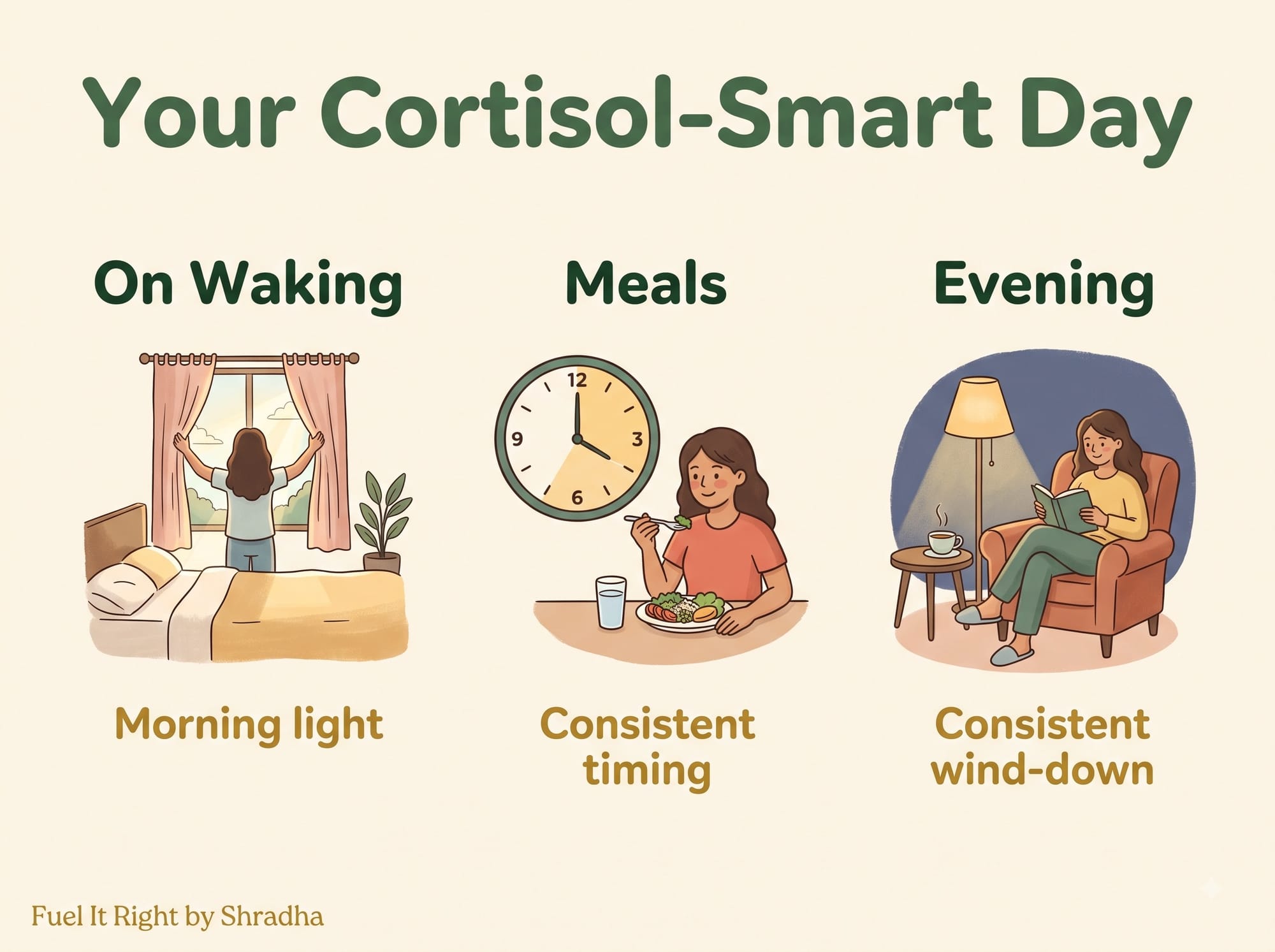
Three Real Moments, Fully Assembled
On waking | Natural light, outside or by a bright window, before checking your phone, anchoring the day's cortisol rhythm the way the evidence actually supports. |
Meals | Breakfast, lunch, and dinner at roughly consistent times, rather than skipped or erratic, supporting the same circadian systems. |
Evening | A consistent wind-down and sleep time, the single most evidence-backed lever here, ahead of any drink or supplement. |
Dealing with real, persistent symptoms and want an actual answer, not a drink?
Let's figure out what's actually going on
Call or WhatsApp: +91 7057063984 or
Conclusion
The cortisol cocktail trend has genuine reach, hundreds of millions of views, real media coverage, and a growing supplement category built around it, but the science underneath it is thinner than the trend suggests. "Cortisol face" borrows a real disease's symptom and applies it to ordinary stress; the drink itself offers real nutrients wrapped in a claim that isn't well supported; and "adrenal fatigue" isn't a recognised diagnosis at all. What actually supports a healthy cortisol rhythm is unglamorous and free: morning light, consistent sleep, and regular meal timing. None of it fits neatly into a 30-second video, which is exactly why it doesn't trend the way a cocktail recipe does.
FAQs
1. What is the cortisol cocktail trend?
A drink, typically orange juice, coconut water, a pinch of salt, and sometimes added magnesium, claimed on social media to lower cortisol and fix stress, sleep, bloating, and "cortisol face." The hashtag #cortisoldetox has accumulated close to 800 million TikTok views.
2. Is "cortisol face" a real medical condition?
The term itself isn't clinical. The actual medical condition, moon facies, involves facial changes from pathologically high cortisol, seen in Cushing's syndrome or long-term steroid use, not from everyday stress like a demanding job.
3. Does the cortisol cocktail actually lower cortisol levels?
There isn't strong human clinical evidence that it does. It contains real nutrients involved in stress hormone regulation generally, but that's different from the specific drink measurably lowering cortisol.
4. Is adrenal fatigue a real diagnosis?
No. The Endocrine Society does not recognise adrenal fatigue as a medical diagnosis. Persistent exhaustion has many possible causes worth investigating with a doctor rather than self-labelling.
5. What actually affects cortisol levels?
Sleep quality and consistency, circadian rhythm (including morning light exposure), meal timing, and genuine chronic stress all interact with cortisol regulation, more consistently than any single drink or supplement.
6. Is the cortisol cocktail harmful to drink?
The drink itself isn't dangerous, though it does contain meaningful sugar, roughly 16 grams per serving, mostly from orange juice. The larger documented concern is self-diagnosis and delayed evaluation of symptoms that might have a real, treatable cause.
7. Why does morning sunlight help with cortisol?
Cortisol follows a natural circadian rhythm that peaks in the morning; light exposure early in the day helps regulate and anchor that rhythm, an effect with a stronger evidence base than a specific drink recipe.
8. Should I see a doctor if I think I have high cortisol?
Yes, if symptoms are persistent and concerning. Cortisol can be measured with an actual blood or saliva test; a doctor can identify whether something specific is going on, rather than relying on a social media symptom checklist.
About the Author
Shradha | Nutritionist & Dietitian | Fuel It Right. Food-first, evidence-based nutrition for real, sustainable results.