
Avocado in Pregnancy: What the Nutrients Actually Do
Avocado shows up on nearly every pregnancy superfood list, but the actual nutrient case is more specific than 'it's healthy.' Here's what the folate, potassium, and fibre content actually do, and how much is genuinely worth eating.
Table of Contents
1. Avocado in Pregnancy: Why This One Fruit Gets Singled Out?
2. Folate: The Nutrient Pregnancy Guidelines Already Emphasize
3. Potassium and Blood Pressure: What One Study Found
4. The Fiber Angle: A Genuine Fix for a Common Pregnancy Complaint
5. How Much Is Actually Enough? Verdict by Verdict
6. Building a Pregnancy-Smart Day
Conclusion
FAQs
1. Avocado in Pregnancy: Why This One Fruit Gets Singled Out?
Avocado shows up on nearly every pregnancy superfood list, usually with the same vague reasoning: it's healthy fat, so it must be good for you. The actual nutritional case is more specific than that, and worth understanding rather than taking on faith.
A 2016 review published in the journal Nutrients found avocados unusual among fruits and vegetables specifically because, by weight, they contain far higher amounts of folate and potassium than most produce, two nutrients maternal diets commonly fall short on. Worth flagging upfront: this review was funded by the Avocado Nutrition Center, an industry body. That doesn't invalidate the underlying nutrient figures, which are sourced from independent USDA data, but it's worth knowing when reading its conclusions.
2. Folate: The Nutrient Pregnancy Guidelines Already Emphasize
Folate's importance in pregnancy is well established well beyond any single food: adequate intake before and during early pregnancy substantially reduces the risk of neural tube defects, which is why folic acid supplementation is a standard, non-negotiable part of prenatal care. Avocado contributes meaningfully alongside that, not instead of it.
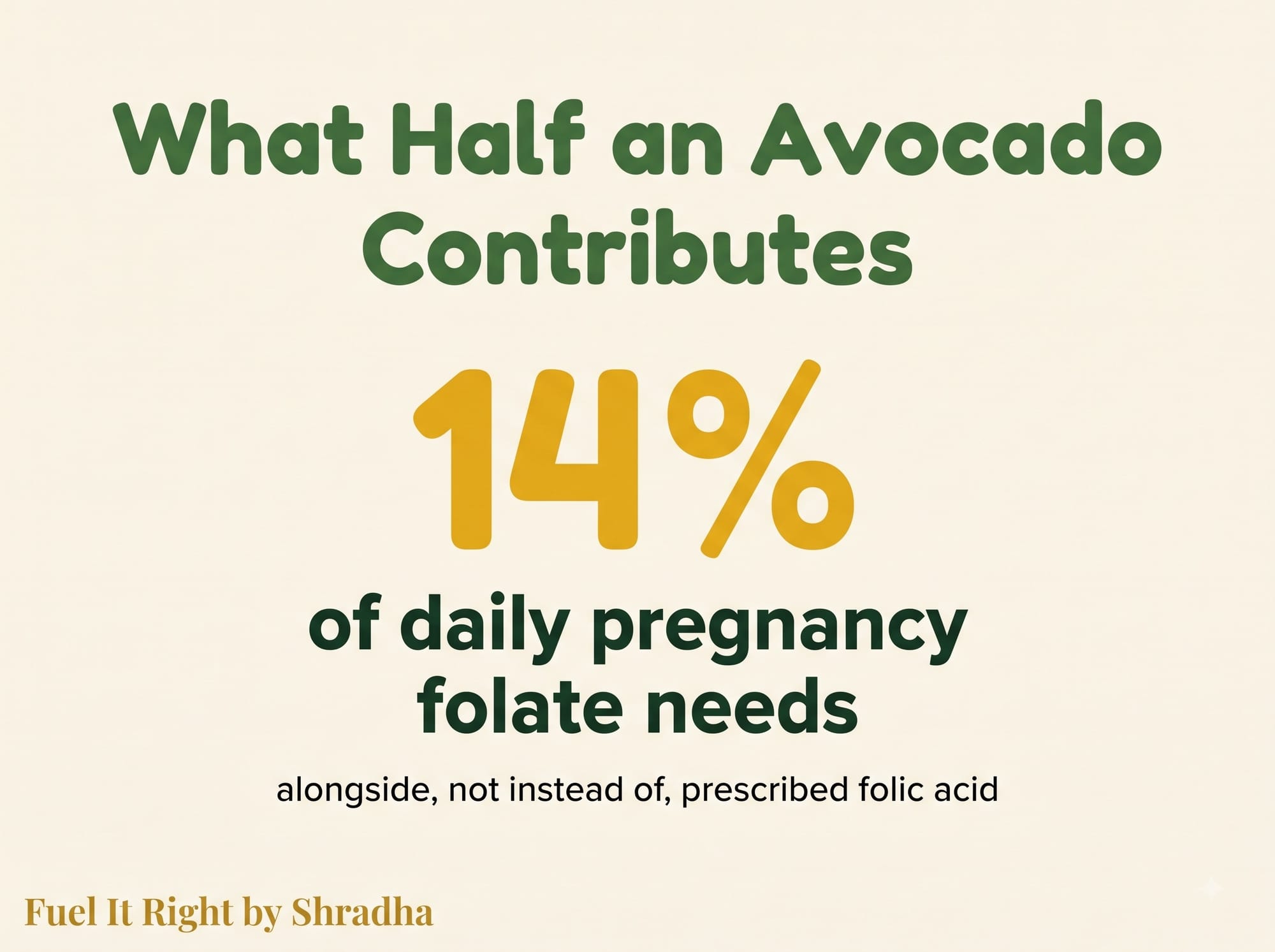
A standard serving, roughly one-third of a medium avocado, provides about 45 micrograms of folate. Half an avocado gets you to roughly 14% of daily pregnancy folate needs. That's a genuine contribution from a single food, worth factoring into an overall diet, but it supplements prescribed folic acid rather than replacing it.
WHAT YOU'VE HEARD: Avocado is a superfood that can replace your folic acid supplement. |
WHAT'S ACTUALLY TRUE: Avocado is a genuine folate contributor, but it doesn't come close to replacing clinically prescribed folic acid supplementation, which remains the primary, evidence-backed recommendation for preventing neural tube defects. Treat it as a food-first addition, not a substitute for medical guidance. |
3. Potassium and Blood Pressure: What One Study Found
Potassium is the second nutrient the 2016 review highlighted as commonly under-consumed in pregnancy, and half an avocado (100g) provides roughly 485mg of it. The relevance goes beyond a general "potassium is good for you" claim.
A study following 263 pregnant women found those consuming 250 to 300mg more potassium daily had a significantly reduced risk of developing high blood pressure during pregnancy. It's one study, not a large body of replicated trials, so treat it as a meaningful data point rather than settled proof. The direction is consistent with what's broadly known about potassium's role in blood pressure regulation.
One study is a data point worth knowing, not a guarantee. The honest version of 'this helps' usually looks exactly like this.
Curious what your gut health picture looks like right now?
Take the free Gut Health Quiz:
4. The Fibre Angle: A Genuine Fix for a Common Pregnancy Complaint
Constipation during pregnancy is common enough to be almost expected, driven by hormonal changes that slow digestion and, later, by physical pressure from a growing uterus. Avocado's fibre content, about 3 grams per serving, split roughly 70% insoluble to 30% soluble, is a genuine, food-first contributor here, not a marketing claim.
The fibre also appears to function as a prebiotic, feeding beneficial gut bacteria rather than simply adding bulk. For anyone already managing this specific complaint, that's a more useful way to think about it than "avocado is fibrous" as a generic fact.
5. How Much Is Actually Enough? Verdict by Verdict
WHAT YOU'VE HEARD: Since avocado is healthy, more is always better during pregnancy. |
WHAT'S ACTUALLY TRUE: Avocado is calorie-dense. A reasonable serving, roughly half a medium avocado, fits well into a balanced day and delivers the folate, potassium, and fiber benefits discussed above. Unlimited quantities add calories without proportional added benefit. |
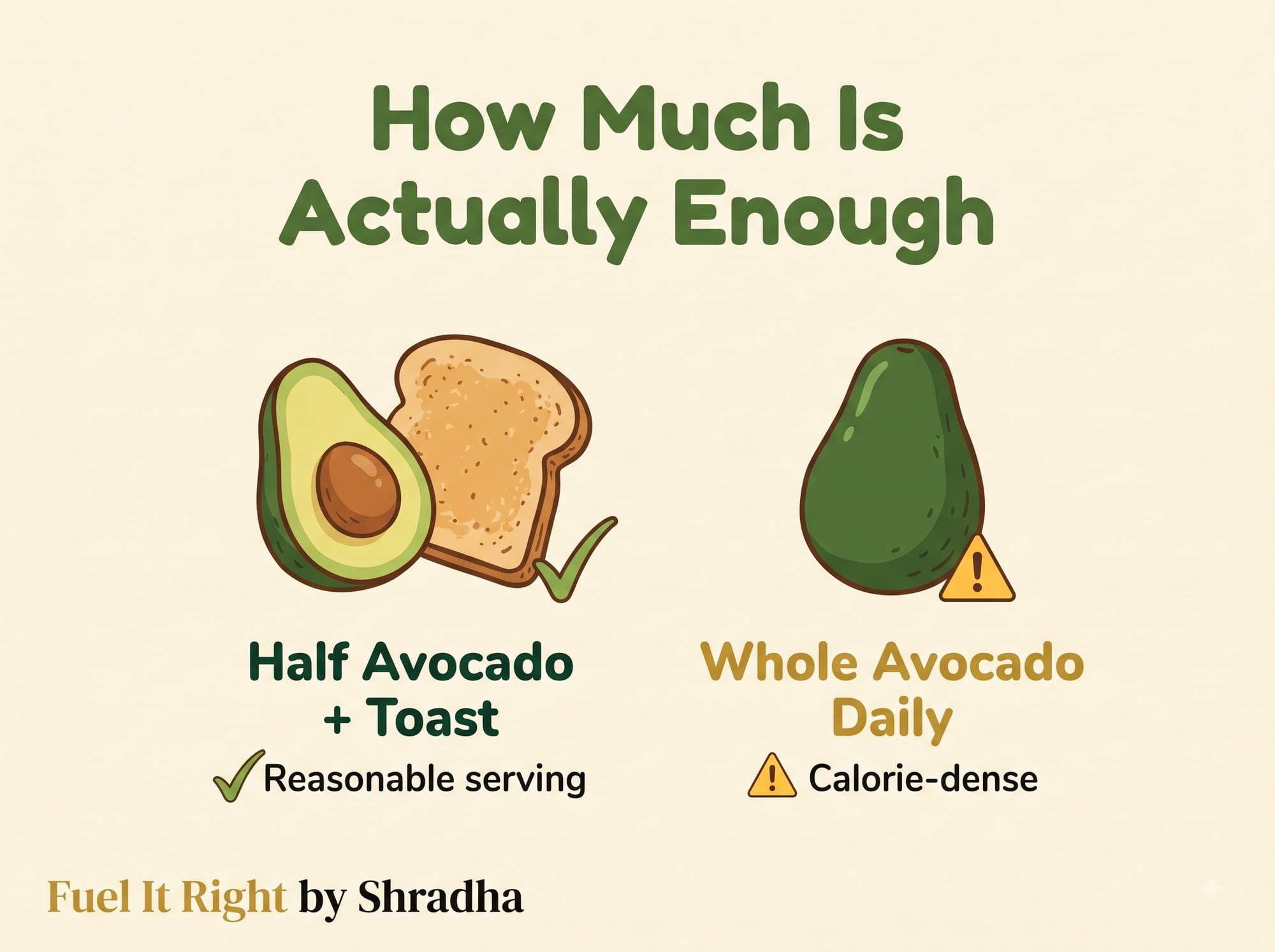
Half a Medium Avocado, Most Days STRONG, REASONABLE SERVING |
Delivers meaningful folate, potassium, and fiber without excessive calorie load. How to make it work: A consistent half-avocado habit most days works better than an occasional whole one. |
Avocado on Whole Wheat Toast GOOD COMBINATION |
Pairs avocado's fiber and healthy fat with the toast's own fiber content, a genuinely complementary combination rather than just a trendy pairing. How to make it work: A simple, repeatable breakfast or snack that doesn't need a recipe to work. |
Avocado as an Oil or Ghee Swap in Cooking GOOD PRACTICAL SWAP |
Mashed avocado can replace some added fat in cooking or spreads, folding in the same nutrient profile discussed above. How to make it work: Start with small substitutions in dishes where a creamy texture already works, rather than a wholesale recipe overhaul. |
A Whole Avocado in One Sitting, Daily CALORIE-DENSE, WORTH MODERATING |
Still nutrient-rich, but at higher daily calorie intake than most pregnancy nutrition plans account for without adjustment elsewhere. How to make it work: If you genuinely enjoy a full avocado, it can fit, just account for it as a meaningful calorie contribution, not a free addition. |
6. Building a Pregnancy-Smart Day: Three Real Moments, Fully Assembled
This is a starting structure, not a substitute for your obstetrician or dietitian's specific guidance, especially if you're also managing a separate concern like the one covered in Iron Deficiency in India: Fix the Chai Timing First, which is common enough in pregnancy to often need its own attention alongside this.
Your Pregnancy-Smart Avocado Checklist, At a Glance |
Treat avocado as a genuine folate and potassium contributor, not a folic acid supplement replacement |
Half a medium avocado most days is a reasonable, sustainable serving |
Pair it with whole wheat toast or use it as a partial oil swap in cooking |
If constipation is a current complaint, avocado's fiber is a legitimate food-first lever, not just a general health claim |
Don't treat "healthy" as unlimited; account for a whole avocado as a real calorie contribution |
Three Real Moments, Fully Assembled
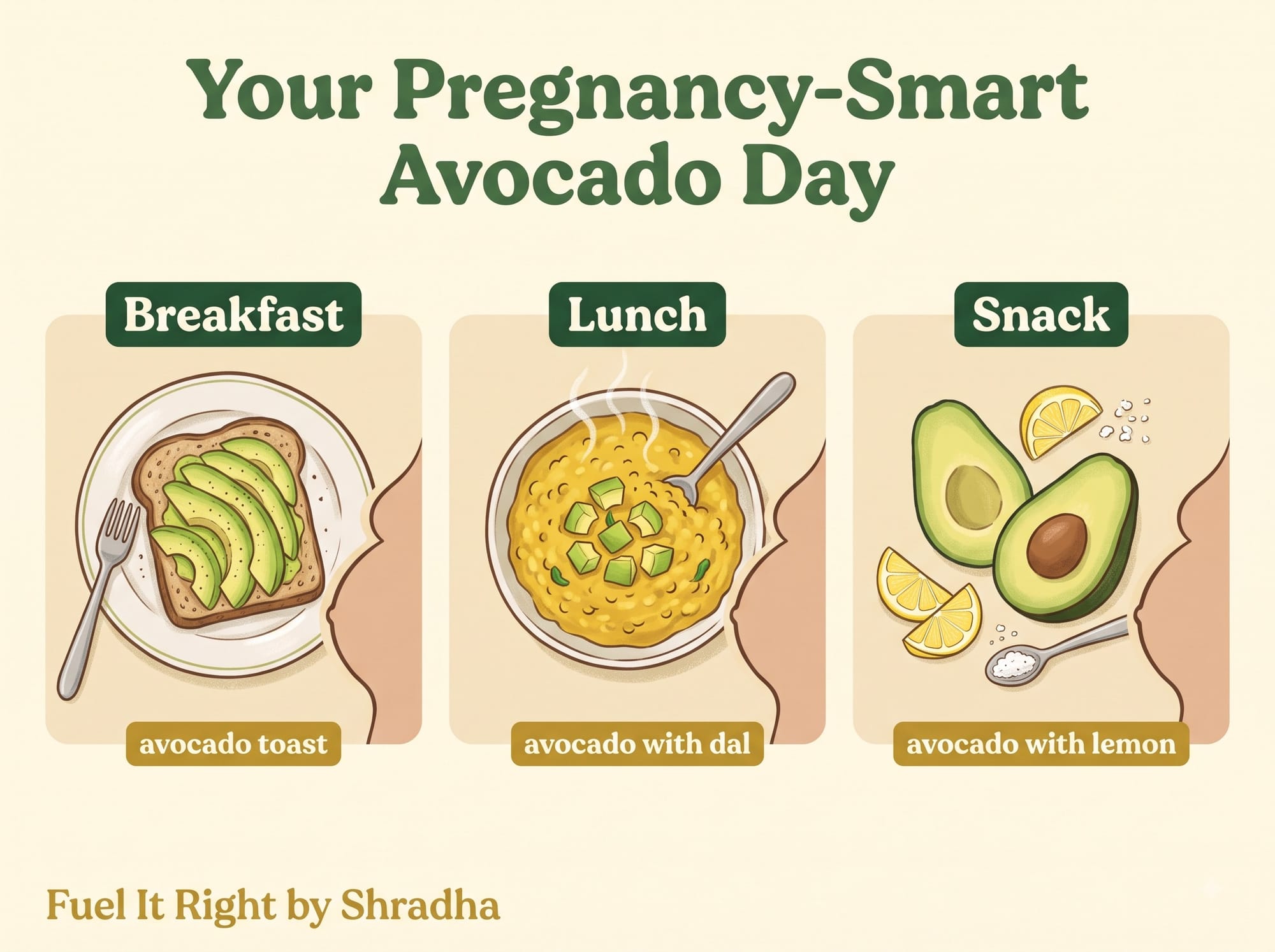
Breakfast | Half an avocado mashed on whole wheat toast, a simple, repeatable way to get folate, potassium, and fiber in one sitting. |
Lunch | A few slices of avocado added to a dal-and-vegetable plate instead of extra ghee or oil, working it into a meal you're already eating. |
Snack | The other half of the same avocado with a squeeze of lemon and a pinch of salt, no separate recipe required. |
Building a food-first pregnancy plan around your actual reports?
Let's put one together:
Call or WhatsApp: +91 7057063984 OR
Conclusion
Avocado earns its place on a pregnancy nutrition list for specific, checkable reasons: meaningful folate and potassium contributions in a population that commonly falls short on both, and a fiber profile that genuinely helps with one of pregnancy's most common complaints. None of that makes it a supplement replacement or an unlimited health pass, half a medium avocado most days is a realistic, evidence-grounded target. If you want to put it to use beyond a plain half with lemon, the avocado toast and avocado-date smoothie recipes already on the site are a good place to start.
FAQs
1. Is avocado actually good for pregnancy, or is that just marketing?
The nutrient case is real and specific: avocado is unusually rich in folate and potassium by weight compared to most fruits and vegetables, both nutrients commonly under-consumed during pregnancy, according to a 2016 review in the journal Nutrients.
2. How much folate does avocado actually provide?
Roughly one-third of a medium avocado provides about 45 micrograms of folate; half an avocado gets you to approximately 14% of daily pregnancy folate needs.
3. Can avocado replace my folic acid supplement?
No. It's a genuine contributor alongside prescribed folic acid supplementation, which remains the primary recommendation for preventing neural tube defects. Don't substitute one for the other.
4. Does avocado really help with blood pressure during pregnancy?
One study following 263 pregnant women found that consuming 250 to 300mg more potassium daily, an amount avocado can meaningfully contribute to, was associated with significantly reduced risk of gestational hypertension. It's a single study, worth knowing rather than treating as definitive.
5. How much avocado should I eat per day during pregnancy?
Roughly half a medium avocado most days is a reasonable, sustainable serving that delivers the folate, potassium, and fiber benefits without excessive calorie intake.
6. Does avocado help with pregnancy constipation?
Yes, genuinely. Its fiber content, roughly 3 grams per serving and mostly insoluble, appears to function as a prebiotic supporting gut bacteria, not just adding bulk, making it a legitimate food-first option for a very common pregnancy complaint.
7. Is it safe to eat avocado every day during pregnancy?
Yes, in a reasonable serving size. It's calorie-dense, so a full avocado daily is worth accounting for as a meaningful calorie contribution rather than an unlimited addition, but moderate daily intake is well within normal dietary guidance.
8. What's the easiest way to add avocado to an Indian diet during pregnancy?
Mashed on whole wheat toast, added to a dal-and-vegetable plate in place of some added oil or ghee, or simply with lemon and salt as a snack all work without requiring a dedicated recipe.
About the Author
Shradha | Nutritionist & Dietitian | Fuel It Right. Food-first, evidence-based nutrition for real, sustainable results.