
Your Body After Pregnancy Is Not the Same
You carried a life. Your body did something extraordinary. So why does it feel like it's working against you now? Post-pregnancy weight resistance is real, it's clinical, and it has nothing to do with trying harder.

Here's Why the Weight Won't Budge — And What Actually Works.
Shradha | Nutritionist & Dietitian | Fuel It Right
You did everything right during pregnancy. You rested when you were supposed to rest. You ate what they told you to eat. You brought a life into the world — or two, or more.
And now, months later, sometimes years later, you're standing in front of the mirror wondering why the body you had before feels like it belongs to someone else. You're eating carefully. You're walking. You're doing all the things you were told to do.
The weight is not moving.
This is not a failure of effort. This is a failure of information. Your post-pregnancy body is operating under a completely different set of rules and most women are never told what those rules are.
After years of clinical practice and working with hundreds of women through this exact phase, I can tell you this clearly: post-pregnancy weight resistance is one of the most misunderstood conditions in women's health. And the standard advice — eat less, move more — is not just unhelpful. In many cases, it actively makes things worse.
Let me explain what's actually happening.
Your Hormones Have Been Through a Complete Upheaval
Pregnancy is the single most significant hormonal event a female body experiences. Over nine months, your body produced and managed extraordinary levels of oestrogen, progesterone, relaxin, prolactin, and human placental lactogen — hormones most women's bodies have never encountered at those concentrations before.
After delivery, these levels drop sharply and suddenly. The body must rebuild its normal hormonal baseline from scratch. This process takes time — and for many women, especially those who've had multiple pregnancies, the baseline itself has permanently shifted.
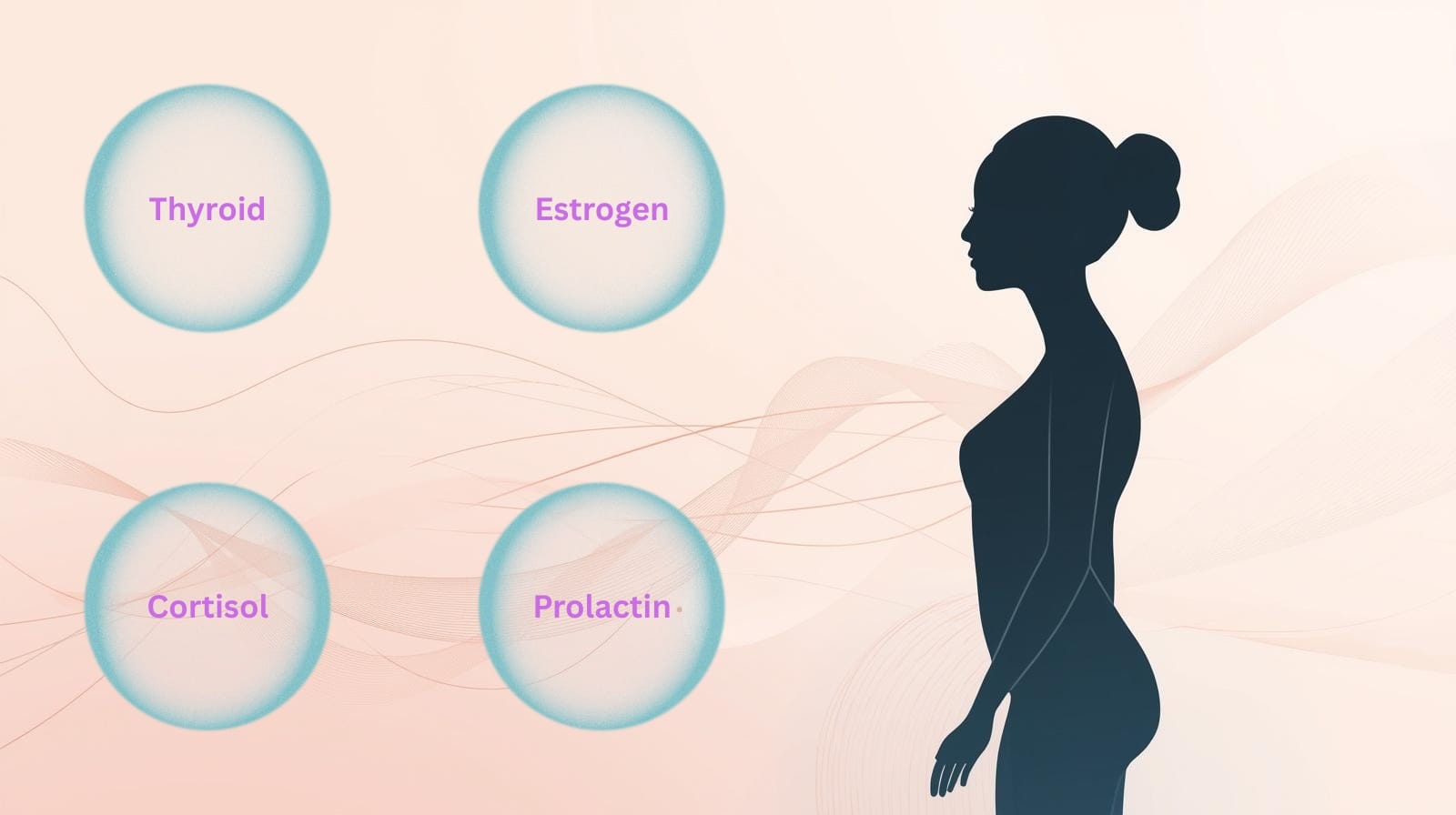
Three hormonal changes in particular are responsible for most cases of post-pregnancy weight resistance:
1. Postpartum Thyroid Disruption
Postpartum thyroiditis affects roughly 5 to 10 percent of women after delivery, but the actual number experiencing subclinical thyroid disruption is much higher. During pregnancy, the immune system is deliberately suppressed to protect the baby. After delivery, it rebounds — and this rebound sometimes attacks the thyroid gland.
The result is a thyroid that is quietly underperforming. Slowed metabolism. Hair falling out in clumps. Persistent fatigue. Difficulty losing weight no matter what you eat. And when you go for blood tests, you're often told your TSH is within the normal range — without anyone checking your free T3 and T4, which is where the real picture sits.
If your reports say normal but your body tells you otherwise — this is worth a closer look with your doctor, and your nutritionist.
2. Cortisol — Chronically and Justifiably Elevated
New mothers are, by the nature of the role, chronically sleep-deprived and chronically stressed. This is not a character observation. It is a physiological reality.
Broken sleep across months and years keeps the body in a sustained low-grade stress state. Cortisol, the primary stress hormone, remains elevated. And chronically elevated cortisol does one thing above all else: it directs the body to store fat, particularly visceral fat around the abdomen, while simultaneously breaking down muscle.
This is why many women notice that even if their overall weight has dropped, the belly remains stubbornly unchanged. Visceral fat responds to cortisol, not to calories. Reducing it requires reducing the cortisol load — not restricting food further.
3. Insulin Resistance That Persisted Past Delivery
Pregnancy naturally induces mild insulin resistance to ensure the baby receives a steady glucose supply. In most women, this resolves after delivery. But in women with a history of PCOS, gestational diabetes, or significant postpartum weight retention, insulin resistance can persist and quietly deepen over months and years.
High insulin signals the body to store fat and blocks the release of stored fat for energy. It also drives cravings for sugar and refined carbohydrates — making the pattern difficult to break without addressing the underlying resistance directly.
The C-Section Factor
This one is almost never discussed — and it should be.
A caesarean section is major abdominal surgery. The recovery involves healing of multiple tissue layers — skin, fascia, uterine wall — all while caring for a newborn with no real rest. The inflammatory response triggered by surgery is significant and, in many women, lingers far longer than the visible scar.
This matters for weight loss in two specific ways.
First, abdominal surgery disrupts the gut microbiome. The combination of anaesthesia, IV antibiotics administered during surgery, and the absence of vaginal birth microbiome transfer creates a significantly altered gut environment in the postoperative period. A disrupted gut microbiome means impaired digestion, increased systemic inflammation, and compromised nutrient absorption — all of which slow metabolic recovery.
Second, the physical healing process requires the body to prioritise repair over fat mobilisation. A body that is still recovering from surgical trauma does not prioritise fat loss, and nor should it. Pushing hard on calorie restriction in the months after a C-section works against the body's biological priorities.
The right approach after a C-section is not restriction. It is gut healing and anti-inflammatory nutrition first, which then creates the physiological conditions for weight loss to follow naturally.
What This Looks Like in Real Life
One of my clients — Samantha, a 34-year-old mother of three from Goa — came to our clinic in September 2025. Her youngest was born by C-section in 2024. She had been wanting to lose weight since but could never get herself to do so.
By the time she came to us, she weighed 104 kg. She was dealing with chronic migraines, persistent bloating, constant acidity, significant hairfall, and a shoulder that had been painful for months. She described her energy as non-existent. And she had come to a very particular conclusion about herself:
"I had just accepted that my body won't change."
This is one of the most heartbreaking things I hear from mothers. And it is almost always wrong.
We did not put Samantha on a weight loss diet. We put her on a gut healing plan — real food, anti-inflammatory, no supplements, no starvation. We addressed her gut first because that was where everything else was breaking down: her hormonal signalling, her inflammation levels, her nutrient absorption, her energy.
Six months later, she had lost 15.4 kg and over 21 inches across her body. Her migraines had significantly reduced. Her bloating was gone. Her energy had returned. And the weight loss — the thing she had given up on entirely — had happened almost as a side effect of a body that had finally started to heal.
You can read her full story in detail here.
Why the Advice You've Been Given Isn't Working
"Just eat less and move more."
I hear this repeated back to me by women who have been told this by well-meaning doctors, relatives, and online sources. And I understand why it sounds logical. Calories in, calories out. Simple physics.
Except the post-pregnancy body is not operating in a simple physics environment. It is operating in a complex hormonal, inflammatory, and metabolic environment where:
• Eating less further elevates cortisol, which deepens fat storage- especially visceral fat.
• Skipping meals worsens insulin resistance by creating blood sugar spikes and crashes.
• Excessive cardio raises cortisol further and breaks down the muscle that drives metabolic rate.
• Restricting food when the gut is already damaged impairs nutrient absorption, worsening hormonal disruption.
The advice is not wrong in a vacuum. It is wrong for this specific body, at this specific time. And applying it repeatedly - getting nowhere, blaming yourself, trying harder - is one of the most common patterns I see in new mothers who come to the clinic exhausted and defeated.
What Actually Works: A Post-Pregnancy Framework
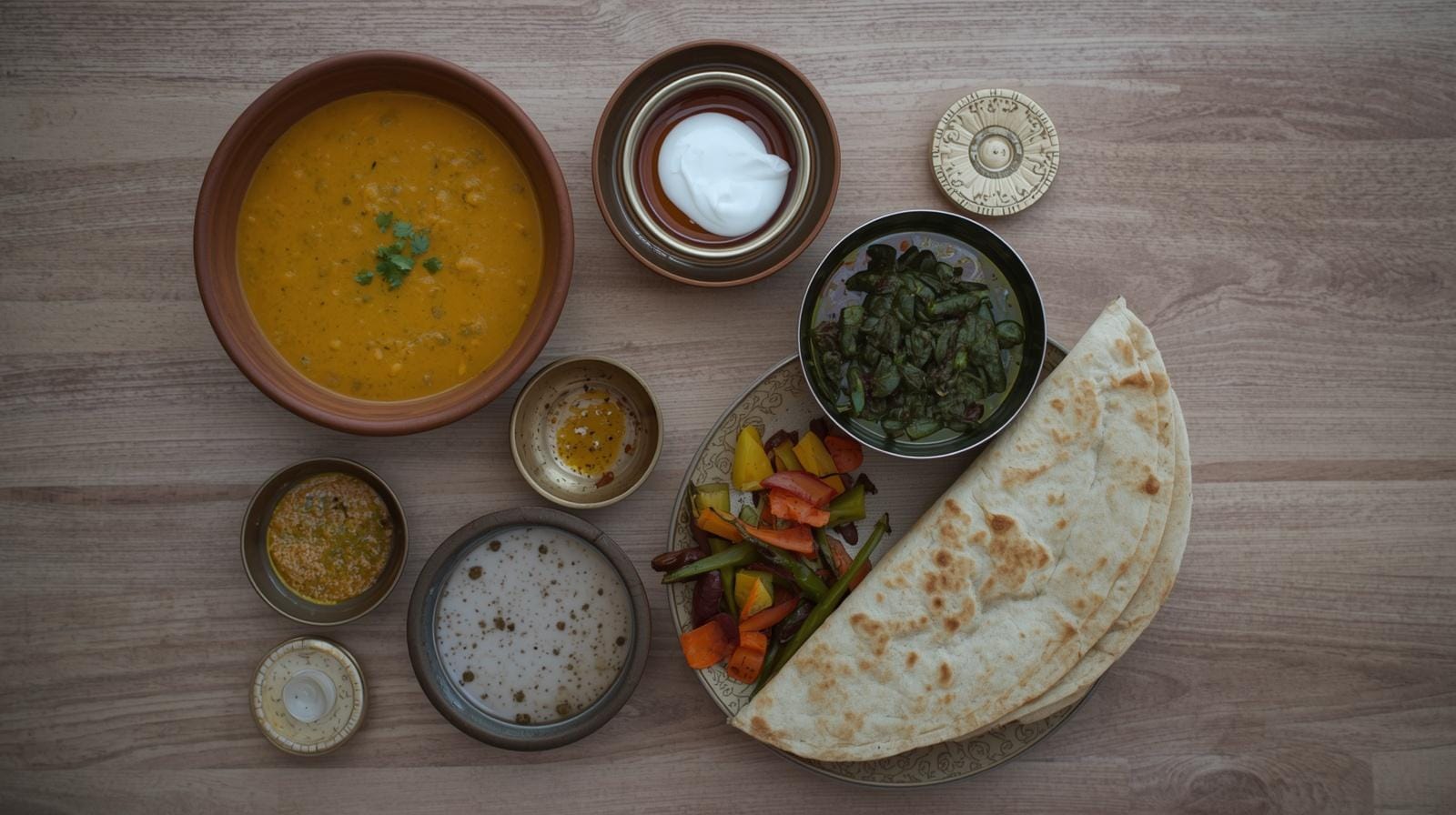
The approach that works is built in a specific order. It is not a diet. It is a physiological reset — one that uses Indian food as the primary tool.
Step 1 — Heal the gut first:
• Homemade curd daily: rebuilds microbiome disrupted by antibiotics and surgery.
• Ghee at every meal: butyrate source that directly heals the gut lining.
• Jeera water before meals: supports digestive enzyme production and reduces bloating.
Reduce immediately: packaged snacks, refined flour, seed oils — the three biggest gut disruptors in the Indian diet.
Step 2 — Support hormonal recovery:
• Methi seeds soaked overnight: taken in the morning, directly improves insulin sensitivity.
• Flaxseeds 1 tbsp daily: supports oestrogen metabolism and thyroid function.
• Til (sesame): calcium-rich, supports bone health postpartum and hormone production.
• Moringa leaves in dal or sabzi: one of the most nutrient-dense foods for postpartum recovery — iron, calcium, B-vitamins.
• Gondh ke ladoo: the traditional postpartum food that Indian families have been making for generations. Not a myth — clinically sound.

Step 3 — Lower cortisol through food and rhythm:
• Do not skip meals: meal skipping is a cortisol trigger. Three balanced meals, no gap longer than 4 hours.
• Ashwagandha kadha: adaptogen that directly reduces cortisol — as a whole-food preparation, not a supplement capsule.
• Prioritise sleep over exercise: if you must choose, sleep wins. One extra hour of sleep does more for fat loss than 45 minutes of cardio in a cortisol-dominant body.
• Warm haldi doodh at night: anti-inflammatory, calms the nervous system, supports sleep quality.
Step 4 — Rebuild metabolic rate:
• Protein at every meal without fail: dal, paneer, curd, eggs- preserves muscle, stabilises blood sugar, reduces cravings.
• Eat enough: this is the one that surprises most women. Chronic undereating, especially while breastfeeding, drives the body into conservation mode. Eating adequately is not the enemy of weight loss — it is the prerequisite for it.
• Walk after meals rather than fasted morning cardio: post-meal walks dramatically improve insulin sensitivity without triggering a cortisol response.
One Last Thing I Want You to Hear
Your body is not broken. It did something extraordinary, it grew and delivered a human being. What it needs now is not punishment or restriction. It needs the right environment to recover.
The women who lose weight sustainably after pregnancy are not the ones who pushed hardest the fastest. They are the ones who understood what their body actually needed — and gave it that.
Samantha had three children, a C-section behind her, and a body she had given up on. Six months of the right approach — and she is living proof that the giving up was premature.
If you are in the same place she was, I want you to know: there is a way through. And it is simpler than you think.
Want to see what this looks like in real life? I'm sharing a client's full post-pregnancy journey — real numbers, real food, real timeline — in an upcoming post. Watch this space.
Related reading on Fuel It Right:
• The Gut-Hormone Connection: How Gut Inflammation Drives PCOS, Thyroid and Weight Issues.
• Why Belly Fat Won't Reduce Until You Fix Your Hormones.
• Cortisol Belly: Why Stress Is Making You Gain Fat.
• Samantha's Story: 15 kg, 21 Inches, 6 Months on a Gut Health Plan (coming 10th April).
Are you struggling with post-pregnancy weight?
Let's build a plan that works for your body — where it is right now.
💬 WhatsApp: +91 70570 63984
Shradha | Fuel It Right
Real Food. Real Results.
About the Author
Shradha is a nutritionist withyears of experience, specialising in post-pregnancy recovery, gut health, hormonal wellness, and Indian food-based nutrition. She consults in person at Diet Dr Clinic, Colva, Goa and online with clients across India. She writes about evidence-based nutrition at fuel-it-right.com.
* Results vary by individual. This blog is for informational purposes and does not replace personalised medical or dietary advice.