
Why You're Always Tired — And It's Not Your Sleep
You slept 8 hours and still woke up exhausted. The problem probably isn't your sleep — it's what your body is quietly running short of. Here are the four most commonly missed nutritional causes of fatigue, and exactly what to test and eat.

You slept 8 hours last night. You still woke up exhausted.
If this sounds familiar, you're not lazy, you're not getting old, and you don't need another cup of coffee. In most cases, the answer lies not in your sleep, but in what your body is quietly running short of.
Fatigue is one of the most common complaints I hear in my practice. And the most common mistake? Blaming it entirely on a busy schedule or poor sleep.
In fact, in most cases, the real culprits are nutritional and hormonal, and they're being missed because nobody is asking the right questions.
Here are the four that come up most often.
1. Iron Deficiency — It's Not Just About Anaemia
Most people associate iron deficiency with anaemia - pale skin, dizziness, shortness of breath. But there's a state before full-blown anaemia that causes significant, debilitating fatigue: low ferritin.
Ferritin is your body's iron storage protein. You can have a perfectly ‘normal’ haemoglobin and still have depleted ferritin stores, and feel completely wiped out. This is the most underdiagnosed cause of fatigue I see, especially in women of reproductive age and anyone eating a predominantly plant-based diet.
Iron does far more than carry oxygen. It's essential for mitochondrial function - meaning it directly powers how efficiently your cells produce energy. Low iron equals low cellular energy. It's that straightforward.
One of my clients came to me exhausted and barely functional day-to-day. After a dietary overhaul focused on iron-rich foods - lentils, dark leafy greens, sesame seeds, jaggery, paired strategically with Vitamin C sources to improve absorption - her energy transformed completely. She later told me that during her Lenten fasting days, she cooked non-stop through Easter preparations and the day itself without flagging once. That kind of sustained energy doesn't come from motivation. It comes from corrected nutrition.
Test this: Serum Ferritin — not just haemoglobin.
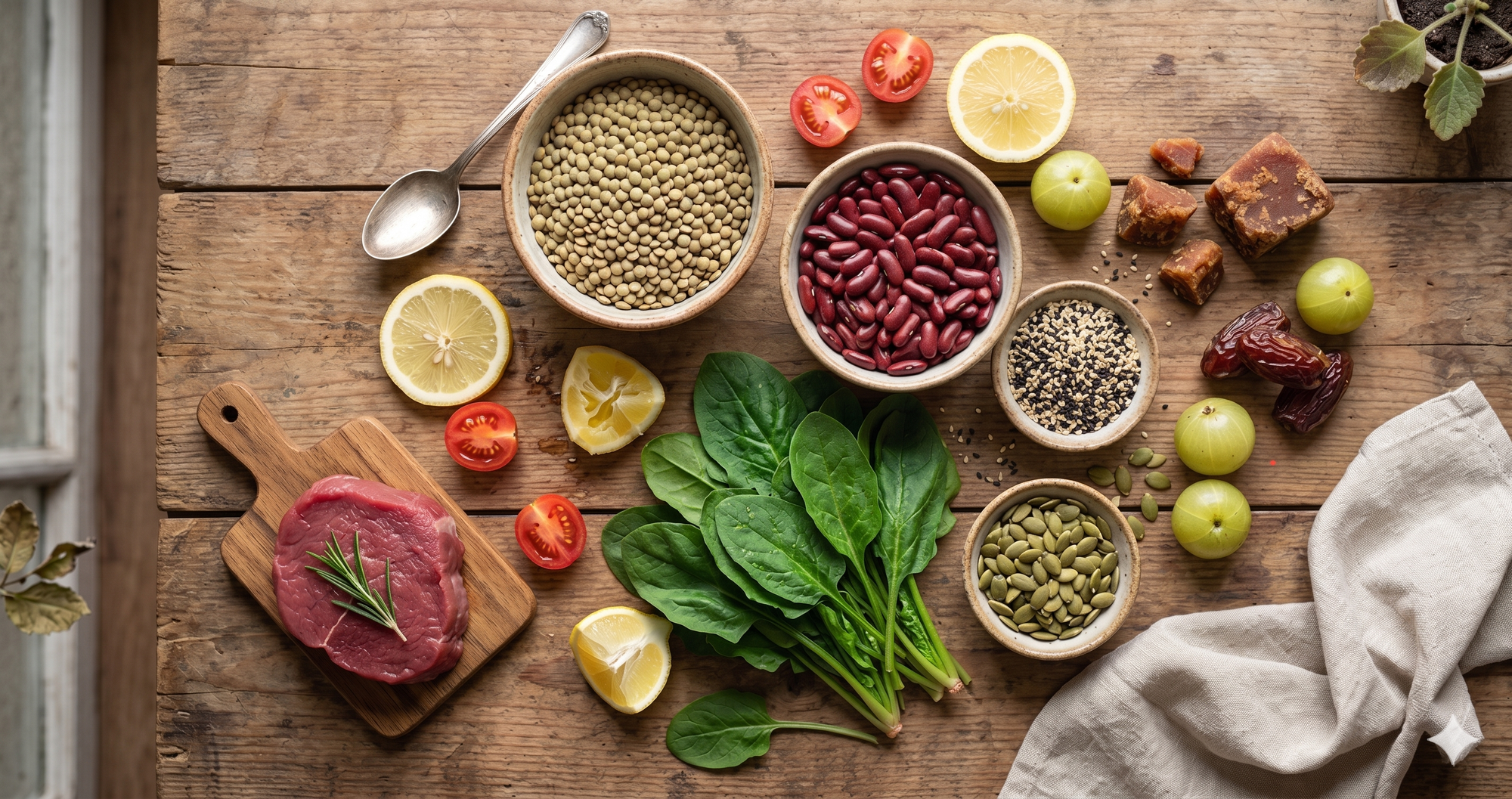
Eat this: Lentils, rajma, spinach, sesame seeds, pumpkin seeds, jaggery, dates, red meat if non-vegetarian. Always pair with a Vitamin C source like lemon juice, tomatoes, amla.
2. Vitamin B12 — The Deficiency Nobody Suspects Until It's Severe
If you're vegetarian or vegan, there is a very real chance your B12 is suboptimal. B12 is found almost exclusively in animal-derived foods, and India has one of the highest rates of B12 deficiency in the world, yet it remains massively underdiagnosed.
B12 is critical for red blood cell formation, neurological function, and DNA synthesis. When it drops, fatigue is often the first and most prominent symptom, alongside brain fog, poor concentration, and low mood that gets misread as depression or burnout.
What makes it particularly tricky: standard blood reports often flag deficiency only at critically low levels. Functional deficiency — where levels are technically ‘within range’ but far from optimal, can drive significant symptoms that go un-investigated for years.
Test this: Serum Vitamin B12. Optimal is 400–900pg/mL, not just above 200.
Eat this: Paneer, curd, milk, eggs, fish. For strict vegetarians, consistent, adequate dairy intake daily is non-negotiable.
3. Vitamin D — The India Paradox
This surprises almost everyone: India is a tropical, sun-rich country, and yet Vitamin D deficiency affects an estimated 70–90% of its population.
The reasons are layered. Darker skin pigmentation requires longer sun exposure to synthesise adequate Vitamin D. Most people spend peak sunlight hours indoors. Air pollution, clothing coverage, and sunscreen use compound the problem further.
Vitamin D functions more like a hormone than a vitamin. It governs energy metabolism, immune function, mood regulation, and muscular strength. Chronically low levels are strongly linked to persistent fatigue, generalised body aches, and low motivation, symptoms that are almost always attributed to 'stress' or 'overwork' and left at that.
Test this: 25-hydroxy Vitamin D. Optimal range is 40–60 ng/mL.
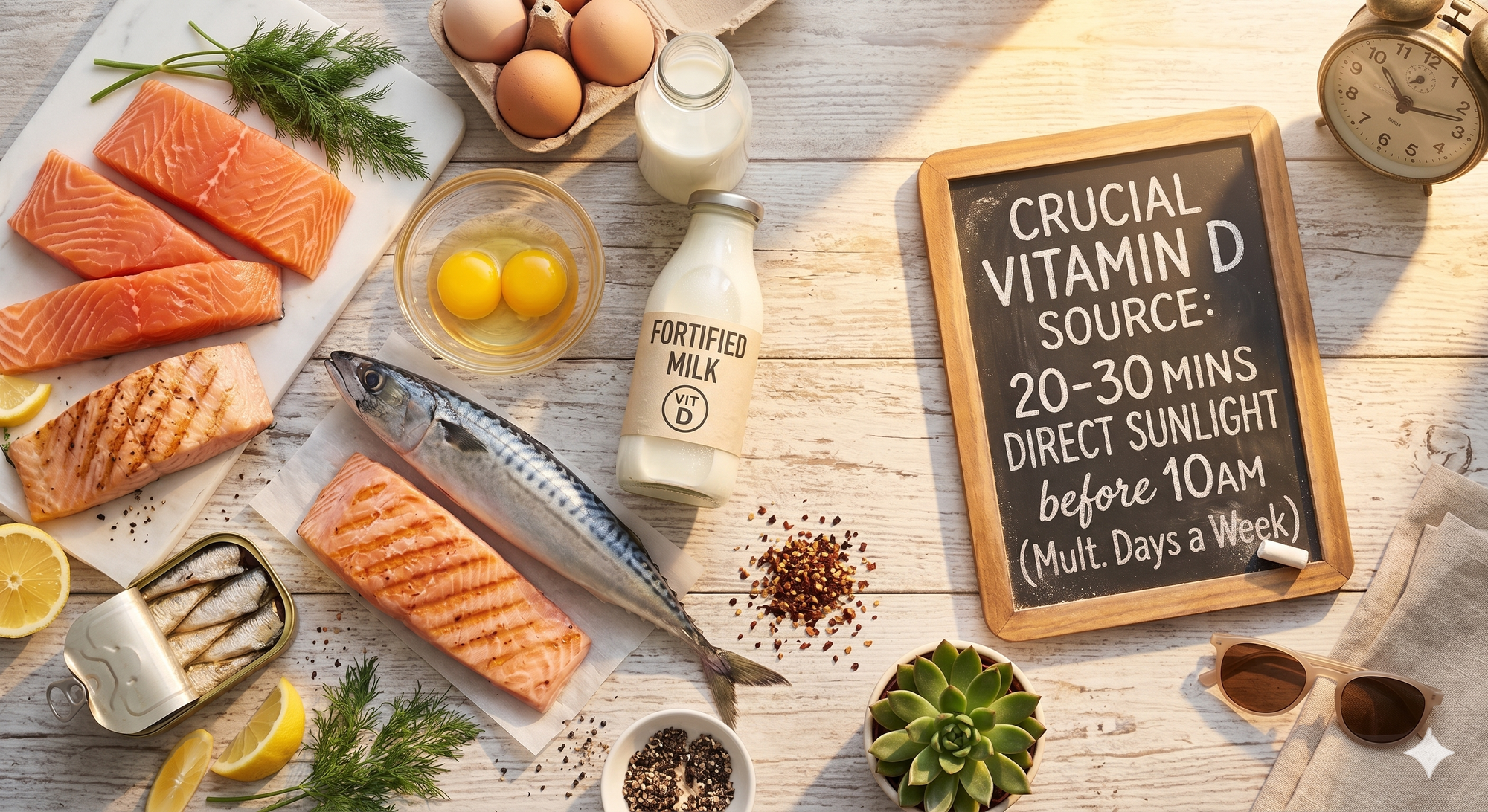
Eat this: Fatty fish like salmon, mackerel, sardines alongwith egg yolks, fortified milk. And critically: 20–30 minutes of direct sunlight before 10am, as many days a week as possible.
4. Subclinical Hypothyroidism — When 'Normal' Is Not Actually Normal
This one matters a great deal. Thyroid tests are increasingly common, but here's the problem: most labs flag TSH as abnormal only above 4.5–5mIU/L. Many people with TSH sitting between 2.5 and 4.5 are told their thyroid is ‘fine’ and sent home, while experiencing significant fatigue, unexplained weight gain, hair thinning, and brain fog.
This is subclinical hypothyroidism. It is far more common than the numbers suggest, and it is frequently overlooked.
The thyroid regulates your basal metabolic rate. Even mild underactivity slows down every metabolic process - digestion, cellular energy production, mood chemistry. Fatigue in this case is not ordinary tiredness. It's a systemic slowdown that no amount of sleep will fix.
Test this: TSH, Free T3, Free T4, and TPO antibodies to rule out Hashimoto's.
Eat this: Brazil nuts and sunflower seeds for selenium, pumpkin seeds and chickpeas for zinc, iodised salt and dairy for iodine. These nutrients directly support thyroid hormone production and conversion.
Why These Four Keep Getting Missed
The standard advice for fatigue is to sleep more, manage stress, and exercise. All valid, but entirely useless if your ferritin is at 9, your B12 is at 180, your Vitamin D is at 12, or your TSH is quietly climbing.
These deficiencies don't announce themselves dramatically. They accumulate slowly, become your new baseline, and eventually get filed under "I'm just a tired person." Until someone asks the right questions and runs the right tests.
What to Do Right Now
Ask your doctor for these specific tests at your next visit:
- Serum Ferritin
- Serum Vitamin B12
- 25-hydroxy Vitamin D
- TSH, Free T3, Free T4
And before results, before any supplements, start with food. Iron-rich meals with Vitamin C. Daily dairy or eggs if vegetarian. Morning sunlight. Selenium and zinc through whole foods consistently.
The goal is never to add a supplement as a first response. It's to find the root cause, and correct it through food first. Supplementation has its place, but it should follow a diagnosis, not replace one.
If you've been exhausted for longer than you can explain, and nobody has looked beyond your lifestyle — this is exactly where to start.
Shradha | Nutritionist | Fuel It Right: Real Food. Real Results.
Book a session: calendly.com/shradhajp/30min | WhatsApp: +91 7057063984