The Gut-Hormone Connection
Most women spend years chasing hormonal symptoms — PCOS, thyroid issues, stubborn weight — without ever addressing the gut inflammation quietly driving all three. Dietitian Shradha breaks down the gut-hormone connection and gives you practical Indian food solutions to start healing from the root.
How an Inflamed Gut Could Be Behind Your PCOS, Thyroid, or Stubborn Weight
You've been doing everything right. Eating clean, exercising, sleeping well — and yet your hormones are still out of whack, your weight won't budge, and you wake up tired no matter how early you sleep.
What if the real problem isn't your hormones at all?
What if the root cause is sitting quietly in your gut — inflamed, overwhelmed, and desperately sending signals your body has been struggling to decode?
In my 13 years as a nutritionist, this is one of the most under-discussed connections in women's health. And today, I want to break it all the way down — in plain language, with practical Indian food solutions woven in.
First — What Exactly Is the Gut-Hormone Connection?
Your gut isn't just a digestion machine. It is home to trillions of bacteria (your gut microbiome) that actively communicate with virtually every system in your body — including your endocrine (hormone) system.
Think of your gut as a central command post. When it's functioning well, it:
• Produces and regulates key hormones like serotonin, cortisol, and oestrogen.
• Controls how much insulin your body needs to release after a meal.
• Manages inflammation levels that directly impact thyroid and ovarian function.
• Helps your liver clear excess hormones from the bloodstream.
But when your gut lining becomes inflamed — due to poor diet, chronic stress, antibiotic overuse, or processed food — this entire communication system breaks down.
🔬 The Science Bit: A 2023 study published in Frontiers in Endocrinology found that gut dysbiosis (an imbalance in gut bacteria) is strongly associated with elevated inflammatory markers, insulin resistance, and disrupted sex hormone metabolism — three of the most common drivers of PCOS and thyroid disorders.
Sign #1: Your PCOS May Be a Gut Problem in Disguise
PCOS — Polycystic Ovary Syndrome — is most often talked about as a hormonal condition. And it is. But what triggers the hormonal chaos? Increasingly, the research points back to the gut.
Here's the link:
When your gut microbiome is imbalanced, it allows a substance called lipopolysaccharide (LPS) — essentially bacterial toxins — to leak into your bloodstream. This triggers a state of chronic low-grade inflammation. That inflammation directly disrupts:
• Insulin sensitivity — leading to elevated insulin, which signals the ovaries to produce excess testosterone
• Oestrogen balance — a healthy gut microbiome (called the 'estrobolome') helps metabolise oestrogen; a damaged one recirculates it, worsening hormonal imbalance
• Ovulation regularity — inflammation interferes with the LH surge needed for regular ovulation
What this looks like for you:
• Irregular periods despite eating 'healthy'.
• Acne around the jawline and chin.
• Bloating, gas, or constipation alongside your PCOS symptoms.
• Cravings for sugar and refined carbs — your inflamed gut is feeding bad bacteria.
Indian foods that help heal the PCOS-gut axis:
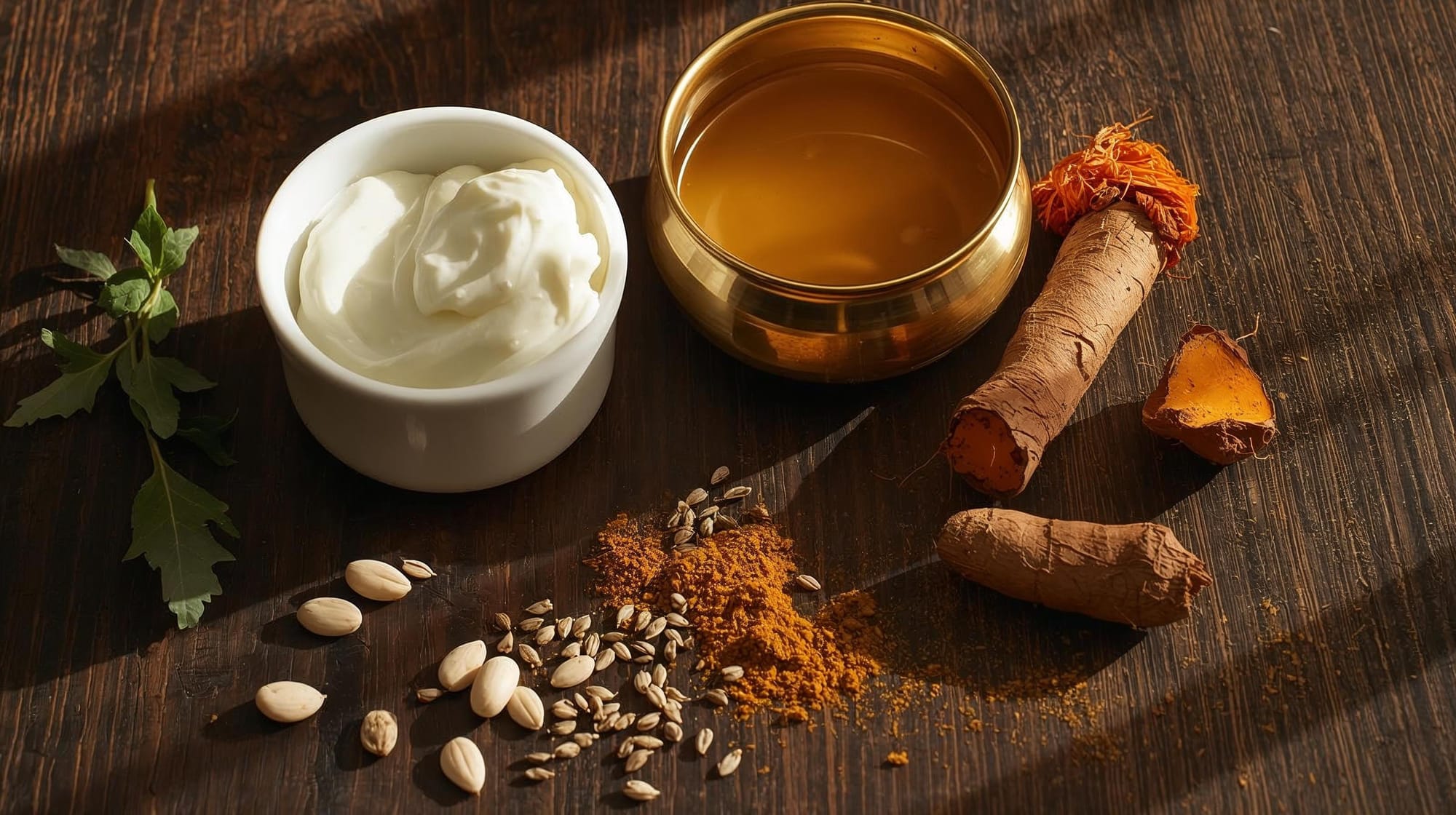
• Jeera (cumin) water — reduces gut inflammation and improves insulin sensitivity.
• Methi (fenugreek) seeds — soaked overnight, these are powerful insulin regulators.
• Homemade dahi (curd) — your most accessible probiotic; eat it daily.
• Ghee — a natural source of butyrate, which literally heals your gut lining.
• Haldi (turmeric) with black pepper — curcumin is one of the most studied anti-inflammatory compounds for PCOS.

💬 "Not sure if your symptoms are gut-driven or hormonal? I work with women across India to find that answer through food — not guesswork. Book a free discovery call with me on Calendly
Sign #2: Your Thyroid Might Be Inflamed, Not Just Imbalanced
Hypothyroidism (underactive thyroid) is one of the most commonly diagnosed conditions in Indian women — and it is drastically on the rise. But here's what most people aren't told: up to 90% of hypothyroid cases are autoimmune in nature (Hashimoto's thyroiditis), meaning the body is attacking its own thyroid tissue.
What triggers this autoimmune response? Very often — a leaky gut.
The gut-thyroid connection explained:
Your gut wall is meant to be selectively permeable — letting nutrients in and keeping toxins out. When the gut lining is damaged (intestinal permeability, commonly called 'leaky gut'), partially digested food particles and bacterial toxins enter the bloodstream. The immune system responds by producing antibodies.
Here's the problem: some of these antibodies cross-react with thyroid tissue. This is called molecular mimicry, and it's a leading theory behind why Hashimoto's is so closely linked to gut inflammation.
💬 "Have questions about your thyroid and gut? Drop them in my WhatsApp community — I answer every week.
Indian foods that support thyroid-gut healing:
• Moringa (drumstick leaves) — rich in selenium, a mineral critical for thyroid hormone conversion.
• Coconut oil — medium-chain fatty acids support gut lining integrity and reduce gut inflammation.
• Bone broth / mutton soup — collagen and glutamine are the two most powerful gut lining repair nutrients.
• Avoid: raw cruciferous vegetables — broccoli, cauliflower, and kale contain goitrogens that can suppress thyroid function when eaten raw in large amounts; cook them lightly instead.
• Fermented foods — kanji (beetroot or carrot ferment), homemade idli/dosa batter left to ferment naturally — these seed your gut with good bacteria that calm autoimmune inflammation.
Sign #3: The Real Reason You Cannot Lose Weight
If you've tried calorie restriction, intermittent fasting, low-carb diets — and the weight still won't shift — gut inflammation is very likely a significant factor. Here's why:
Gut inflammation disrupts weight in 4 key ways:
1. Insulin Resistance. Gut inflammation drives elevated insulin, which shifts your body into fat-storage mode. You can eat 1400 calories and still gain weight if your insulin is chronically high.
2. Leptin Resistance. Leptin is your 'I'm full' hormone. An inflamed gut impairs the brain's ability to receive leptin signals, meaning you never truly feel satisfied — and you keep eating past your actual needs.
3. Cortisol Dysregulation. Gut inflammation activates the HPA axis, chronically elevating cortisol. Elevated cortisol increases visceral (belly) fat storage — regardless of caloric intake.
4. Impaired Nutrient Absorption. An inflamed gut lining cannot absorb micronutrients efficiently. Deficiencies in Vitamin D, B12, magnesium, and zinc — all common in gut dysfunction — further impair metabolism and thyroid function.
Indian foods that break the inflammation-weight cycle:
• Sabja (basil) seeds — soluble fibre that feeds good gut bacteria and stabilises blood sugar.
• Amla (Indian gooseberry) — the highest natural source of Vitamin C, a powerful anti-inflammatory that also supports iron absorption.
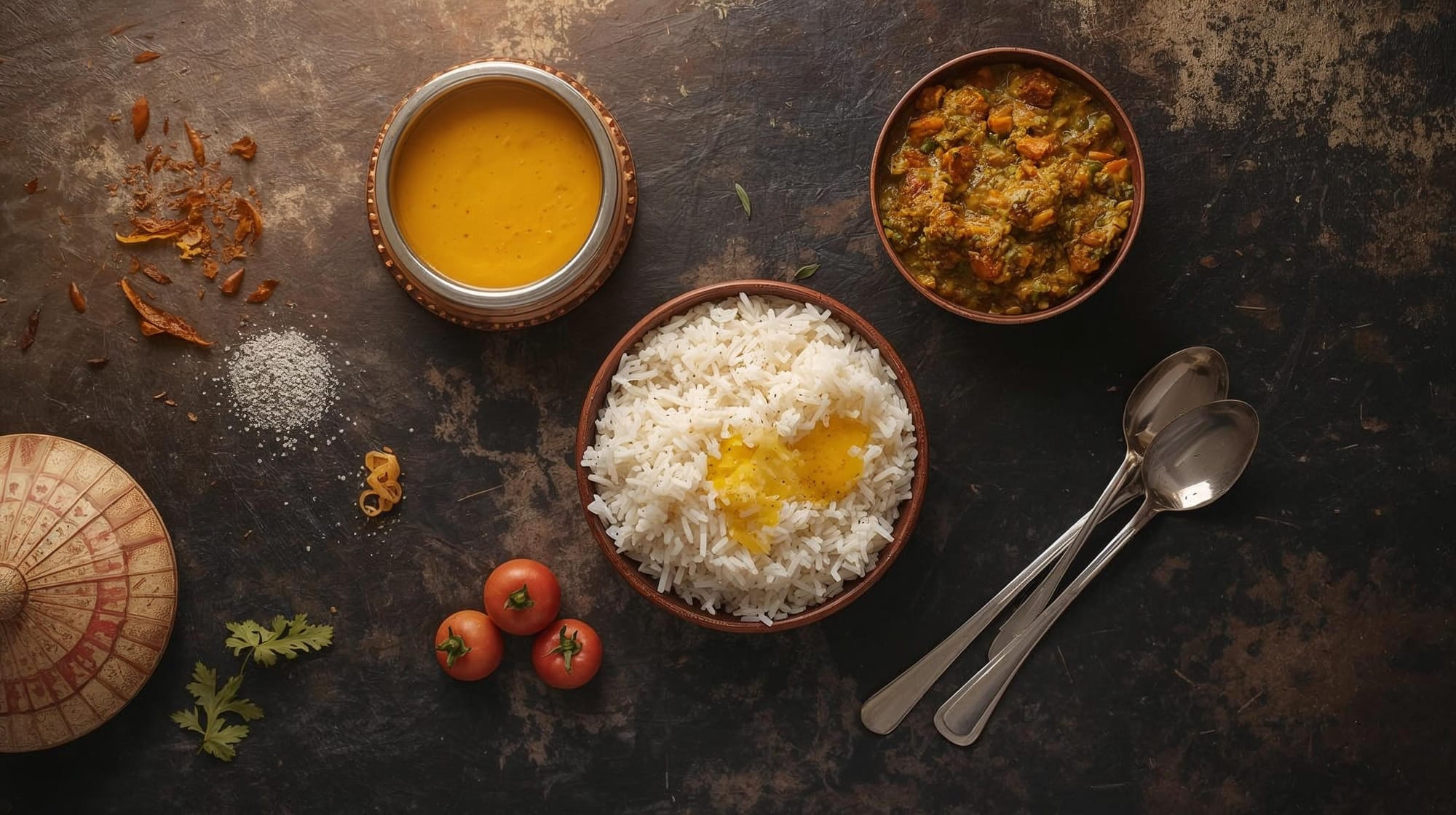
• Rice + ghee + dal — yes, this classic Indian combination is a gut-healing meal; ghee provides butyrate, dal provides prebiotic fibre, and white rice is easier on an inflamed gut than wheat.
• Ajwain (carom seeds) — a digestive powerhouse that reduces bloating and gut inflammation simultaneously.
Your 5-Step Gut-Hormone Reset: Starting This Week
You don't need a drastic cleanse or a 30-day elimination protocol. Start here:
1. Add one probiotic food daily. Homemade curd, kanji, or naturally fermented idli/dosa batter. Consistency matters more than variety.
2. Eat ghee with every meal. 1 teaspoon with dal, rice, or sabzi gives your gut lining the butyrate it needs to repair.
3. Remove the two biggest gut irritants first. Refined sugar and refined vegetable oils (not ghee or coconut oil) are the fastest drivers of gut inflammation. Start there — not with gluten, not with dairy.
4. Eat your meals in a calm state. The vagus nerve directly connects your gut and your brain. Eating while stressed, rushed, or distracted switches off digestive enzymes and worsens gut permeability.
5. Track the connection, not just the symptoms. Keep a simple note on your phone: what you ate, how your energy felt at 3pm, and how your digestion was. Three weeks of this data will show you your personal gut-hormone triggers more clearly than any blood test.
The Bottom Line
Your gut is not separate from your hormones. It is not separate from your PCOS, your thyroid, or your weight. It is the foundation everything else sits on.
When you stop chasing hormonal symptoms and start healing the gut underneath them, the symptoms often resolve on their own — without more medications, more restrictions, or more confusion.
The best part? You don't need exotic superfoods or expensive supplements. The Indian kitchen — with its jeera, haldi, ghee, dahi, amla, and methi — has always been a gut-healing kitchen. It just needed the science to catch up.
It has. Now it's your turn.
About the Author
Shradha is a nutritionist with 13 years of experience and the founder of Fuel It Right. She specialises in gut health, hormonal nutrition, and practical Indian dietary solutions for modern lifestyle conditions.